
Sinomach-HI International Equipment Co., Ltd.
Choosing a Dozer is not simply a matter of selecting the largest machine within your budget. The right model should match the ground, workload, and working conditions on your project. A compact machine may suit a confined site, while a larger dozer can move more material across open ground. But size alone tells only part of the story.
Start with the material you need to move, the distance it must travel, and the number of working hours expected each day. Soil, gravel, and rock place different demands on the blade, tracks, and powertrain. Slopes, soft ground, and tight access can also change which configuration makes sense. Small details matter. Track width, blade type, visibility, and operator comfort may affect productivity over a full shift. Consider transport requirements, fuel use, maintenance access, and local service support before comparing purchase prices. Downtime costs money.
Specifications help narrow the options, but they cannot fully describe how a machine will perform on your actual site. If possible, review the work area with an experienced dealer or equipment specialist, and compare operating costs alongside capacity. Check that the machine’s rated performance fits your conditions, rather than relying on a single headline figure. A tidy spreadsheet can still miss muddy access or frequent repositioning. I’ve seen planning assumptions look convincing until the ground changes. That deserves a second look. This guide explains the key factors to weigh, helping you choose a Dozer that fits the work without paying for capacity you may not use.
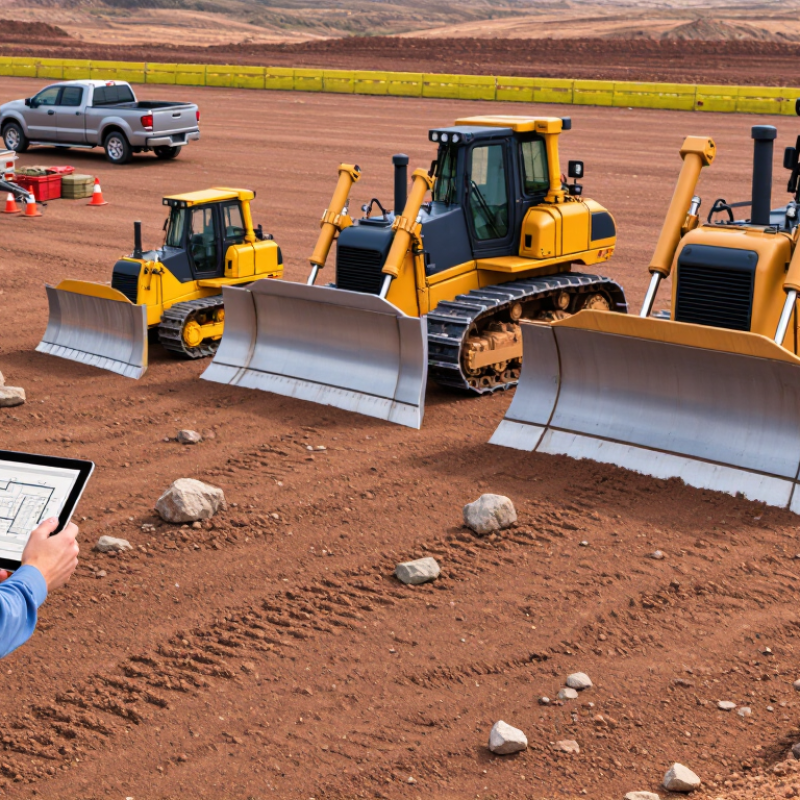
Start with the ground beneath the tracks. Dry, firm gravel behaves differently from wet clay, loose fill, or topsoil after rain. Walk the work area and note soft patches, buried debris, and drainage paths. Soil conditions can change within a few metres. Small details matter. Match track configuration and machine weight to the surface, then check estimated ground pressure against the site’s bearing capacity. A dozer that sinks or churns soil wastes fuel and time.
Measure the distance material must travel and the steepness of each push. Longer hauls often reduce production; a larger machine is not always the answer. On grades, consider traction, stability, and the direction of travel, especially when turning with a loaded blade. Recheck the route after rain or excavation. Estimates can be wrong, and site plans rarely show every soft spot.
A 215 hp dozer is a useful starting point for setting your machine class, not a final specification. Match that benchmark to the work: pushing material across a short cut differs sharply from stripping dense soil over a long haul. Check operating weight, blade capacity, track width, and ground pressure alongside horsepower. On a wet clay pad, a wider track may matter more than extra power. In compact gravel, traction and blade control can decide whether the machine keeps moving.
Use published data to test the choice. The U.S. Army Corps of Engineers’ EP 1110-1-8 equipment schedule provides ownership and operating-cost estimates by equipment category. Compare its relevant rates against expected shifts and utilization, then check local rental quotes. The U.S. EPA’s NONROAD technical documentation models off-road emissions using factors such as rated horsepower, load, and operating hours. These inputs also help frame duty-cycle estimates; they do not predict your exact fuel bill. A 215 hp machine working six productive hours represents 1,290 rated-horsepower-hours per shift. Actual output will vary.
That distinction matters. A machine can have enough horsepower on paper and still lose time to poor traction, tight turning space, or repeated repositioning. Walk the site, note soil changes, and estimate push distance before choosing. Small errors add up. I would treat the 215 hp mark as a screening line, then revise it after a short field trial. That trial may be inconvenient, but a spreadsheet can miss a soft corner.
Choosing a dozer blade starts with the material, not the machine’s advertised capacity. A straight blade offers precise control in firm soil, but carries less loose material than a curved blade. For moving topsoil or light fill, a higher-capacity blade may reduce passes. In wet clay, however, a full blade can create extra resistance and cause track slip. That matters.
For rough grading and shallow cuts, a straight or semi-U blade can help control the cutting edge. When pushing loose sand over a longer distance, a U-shaped blade can carry more per pass. Treat capacity figures as a starting point, not a promise. Moisture, material density, and travel distance all affect real output. Test a short pass.
Cut depth also shapes the choice. Compacted ground may require smaller bites and slower travel, especially when the cut is deep. Forcing a large load can reduce traction and leave an uneven grade. Check the planned depth against machine weight, traction, and undercarriage condition. Even a careful site estimate can be off: a firm surface crust may hide softer soil below. Recheck the cut after a few passes and adjust the blade load before correcting the grade becomes difficult.
| Material and Task | Suitable Blade Type | Indicative Blade Capacity | Typical Working Cut Depth | Selection Guidance |
|---|---|---|---|---|
| Loose soil and topsoil; spreading or finish grading | Straight (S) or angle blade | Approximately 3–6 m³ (4–8 yd³) | Approximately 0.2–0.4 m (8–16 in) | Choose a straight or angle blade for control and accurate grading. A smaller load can be easier to manage when trimming or working in confined areas. |
| Common earth and moderately compacted soil | Semi-U (SU) blade | Approximately 5–9 m³ (7–12 yd³) | Approximately 0.3–0.5 m (12–20 in) | A practical general-purpose choice for cut-and-push work. Use a ripper if the soil is too compacted to cut efficiently with the blade alone. |
| Sand and gravel; moving loose, free-flowing material | U blade | Approximately 7–12 m³ (9–16 yd³) | Approximately 0.2–0.4 m (8–16 in) | The larger curved moldboard can carry more loose material over a push. Avoid overfilling if traction, visibility, or spillage becomes a concern. |
| Hard, compacted ground; short, forceful cuts | Straight (S) or semi-U (SU) blade | Approximately 4–8 m³ (5–10 yd³) | Approximately 0.2–0.4 m (8–16 in) | A more aggressive cut may require a smaller blade load and slower passes. Consider a single- or multi-shank ripper where ground conditions allow. |
| Blasted rock and coarse, fragmented material | Rock-duty straight or semi-U blade | Approximately 5–10 m³ (7–13 yd³) | Approximately 0.15–0.3 m (6–12 in) | Use a reinforced blade and cutting edges suited to abrasive material. Actual capacity may be lower because large fragments do not pack evenly. |
| Coal or other light, low-density bulk material | High-capacity U blade | Approximately 9–15 m³ (12–20 yd³) | Approximately 0.3–0.5 m (12–20 in) | A high-capacity blade can move more volume per pass, but confirm that the machine can push the load safely on the site’s grade and underfoot conditions. |
Planning note: Capacity and cut-depth figures are indicative ranges for comparison, not guaranteed machine specifications. Actual results depend on dozer size, blade design, material density and moisture, ground conditions, slope, and operator technique. Check the selected machine’s specifications and site requirements before estimating production.
A dozer’s listed operating weight is more than a number for comparing machine classes. It affects ground pressure, hauling needs, and how confidently the machine works on soft subgrade. ISO 6016 provides methods for measuring earthmoving-machine masses, so compare specifications on the same basis. Check what each figure includes, such as attachments, fluids, and operator allowance. A blade or winch can change the transport load. Small detail. Big difference.
Track choice changes both traction and footprint. Wider shoes spread the machine’s weight over more ground, which can help on wet soil or finished surfaces. But they may increase overall width and make turning less forgiving. Standard shoes can suit firm, compact work; low-ground-pressure setups fit softer terrain. Compare shoe width, track gauge, and stated ground pressure—not just the track label. Actual soil conditions matter, and a tidy specification table cannot predict every muddy morning.
Transport dimensions deserve an early check. The Federal Highway Administration identifies 102 inches (8.5 feet) as the general width limit on the U.S. National Network, with exceptions and route-specific conditions. A machine close to that figure may still need special planning once its blade, ramps, and trailer are included. Measure the complete load. Confirm height and weight with the hauler and route authority before scheduling. Manufacturer specification sheets provide the machine figures; they do not settle the route question.
How to Choose the Right Dozer for Your Project
A dozer’s purchase price tells only part of its cost. Estimate fuel, service, and productive hours over the project’s expected life. The U.S. EPA’s NONROAD model estimates equipment fuel use using factors such as engine power, load, and operating hours. Treat it as a planning reference, not a promise about your site. Soil, slope, idling, and operator habits can change consumption quickly.
Use a realistic hourly fuel rate and your delivered fuel price. The U.S. Energy Information Administration reported an average U.S. retail diesel price of $3.76 per gallon for 2024; remote-site delivery may cost more. For example, 900 hours at an estimated 5.5 gallons per hour equals 4,950 gallons, or about $18,612 at that benchmark. A rough estimate. Replace it with field records when available.
Then compare service costs against productive hours, not calendar time alone. Review maintenance invoices, repair logs, and machine-hour records for comparable work. Include filters, undercarriage wear, planned inspections, and likely downtime. A machine used 600 productive hours costs more per working hour than one used 900 hours, even with similar annual service bills. Small differences matter. Still, utilization forecasts are often optimistic; weather, hauling delays, and operator availability can shrink them. Build a low-use scenario before choosing.
Estimate annual fuel and routine service costs using expected utilization—not machine size alone.
Planning estimate: diesel at $4 per gallon. Compact: 4 gal/hour and 800 hours/year; mid-size: 7 gal/hour and 1,000 hours/year; large: 11 gal/hour and 1,200 hours/year. Routine service is estimated at $12, $20, and $30 per operating hour, respectively. Actual consumption and service costs vary with workload, terrain, machine condition, and local prices. Estimates exclude purchase or rental costs, operator wages, and major repairs.
Check soil type, soft patches, buried debris, drainage, haul distance, and slope. Conditions can change within a few metres. Walk the route.
Wet clay, loose fill, and firm gravel offer different levels of support and traction. Wider tracks may help on soft ground. Test questionable areas carefully.
Compare the machine’s estimated ground pressure with the site’s bearing capacity. A dozer that sinks can waste fuel and time. Estimates can miss things.
Not necessarily. Longer pushes can reduce production, but a larger machine may not solve poor traction or tight turning space. Measure the route first.
Check traction, stability, and travel direction, especially when turning with a loaded blade. Reassess the route after rain or excavation. Slopes can be tricky.
Treat roughly 215 horsepower as a screening benchmark, not a final specification. Also compare operating weight, blade capacity, track width, and ground pressure.
Compare published equipment cost estimates with expected shifts, utilization, and local rental quotes. Rated horsepower and operating hours help frame estimates, but cannot predict an exact fuel bill.
A short pass can show where tracks slip, soil gives way, or the machine needs repeated repositioning. Record what happens. I might still misjudge a soft corner.
Choosing the right Dozer starts with understanding the worksite. Assess soil type, haul distance, slope, and the ground pressure the surface can safely support. These conditions help determine the machine class and power needed; use a suitable horsepower benchmark to compare options without choosing more capacity than the project requires.
Next, match the blade type and capacity to the material being moved and the depth of each cut. Compare operating weight, available track configurations, and transport dimensions to ensure the machine can work effectively and reach the site. Finally, estimate total ownership and operating costs by considering fuel consumption, expected utilization, and service requirements. Evaluating performance alongside transport and lifecycle costs helps you select a Dozer that fits both the project’s demands and its budget.
