
Featured Diesel Wheel Loaders & Earthmoving Equipment
Heavy-duty construction machinery configured for extreme earthmoving, quarry loading, and infrastructure projects worldwide.

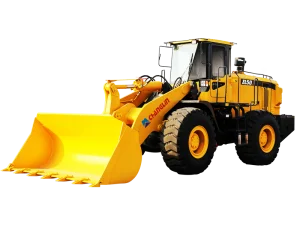





Industrial-Grade Diesel Loader Manufacturing Heritage
In the domain of heavy earthmoving, quarry management, and bulk material logistics, selecting the right Diesel Loader Manufacturer dictates long-term operating profitability. Modern diesel wheel loaders serve as the primary workhorse across civil infrastructure, mining overburden removal, port bulk handling, and aggregate handling. Unlike light utility equipment, industrial diesel loaders must operate continuously under brutal thermal dynamics, high shock loads, and abrasive dust conditions.
Partnering directly with established heavy machinery manufacturing factories—such as the state-of-the-art Changzhou manufacturing base—enforces rigorous mechanical integrity. From high-tensile structural steel welding to precision-machined planetary gearboxes and heavy-duty Z-bar kinematic linkages, enterprise OEM factories deliver unmatched power-to-weight ratios. Buyers gain direct access to custom mechanical configurations tailored specifically for ambient thermal extremes, high-altitude oxygen compensation, and heavy payload demands.
Manufacturing & Rigor Metrics
Our manufacturing facilities integrate robotic structural welding, automated paint lines, and ultra-high-pressure hydraulic pulse test rigs. Every production batch undergoes 100% full-load hydraulic pressure validation before export authorization.
Global B2B Purchasing Criteria: Decoding TCO for Fleet Managers
Enterprise procurement teams evaluate equipment beyond initial acquisition price (CAPEX). Optimal decision-making requires evaluating Total Cost of Ownership (TCO), fuel efficiency curves, and hydraulic duty cycles.
Fuel Consumption per Ton
Fuel accounts for approximately 45% to 60% of a heavy diesel wheel loader's lifetime OPEX. Premier diesel loader factories configure high-torque, low-RPM engines paired with variable-displacement axial piston hydraulic pumps. This load-sensing geometry matches engine output directly to hydraulic demand, reducing fuel burn per ton moved by up to 15%.
Transmission Kinematics
Heavy-duty planetary power-shift transmissions equipped with hydro-dynamic torque converters deliver smooth directional changes under full load. Selecting machines with electro-hydraulic automatic shifting eliminates operator error, protects drive axles, and extends brake lining life significantly during heavy loading cycles.
Structural Reliability
The structural backbone—including front and rear articulated frames, lift arms, and bucket linkages—must resist torsional twisting under off-center loading. Heavy-duty cast steel nodes at stress concentration points ensure structural integrity across aggregate stockpiles and hard-rock quarry faces.
Macro-Industry Engineering Scenarios
Operational duty cycles vary dramatically across global industries. Engineering configurations must be adapted to raw material density, site traction, and loading height requirements.
1. Mining Operations & Heavy Aggregate Extraction
Open-pit mining and stone quarries demand high breakout forces and exceptional tipping load margins. Heavy diesel loaders, such as 5-ton to 8-ton payload capacity models (e.g., ZL50Z, ZL60H, ZL80H), utilize reinforced rock buckets equipped with bolt-on tooth systems and wear-resistant liner plates (Hardox 450/500 equivalent). Coupled with heavy-duty wet axle braking systems, these machines execute rapid 3-to-4-pass loading cycles into 30-ton to 50-ton dump trucks.
2. Civil Road Infrastructure & Earthworks
Road construction projects require seamless synergy between motor graders (PY220H), compaction rollers, and medium diesel wheel loaders (ZL30H, ZL50Z). Loaders perform sub-base material handling, trench backfilling, and asphalt plant feeder bin loading. Features like boom float control and return-to-dig auto-leveling drastically reduce operator fatigue while optimizing grading productivity.
3. Port Terminal Logistics & Bulk Material Handling
Port terminals handling coal, iron ore, fertilizer, and grain require high-capacity light-material buckets (3.5 m³ to 5.0 m³). High-dump bucket configurations provide elevated discharge clearances, allowing efficient loading of high-sided railway wagons and hopper bins. Fast hydraulic cycle times (raise/dump/lower under 10 seconds) ensure continuous vessel unloading operations.
4. Forestry, Agriculture & Custom Industrial Attachments
Modern factory manufacturing permits rapid mechanical adaptation. Equipping diesel loaders with quick-coupler hydraulic systems allows operators to swap between standard buckets, timber log grapples, side-dump buckets, pallet forks, and snow plows within minutes. This versatility transforms a single machine into an all-season industrial asset.
Next-Generation Powertrain & Telematics Architecture
The engineering trajectory of industrial diesel loaders centers on intelligent hydraulic control, low-emission engine integration, and edge-computing telematics.
Stage V / Tier 4 Final
Integration of High-Pressure Common Rail (HPCR) diesel engines equipped with Selective Catalytic Reduction (SCR) and Diesel Particulate Filters (DPF), minimizing NOx and particulate matter without sacrificing torque delivery.
Intelligent Load-Sensing
Implementation of Electro-Hydraulic Main Control Valves (EHMV). Variable displacement pumps deliver exact oil flow matching joystick displacement, eliminating hydraulic throttling losses and lowering oil temperatures.
CAN-Bus Fleet Analytics
Real-time machine monitoring via J1939 CAN-bus protocols. Transmits fuel efficiency data, thermal warnings, hydraulic pressure spikes, and GPS tracking directly to fleet management dashboards.
Diesel-Electric Hybrids
Emerging hybrid drive concepts pair optimized diesel engines with electric traction motors, recovering braking energy to assist during high-demand bucket loading cycles for up to 25% fuel reduction.
Regional Market Dynamics & Compliance Matrix
Operating conditions, fuel qualities, and regulatory compliance standards differ fundamentally across international markets. OEM factories configure machines accordingly.
North America & Western Europe
Enforces EPA Tier 4 Final / EU Stage V emission regulations. Demands FOPS/ROPS certified pressurized cabs with low noise rating (< 72 dB), air-suspension seating, integrated rearview cameras, and electro-hydraulic pilot controls.
Latin America & Andean Mining Regions
High-altitude mining environments (> 4,000 meters above sea level) require turbocharger elevation matching to prevent derating. Systems include severe-duty multi-stage fuel filtration and heavy-duty rock protection guards.
Middle East & North Africa (MENA)
Extreme ambient heat (> 50°C) requires oversized aluminum radiator cooling packages with reversible hydraulic fan control for dust purging, sand-proof electrical harness sealing, and high-capacity cab air conditioning.
CIS & Central Asia Regions
Severe Arctic winter conditions down to -40°C require engine block pre-heaters, cold-start glow plugs, low-temperature synthetic hydraulic fluids, heated fuel filters, and double-glazed cab glass.
Factory-Direct QA & Overseas Supply Chain
Securing equipment directly from a certified Diesel Loader Factory mitigates post-purchase risks. Every machine conforms to international quality standards including ISO 9001, ISO 14001, and CE marking. Pre-delivery inspections (PDI) involve comprehensive hydraulic flow testing, brake performance testing, and thermal imaging under continuous load.
Global logistics capabilities support shipping via RoRo (Roll-on/Roll-off), flat rack vessels, or disassembled high-cube container packing. Backed by regional central spare parts hubs and 300+ overseas dealer outlets, critical replacement parts (filters, seal kits, hydraulic valves, brake discs) can be dispatched within 48 hours to minimize site downtime.
Enterprise Service Guarantees
-
Factory Warranty Coverage: 12 Months or 2,000 Operating Hours full machine coverage, extended powertrain warranties available.
-
Technical Training Programs: On-site technician training and operator safety certification conducted by certified factory engineers.
-
Genuine Spare Parts Assurance: 100% trace-ability for all core engine, transmission, and hydraulic components.
Frequently Asked Questions for Sourcing Diesel Loaders
Expert answers addressing engine selection, hydraulic maintenance, bucket sizing, and global export shipping logistics.
What engine brands and emission configurations are available for export diesel loaders? ▼
Our diesel loader manufacturing facilities offer flexible engine configurations tailored to destination country regulations. Options include Tier 2 / Tier 3 heavy-duty Mechanical / Electronic Common Rail engines (Weichai, Cummins, Shangchai) for regions with variable fuel quality, as well as EPA Tier 4 Final and EU Stage V compliant diesel engines for North American and European markets.
How do I calculate the proper bucket capacity for my site material? ▼
Bucket sizing is determined by raw material bulk density (t/m³) and the loader's rated operating capacity (payload). For heavy iron ore or granite quarries (> 1.8 t/m³), smaller rock buckets (2.5 m³ – 3.0 m³) with teeth are recommended. For river sand or crushed gravel (1.5 - 1.7 t/m³), standard 3.0 m³ – 4.5 m³ buckets are ideal. For light agricultural or coal handling (< 1.0 t/m³), oversized light-material buckets up to 5.0 m³ optimize pass counts.
What is the difference between Z-Bar Linkage and Parallel Lift Linkage? ▼
Z-Bar linkage is the standard configuration for heavy excavation and quarry loading because it generates maximum breakout force at ground level using a single tilt cylinder. Parallel lift linkage (Tool Carrier geometry) utilizes dual tilt cylinders to keep forks or attachments perfectly level throughout the lift path, making it ideal for pallet handling, logging, and industrial material placement.
How does extreme ambient heat affect diesel loader hydraulics, and how is it managed? ▼
High temperatures cause hydraulic oil viscosity breakdown, leading to pump cavitation and seal degradation. For high-heat regions (MENA, Sub-Saharan Africa), our factory integrates high-efficiency aluminum plate-fin oil coolers, independent temperature-controlled hydraulic fan drives, and synthetic ISO VG 68 hydraulic oil. This preserves system operating pressures up to 21 MPa even in 50°C ambient heat.
What shipping options are used for exporting heavy machinery from China? ▼
Heavy equipment shipping depends on machine dimensions and cost targets. Large wheel loaders (ZL50Z, ZL60H, ZL80H) are typically shipped via RoRo (Roll-on/Roll-off) or Break-Bulk vessels fully assembled. Alternatively, machines can be partially disassembled (removing cab, wheels, bucket) and loaded into 40ft High Cube (HC) containers, significantly reducing ocean freight costs for multi-unit orders.
Can diesel wheel loaders be customized with quick-couplers and hydraulic auxiliary lines? ▼
Yes. Factory-installed hydraulic quick-couplers paired with 3rd and 4th spool auxiliary hydraulic circuit valves allow seamless operational switching between grapples, side-dump buckets, sweeper brooms, and snow blowers directly from the operator cabin via pilot joystick controls.
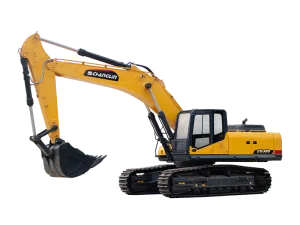
Excavators, Bulldozers & Road Rollers Factories Direct
Explore our complete heavy construction equipment line designed for high performance and durability across mining, roadwork, and land reclamation projects.





Optimize Your Heavy Fleet Procurement Today
Connect directly with our Changzhou engineering team to evaluate site payload requirements, request tailored technical data sheets, or schedule an OEM factory audit.