
Industrial Road Roller & Earthmoving Machine Lineup
Precision-engineered compactor rollers, excavators, graders, and loaders manufactured in our state-of-the-art smart factory hubs.



1. Global Road Roller Manufacturing Hubs & Industrial Context
Analyzing the technical evolution, global supply chain dynamics, and OEM factory engineering paradigms shaping modern soil and asphalt compaction equipment.
In modern civil infrastructure, highway engineering, and mining site preparation, the compaction phase dictates structural longevity. Premium road roller factories serve as the technological backbone of earthworks, transforming raw structural steel, advanced hydraulic circuits, and micro-processor electronics into high-tonnage compaction machinery. As global transport corridors require higher axle load capacities and extended asphalt fatigue thresholds, contract specifications have shifted from rudimentary static rolling to dynamic, high-amplitude, multi-frequency vibratory and oscillatory compaction systems.
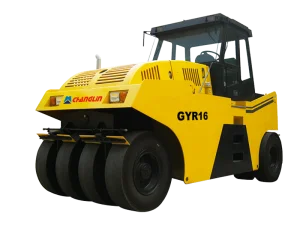
An elite road roller factory operates at the nexus of metallurgy, structural dynamics, and fluid dynamics. Leading Chinese OEM manufacturing hubs—such as Sinomach-HI (Changlin) in Changzhou, Jiangsu—integrate automated robotics, heavy submerged arc welding, sub-micron tolerance machining, and climate-controlled hydraulic assembly lines. These advanced manufacturing capabilities allow factories to produce heavy single-drum vibratory rollers (such as 10T to 22T GYS series), double-drum tandem asphalt rollers (GYD series), and multi-wheel pneumatic tyred compactors (GYR series) tailored to stringent international standards including ISO 9001, CE mark compliance, and EPA Tier 4 Final / EU Stage V emissions protocols.
Factory engineers classify road roller efficiency using two core metrics: Linear Static Load (expressed in N/cm across the drum width) and Dynamic Centrifugal Force (expressed in kN). While static weight creates initial material settlement, vibratory excitation reduces internal inter-particle friction in granular soils, allowing aggregate particles to re-orient into high-density interlocking matrix structures.
2. Geotechnical Soil Mechanics & Compaction Physics
Understanding how vibratory amplitude, frequency, and nominal drum forces manipulate soil shear strength and void ratios.
Vibratory Amplitude Vectoring
Single and double drum vibratory road rollers utilize eccentric rotating shafts within the drum core. Factory configurations allow dual-amplitude adjustments (e.g., High Amplitude 1.9mm / Low Amplitude 0.95mm). High amplitude delivers deep energy penetration for thick subbase lift compaction, while low amplitude prevents aggregate crushing during thin asphalt surface layer finishing.
Frequency Tuning (28Hz - 50Hz)
Matching vibratory frequency (measured in Hertz) to the natural resonant frequency of the soil matrix optimizes energy transfer. Granular soils (gravel, sand) respond maximally to lower frequencies with higher amplitude, whereas cohesive soils (clay, silt) require padfoot drum adapters or pneumatic kneading forces to expel trapped pore water.
Continuous Compaction Control (CCC)
Modern factories embed accelerometer sensors directly inside drum bearings. By recording real-time ground reaction forces, onboard Intelligent Compaction (IC) systems compute dynamic soil stiffness parameters ($E_{VIB}$ or $CMV$) continuously, mapping pass counts and alerting operators to soft spots before asphalt paving begins.
| Compactor Category | Typical Tonnage | Primary Compaction Mechanism | Optimal Application Scenario | Factory Options & Attachments |
|---|---|---|---|---|
| Single-Drum Vibratory (GYS Series) | 8T – 22T | Heavy Impact + High Amplitude Vibration | Subgrade, Embankments, Highway Rock Fill, Dam Bases | Detachable Padfoot Shells, Hydrostatic Rear Axle Drive |
| Tandem Double-Drum (GYD Series) | 3T – 14T | Dual-Drum Hydrostatic Vibration / Oscillation | Asphalt Wearing Course, Binder Layers, Municipal Roads | Crab-Steering, Edge Cutters, Multi-point Water Sprinklers |
| Pneumatic Tyred Compactor (GYR Series) | 16T – 30T | Kneading + Static Pressure Manipulation | Asphalt Surface Sealing, Chip Seals, Sub-Base Finishing | Air Inflation Control, Thermal Tyred Skirting, Ballast Tanks |
| Heavy Landfill Compactor | 25T – 35T | High-Pressure Cleated Steel Feet Shredding | Municipal Waste Density Maximization, Landfill Capping | Bulldozer Blade, High-Cab Air Filtration, Wire Cutter Bars |
3. OEM Factory Production Protocols & Precision Quality Assurance
How tier-1 heavy machinery factories manufacture durable frames, balanced vibration drums, and leak-free hydraulic circuits.
Precision Frame Fabrication & Submerged Arc Welding
The structural chassis of a road roller endures constant multi-axis vibrational stresses. Leading OEM factories utilize high-strength Q355B and Q690D structural steel plates. Heavy structural elements undergo CNC robotic plasma arc cutting followed by automated submerged arc welding. To ensure zero structural failure under harsh job-site forces, frames are subjected to ultrasonic non-destructive testing (NDT) and thermal stress-relief annealing to purge residual welding tensions.
- High-strength steel chassis rated for 15,000+ continuous operating hours.
- Articulated joint pin assemblies with self-lubricating composite bushings.
- Heavy-duty rubber damper mounts isolating the cab from 98% of drum vibration.
Drum Dynamic Balancing & Hydraulic Cleanliness
Unbalanced eccentric shafts lead to premature bearing failure and uneven surface compaction. Factory assembly includes dynamic balancing on specialized electronic rigs, ensuring rotational concentricity within micro-millimeter thresholds. Hydraulic systems—featuring top-tier components from Danfoss, Rexroth, and Cummins engines—are assembled in ISO Class 8 cleanroom environments. Oil cleanliness is strictly enforced according to ISO 4406 standards (target cleanliness level 16/14/11) to eliminate valve sticking and pump cavitation.
- Precision-machined drum shells made from abrasion-resistant manganese steel alloy.
- Hydrostatic closed-loop propulsion and vibration drives for seamless speed modulation.
- Multi-stage fuel filtration with water-in-fuel sensors for low-quality site diesel.
4. Global Infrastructure Solutions & Application Scenarios
Deploying tailored compaction fleets across highway corridors, high-speed rail subgrades, airport runways, and mining haul roads.
Expressways & Asphalt Highways
High-speed motorways demand flawless surface smoothness (IRI < 0.8 m/km) and zero permeability. Asphalt paving trains utilize tandem double-drum rollers (such as GYD132J) for initial breakdown rolling and intermediate compaction, followed by heavy pneumatic tyred compactors (GYR162) to seal surface voids and achieve optimal binder density.
Heavy Earthworks & Dam Foundations
For rock-fill dams, airport foundations, and railway embankments, thick lifts of coarse material require 18T to 22T heavy-duty single-drum vibratory rollers (e.g., GYS20J). Equipped with high linear static load and dual-frequency vibration, these machines consolidate rock aggregate down to depths exceeding 1.0 meter per pass.
Municipal Utility & Urban Backfill
Working in constrained city streets, bridge abutments, and trench backfilling requires compact vibratory rollers (GYS08J / GYS10J). Featuring tight articulation turning angles and high gradient climbing capability (up to 40%), these units deliver high productivity without endangering surrounding urban structures.
5. Localized Support, Regulatory Compliance & Factory Warranties
How global procurement teams mitigate risk through factory audits, certified operator safety, and international logistics integration.
Purchasing heavy machinery direct from an international factory requires robust compliance frameworks and after-sales guarantees. Leading Chinese manufacturers establish comprehensive support ecosystems across Latin America, Southeast Asia, Central Asia, the Middle East, and Africa. By pairing localized spare-parts distribution hubs with factory-trained field support engineers, machinery buyers maintain over 95% operational uptime even in extreme environments such as high-altitude Andean mines or high-heat Middle Eastern deserts.
Regulatory & Environmental Compliance Frameworks
- Engine Emissions Compliance: Custom engine configurations tailored to destination markets, ranging from robust Mechanical Tier 2 engines for regions with high-sulfur fuel to advanced Common Rail Tier 4 Final / Stage V engines with DEF/AdBlue systems.
- ROPS/FOPS Operator Safety Cabs: Certified Roll-Over Protective Structures (ROPS) and Falling-Object Protective Structures (FOPS) according to ISO 3471 and ISO 3449, keeping operators safe in heavy slope applications.
- Noise & Vibration Abatement: Acoustic insulation paneling minimizing operator sound pressure levels to below 78 dB(A), coupled with ergonomic pilot joystick controls to minimize operator fatigue.
- Pre-Shipment Technical Audits: Every road roller leaving the factory undergoes a 50-point quality inspection, including hydrostatic pressure testing, dynamic vibration spectrum analysis, and water-tight cab sealing trials.
6. Fleet Total Cost of Ownership (TCO) & OEM Procurement Optimization
Evaluating initial CAPEX against operational fuel economy, preventive maintenance schedules, and global component interchangeability.
CAPEX Optimization vs. Premium Components
Factory-direct purchasing cuts distributor markups by up to 25–35%, freeing budget for premium structural and hydraulic options. Premium components—such as heavy-duty planetary drive axles, hydraulic pumps from international brands, and wear-resistant scraper blades—substantially lower maintenance costs over the equipment's 10-year lifespan.
Preventive Maintenance & Parts Logistics
Standardized service points accessible from ground level accelerate routine maintenance. Standardized filters, standardized O-rings, and universal hydraulic hose fittings ensure fleet mechanics can quickly source replacement parts worldwide, reducing downtime during time-critical paving seasons.
- Centralized grease banks for quick chassis pin lubrication.
- Flip-up engine hoods providing 180-degree access to filters and radiators.
- Factory spare-parts kits bundled with initial machine shipment.
7. Technical Roadmap: Unmanned Autonomous Rollers & Electrification
Exploring next-generation technologies: zero-emission electric compactors, 5G unmanned autonomous fleets, and AI-assisted compaction control.
Autonomous & Unmanned Rolling
Integrating Real-Time Kinematic (RTK) GNSS positioning with 5G telematics enables factory-built autonomous road rollers to execute pre-programmed pass patterns with millimeter accuracy. Path planning algorithms automatically manage overlap, velocity, and dynamic amplitude adjustments, eliminating human operator error and preventing over-compaction.
Battery Electric Road Rollers (e-Rollers)
As urban low-emission zones expand, OEMs are developing zero-emission electric vibratory rollers powered by high-density Lithium Iron Phosphate (LFP) battery packs. Electric motor drives deliver instant peak torque and allow independent, stepless control of drum vibration frequency and travel speed, reducing noise by up to 15 dB.
AI-Driven Density Mapping
Next-generation smart road rollers transmit real-time soil stiffness parameters to cloud platforms. AI models analyze ground response data to generate instant density heatmaps across the job site, giving project managers verified quality documentation and identifying weak subgrade areas automatically.
Explore Earthmoving, Mining & Construction Machinery
Complement your road roller fleet with factory-direct bulldozers, wheel loaders, motor graders, and heavy crawler excavators.






8. Frequently Asked Questions (Q&A)
Expert technical responses to common questions regarding road roller factory operations, compactor selection, and maintenance practices.
What is the primary technical difference between single-drum and double-drum road rollers?
Single-drum vibratory rollers (e.g., GYS10J, GYS20J) feature one heavy steel drum at the front and heavy rubber drive tyres at the rear. They provide high traction and deep compaction energy, making them ideal for thick earthwork lifts, subgrade layers, rock fill, and embankment foundations. Tandem double-drum rollers (e.g., GYD132J) feature steel drums on both front and rear axles. They provide uniform, smooth compaction without tyre tracks, making them essential for asphalt hot-mix surface courses and binder layers.
How do road roller factories calculate optimal compaction lift thickness for soil?
Factory engineers estimate effective compaction depth based on the machine's static weight and dynamic centrifugal force. As a general industry benchmark, single-drum vibratory compactors can effectively consolidate granular soils up to a depth (lift thickness) equal to roughly 10% to 15% of their total dynamic impact force. For instance, a 20-ton roller generating 400 kN of centrifugal force can efficiently compact uncompacted soil lifts of 60 cm to 80 cm in depth down to 98% Proctor density.
Why are pneumatic tyred compactors (GYR series) used in asphalt paving trains?
Pneumatic tyred rollers utilize multiple overlapping rubber tyres that exert both vertical pressure and lateral kneading actions on hot asphalt mixes. Unlike rigid steel drums, the flexible rubber tyres force smaller aggregate particles into voids, sealing surface micro-cracks and creating an impermeable, water-resistant surface layer. They also prevent surface aggregate fracturing while enhancing pavement fatigue life.
What is a Padfoot drum attachment, and when should a contractor order one from the factory?
A Padfoot drum (also known as a tamping foot drum) features grid-pattern steel cleats welded to the drum shell. These feet penetrate thick clay or cohesive soils to deliver localized high-pressure compaction while expelling trapped moisture. Factories offer either dedicated padfoot rollers or removable multi-piece padfoot shell kits that bolt over smooth drums, giving contractors flexibility to handle both cohesive clay and granular soil on a single job site.
What factory quality assurance checks ensure hydraulic reliability in heavy vibratory compactors?
Leading factories enforce multi-stage quality control: 1) Hydraulic component pressure testing up to 1.5x working pressure; 2) Laser particle counting to ensure hydraulic fluid cleanliness meets ISO 4406 standards; 3) Dynamic vibration frequency spectrum auditing to prevent unwanted resonance across structural cabs and frames; and 4) Hot-climate thermal endurance testing to verify hydraulic oil cooling efficiency under full engine loads.
How does factory-direct procurement support international custom specifications?
Direct OEM procurement allows international buyers to tailor machine configurations to local site conditions. Buyers can specify engine emissions tiers (Tier 2/3/4F/Stage V), high-altitude turbochargers, tropical cooling radiators, desert air filtration, ROPS/FOPS cabs with air conditioning, intelligent compaction sensors, and specialized drum width or ballast weight setups prior to production.