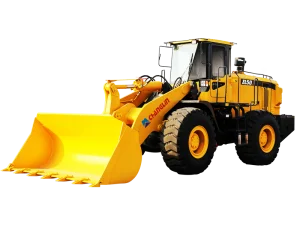
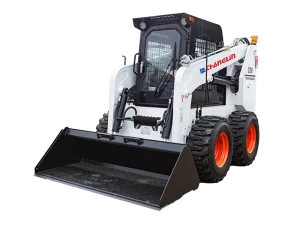
Primary Industrial & Landfill Machinery Fleet
Explore our high-performance heavy compaction and earthmoving machinery engineered for high-density municipal solid waste, quarry mining, and infrastructure development.








Engineering Paradigm of Modern Landfill Waste Compaction
A comprehensive examination of how structural weight, wheel tooth geometry, and hydraulic distribution drive density optimization in municipal solid waste (MSW) management.
In modern waste management infrastructure, selecting an authoritative landfill compactor manufacturer is the single most decisive factor governing the operational longevity and profitability of sanitary landfills. Unlike standard earthmoving compactors or road rollers, heavy landfill compactors operate in complex, unpredictable, and highly abrasive environments. Municipal solid waste (MSW) exhibits volatile moisture levels, varying elasticity, and non-homogeneous density. Achieving optimal compaction density—typically target ratios exceeding 0.8 to 1.1 tons per cubic meter ($t/m^3$)—demands specialized heavy machinery designed with high point-load steel wheels, aggressive shredding teeth, high ground clearance, and sealed powertrain architecture.
Leading global landfill compactor manufacturers build machines engineered not merely to flatten waste, but to actively tear, crush, blend, and void-free compact refuse. Every pass of a heavy landfill compactor reduces the air pockets trapped within garbage layers, directly minimizing slope instability, reducing subsurface fires caused by trapped methane pockets, and drastically curbing leachate accumulation. By maximizing the payload mass within every cubic meter of airspace, landfill operators can extend the operational life of a waste cell by 25% to 40%, directly translating into tens of millions of dollars in deferred capital expenditure for site expansion.
Core Competitive Advantages of Chinese Landfill Compactor Factories
How China's heavy machinery manufacturing clusters deliver unmatched structural durability, technological integration, and total cost of ownership (TCO) advantages to global buyers.
Fully Integrated Industrial Ecosystem
Chinese OEM manufacturers benefit from complete supply chain integration. From high-tensile structural steel plate cutting and specialized heat-treated wheel tooth casting to advanced hydraulic valve block assembly, Chinese factories eliminate supply bottlenecks, drastically reducing production lead times.
Superior TCO & Capital Efficiency
Procuring directly from leading Chinese landfill compactor manufacturers provides equipment buyers with a 30% to 45% capital expenditure advantage over Western OEMs without sacrificing component longevity. Lower upfront procurement costs allow fleet managers to acquire redundant units or upgrade to higher-tonnage classes.
Heavy-Duty Structural Fabrication
Chinese heavy equipment factories utilize robotic automated welding and ultrasonic weld-defect detection across all box-section articulated frames. High-stress joints feature reinforced alloy steel plates designed to withstand perpetual torsional stress under uneven ground loading.
Engine & Component Modular Adaptability
China's export-oriented factories design compactors with modular engine bays capable of housing Cummins, Weichai, Shangchai, or Deutz powertrains. This modularity ensures compliance with regional emissions standards ranging from Tier 2 / Stage II for developing markets to Tier 4 Final / Stage V for regulated regions.
Rigorous Factory Pre-Delivery Testing
Before shipment, machines undergo continuous 48-hour hydraulic pressure endurance testing, steep-slope gradeability evaluation, and cabin climate control verification. Photo and video quality control dossiers are compiled for transparent buyer verification.
Global Logistics & Spare Parts Hubs
Chinese manufacturers maintain strategic overseas spare parts warehouses and dealer networks across Africa, Central Asia, South America, and the Middle East, guaranteeing rapid replacement of high-wear items such as tooth tips, scraper blades, and hydraulic seals.
Global Industry Trends & Next-Generation Technologies
The transformation of waste compaction through intelligent sensor integration, electrification, automated compaction mapping, and operator health safeguards.
1. Real-Time GPS & GNSS Compaction Density Mapping
Modern landfill compactor manufacturing has evolved from brute force mechanics into intelligent engineering. Advanced compactors now feature integrated high-precision GNSS positioning sensors and dynamic soil/refuse stiffness indicators. As the machine traverses the waste face, real-time telemetry measures accelerometer responses to calculate compaction pass counts and real-time material density. Operators view color-coded terrain maps on cab monitors, highlighting under-compacted zones while preventing over-compaction, which wastes fuel and accelerates mechanical wear.
2. Intelligent Hydrostatic Drive & Differential Traction Control
Traditional mechanical transmissions struggle with the variable resistance of loose, soft waste faces. Next-generation compactors utilize electronic closed-loop hydrostatic drive systems powered by variable-displacement hydraulic pumps and motors. Combined with automatic inter-axle and inter-wheel differential lock systems, modern compactors maintain 100% traction even when one wheel encounters slippery plastic sheeting or low-friction organic sludge.
3. Specialized Anti-Wrapping Wheel Geometry & Self-Cleaning Scrapers
Long wire cables, plastic film, synthetic netting, and textiles present severe operational hazards, often wrapping around axle shafts and destroying hydraulic oil seals. Modern landfill compactor manufacturers utilize proprietary wheel designs featuring specialized cleat or block-pattern steel teeth paired with heavy-duty adjustable scraper bars. Wire-cutter teeth actively shear wrapping debris during rotation, while continuous-contact scraper teeth clean the spaces between cleats to maintain maximum ground penetration on every rotation.
4. Positive-Pressure FOPS/ROPS Cabins with HEPA & Carbon Filtration
Landfill environments expose operators to dangerous bio-aerosols, hydrogen sulfide gas, methane, and toxic fine particulates. Advanced compactor design incorporates fully sealed FOPS (Falling Object Protective Structure) and ROPS (Roll-Over Protective Structure) cabins equipped with multi-stage air purification systems. Positive cabin pressure prevents external gas ingress, while activated carbon and HEPA filtration systems ensure safe, odor-free breathing air for the operator throughout 12-hour shifts.
Localized Operational Scenarios & Environmental Adaptations
Custom engineering configurations designed to tackle extreme geographic, climatic, and material challenges encountered across global disposal sites.
High-Humidity Tropical MSW Landfills
Challenge: High organic food waste content resulting in low friction, excessive leachate generation, and frequent vehicle bogging in Southeast Asia and South America.
Solution: Compactors configured with high-cleat diamond teeth, dual-hydraulically driven radiator cooling fans with automatic reverse-flushing to clear airborne chaff, and fully sealed underbelly armor plates to protect hydraulic lines from acidic leachate pools.
Extreme Sub-Zero Cold Climate Operations
Challenge: Frozen ground conditions, engine starting failures, and brittle steel fractures in Northern CIS and high-latitude mining/municipal sites.
Solution: Implementation of engine coolant pre-heaters, synthetic low-viscosity arctic hydraulic oils, heated cabin glass, and structural frames fabricated from normalized high-impact low-temperature alloy steels.
Coastal & Highly Corrosive Industrial Cells
Challenge: Marine salt spray combined with corrosive industrial chemical sludges accelerating chassis rust and wiring harness deterioration.
Solution: Heavy-duty marine-grade epoxy undercoating, stainless steel hydraulic piping, sealed Deutsch waterproof electrical connectors, and sacrificial zinc anodes mounted inside frame pockets.
High-Altitude Thin-Air Waste Sites
Challenge: Engine power derating, insufficient combustion oxygen, and hydraulic fluid overheating at altitudes exceeding 3,500 meters in Andean or Himalayan regions.
Solution: High-pressure turbocharger matching, enlarged aluminum radiator cores, and electronically managed fuel injection systems calibrated specifically for high-altitude air density compensation.
Macro Industry Solutions: Sustainability, ESG & Cell Lifecycle Optimization
How high-density waste compaction contributes directly to global environmental compliance, methane gas capture efficiency, and municipal cost control.
Landfill operators worldwide face increasingly stringent environmental regulations and aggressive ESG (Environmental, Social, and Governance) mandates. Procurement decisions regarding heavy equipment are no longer isolated to equipment price; they are directly tied to environmental stewardship metrics.
Extending Landfill Airspace & Deferring Site Acquisition
Acquiring new land for municipal waste disposal is politically challenging, environmentally sensitive, and financially prohibitive. By deploying high-tonnage (23t to 33t) landfill compactors built by specialized manufacturers, site operators optimize every cubic meter of permitted airspace. Raising compacted refuse density from $0.6\text{ t/m}^3$ to $0.95\text{ t/m}^3$ yields a net 36% gain in total landfill capacity, postponing the requirement for new site permits by over a decade.
Optimizing Daily Cover Material (Dirt Savings)
Regulated landfills are legally required to apply a daily cover layer of soil or foam over exposed garbage faces to control vectors, odors, and blowing litter. A well-compacted, smooth waste surface created by a compactor equipped with a wide semi-U trash blade minimizes the surface area of interstitial voids. Operators save up to 30% on daily soil import volume, preserving precious cell airspace for revenue-generating waste.
Leachate & Landfill Gas (LFG) Containment Improvement
Uniformly compacted waste layers reduce unorganized rainwater infiltration pathways. By preventing water from pooling inside loose garbage pockets, the compactor reduces raw leachate generation volume—directly lowering leachate treatment plant processing costs. Furthermore, high-density compaction creates predictable, homogenous sub-surface strata, allowing vertical landfill gas (LFG) extraction wells to draw methane efficiently for green energy conversion without pulling in ambient air.
Global Fleet Buyer Procurement & Total Cost of Ownership (TCO) Blueprint
Essential selection criteria for municipal procurement officers, private waste concessionaires, and heavy equipment dealers.
Evaluating a landfill compactor manufacturer requires analyzing long-term lifecycle metrics rather than unit acquisition price alone. Modern fleet procurement strategies center around four key pillars:
1. Weight Class & Linear Load Selection
Match operating weight to daily tonnage throughput. Sites accepting under 200 tons/day operate efficiently with 20-ton compactors (e.g., GYL203). High-volume sites handling over 500 tons/day require 23-ton to 30-ton+ compactors (e.g., GYL233) to achieve required crushing forces.
2. Spare Parts & High-Wear Interchangeability
Verify that the manufacturer uses standardized, internationally accessible components for wear-prone systems—such as Permco/Danfoss hydraulics, ZF/DANA transmissions, and standard bolt-on wheel teeth tips—to guarantee fast local field repairs.
3. Protective Guarding & Thermal Management
Ensure the machine includes factory-installed, heavy-duty underbody belly guards, enclosed hydraulic cylinder armoring, dual wire-sweeps over the wheels, and an isolated engine bay designed to keep trash fluff away from hot exhaust manifolds.
Landfill Compactor Engineering Benchmark Comparison
Direct technical metrics illustrating performance indicators across primary heavy waste compactor models.
| Specification Parameter | GYL203 Model Class | GYL233 Model Class | Heavy Mining / Heavy Duty Class |
|---|---|---|---|
| Operating Weight (kg) | 20,300 kg | 23,000 kg | 30,000 - 33,000 kg |
| Engine Rated Power (kW/HP) | 162 kW / 220 HP | 175 kW / 238 HP | 240 kW / 326 HP |
| Compaction Wheel Width (mm) | 1,000 mm | 1,100 mm | 1,250 mm |
| Static Linear Load (N/cm) | >310 N/cm | >350 N/cm | >420 N/cm |
| Travel Speed (Forward/Reverse) | 0 - 10 km/h | 0 - 11 km/h | 0 - 12 km/h |
| Gradeability (%) | 100% (45°) | 100% (45°) | 100% (45°) |
| Blade Type & Width | Semi-U Trash Blade (3,600 mm) | Heavy Semi-U Blade (3,800 mm) | High-Capacity U-Blade (4,100 mm) |
| Recommended Daily Waste Volume | 150 - 350 Tons / Day | 350 - 800 Tons / Day | >800 Tons / Day |
Frequently Asked Questions (FAQ) - Landfill Compactors
In-depth responses regarding compactor operation, tooth patterns, maintenance cycles, and international procurement logistics.
What is the structural difference between a standard road roller and a specialized landfill compactor?
A standard road roller uses smooth or padfoot steel drums designed to apply vibratory forces onto uniform soil or asphalt layers. In contrast, a specialized landfill compactor relies on continuous static weight and high point-load impact delivered via rigid steel wheels equipped with aggressive crushing teeth (cleat or block style). Landfill compactors do not use vibration, as internal vibration could destabilize loose waste slopes and damage underlying geomembrane liners. Additionally, landfill compactors feature heavy protective belly armor, high ground clearance, wire strippers, self-cleaning scraper bars, and positive-pressure filtered cabs designed specifically for toxic gas environments.
How do I select the right compactor tonnage for my municipal solid waste (MSW) facility?
Selection depends primarily on your site’s daily waste intake volume, operational hours, and required target density. For small to medium facilities handling 150 to 350 tons per day, a 20-ton compactor class (such as the GYL203) provides excellent maneuverability and density output. For medium to large regional waste hubs processing 350 to 800+ tons daily, a 23-ton to 30-ton compactor (such as the GYL233) is mandatory to keep pace with incoming haul trucks while maintaining a minimum of 3 to 4 crushing passes per waste layer.
What tooth design is best for waste shredding: Cleat pattern or Block pattern?
Diamond-shaped cleat teeth excel at puncturing, shredding, and tearing flexible bulky waste such as plastic sheets, mattresses, cardboard boxes, and synthetic packaging, providing high traction on steep slopes. Trapezoidal block-style teeth provide higher surface contact area and maximum static crushing force, making them ideal for heavy industrial refuse, demolition debris, and rigid organic waste. Many global operators utilize a combination pattern (cleats on front wheels for tearing, blocks on rear wheels for final sealing) to optimize performance.
How does high compaction density protect the landfill's geomembrane liner system?
When waste is placed directly above protective soil layers over HDPE geomembrane liners, sharp debris or large rigid objects can puncture the liner if pushed down vertically by uncalibrated machinery. A landfill compactor spreads and shreds refuse horizontally using its front semi-U blade before rolling over it. By homogenizing the waste face into thin, uniform 30cm-50cm lifts, point-load spikes on the underlying liner are eliminated, preserving environmental containment integrity.
What daily maintenance routines are required for a landfill compactor?
Daily maintenance should include: (1) Inspecting wheel cleaning scrapers and wire cutters to clear any wrapped cables or netting; (2) Checking and cleaning the dual-stage engine air intake filters; (3) Actuating the automatic reverse fan to purge radiator fins of airborne paper and dust; (4) Inspecting underbody belly pan seals for trash accumulation; and (5) Checking cabin air intake HEPA/carbon filters for odor breakthrough.
Can Chinese landfill compactors be customized with Tier 4 Final or Stage V engines for export?
Yes. Leading Chinese manufacturers engineer modular engine frames capable of accommodating Tier 2, Tier 3, Tier 4 Final, or EU Stage V engines (such as Cummins or Weichai electronically controlled engines with DEF/AdBlue and DPF systems) to satisfy the environmental regulations of importing countries across North America, Europe, or Australia.
How are heavy landfill compactors packed and shipped internationally?
Due to their large dimensions, heavy operating weights, and high steel wheels, landfill compactors are typically shipped via Roll-on/Roll-off (RoRo) vessels or Break-Bulk ocean freight. For flat-rack container shipping, the compactor’s steel wheels, blade, and cabin upper assembly can be disassembled at the factory and securely lashed to fit within standard container dimensions, with re-assembly guided by factory engineers upon arrival.
What warranty and technical support terms do Chinese factories provide?
Standard export factory warranties cover 12 months or 2,000 operational hours (whichever comes first), with optional extended warranty packages up to 24-36 months available for key components (engine, transmission, axle, frame). Technical support is delivered via local authorized dealer technicians, video diagnostic support, and expedited express delivery for OEM spare parts.
Complementary Fleet Equipment & Machinery Models
Explore our complete heavy equipment range engineered for quarry loading, road construction, material handling, and site maintenance.