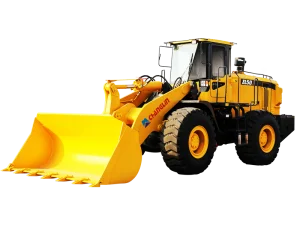
Factory-Direct Heavy Fleet Lineup
Explore our OEM/ODM machinery portfolio engineered for infrastructure development, mining logistics, and municipal construction.



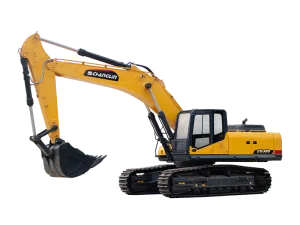



Global Commercial & Market Landscape of 10-Ton Excavators
Analyzing supply chain dynamics, regional adoption rates, and operational economics across the global midi-excavator sector.
The Strategic "Sweet Spot" of 10-Ton Midi Excavators
In the global earthmoving and heavy machinery ecosystem, the 10-ton excavator—frequently classified within the upper midi-excavator spectrum (8 to 12 metric tons operating weight)—represents a critical engineering baseline. Contracting firms, equipment leasing enterprises, and municipal fleets increasingly identify the 10-ton capacity as the ideal compromise between compact maneuverability and heavy-duty hydraulic break-out performance.
Unlike standard mini-excavators (under 6 tons) that face depth and breakout limitations in high-compaction rocky soils, or heavy 20-ton crawler excavators that incur prohibitive transport logistics and transport permit overheads, the 10-ton operating envelope provides exceptional versatility. A standard 10-ton crawler machine delivers digging depths ranging from 4.5 to 5.2 meters, bucket breakout forces surpassing 68 kN, and swing speeds exceeding 11 RPM—all while remaining transportable via standard tandem-axle low-boy trailers without requiring oversized freight clearances in North America, Europe, or Asia-Pacific.
Factory Insight: Direct procurement from accredited 10-ton excavator manufacturers allows commercial buyers to customize hydraulic main control valves (MCV), undercarriage shoe profiles, and counterweight setups—slashing initial acquisition expenditure by 22% to 35% compared to tier-one brand retail dealer markups.
North America & EU Dynamics
High demand driven by urban infrastructure upgrades, fiber optic trenching, and civil utility expansions. Strict Stage V / Tier 4 Final emission requirements mandate advanced diesel oxidation catalysts (DOC) and selective catalytic reduction (SCR) integration.
Asia-Pacific Expansion
Rapid urban growth and Belt and Road infrastructure projects across Southeast Asia drive massive demand for robust, high-durability machines capable of continuous duty cycles in high-humidity, high-ambient heat conditions.
LATAM & MEA Demand
High reliance on versatile equipment for mining support, agricultural land clearing, and municipal water management projects. Procurement focuses heavily on fuel efficiency, mechanical simplicity, and spare-parts interchangeability.
10-Ton Excavator Industry Trends & Technological Convergence
How smart hydraulics, electrification, telematics, and AI safety features are reshaping modern earthmoving manufacturing.
1. Next-Gen Electro-Hydraulic Systems (EHS)
Traditional mechanical-hydraulic pilot controls are rapidly giving way to electronically controlled load-sensing hydraulic (LUDV) main valves. Modern 10-ton excavators utilize dual variable-displacement axial piston pumps (delivering flow rates up to 2 x 110 L/min) that continuously modulate output according to real-time pressure transducers. This eliminates hydraulic fluid throttling, reduces oil thermal dissipation, and boosts overall fuel efficiency by 15% to 20% under heavy excavation loads.
2. Telematics & Predictive Maintenance Integration
ISO 15143-3 compliant telematics gateways are now standardized across leading 10-ton excavator manufacturing facilities. Fleet managers access real-time operational parameters, including fuel burn rates, hydraulic fluid viscosity indices, filter pressure differentials, and engine torque curves via cloud platforms. Predictive algorithms notify technicians of potential pump cavitation, injector clogging, or undercarriage wear prior to catastrophic equipment downtime.
3. Hybrid & Battery Electric Powertrains (e-Midi)
Driven by net-zero carbon mandates in urban low-emission zones (LEZ), electric 10-ton excavators equipped with Lithium Iron Phosphate (LFP) battery packs (ranging from 140 kWh to 210 kWh) are transitioning from prototype trials to mass production. Providing 6 to 8 hours of continuous operation on a single dual-gun fast charge, electric midi excavators eliminate site tailpipe emissions while drastically lowering acoustic signatures to under 68 dB(A) for night-shift urban utility work.
4. 3D Machine Control & AI Camera Vision
Factory integration of GNSS guidance systems, 3D grade control software, and AI-powered peripheral vision obstacle detection. Ultrasonic sensors and stereo cameras mounted on the counterweight automatically trigger hydraulic braking if site personnel enter the machine's dynamic swing radius, ensuring compliance with strict international jobsite safety directives (ISO 12100 / ISO 5010).
Localized Engineering Application Scenarios
Detailed duty-cycle configurations and attachment pairings tailored to diverse operational environments globally.
| Application Sector | Key Operational Challenge | Recommended 10T Config | Essential Attachments | Primary Technical Advantage |
|---|---|---|---|---|
| Urban Utility & Roadworks | Confined spaces, strict noise limits, traffic preservation. | Zero Tail Swing (ZTS), Rubber Pads, Offset Boom. | Hydraulic Breaker, Trench Bucket, Quick Coupler. | Operates within single lane closure without blocking traffic flow. |
| Forestry & Land Clearing | Uneven terrain, stump resistance, overhead debris risks. | FOPS/ROPS Cab, Heavy Underguard, High Track Ground Clearance. | Log Grapple, Brush Cutter, Hydraulic Thumb. | Protects operator cabin while maximizing lifting and clamping force. |
| Quarrying & Demolition Support | Highly abrasive rock, continuous high-impact vibration. | Heavy-Duty Arm, Reinforced Rock Bucket, Auxiliary Oil Cooler. | Concrete Pulverizer, Heavy Breaker, Ripper Tooth. | Maximizes breakout force (68+ kN) with stress-relieved steel boom structure. |
| Agricultural Water Works | Low ground bearing capacity, muddy or swampy soils. | Wide Track Shoes (600mm+), Long Arm Assembly. | Ditch Cleaning Bucket, Tilt Rotator, Auger Drive. | Minimizes ground pressure (<38 kPa) to prevent vehicle sinking in wetlands. |
Deep Dive: Customizing Hydraulic Circuitry for Multifunctional Attachments
A primary factor driving global buyers toward accredited 10-ton excavator factories is the ability to engineer multi-function auxiliary hydraulic circuits. Standard factory configurations often include only single-acting breaker lines. However, modern commercial demands require dual-way proportional high-flow lines (up to 120 L/min) combined with secondary low-flow rotation lines (20–40 L/min).
This allows operator cab control over complex attachments like hydraulic tilt-rotators, sorting grapples, and rotary cutters directly via ergonomic joysticks equipped with proportional thumb-wheels. Factory integration ensures that line pressure relief valves are precisely calibrated to protect attachment hydraulic motors from pressure spikes.
10-Ton Excavator Technical Roadmap & Factory Quality Control
Inside the advanced production process: material selection, structural stress relief, automated welding, and rigorous testing protocols.
High-Strength Steel Selection
Boom, arm, and chassis structures are constructed using HG785 and Q355D high-tensile alloy steel plates, ensuring high fracture toughness under extreme low-temperature conditions.
Robotic Arc Welding
100% automated Panasonic multi-axis robotic arc welding ensures complete weld penetration, verified through Ultrasonic Non-Destructive Testing (NDT) to prevent fatigue cracking.
Stress-Relieving Thermal Aging
Welded boom and arm assemblies undergo shot peening and thermal stress-relieving heat treatment to eliminate internal structural tension prior to final line machining.
End-of-Line Dynamic Testing
Every manufactured unit completes a 6-hour rigorous performance test: hydraulic pressure spike evaluation, track gradient climbing, full-load digging cycles, and emission tuning.
Key Components & OEM Sourcing Architecture
A reputable 10-ton excavator manufacturer establishes transparency across its bill of materials (BOM). Premium tier-1 Chinese factories partner with tier-one global powertrain and hydraulic component suppliers to deliver world-class reliability:
- Engine Systems: Cummins B3.3 / QSF3.8, Yanmar 4TNV98CT, or Kubota V3800 turbocharged diesel engines delivering 55 kW to 73 kW gross power, meeting EU Stage V / US EPA Tier 4 Final standard emissions.
- Main Control Valves & Pumps: Rexroth, Kawasaki, or Hengli hydraulic load-sensing main pumps paired with anti-drift boom and arm holding valves.
- Slew Drive & Swing Motors: Eaton or Nabtesco planetary swing gearboxes delivering high swing torque (over 28 kN·m) for rapid cycling on steep slopes.
- Undercarriage & Track Assemblies: Heavy-duty X-frame lower chassis equipped with heat-treated forged track rollers, hardened track links, and automated hydraulic track adjusters.
Macro Industry Solutions & Fleet Standardization Framework
Maximizing ROI through fleet synergy, streamlined spare-parts inventory, and factory-direct technical support.
Interchangeable Parts Ecosystem
Standardizing your earthmoving fleet across 10-ton excavators, wheel loaders, motor graders, and compactors from the same manufacturing platform reduces required spare-parts inventory by up to 40%. Filters, hydraulic seals, track pins, and electrical relays are shared across model lines, simplifying field service logistics.
Factory-Direct OEM/ODM Tailoring
Direct factory communication empowers fleet procurement teams to specify exact machinery characteristics: custom paint colors, telematics API integrations, extreme hot/cold climate cooling packages, cab guard grids (FOPS Level II), and specialized boom offset configurations engineered directly at the manufacturing facility.
Optimized Total Cost of Ownership
TCO is heavily influenced by fuel consumption per hour, routine maintenance intervals, and structural longevity. A factory-direct 10-ton excavator achieves fuel burn rates below 6.5–8.2 L/h under standard working cycles, combined with 500-hour engine oil change intervals and 5,000-hour hydraulic fluid service lifespans.
Frequently Asked Questions (FAQ)
In-depth expert responses to standard engineering, procurement, and logistical inquiries regarding 10-ton excavators.
Explore Extended Factory Fleet Options
Complete your fleet with our range of motor graders, road rollers, excavators, and compactors.