
Factory-Direct Fleet Synergy Equipment
Explore heavy machinery models engineered to integrate seamlessly with high-impulse hydraulic backhoe breakers, compactors, and earthmoving attachments.
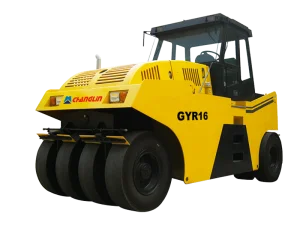





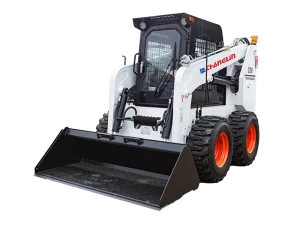

Global Commercial Status & Industrial Landscape of Backhoe Breakers
In modern civil engineering, urban utility development, rock trenching, and concrete demolition, the hydraulic backhoe breaker (hydraulic hammer attachment) serves as an essential force-multiplier. As global infrastructure initiatives expand across emerging markets in Southeast Asia, Sub-Saharan Africa, Latin America, and the Middle East, procurement managers facing stringent deadlines require high-durability, factory-direct hydraulic breakers that maintain optimal kinetic transfer efficiency without straining carrier hydraulics.
Modern backhoe loaders (operating between 3 to 12 metric tons) demand specialized hydraulic breaking attachments. Unlike massive 40-ton excavator hammers designed exclusively for open-pit mining benching, a backhoe breaker must balance high strike frequencies (400–900 BPM) with precise oil flow rates (40–90 L/min). This ensures the carrier's hydraulic pump does not suffer from thermal cavitation or excessive backpressure.
The industrial demand for high-tier manufacturers and factory-direct OEM suppliers has surged due to the total cost of ownership (TCO) metric. Fleet operators no longer look solely at the purchase price; they calculate cost-per-cubic-meter of fractured rock. Direct factory procurement ensures that replacement chisels, seal kits, accumulators, and control valves are manufactured under ISO9001 and CE certifications, eliminating intermediate distributor markups and guaranteeing structural metallurgy compliance.
Hydraulic Architecture & Impact Transfer Mechanics
Understanding the internal physics: Nitrogen chamber buffering, piston stroke kinetic energy, and hydraulic flow-matching mechanics.
Nitrogen (N2) Gas Energy Chamber
Combines hydraulic oil pressure with compressed nitrogen gas back-pressure to maximize impact energy per blow. The top N2 chamber acts as a kinetic energy accumulator, accelerating the internal piston downward to achieve maximum energy transfer into the tool bit.
Anti-Blank Firing System
Integrated hydraulic cushion valves prevent piston contact when the tool chisel is not pressed firmly against rock or concrete. This protects the tie-rods, retainer pins, and outer shell housing from stress fractures caused by idle strikes.
Vibration Damping Polyurethane Buffers
Heavy-duty synthetic polyurethane vibration dampening pads absorb high-frequency shockwaves reflected back from the substrate. This prevents damaging vibration transmission to the backhoe boom, pins, and operator cabin.
Technical Performance & Carrier Compatibility Matrix
| Breaker Class / Model Spec | Carrier Weight (Tons) | Operating Pressure (Bar) | Oil Flow Range (L/min) | Impact Rate (BPM) | Chisel Dia. (mm) | Primary Application |
|---|---|---|---|---|---|---|
| Light Utility (BHB-450) | 2.5 – 4.5 Ton | 90 – 120 Bar | 25 – 45 L/min | 700 – 1200 BPM | 45 mm | Urban Asphalt Cutting & Utility Trenching |
| Standard Workhorse (BHB-680) | 4.5 – 7.0 Ton | 110 – 140 Bar | 40 – 70 L/min | 500 – 900 BPM | 68 mm | Reinforced Concrete & Road Demolition |
| Heavy Duty (BHB-850) | 7.0 – 10.0 Ton | 120 – 150 Bar | 50 – 90 L/min | 450 – 800 BPM | 85 mm | Hard Rock Trenching & Foundation Excavation |
| Mining & Quarry (BHB-1000) | 10.0 – 14.0 Ton | 130 – 170 Bar | 80 – 120 L/min | 350 – 650 BPM | 100 mm | Secondary Bouldering & Heavy Demolition |
Real-World Operational Application Scenarios
Urban Municipal Utility Trenching
In congested city environments where space constraints prohibit full-sized excavators, backhoe loaders equipped with silent-type box bracket breakers break up asphalt overlays and underlying concrete slabs with reduced noise emissions (below 85 dBA).
Aggregate Quarries & Secondary Breaking
Primary blasting in granite and limestone quarries frequently produces oversized boulders that jam primary jaw crushers. Backhoe breakers perform rapid secondary breaking at crushing stations, restoring aggregate throughput without secondary blasting hazards.
Permafrost & Sub-Zero Trench Excavation
In high-latitude regions (e.g., Northern Canada, CIS countries), winter ground freezing halts standard bucket digging. Specialized cold-weather alloy chisel breakers break through frozen clay and shale layers down to 1.5 meters.
Technology Roadmap & Future Development Trends
How next-generation intelligent hydraulic systems and material sciences are shaping the future of hydraulic breaker manufacturing.
1. IoT Telemetry & Smart Sensors
Integration of real-time stroke counters, hydraulic oil temperature monitors, and pressure vibration sensors connected via Bluetooth/4G. Fleet managers receive instant alerts when nitrogen gas pressure drops or when maintenance intervals are breached.
2. Auto-Greasing Integrated Channels
Built-in central lubrication channels deliver continuous high-temperature molybdenum grease directly to the upper and lower wear bushings during operation, reducing bushing friction and extending chisel life by up to 40%.
3. Vacuum Carburizing Heat Treatment
Transitioning from traditional salt-bath heat treatment to deep-case vacuum carburizing. This metallurgical process creates a micro-refined martensitic grain structure, achieving an outer hardness of 58–62 HRC while preserving high core toughness.
Macro B2B Buyer Procurement & Maintenance Framework
When selecting a manufacturer for backhoe breakers, commercial procurement teams must evaluate structural components beyond initial invoice cost. Below is the systematic evaluation protocol recommended for enterprise equipment managers:
Phase A: Hydraulic Circuit Auditing
Before ordering, verify the carrier's main relief valve setting (Bar) and auxiliary pedal flow capacity (L/min). Operating a hammer on an improperly adjusted auxiliary circuit leads to rapid oil breakdown, blown main seals, and internal cylinder scoring.
Phase B: Chisel Geometry Selection
Specify tool bits based on target substrate hardness:
- Moil Point: General demolition and trenching in soft/medium rock.
- Wedge (Flat): Sedimentary rock stratification, concrete trenching.
- Blunt Tool: Heavy crushing of massive granite or slag.
- Conical Point: Hard igneous rock penetration.
Phase C: Logistics & Spare Parts Buffer
Establish a 1:5 spare parts ratio for high-wear components. Every procurement package should include spare tie-rods, lower bushings, seal kits (Nok / Parker seals), charging kits, and nitrogen bottle adapters suited to destination standards.
Full-Line Construction & Earthmoving Equipment
Discover our factory-direct heavy machinery line-up certified for international export and site operations.







Frequently Asked Questions (FAQ)
Expert responses to critical procurement, installation, and troubleshooting queries for backhoe breaker attachments.
Matching requires aligning two key parameters: Oil Flow Rate (L/min) and Relief Valve Operating Pressure (Bar). Check your carrier’s auxiliary hydraulic output specs. If the carrier pump delivers 80 L/min at 160 Bar, select a breaker whose optimal operational window sits between 50–75 L/min and 130–150 Bar. Always adjust the carrier's main relief valve to 20–30 Bar above the breaker’s max operating pressure to prevent valve chatter.
Tie-rod fracture is primarily caused by blank firing (striking without resistance), loose tie-rod torque tension, or extreme side-prying with the chisel bit. Ensure tie-rods are torqued to factory specifications using a hydraulic torque wrench, enforce correct operator positioning (90-degree strike angle), and select breakers equipped with internal anti-blank firing mechanisms.
Chisel shank greasing should occur every 2 to 4 operating hours using dedicated high-temperature molybdenum disulphide grease. Check nitrogen accumulator pressure weekly using the factory-supplied test gauge. Replace oil seals every 600 to 800 operating hours or immediately upon detecting hydraulic oil weepage around the lower chisel bushing.
Factory-direct purchasing guarantees genuine metallurgical standards (certified 20CrMo piston and housing forging), eliminates intermediary price markups (saving 20–35% on TCO), allows custom OEM mounting bracket fabrication for specific backhoe quick-couplers, and ensures direct access to factory technical engineering support for valve calibration.