
Direct Factory Machine Catalog (Part I)
Explore our heavy-duty excavators, compaction equipment, and precision grading machinery ready for global export and fleet deployment.

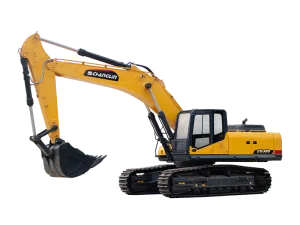

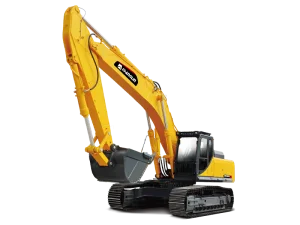




Global Backhoe Excavator Procurement & Market Dynamics
Understanding the macro-economic shifts, hydraulic advancements, and engineering criteria required when evaluating direct factory partners.
Direct OEM Sourcing vs. Dealer Markup
Bypassing regional distribution intermediaries yields up to 25-35% capital expenditure reduction per unit. Direct factory partnerships enable tailored hydraulic configurations, heavy-duty bucket customization, and direct warranty backstopping.
Hydraulic Architecture & Power Dynamics
Modern backhoe excavators utilize Load-Sensing Systems (LSS) combined with Variable Displacement Axial Piston Pumps. This ensures precise flow distribution to digging booms and stabilizer legs, minimizing power loss by 18%.
Regulatory & Emission Compliance
Global projects demand engines certified for US EPA Tier 4 Final / EU Stage V or China IV standards. Modern backhoe manufacturers integrate Selective Catalytic Reduction (SCR) and Diesel Particulate Filters (DPF) without sacrificing engine torque.
Engineering Architecture & Direct Sourcing Best Practices for Backhoe Excavators
When procurement managers, fleet engineers, and infrastructure contractors seek to Buy Backhoe Excavator Machinery from Factories, the decision extends far beyond structural price comparison. A backhoe excavator—combining front-loader material handling with rear articulated digging capabilities—serves as the versatile backbone for urban utility engineering, pipeline installation, highway maintenance, and quarry auxiliary operations.
1. Structural Frame Integrity & Kinematic Boom Design
The structural longevity of a backhoe excavator is dictated by the high-tensile steel composition of its chassis, loader arms, and rear excavator boom. Top-tier Chinese manufacturers employ robot-welded, box-section structural components fabricated from high-yield strength steel (such as Q345B or Hardox in high-wear zones). Key structural design aspects include:
- Curved Boom Design: Provides additional clearance over obstacle walls during deep trenching operations and minimizes transport height when stowed.
- Heavy-Duty Swing Castings: Nodular cast-iron swing pivots absorb torsional stress during high-torque lateral slewing under heavy earth loads.
- Stabilizer Leg Geometry: Vertical vs. wing-out (flip-over) stabilizers. Wing-out stabilizers offer wider stance stability on uneven terrain, whereas vertical drop-down legs minimize footprint in narrow municipal road lanes.
2. Power Core & Eco-System Thermodynamics
Engine selection defines fuel efficiency per ton of earth moved. Leading factories partner with world-class powertrain suppliers (such as Cummins, Perkins, Weichai, and Yuchai) to provide turbocharged diesel engines engineered for low-speed high-torque performance. Enhanced cooling packs featuring anti-clogging radiator fins and hydraulic-driven reversible fans ensure operational stability in ambient temperatures exceeding 50°C in Middle Eastern and African job sites.
| Performance Metric | Standard Utility Class (50-70 kW) | Heavy-Duty Production Class (75-110 kW) | Mining Support / Extreme Duty (>110 kW) |
|---|---|---|---|
| Operating Weight | 7,000 - 8,500 kg | 8,600 - 10,500 kg | 11,000 - 14,000 kg |
| Dig Depth (Extended) | 4.2 - 4.8 Meters | 5.2 - 5.8 Meters | 6.0 - 6.5 Meters |
| Bucket Dig Force | 50 - 62 kN | 65 - 82 kN | 85 - 105 kN |
| Hydraulic Flow Rate | 110 - 140 L/min | 150 - 185 L/min | 190 - 230 L/min |
| Primary Applications | Municipal utility, trenching, agriculture | Road construction, quarrying, pipeline work | Open-pit support, heavy foundation engineering |
3. Hydraulic Efficiency: Load-Sensing Systems (LSS)
The transition from fixed-displacement gear pumps to variable-displacement axial piston pumps governed by Closed-Center Load-Sensing System (CCLSS) technology represents a quantum leap in heavy equipment manufacturing. CCLSS matches pump output pressure and hydraulic oil flow precisely to the joystick demand. If an operator requires multi-function simultaneous movement—such as raising the boom while crowding the stick and curling the bucket—the valve spool prioritizes pressure distribution based on mechanical load, eliminating hydraulic stalling and lowering operational fuel burn by up to 22%.
4. Total Cost of Ownership (TCO) & Lifecycle Economics
Procurement professionals evaluating factory direct quotations must model TCO across a typical 8,000-hour operational lifecycle. TCO consists of three primary components:
- Initial Capital Expenditure (CAPEX): Factory direct purchasing reduces upfront cost by 20-30% compared to traditional regional dealer networks.
- Operating Expense (OPEX): Fuel consumption accounts for ~40% of total operational cost. Machines equipped with Eco-mode engine maps and auto-idle features yield substantial lifetime savings.
- Maintenance & Parts Availability: Standardized hydraulic seals, accessible filters, and interchangeability of ground engaging tools (GET) minimize downtime costs.
Industry Solutions & Localized Compliance Support
Adapting machinery configurations for regional climates, terrain harshness, and legal customs requirements.
Tropical & Desert Package
Enhanced dust filtration (sy-klone air pre-cleaners), high-capacity oil coolers, UV-resistant hydraulic hoses, and heavy-duty air conditioning units engineered for Africa, South America, and Middle East operations.
Extreme Cold & High Altitude
Engine block heaters, synthetic arctic hydraulic fluid, double-glazed cab glass, and high-pressure fuel injection systems tailored for high-altitude CIS regions, Central Asia, and northern latitudes.
Customs & International Certification
Complete compliance support including CE certificates, ISO 9001 quality management, EAC marks for Eurasian Economic Union, and OSHA-compliant ROPS/FOPS safety cab structures.
Technological Roadmap: The Next Era of Earthmoving
How electrification, telematics, and autonomous digging algorithms are reshaping heavy machine manufacturing.
Electrification & Zero Emissions
High-voltage Lithium Iron Phosphate (LFP) battery systems are enabling pure electric backhoe excavators. These zero-emission machines allow 8 hours of continuous operation, indoor tunnel digging, and zero local air contamination.
IoT Telematics & Fleet Analytics
Embedded 5G telematics hardware transmits real-time hydraulic pressure readings, fuel consumption maps, geo-fencing location alarms, and predictive wear notifications directly to fleet managers' dashboards.
Smart Grade & Autonomous Digging
Integrated 2D/3D GNSS grade control automatically prevents over-excavation by dynamically adjusting boom height and bucket angle, enabling less experienced operators to achieve millimeter accuracy.
Direct Factory Machine Catalog (Part II)
Select additional machinery models for earthmoving, road surfacing, grading, and site preparation.






Frequently Asked Questions (FAQ)
Essential questions answered by engineering specialists for B2B buyers, fleet directors, and equipment importers.
How does direct factory sourcing lower the total cost of ownership (TCO) for heavy equipment?
Direct factory sourcing eliminates distributor markups, saving 20% to 35% on the purchase price. Furthermore, direct collaboration with factory engineers allows buyers to request specific hydraulic, engine, and undercarriage configurations suited to their site conditions, minimizing premature wear and reducing lifetime operating expenses (OPEX).
What options are available for customizing backhoe excavator attachments?
Factories support a wide range of quick-coupler auxiliary hydraulic attachments, including hydraulic breakers, augers, trenching buckets, tilt-rotators, clamshell buckets, and timber grapples. Auxiliary hydraulic lines can be configured with dual-way flow control to handle high-demand attachments seamlessly.
What international emission certifications are provided for export orders?
Depending on the destination market, equipment can be supplied with engine certifications matching US EPA Tier 4 Final, EU Stage V, or China IV standards. For regions without strict emission mandates, Tier 2 and Tier 3 engine options are also available to accommodate varied fuel sulfur levels.
How is heavy machinery packaged and shipped globally?
Large machinery such as crawler excavators and heavy motor graders are shipped via Roll-on/Roll-off (Ro-Ro) or Break-Bulk vessels, or partially dismantled and secured in 40ft High Cube or Flat-Rack containers. Compact machinery and skid steer loaders fit into standard shipping containers to minimize freight costs.
What quality assurance tests are performed prior to factory dispatch?
Every unit undergoes strict Factory Acceptance Testing (FAT), including 100% hydraulic pressure testing, structural weld inspection via ultrasound, high-temperature cooling system stress tests, and a 5-hour operational field test covering digging, lifting, and travel functions. Third-party inspections (e.g., SGS, Bureau Veritas) are welcome.
What global after-sales and spare parts support is available?
We back our international machinery through a network of 300+ regional dealers and 650+ authorized service centers across 180+ countries. Fast-moving spare parts (filters, seal kits, ground engaging tools) are stocked regionally, and factory technicians provide remote telemetry diagnostics and field training.