
Featured Heavy Machinery & Infrastructure Equipment
High-performance heavy machinery built for concrete breaking, heavy civil engineering, compaction, and mining operations worldwide.








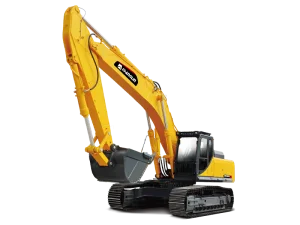
Concrete Excavator Engineering: Structural Integrity & Heavy Attachment Dynamics
Understanding the mechanical demands, hydraulic architecture, and alloy specifications required for heavy-duty concrete demolition, reinforced slab breaking, and foundation excavation.
High-Stress Boom & Dipper Structures
Excavating and breaking reinforced concrete exposes machine booms to severe torsional twist and high-frequency shock loading. Modern concrete-grade excavators utilize high-tensile steel (such as Q355B and Q690D welded structural plate) reinforced with internal baffle plates. Crucial stress concentration zones—including boom pivots, cylinder mountings, and stick ends—are cast using heavy steel elements rather than fabricated sheet metal, preventing micro-fractures under continuous hydraulic breaker operation.
Dual-Circuit High-Flow Hydraulics
Concrete crushing, shearing, and hammering require precise hydraulic regulation. Heavy excavator factories configure main pumps (such as Kawasaki or KPM systems) with positive-flow electronic hydraulic control (EHC). Dual auxiliary lines with high-pressure proportional valves allow simultaneous operation of rotation motors and heavy jaw crushers. Main system relief pressure is elevated to 34.3–37.0 MPa to drive heavy hydraulic hammers with minimal back-pressure buildup.
Information Gain Insight: Standard earthmoving excavators suffer from accelerated pin/bushing wear and hydraulic fluid degradation when operated with continuous demolition attachments. Direct OEM concrete excavators feature oil-cooler thermal capacity upgraded by 35%, dual-stage return oil filtration (down to 3 microns), and heavy-duty bucket cylinder guards to handle concrete rebar snapback and falling rubble.
Concrete Excavator Technical Roadmap & Future Evolution
How next-generation power electronics, automated attachment management, and structural telemetry are revolutionizing heavy concrete processing.
Phase 1: Electrification & High-Voltage Battery Architectures (2025–2026)
Transitioning urban concrete demolition fleets from diesel to tethered high-voltage electric and lithium-iron-phosphate (LFP) battery systems. Zero local emissions enable indoor structural removal, subway tunnel expansion, and urban nighttime concrete crushing without noise constraint violations.
Phase 2: Intelligent Attachment Flow & Pressure Auto-Tuning (2026–2028)
Integration of RFID-tagged quick-couplers and electro-hydraulic main control valves. The excavator automatically recognizes whether a hydraulic breaker, concrete pulverizer, shear, or bucket crusher is attached, auto-adjusting hydraulic flow rates, relief pressure presets, and joystick sensitivity within milliseconds.
Phase 3: Real-Time Structural Telemetry & Anti-Tip Stabilization (2028–2030)
Deploying strain-gauge sensors embedded directly into the boom welding seams and undercarriage frame. Real-time telemetry warns operators of fatigue limits, preventing boom cracking while dynamic load-moment indicators prevent tip-overs during heavy high-reach structural concrete shearing.
| Excavator Weight Class | Concrete Application Scope | Recommended Breaker Weight | Hydraulic Flow Requirements | Structural Steel Grade |
|---|---|---|---|---|
| 15 – 22 Ton (Medium) | Bridge deck removal, urban pavement breaking, trenching | 1,200 - 1,800 kg | 110 - 160 L/min | Q355B High-Strength Alloy |
| 30 – 38 Ton (Heavy) | Heavy industrial foundation breaking, reinforced column shear | 2,200 - 3,200 kg | 200 - 280 L/min | Q690D Weldable Structural Steel |
| 45 – 50 Ton (Ultra-Heavy) | Quarry concrete processing, mass dam demolition, rock crushing | 3,500 - 4,500 kg | 320 - 400 L/min | HG785 High-Yield Quenched Steel |
Macro-Industry Solutions for Heavy Infrastructure Projects
Tailored machine configurations engineered to solve demanding operational bottlenecks across international infrastructure, municipal, and industrial sectors.
Highway Overpass & Bridge Demolition
High-reach concrete demolition requires steady hydraulic pressure at max boom extension. Our factory fits specialized 2-piece demolition booms, heavy counterweights, and FOPS/TOPS certified cabs to protect operators against falling concrete fragments.
Ports, Landfills & Concrete Recycling
Processing crushed concrete stockpiles demands rapid duty cycles. Integrating magnetic separators and bucket crushers directly onto crawler excavators turns concrete waste into reusable aggregate on site, drastically lowering transport expenses.
Subsurface Heavy Foundation Engineering
Deep foundation digging through concrete slurry walls and retaining pilings requires heavy breakout torque. High-displacement swing motors and heavy-duty slewing bearings ensure zero drift under offset digging loads.
China Factory 4.0: Modern Manufacturing & Supply Chain Resilience
Leveraging state-of-the-art robotic assembly, stringent metallurgy testing, and vertical supply chain control at our Changzhou manufacturing hub.
Automated Robotic Welding & Ultrasonic Testing
Every boom seam and chassis joint undergoes automated multi-pass arc welding inside temperature-controlled robotic cells. Weld integrity is verified using 100% ultrasonic non-destructive testing (NDT) and magnetic particle inspection, eliminating internal voids before machines reach assembly.
Robust Supply Chain & Component Traceability
By pairing local steel manufacturing ecosystems with globally certified hydraulic power units, our factory minimizes supply disruption. Complete MES (Manufacturing Execution System) tracking assigns digital barcodes to engine blocks, main pumps, and valve banks for long-term trace-ability.
Global Fleet Procurement Matrix & TCO Optimization
Maximizing Return on Investment (ROI) through total cost of ownership modeling, fuel consumption management, and lifecycle wear component planning.
Calculated TCO Reduction Strategy
For international contractors and rental fleet operators, capital machinery cost represents only 25–30% of total lifecycle expenditure. Fuel consumption, bucket tooth replacement, breaker chisel wear, and unscheduled hydraulic downtime account for the remainder.
Buying direct from a certified Chinese excavator manufacturer provides key financial advantages:
- CapEx Reduction: Save 30% to 45% compared to Tier-1 Western brands while maintaining equivalent hydraulic power and engine reliability.
- Standardized Components: Utilization of Cummins, Weichai, Perkins, and Yanmar engine platforms ensures local spare parts availability worldwide.
- Consolidated Wear Parts Logistics: Standard factory pricing on hammer chisels, track links, and bucket teeth reduces long-term maintenance budgets.
Lifecycle TCO Breakdown
Localization Support & Global Regulatory Compliance
Configuring heavy machinery to satisfy regional environmental norms, climate demands, and safety certifications across North America, Europe, Africa, and Asia.
Emission Norms (CE / EPA Tier 4 / Stage V)
We configure engines based on target market regulations. EU Stage V and US EPA Tier 4 Final engines feature DPF and DEF/AdBlue SCR systems. For non-regulated markets in South America, CIS, and Africa, Tier 2/Tier 3 mechanical injection engines are supplied to handle variable diesel fuel quality.
Extreme Climate Engineering Packages
Whether operating in extreme desert heat (+50°C) or freezing polar zones (-40°C), machines are optioned with oversized aluminum radiators, independent engine fuel pre-heaters, arctic-grade hydraulic seals, and double-glazed climate control cabs.
Custom Hydraulic Quick-Attach Couplers
Factory custom-fits international standard quick-coupler geometries (ISO 13031 / Nordic standard). Hydraulic port configurations are supplied with SAE flange or metric thread options to match local hammer and pulverizer hose connections.
Explore Earthmoving, Grading & Material Handling Fleets
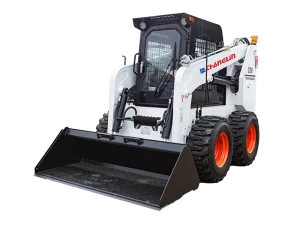
Factory-direct crawler excavators, motor graders, wheel loaders, track skid steers, bulldozers, and vibratory road rollers.




Concrete Excavator Buying & Factory Direct Inquiry Guide
Answers to common engineering, commercial, shipping, and maintenance inquiries from global equipment buyers.