
Featured Earthmoving & Compaction Equipment
Direct factory configurations optimized for heavy earthworks, highway construction, and site preparation.






Global Construction Machinery Sourcing Shifts & Factory Direct Economics
How tier-one contractors and mining operators are restructuring procurement strategies to mitigate supply chain risk, lower fleet capital expenditure, and maximize lifecycle efficiency.
Global Infrastructure Growth Drives Demand
Megaprojects across Africa, Central Asia, Latin America, and the Middle East demand heavy earthmoving fleets capable of continuous high-load operations under severe environmental conditions. High-efficiency excavators and heavy motor graders represent the core capital assets required for primary site development.
OEM vs. Trading House Cost Structure
Procuring directly from established OEM factories eliminates intermediary markups of 15% to 30%. Direct factory contracts grant enterprise buyers customized hydraulic configurations, specialized duty-cycle engineering, and direct engineer-to-engineer technical support channels.
ESG & Carbon Neutrality Pressures
International environmental mandates demand reduced carbon output per moved metric ton. Chinese machinery giants lead the industrial deployment of zero-emission electric wheel loaders and fuel-efficient electronic common rail (ECR) diesel engines compliant with global emissions standards.
| Procurement Channel | Initial Asset Cost | Customization Capability | Spare Parts Availability | Engineering Support | TCO Risk Profile |
|---|---|---|---|---|---|
| Direct OEM Factory Sourcing | Factory Benchmark (Lowest) | Full OEM/ODM Engine & Hydraulics | Direct Parts Distribution (Centralized) | Dedicated Factory Field Engineers | Optimized Low Risk |
| Regional Machinery Dealers | High (+20-35% Markup) | Limited to In-Stock Units | Subject to Regional Stock Levels | Dealer Service Technicians | Moderate (High CapEx) |
| Independent Trading Companies | Moderate (+10-20% Markup) | None (Standard Off-the-Shelf) | Third-Party Sourcing Delays | No Direct Technical Backing | High (Service Gaps) |
"To achieve optimum Total Cost of Ownership (TCO) in modern civil engineering and mining operations, procurement managers must evaluate equipment manufacturers not merely on acquisition price, but on hydraulic efficiency, structural metallurgical integrity, telematics capability, and life-cycle spare parts availability."
Buyer Intent Mining: Evaluating Heavy Machinery Manufacturers
Detailed procurement matrix addressing specific enterprise requirements across open-pit mining, highway infrastructure, municipal sanitation, and heavy earthmoving sectors.
Key Technical Sourcing Criteria
When searching to Buy Construction Machinery Manufacturers & Factories, commercial buyers prioritize verified parameters over sales rhetoric. Primary technical benchmarks include engine net power (kW/HP), operating weight (metric tons), bucket/blade payload capacities, main pump hydraulic flow (L/min), and operating pressure (MPa).
Total Cost of Ownership (TCO) Metrics
TCO calculation encompasses capital purchase price, hourly fuel or electricity consumption, scheduled preventive maintenance intervals, wear-part life expectancy, structural warranty coverage, and projected machine residual value after 10,000 operational hours.
| Equipment Category | Primary Industrial Application | Key Performance Indicators (KPIs) | Critical Procurement Checks |
|---|---|---|---|
| Crawler Excavators (22T - 38T) | Heavy Excavation, Trenching, Quarry Mining | Digging Force (kN), Bucket Capacity (m³), Cycle Time | Kawasaki/Handok Hydraulics, High-tensile Boom Welding |
| Heavy Motor Graders (130HP - 220HP) | Highway Base Layer, Mining Haul Roads, Slope Leveling | Blade Drawbar Pull, Moldboard Reach, Steering Radius | No-Spin Differential Lock, Hydraulic Circle Turn Torque |
| Vibratory Road Rollers (12T - 20T) | Sub-grade Compaction, Asphalt Paving, Dam Baselines | Static Linear Load (N/cm), Amplitude & Frequency | Dual-frequency Vibration System, Drum Shell Thickness |
| Heavy Landfill Compactors (20T - 23T) | Municipal Solid Waste (MSW) Densification | Compaction Force per Tooth, Refuse Density Gain | Cleated Steel Wheels, Underbody Protective Shielding |
| Crawler Bulldozers (220HP - 320HP) | Bulk Earthmoving, Land Clearing, Mine Overburden | Blade Capacity (m³), Ground Clearance, Underwear Rate | Modular Transmission, Heavy-Duty Sealed Track Linkage |
Technical Roadmap: Future Outlook of Construction Machinery (2025–2030)
Investigating the engineering innovations transforming earthmoving assets: electro-hydraulic systems, battery electric powertrains, autonomous machine guidance, and telematics intelligence.
1. Electrification & Zero Emissions
The operational pivot from diesel to Battery Electric Vehicles (BEV) is accelerating in closed environments such as mines, tunnels, and urban centers. Electric wheel loaders and excavators deliver instantly available torque, eliminate local tailpipe emissions, reduce cabin noise levels below 68 dB(A), and achieve up to 60% savings in energy costs per hour compared to conventional diesel power units.
2. Electro-Hydraulic Load Sensing (EHS)
Modern excavators and motor graders incorporate electronically controlled main hydraulic pumps coupled with load-sensing main control valves (MCV). By dynamically matching hydraulic oil flow directly to task resistance, internal energy losses are minimized, resulting in a 10% to 15% reduction in overall fuel consumption while maintaining rapid cycle response times.
3. 3D GNSS Autonomous Machine Control
Motor graders and excavators are increasingly integrated with dual-antenna 3D GNSS satellite positioning and inertial measurement units (IMU). Automatic blade adjustments allow operators to achieve millimeter-accurate sub-grade tolerances in a single pass, eliminating manual grade-checking, cutting rework rates by 40%, and significantly boosting daily production rates.
4. IoT Telematics & Predictive Maintenance
Factory-integrated CAN-bus telematics modules transmit real-time diagnostic parameters to centralized cloud servers. Fleet managers remotely monitor engine load factors, hydraulic fluid thermal profiles, fuel usage metrics, and fault codes. Predictive AI analytics flag abnormal vibration or thermal spikes prior to mechanical failure, transforming unscheduled downtime into planned maintenance.
5. Advanced Metallurgy & Structural FEA
Structural booms, arms, and chassis frames undergo Finite Element Analysis (FEA) computer modeling to eliminate stress concentration points. Fabricated using high-strength low-alloy (HSLA) structural steel (such as Q690D/Hardox wear plates), critical load-bearing structures deliver extended fatigue lifespans under severe quarry and mining shock loads.
E-E-A-T Sourcing Standard: How to Audit Construction Machinery Factories
A rigorous five-stage quality assurance protocol recommended for procurement auditors evaluating Chinese heavy machinery manufacturing facilities.
Raw Material & Sub-Component Validation
Auditing raw steel certifications (EN 10204 3.1/3.2), ultrasonic flaw detection on heavy castings, and verify key tier-one component partnerships (e.g., Cummins, Weichai, Kawasaki, Rexroth, ZF, and Dana powertrains).
Robotic Fabrication & Weld Integrity
Inspecting multi-axis robotic welding stations for continuous boom and frame assembly. Verifying 100% non-destructive testing (NDT) via Magnetic Particle Inspection (MPI) and Radiographic Testing (RT) on structural welds.
Hydraulic Contamination & Assembly Control
Verifying clean-room assembly environments for hydraulic pumps, control valves, and cylinders. Checking fluid filtration standards to ISO 4406 cleanliness codes (target 16/14/11) to prevent premature valve scoring.
Full Load Operational Testing & Benchmarking
Every machine unit must complete 4 to 8 hours of continuous field testing on factory proving grounds. Checking hydraulic relief valve pressures, travel torque, braking distance, thermal stabilization, and acoustic levels.
Pre-Shipment Inspection (PSI) & Export Packing
Conducting anti-corrosion marine coating protection, wax sealing for ocean transit, shrink wrapping cabs, securing tracks/wheels on flat-racks or RoRo vessels, and archiving complete inspection documentation.
Tailored Machinery Packages by Industrial Sector
Matching specialized machine configurations to specific ground conditions, ambient temperatures, and operational duty cycles.
Open-Pit Mining & Quarries
High-tonnage heavy excavators (such as the 38T ZG385) combined with heavy-duty bulldozers (320HP YD320) and mining motor graders (PY220H). Configured with reinforced rock buckets, heavy track guards, high-capacity cooling packages, and dual air pre-cleaners for extreme dust environments.
Highway & Infrastructure Projects
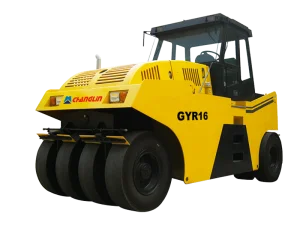
Precision motor graders (PY180H / PY130H) matched with heavy vibratory rollers (20T GYS20J / 16T GYR162) and 22T crawler excavators (ZG220 / ZG220N). Delivers consistent grade smoothness, uniform soil density achievement, and fast trench excavation along transport corridors.
Municipal Solid Waste (MSW) Landfills
Specialized landfill compactors (GYL233 / GYL203) engineered with high-impact steel cleated wheels, front trash blades, enclosed underbody armor, and positive-pressure cab filtration systems with activated carbon to protect operators from toxic landfill gases.
International Logistics, Local Compliance & After-Sales Support
Securing seamless cross-border heavy equipment delivery, customs clearance, localized operator training, and 24/7 spare parts availability.
Optimized Ocean Freight Logistics
Flexible shipping arrangements via Roll-on/Roll-off (RoRo) vessels, Break-Bulk, or specialized Flat Rack (FR) containers. Compact equipment models (skid steers, mini excavators) are optimized for standard 40ft High-Cube container loading to reduce freight expenditure.
Global Certification & Compliance
Every factory production line conforms to international certification benchmarks including ISO 9001 Quality Management, ISO 14001 Environmental Compliance, European CE Safety Certification, Eurasian EAC Approval, and North American EPA / European Stage V engine emission mandates.
Rapid Lifecycle Spare Parts Supply
Global logistics hubs maintain strategic spare-part inventories (hydraulic pumps, filters, seal kits, ground-engaging tools). Emergency consignment orders ship via fast air freight within 48 hours to minimize job-site downtime.
Heavy Excavation, Grading & Landfill Machinery
High-torque bulldozers, heavy motor graders, single and double drum road rollers, and high-density landfill compactors.





Frequently Asked Questions: Sourcing from Heavy Machinery Manufacturers
In-depth technical and operational answers to key procurement queries faced by commercial equipment buyers worldwide.
What are the key financial and operational advantages of procuring construction machinery directly from Chinese factories versus local dealerships?
Direct factory procurement eliminates regional dealer distribution markups (typically 20% to 35%), allowing buyers to allocate capital toward higher specification machines or expanded spare-parts packages. Direct OEM contracts enable customized hydraulic configurations, specialized extreme-climate cooling packages (-30°C to +50°C), factory-installed telematics, and direct lines of technical communication with factory design engineers for complex fleet deployments.
How do factory engineers customize crawler excavators and motor graders for high-altitude or extreme dust environments?
For high-altitude applications (exceeding 3,000 meters above sea level), factory engineers calibrate turbocharger boost profiles and fuel injection timing to compensate for lower air density. High-dust quarry and desert environments receive dual-stage cyclonic air pre-cleaners, heavy-duty radiator fin spacing with reversible fan blowers, and reinforced seals on all hydraulic cylinders and rotary joints to prevent particulate contamination.
What specific quality control and proving-ground benchmarks are enforced before machinery export?
Prior to shipment, every unit undergoes rigorous testing on factory proving grounds. This includes hydraulic system pressure testing up to maximum relief valve limits, 100% non-destructive weld testing (NDT), brake distance validation under maximum load, thermal stability runs across 4 to 8 continuous operating hours, and cabin acoustic isolation measurement. Comprehensive pre-delivery inspection (PDI) certificates and operational video records are archived for client verification.
How does the total cost of ownership (TCO) of electric wheel loaders compare with conventional diesel loaders over 10,000 operational hours?
While electric wheel loaders feature a higher initial capital expenditure (typically 30% to 40% higher due to lithium-iron-phosphate battery technology), their operating costs are dramatically lower. Electric loaders eliminate internal combustion engine maintenance (no engine oil, filters, fan belts, or fuel injection servicing) and reduce energy cost per hour by up to 60%. Most enterprise operators achieve complete CapEx parity and payback within 2.5 to 3.5 years under two-shift daily operations.
What international shipping methods are recommended for heavy machinery export to balance cost and asset safety?
Heavy units such as 38T excavators, 320HP bulldozers, and 20T road rollers are typically shipped via Roll-on/Roll-off (RoRo) or Break-Bulk vessels to prevent mechanical disassembly. Medium excavators and motor graders can be shipped on Flat Rack (FR) containers. Compact equipment, including skid steer loaders and mini excavators, is efficiently packaged in standard 40ft High-Cube (HC) containers, minimizing sea freight expenditure per unit.
What structural warranties and long-term spare-parts commitments are provided by leading Chinese heavy machinery manufacturers?
Standard OEM warranty coverage includes 12 months or 2,000 operational hours (whichever occurs first) on major structural components (boom, frame, chassis) and core powertrain elements (engine, hydraulic main pump, transmission, main control valve). Leading manufacturers guarantee spare-parts availability for a minimum of 10 to 15 years post-production, backed by global parts distribution hubs capable of dispatching critical components within 24 to 48 hours.
How do Landfill Compactors (e.g., GYL233 / GYL203) differ structurally from standard Vibratory Road Rollers?
Landfill compactors are engineered specifically for municipal solid waste (MSW) management. Unlike smooth or padfoot vibratory road rollers designed for soil/asphalt, landfill compactors utilize heavy steel wheels fitted with specialized cleated teeth that shred and crush refuse to achieve high density. They feature wide front trash blades, heavy underbody protection plates, high ground clearance, and specialized positive-pressure air filtration to resist acidic and toxic waste environments.
What telemetry and 3D machine control integrations are available for motor graders working on precision highway projects?
Motor graders (such as the PY220H and PY180H series) are factory-prepared for plug-and-play integration with major 3D GNSS satellite grade-control systems (Trimble, Leica, Topcon). Electro-hydraulic proportioning valves allow automated blade position control directly from 3D digital terrain models (DTM), enabling fine grading tolerances within +/- 5mm while reducing manual surveying costs and material over-consumption.