
Featured Industrial Construction Equipment
Explore heavy-duty excavators, loaders, graders, and compactors configured for high-hour durability across global earthmoving sites.


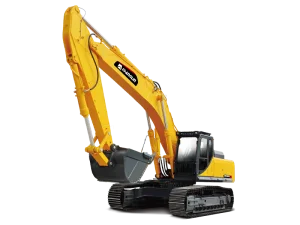
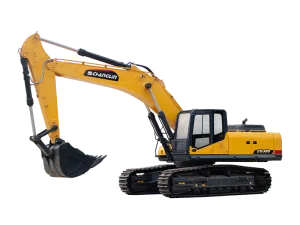




Strategic Procurement Analysis for Heavy Excavation Machinery
Navigating complex global equipment sourcing demands an intimate understanding of manufacturer mechanical design, hydraulic efficiency, and long-term asset value retention.
In the evolving landscape of global infrastructure, mining, and urban civil engineering, selecting the right crawler backhoe manufacturer (commonly referred to internationally as hydraulic crawler excavators or track-mounted backhoes) represents one of the most critical procurement decisions for fleet managers, EPC contractors, and equipment distributors. Operating under punishing ambient conditions—ranging from sub-zero permafrost in CIS regions to high-temperature, high-dust environments in Sub-Saharan Africa and the Middle East—heavy machinery must deliver absolute mechanical reliability, precise hydraulic response, and low total cost of ownership (TCO).
As modern search engines shift toward semantic search and strict E-E-A-T guidelines, enterprise buyers no longer rely on superficial manufacturer claims. Instead, procurement directors examine verified engineering metrics: main pump hydraulic flow rates, swing torque density, structural steel tensile grades (such as Q350D/HG785), thermal dissipation capacity, and localized spare parts supply chain architecture. This whitepaper provides a comprehensive, technical deep-dive into purchasing crawler excavators and heavy earthmoving machinery from top-tier original equipment manufacturers (OEMs).
Engineering Architecture & Future Outlook
How next-generation electro-hydraulic load sensing, structural finite element analysis, and powertrain electrification are transforming crawler excavator performance.
Electro-Hydraulic Load Sensing (EHLS)
Traditional mechanical hydraulic control valve systems often suffer from energy throttling losses exceeding 20%. Next-generation crawler backhoes integrate electronically controlled main pumps (such as Kawasaki K3V/K7V series) coupled with positive flow main control valves (MCVs). By continuously matching pump displacement with real-time joystick pilot signals, fuel efficiency improves by up to 18% while smoothing compound digging operations.
Powertrain Decarbonization & Electrification
As global carbon mandates tighten, crawler excavators are experiencing a dual-path powertrain evolution. Heavy-duty diesel platforms incorporate Stage V / US Tier 4 Final ultra-low emission engines with EGR, DPF, and SCR exhaust aftertreatment. Simultaneously, high-capacity lithium iron phosphate (LFP) electric models (such as 50-ton electric loaders and medium electric excavators) provide zero local emissions, reduced noise, and lower energy cost per operating hour in tunnel and mining sites.
Structural Finite Element Analysis (FEA)
Heavy excavator booms, arm structures, and X-frame lower undercarriages bear multi-axial impact loads during severe rock ripping and mining operations. Advanced manufacturers utilize 3D non-linear FEA simulation software to optimize weld seam placement, increase steel plate thickness at high-stress concentrations, and utilize robotically welded heavy structural steel casting hubs, ensuring a minimum structural design life exceeding 10,000 working hours.
| Excavator Tonnage Class | Typical Engine Output | Hydraulic Main Pump Flow | Bucket Breakout Force | Target Operational Duty Cycle |
|---|---|---|---|---|
| Compact / Mini (1.5t – 8t) | 15 kW – 45 kW | 60 – 160 L/min | 15 kN – 55 kN | Urban utilities, landscaping, residential foundation trenching |
| Medium Crawler (13t – 25t) | 75 kW – 135 kW | 2x 120 – 2x 240 L/min | 95 kN – 160 kN | Highway infrastructure, pipeline installation, general earthmoving |
| Heavy Construction (30t – 40t) | 190 kW – 230 kW | 2x 290 – 2x 360 L/min | 220 kN – 270 kN | Mass earthworks, quarry loading, deep foundation excavation |
| Severe Mining (45t – 90t+) | 280 kW – 400+ kW | 2x 380 – 2x 500 L/min | 320 kN – 480+ kN | Open-pit mining overburden removal, heavy granite blasting rock loading |
Macro-Industry Integrated Earthmoving Solutions
Matching specialized machinery specs to the precise working requirements of global engineering projects.
Mining & Heavy Quarry Extraction
Open-pit mines demand continuous 24/7 operating uptime under severe abrasion and high impact loading. Mining-class crawler backhoes (such as 38-ton to 48-ton heavy excavators) are equipped with reinforced rock buckets featuring anti-wear side cutters, HARDOX floor lining, heavy-duty track guard guides, and dual-stage oil-bath pre-cleaners. Paired with heavy motor graders and dump fleets, these units maximize bank-cubic-meter (BCM) hourly throughput.
Highways & Belt-and-Road Infrastructure
Linear road construction requires versatile fleet orchestration combining medium crawler excavators for slope grading and ditch cleaning, heavy wheel loaders for aggregate stockpile loading, motor graders for sub-base levelling, and vibratory road rollers for soil compaction. Modern manufacturers provide unified telemetry systems across mixed fleets, allowing site engineers to track fuel burn, working hours, and machine location in real time.
Municipal Waste Management & Landfill Compactors
Landfill operations represent one of the harshest environments for heavy machinery due to corrosive gases, airborne debris, and low traction. Purpose-built heavy landfill compactors equipped with specialized steel tooth drums, trash blades, full-underbody protective guarding, and high-efficiency cab air filtration units work alongside crawler excavators to crush, spread, and densify municipal solid waste, extending landfill cell life expectancy.
Harbor Bulk Handling & Industrial Logistics
At port terminals and steel mills, high-efficiency material transfer is vital. Electric wheel loaders and specialized long-reach crawler backhoes fitted with hydraulic grabs, clamshell buckets, or magnetic attachments handle iron ore, coal, scrap metal, and grain bulk. The transition to pure battery-electric drive systems dramatically reduces operational expenses by up to 60% compared to diesel fuel costs in localized fixed-cycle operations.
China Factory 4.0: Manufacturing Precision & Resilience
Inside state-of-the-art heavy machinery production bases combining intelligent robotics, rigorous quality testing, and global component sourcing.
China's heavy construction machinery manufacturing sector has undergone a massive transformation over the past decade. Industrial manufacturing hubs like Changzhou, Jiangsu have evolved into global epicenters of Industry 4.0 heavy machine production. Leading brands such as Sinomach-HI (Changlin) integrate advanced flexible robotic manufacturing systems, automated guided vehicles (AGVs), laser cutting centers, and intelligent assembly lines to deliver world-class machine quality at highly competitive price points.
Automated Robotic Welding & Machining
Booms, arms, and structural frames are fabricated using multi-axis Panasonic robotic welding stations. Ultrasonic flaw detection (UT) and magnetic particle testing (MT) are systematically applied to 100% of primary structural weld seams, eliminating human error and internal stress fractures under high fatigue loads.
Global Tier-1 Component Integration
To ensure uncompromised global reliability, China's premier excavator factories partner with top-tier global component leaders. Heavy machines integrate Cummins, Isuzu, and Weichai engine units; Kawasaki, Rexroth, and Parker hydraulic systems; and ZF or Dana drivetrain transmissions, facilitating seamless global spare parts procurement.
End-to-End PDI Testing Protocol
Prior to ocean delivery, every single unit undergoes a stringent Pre-Delivery Inspection (PDI). Testing includes 100% full-load hydraulic pressure holding, thermal balance testing in high-temperature climatic chambers, track tension calibration, and multi-hour simulated digging cycles recorded via video for international clients.
B2B Corporate Sourcing & TCO Evaluation Matrix
A structured evaluation framework designed for enterprise equipment buyers, government tenders, and fleet lease operators.
When purchasing crawler excavators, motor graders, or wheel loaders in bulk, enterprise buyers must evaluate vendors using a holistic Total Cost of Ownership (TCO) methodology rather than solely focusing on initial FOB purchase price. Over a typical 5-year or 10,000-operating-hour machine lifecycle, initial capital expenditure (CAPEX) accounts for only 25-30% of total lifetime expenses. Fuel consumption, routine maintenance, operator efficiency, wear parts replacement, and unplanned downtime represent the remaining 70-75%.
Key Procurement Evaluation Checklist
- Hydraulic Efficiency Ratio: Liters of diesel consumed per bank-cubic-meter (BCM) of material moved.
- Undercarriage Wear Index: Hardness rating (HRC) of track shoes, rollers, idlers, and sprockets.
- Engine Emission Compliance: Stage V, Tier 4F, Tier 3, or Tier 2 configuration options tailored to local fuel sulfur content (ppm).
- Operator Ergonomic & Safety Rating: ROPS/FOPS certified pressurized cabin with low noise (dBA) and integrated HVAC systems.
- Shipping & Logistics Packaging: Machine demounting plans for containerization vs Flat Rack / RoRo shipping cost optimization.
5-Year TCO Cost Distribution Model
Localized Support, Compliance & Global Service SLAs
Assuring seamless machine operation across international jurisdictions through extensive dealer networks and rapid parts dispatch.
International Regulatory Certifications
Machines destined for international markets comply with strict regional safety and environmental standards. Standard certifications include European Union CE marking, Eurasian EAC certification, North American EPA compliance, and ISO 3471 / ISO 3449 ROPS/FOPS operator cabin safety standards, facilitating straightforward customs clearance.
24/48-Hour Spare Parts Dispatch SLA
Unplanned machine downtime directly impacts project profitability. Operating through a network of 300+ global dealers and regional spare parts hubs, wear items (bucket teeth, hydraulic seals, filters) and major components (hydraulic pumps, swing motors) are backed by a priority dispatch SLA to minimize site interruption.
Comprehensive Technical Training Programs
Recognizing that skilled operators and field service engineers prolong machine service life, manufacturers host structured service training classes both virtually and on-site. Modules cover hydraulic circuit troubleshooting, CAN-bus electrical system diagnostics, engine fault code analysis, and efficient machine handling techniques.
Heavy Earthmoving & Infrastructure Machinery
Complete your fleet with heavy crawler excavators, high-horsepower bulldozers, heavy wheel loaders, and precision motor graders.







Frequently Asked Technical & Procurement Questions
Clear, authoritative answers addressing machine customization, OEM factory audits, logistics, and warranty coverage.
What is the primary difference between a crawler backhoe and a crawler excavator?
In international heavy machinery terminology, the terms "crawler backhoe" and "crawler excavator" (or hydraulic track excavator) are largely synonymous when describing track-mounted hydraulic machines equipped with a boom, arm, and bucket that digs back toward the machine. While "backhoe loader" specifically refers to a tractor-style unit with a front loading bucket and rear digging arm, "crawler backhoe" in industrial B2B procurement refers to full 360-degree rotating hydraulic crawler excavators ranging from 13 tons up to 90 tons+ in operating weight.
How do I determine whether to buy a diesel vs. an electric machine platform?
Diesel platforms suit remote sites, greenfield infrastructure projects, long un-grid-connected shifts, and locations with fluctuating ambient temperatures. Conversely, pure electric machines (such as 5-ton electric wheel loaders and battery excavators) are optimal for fixed-location material yards, steel mills, ports, underground tunneling, and urban job sites where charging infrastructure exists, local emissions are restricted, and low operational sound levels (dBA) are mandated.
Can machines be customized for extreme arctic cold or high-altitude environments?
Yes. Factory engineering teams configure custom cold-weather packages including fuel pre-heaters, arctic hydraulic oil ratings (-40°C), block heaters, double-glazed cab glass, and high-capacity batteries. For high-altitude operations (above 3,000 meters in Andean or Central Asian mining zones), turbocharged engines are recalibrated with optimized air intake manifold ratios to prevent power derating.
What are the standard international trade terms and shipping methods for heavy equipment?
Standard export trade terms include FOB (Free On Board, China ports like Shanghai, Tianjin, Qingdao), CFR, and CIF. Shipping method depends on machine dimensions: compact units (skid steers, mini excavators) are shipped in 40ft High Cube containers; medium excavators and loaders are demounted into containers or shipped via Flat Rack; while large mining-class machines and bulldozers travel via Roll-on/Roll-off (RoRo) or Break-Bulk vessels.
What OEM/ODM customization and white-label options are available for global distributors?
Major Chinese original equipment manufacturers provide comprehensive OEM/ODM programs for qualified dealer networks and leasing companies. Options include custom paint color schemes, private label badging, specialized auxiliary hydraulic piping (breaker, shear, tilt-rotator circuits), GPS telematics integration, and localized operator manual translations in over 15 languages.
How can an international buyer initiate a factory audit or Pre-Delivery Inspection (PDI)?
Procurement teams are invited to conduct on-site factory audits at manufacturing bases in Changzhou, Jiangsu. Alternatively, buyers can engage third-party inspection agencies (SGS, TÜV Rheinland, Bureau Veritas) to witness static and dynamic testing, hydraulic pressure checks, paint thickness measurement, and functional trials prior to container loading and final payment release.