
Heavy Crawler Equipment & Earthmoving Machinery
Factory-direct crawler excavators, track-driven loaders, and heavy earthmoving machinery optimized for harsh mining, infrastructure, and quarrying environments.



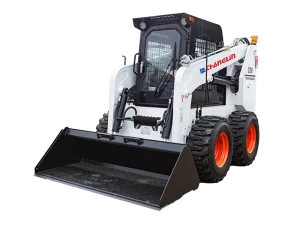




1. Global Crawler Machinery Procurement & Total Cost of Ownership (TCO) Matrix
Navigating heavy machinery procurement requires looking beyond nominal purchase prices to evaluate lifetime mechanical availability, thermal endurance, and component wear rates.
In modern industrial earthmoving, heavy civil infrastructure, and open-pit mining operations, selecting the right crawler equipment manufacturer and factory direct partner is a pivotal financial decision. Track-driven machinery—encompassing crawler hydraulic excavators, track bulldozers, crawler drill rigs, and specialized tracked loaders—represents the operational backbone of high-load job sites. Unlike wheeled counterparts, crawler machinery is engineered specifically to convert massive engine torque into linear tractive effort over unstable, muddy, rocky, or ultra-steep terrain.
When enterprise procurement teams evaluate global OEMs and Chinese manufacturing facilities, the primary benchmark must be Total Cost of Ownership (TCO) calculated over a 10,000-to-15,000 operating hour lifecycle. TCO comprises three distinct pillars: Initial Capital Expenditure (CapEx), Operational Expense (OpEx—dominated by fuel burn rate and track shoe replacement), and Mechanical Availability Factor (MAF). Factory-direct sourcing from established Chinese industrial groups like Sinomach-HI provides significant CapEx relief (often 30% to 45% lower than traditional Western OEMs) without sacrificing high-end structural fatigue resistance or hydraulic power density.
A machine's true value isn't measured at delivery; it is measured in cost-per-ton of moved material. Optimizing main pump hydraulic efficiency, spool valve flow sharing, and track roller heat-treatment depth yields up to a 14% fuel reduction and extends undercarriage life by 2,500 hours.
Hydraulic System Power Density
Main hydraulic pumps running positive flow control deliver micro-second response to load resistance, matching engine power curves to eliminate engine lugging and excess thermal losses.
- Dual Variable Displacement Axial Piston Pumps
- Main Control Valve with Boom/Arm Energy Recovery
- Pilot Pressure Control for Millimeter Precision
Structural Steel Integrity
Heavy D-section track frames and robotic continuous-welded boom assemblies utilize high-tensile structural steel designed to withstand extreme torsional loads.
- Q690D / BS700 High-Yield Steel Plates
- Full Stress-Relieving Annealing Treatment
- Ultrasound non-destructive weld testing
Life-Cycle Maintenance Costs
Standardized component sourcing ensures replacement parts like filter elements, seals, track shoes, and bucket teeth are widely available and economically priced.
- Common-Rail Fuel Filtration with Water Separator
- Centralized Grease Manifolds for Slew Ring
- Extended 500-Hour Hydraulic Oil Filter Intervals
2. Chinese Factory Ecosystem & Tier-1 Global Component Integration
Modern heavy machinery manufacturing merges advanced domestic steel fabrication with globally recognized hydraulic and powertrain units.
China's heavy machinery production hubs—most notably in Changzhou, Jiangsu—have evolved from simple assembly lines into sophisticated, vertically integrated smart factories. Sourcing direct from a premier crawler equipment manufacturer grants global buyers direct access to advanced industrial processes: automated plasma plate cutting, multi-axis robotic boom welding, automated frame shot-blasting, and climate-controlled paint booths utilizing polyurethane anti-corrosion finishes.
A key strength of top-tier Chinese factories lies in their open architecture component strategy. By pairing heavy-duty structural frames forged in Changzhou with internationally proven powertrain and hydraulic assemblies, machines deliver elite operational reliability across global job sites:
Global Powertrain & Emission Compliance
Machinery built for international export offers customized engine configurations tailored to destination fuel standards and local regulatory requirements:
- Cummins & Weichai Engines: High-pressure common rail (HPCR) injection delivering high low-end torque.
- Emission Tier Alignment: Available in EU Stage V / US EPA Tier 4 Final with DPF+SCR, as well as robust Tier 2/3 mechanical variants for regions with high-sulfur diesel.
- Thermal Dissipation: Large-capacity aluminium radiator modules with variable-speed viscous fan clutches for ambient operation up to +55°C.
Precision Hydraulics & Drive Assemblies
Hydraulic efficiency dictates cycle speeds and fuel economy. Chinese manufacturing integrates industry-standard hydraulic packages:
- Kawasaki & Rexroth Main Pumps: High displacement efficiency with sub-10ms response to load fluctuations.
- Parker & KYB Valve Blocks: Ultra-fine spool tolerance minimizing internal oil leakage and thermal oil degradation.
- Nachi & Doosan Final Drives: Heavy-duty planetary gear reduction units delivering exceptional drawbar pull to crawler tracks.
3. Global Technical Compliance & Operational Footprint
Certified for worldwide deployment, meeting international safety, noise, emission, and structural standards across 180+ countries.
Deploying heavy machinery internationally requires absolute adherence to regional safety and regulatory frameworks. Every piece of crawler machinery built for export undergoes comprehensive factory benchmarking to earn recognized certifications including CE Marking (Europe), EAC (Eurasian Customs Union), OSHA-compliant ROPS/FOPS (North America/Global), and ISO 3471 / ISO 3449 structural verification.
Furthermore, customized environmental adaptations ensure machinery reliably ignites and operates without power loss across planetary weather extremes—ranging from freezing Siberian mines requiring engine block pre-heaters and synthetic hydraulic fluids, to high-altitude Andean copper pits where turbochargers compensate for lower atmospheric oxygen levels.
4. Undercarriage Architecture & Wear Component Management
The undercarriage accounts for up to 50% of a crawler machine's lifetime maintenance costs. Correct specification is vital to operational longevity.
Track Chain & Pins
Sealed and Lubricated Track (SALT) chains prevent internal abrasive grit from grinding track pins and bushings, dramatically reducing pitch elongation ("track stretch").
- Induction-Hardened Pin Rails (HRC 52-58)
- Synthetic Grease Injection with Polyurethane Seals
- Heavy-Duty Retaining Rings
Grouser Shoe Profiles
Selecting shoe width and grouser count dictates soil ground pressure (PSI) and penetration traction, avoiding unnecessary undercarriage stress.
- Triple Grouser: Low ground disturbance for soft soils & mud.
- Single/Double Grouser: Maximum penetration in hard rock.
- Heavy-Duty Armor: Impact-resistant manganese steel.
Rollers & Idlers
Forged steel bottom rollers, top carrier rollers, and heavy tensioning recoil springs absorb shock loads when traveling over jagged rocky terrain.
- Lifetime-Lubricated Duo-Cone Seals
- Deep Hardness Heat-Treatment Depth
- High-Capacity Hydraulic Track Adjusters
5. Industry Trends: Zero-Emission Electrification & Smart Telematics
The heavy machinery sector is undergoing a rapid transition toward battery-electric powertrains and 3D GPS-guided autonomous control systems.
As corporate ESG directives intensify and urban job sites enforce strict noise and exhaust thresholds, zero-emission heavy equipment is no longer theoretical. Advanced manufacturers now supply pure battery-electric wheel loaders (such as the ZL50EV) and tethered/battery electric crawler excavators. Powered by high-density Lithium Iron Phosphate (LFP) battery packs, these machines eliminate localized diesel emissions, reduce cabin noise levels below 68 dB(A), and cut energy costs per hour by up to 60% compared to internal combustion engines.
Simultaneously, crawler equipment is becoming fully connected via CAN-bus telematics and IoT fleet management systems. Integrated sensors monitor real-time hydraulic oil temperature, main pump pressures, fuel burn analytics, and track wear indicators. Fleet managers receive instant alerts for preventative maintenance while enabling 3D GPS grade control systems (Trimble/Leica compatible) for centimeter-level automated trenching and grading precision.
6. Tailored Applications across Extreme Job Sites
From high-tonnage mining quarries to dense municipal trenching, machinery configurations must match specific site conditions.
Hard-Rock Quarrying & Heavy Mining
Heavy crawler excavators (e.g., 36t to 50t class like ZG360 & ZG480) equipped with short booms, heavy-duty rock buckets, and full bottom track guards process high-density granite and iron ore efficiently.
Highway Infrastructure & Mass Earthmoving
Pairing 20t-class crawler excavators (ZG210/ZG220N) with heavy motor graders (PY180H/PY320T) delivers rapid subgrade preparation, drainage ditching, and precise layer compaction.
Landfills & Demolition Sites
Reinforced track frames, guarded cab glazing, high-mounted pre-cleaner air intakes, and specialized trash-compacting wheels ensure maximum uptime in harsh waste processing environments.
Additional High-Performance Construction Machinery
Explore our broader lineup of factory-direct heavy machinery available for worldwide export and custom OEM configuration.








7. Enterprise Buyer Frequently Asked Questions (FAQ)
Technical, commercial, and logistics considerations for global fleet directors sourcing crawler machinery direct from the factory.