
Featured Machinery Lineup: Earthmoving & Compaction
Direct factory equipment configurations engineered for mining, highway construction, and heavy municipal applications.








1. Macro-Industrial Analysis: Global Infrastructure Push & Heavy Crawler Machinery Demand
The global heavy machinery landscape is experiencing a structural paradigm shift driven by massive public infrastructure modernization, expanding open-pit mining operations, and large-scale land reclamation projects across emerging and developed markets. Procurement executives, engineering contractors, and mine operators seeking to buy crawler heavy equipment directly from qualified manufacturers and factories must evaluate machinery through a multi-faceted lens that extends beyond surface-level purchase price. Total machine efficiency, structural metallurgy, hydraulic pump displacement dynamics, and life-cycle spare parts availability now form the baseline for project profitability.
Crawler-tracked heavy machinery—including medium and large excavators, heavy-duty track dozers, specialized landfill compactors, and motor graders—serves as the foundational backbone for primary earthmoving. Unlike wheeled counterparts, crawler undercarriages distribute operating weights across extensive track contact areas, drastically reducing ground bearing pressure (measured in kPa/PSI). This structural characteristic enables uninterrupted operation in low-traction environments, soft alluvial soils, arctic tundra, and steep open-pit quarry gradients.
In modern heavy civil engineering—ranging from highway sub-base grading to high-volume mining overburden removal—the efficiency of primary excavators directly dictates truck loading cycle times and haulage economics. Matching bucket capacity to haul truck volumetric limits (aiming for the optimal 3-to-5 pass loading window) prevents bottlenecking at extraction faces. Direct factory collaboration allows procurement directors to customize track shoe widths (single, double, or triple grousers), boom arm lengths, and auxiliary hydraulic flow configurations precisely calibrated to job-site material density (tonnes per bank cubic meter).
SEO & Industry Gain Insight: Procurement directors who negotiate directly with OEM manufacturing facilities gain significant technical customization capabilities. Factory-direct sourcing enables custom hydraulic valve spool tuning, cold-weather package integration, and high-altitude engine turbocharger matching that third-party trading intermediaries cannot engineer.
2. Technical Deep Dive: Undercarriage Mechanics, Metallurgy & Hydraulic Architecture
The structural integrity of crawler equipment resides predominantly within its chassis and track frame assembly. Premium heavy equipment factories employ computer-aided Finite Element Analysis (FEA) to eliminate stress concentration points within X-frame structures and track roller frames. Understanding component-level metallurgy is essential for asset managers who are responsible for calculating maintenance reserves over a 10,000-hour machine lifespan.
| Equipment Subsystem | Engineering Specification Standard | Operational Advantage | Maintenance Target |
|---|---|---|---|
| Track Chain Assemblies | Sealed & Lubricated Tracks (SALT) with Polyurethane Seals | Prevents internal pin/bushing wear; reduces friction loss by 15% | Bushing turn at 4,000 - 6,000 operating hours |
| Main Hydraulic Pumps | Variable Displacement Axial Piston (Kawasaki/Rexroth architecture) | Load-Sensing System (LSS) delivers proportional flow on demand | Fluid analysis & filter change every 500 - 1,000 hours |
| Track Shoes / Grousers | Heat-Treated Boron Alloy Steel (Hardox 450 / NM400 equivalency) | Resists severe impact bending and abrasive ground wear | Visual inspection for grouser height wear limits |
| Final Drives & Planetary Gears | Two-Stage Planetary Gearbox with Integrated Swashplate Motors | Delivers massive rim-pull torque for steep incline climbing | Gear oil replacement every 1,000 operating hours |
| Structural Boom & Arm | High-Tensile Structural Steel with Internal Baffle Plates | Absorbs torsional twisting during heavy rock trenching | Ultrasonic weld integrity check during major overhaul |
Hydraulic system architecture represents the operational heart of modern excavators and track loaders. Advanced positive-control or negative-control hydraulic circuits synchronize main pump delivery with main control valve (MCV) spool displacement. This balance minimizes hydraulic fluid pressure drops across system elbows, curtailing thermal heat generation and lowering fuel consumption per moved ton of material by up to 12%. Furthermore, electro-hydraulic proportional pilot control allows operators to fine-tune attachment control sensitivity directly from cab touchscreens.
3. Global Commercial Dynamics & Total Cost of Ownership (TCO) Model
When international buyers evaluate crawler heavy equipment manufacturers and factories, total cost of ownership (TCO) serves as the primary metric of purchasing efficiency. TCO incorporates initial Capital Expenditure (CAPEX), routine Operational Expenditure (OPEX)—including fuel, operator wages, scheduled preventative maintenance, and unscheduled wear-parts replacement—alongside residual asset resale value.
Direct manufacturer sourcing significantly shifts the financial equation by eliminating multi-tiered distributor markups, which frequently add 15% to 30% to landed machine costs. Direct factory channels also streamline access to genuine OEM spare parts, reducing warranty claim lead times and accelerating parts fulfillment through centralized regional logistics nodes.
| TCO Cost Element | Percentage of Lifetime TCO | Optimization Strategy via Direct Factory Sourcing |
|---|---|---|
| Initial Machine Purchase (CAPEX) | 25% - 35% | Direct-from-factory pricing removes distributor margins; volume fleet discounts applied. |
| Fuel / Energy Consumption | 30% - 40% | Factory customization allows tier-matched engines (Stage V / Tier 4F) & eco-mode hydraulic tuning. |
| Preventative Maintenance & Wear Parts | 15% - 20% | Consolidated container shipments of wear items (teeth, track shoes, filters) at OEM wholesale rates. |
| Unscheduled Downtime & Repairs | 5% - 10% | Integrated telematics systems enable predictive diagnostic alerts, preventing catastrophic component failures. |
| Operator & Residual Asset Value | 10% - 15% | Ergonomic FOPS/ROPS certified cabs boost operator productivity; high structural quality retains resale value. |
4. Localized Application Scenarios: Engineered Solutions for Extreme Working Environments
Heavy equipment rarely operates in standardized ambient laboratory settings. Job sites range from sub-zero Siberian mining tracts to scorching Middle Eastern desert infrastructure projects and high-altitude Andean copper reserves. Leading crawler equipment factories design modular machine packages tailored to extreme local environments.
A. High-Altitude & Low-Oxygen Mining Sites (>3,500m)
Engineering Challenge: Atmospheric pressure drop reduces air density, leading to incomplete diesel combustion, engine derating, high exhaust gas temperatures (EGT), and hydraulic power degradation.
Factory Modification Package: Turbocharger matching with high-pressure ratio compressors, enlarged air-to-air intercoolers, dynamic altitude engine control unit (ECU) mapping, and dual-element cyclone air pre-cleaners.
B. Sub-Zero Arctic Environments (-40°C to -20°C)
Engineering Challenge: Hydraulic fluid thickening, seal embrittlement, diesel fuel gelling, and structural steel cold-shortness brittle fractures.
Factory Modification Package: Arctic grade low-viscosity synthetic hydraulic oils, electric block & fuel heaters, double-glazed heated cab glass, low-temperature resistant fluorosilicone O-rings, and Q690E steel track frames.
C. High-Ambient Desert & Tropical Heat (+50°C)
Engineering Challenge: Engine and hydraulic thermal overheating, radiator core clogging, UV-induced hose degradation, and operator fatigue.
Factory Modification Package: Independent hydraulic oil coolers with temperature-sensing variable speed fan drives, wide-fin-spacing radiator cores, heavy-duty HVAC cab air conditioning, and UV-resistant hydraulic hosing sleeves.
D. Heavy Municipal Landfill & Refuse Operations
Engineering Challenge: Refuse wrap-around on axles, radiator clogging from loose debris, airborne methane exposure, and severe corrosive leachate damage.
Factory Modification Package: High-cleat steel compactor wheels with cleaning scrapers, fully enclosed undercarriage belly guards, pressurized air-filtering cab units, and anti-corrosive epoxy frame coatings.
5. Compliance, Certification & Factory Acceptance Testing (FAT) Protocols
Securing heavy machinery from global manufacturers requires strict compliance with international mechanical safety and emissions standards. Professional procurement protocols mandate comprehensive inspection regimes prior to bill of lading issuance and maritime dispatch.
Factory Auditing Rule of Thumb: Always verify that the manufacturer maintains valid ISO 9001 (Quality Management), ISO 14001 (Environmental Management), and ISO 45001 (Occupational Health & Safety) certifications. For European and North American destination markets, verify CE compliance, Stage V / Tier 4 Final engine documentation, and FOPS/ROPS cabin safety test reports certified by accredited third parties (e.g., TÜV, SGS, or Bureau Veritas).
Standardized Factory Acceptance Testing (FAT) protocols executed on factory test grounds include:
- Hydraulic Drift & Pressure Testing: Boom and arm cylinder drift measured over 15 minutes under full payload capacity; relief valve pressure verification across all main hydraulic circuits.
- Undercarriage Alignment & Track Tensioning: Alignment validation of front idlers, top carrier rollers, and bottom track rollers using laser-guided positioning tools.
- Thermal Equilibrium Performance Run: Continuous 2-hour stress loading under peak engine output to record hydraulic oil, engine coolant, and final drive gear oil thermal stability curves.
- ROPS/FOPS Structural Integrity Certification: Roll-Over and Falling-Object Protective Structures tested according to ISO 3471 and ISO 3449 engineering benchmarks.
- Noise Level & Vibration Audits: Operator ear-level sound pressure measurement (dB) within fully sealed, air-conditioned cab environments.
6. Technology Roadmap (2025–2035): Electrification, IoT Telematics & Autonomous Operations
The heavy equipment industry is undergoing a digital and mechanical transformation. Forward-thinking equipment buyers are increasingly prioritizing OEMs that offer clear technology roadmaps integrating telematics connectivity, hybrid/electric powertrains, and autonomous operation capabilities.
Battery Electric & Hybrid Drives
High-capacity Lithium Iron Phosphate (LFP) battery architectures operating on 600V-800V bus lines are replacing traditional diesel powerunits in enclosed quarrying, tunneling, and urban demolition zones. Electric crawler excavators yield zero localized carbon emissions, 70% energy cost savings per operating hour, and dramatically lower ambient noise profiles.
IoT Telematics & AI Predictive Maintenance
Modern heavy machinery features integrated CAN-bus gateway modules that transmit real-time telemetry data to cloud dashboards. Fleet managers monitor fuel burn rates, hydraulic oil cleanliness levels, operator idle times, and GPS geofencing. Machine learning algorithms analyze sensor trends to predict component failure before downtime occurs.
5G Remote Control & Autonomous Grading
Integrated RTK-GPS receivers, 3D LiDAR sensors, and electro-hydraulic steering controls enable semi-autonomous and fully autonomous grading and digging operations. Operators can control multiple machines from remote station pods over low-latency 5G networks, removing human personnel from hazardous mining faces.
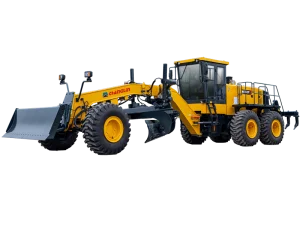
Full Line Heavy Construction Machinery Series
Explore additional high-performance crawler excavators, motor graders, compactors, and skid steer loaders direct from factory inventory.






Procurement FAQ: Sourcing Crawler Heavy Machinery Direct From Factories
Expert answers to high-intent questions asked by global equipment dealers, project contractors, and government purchasing managers.
What are the primary lead times for factory-direct crawler equipment orders?
Standard manufacturing lead times for production-line crawler excavators, track dozers, and motor graders range between 25 to 40 calendar days depending on order volume and custom specification requirements. Customized options—such as cold-weather packages, high-altitude engine modifications, or custom hydraulic auxiliary circuits—typically add 10 to 15 days for rigorous Factory Acceptance Testing (FAT).
How are heavy crawler machines securely packaged and shipped internationally?
Heavy equipment shipping strategies are optimized based on total machine operational dimensions and weight:
- RoRo (Roll-on/Roll-off): Recommended for fully assembled excavators, dozers, and rollers; enables immediate drive-off at destination ports.
- Flat Rack Containers: Used for large excavators (above 30-ton class) where booms or counterweights are dismounted to comply with shipping envelope thresholds.
- High Cube (40' HC) Containers: Compact machines, including skid steer loaders and small wheel loaders, are dismantled and secured in HC containers to reduce ocean freight rates per unit.
Can factory engines be matched to local fuel quality and emissions regulations?
Yes. Heavy equipment manufacturers configure diesel engines based on destination market regulations. For North America and Europe, machines feature Tier 4 Final / Stage V compliant engines equipped with Selective Catalytic Reduction (SCR) and Diesel Particulate Filters (DPF). For markets in South America, Africa, Central Asia, and Southeast Asia, Tier 2 / Tier 3 mechanical fuel injection engines are provided to tolerate higher sulfur content in regional diesel fuel supplies without injector fouling.
What warranty coverage and spare parts support are provided?
Standard factory warranty coverage spans 12 months or 2,000 operating hours (whichever occurs first), with extended structural warranty options available up to 36 months / 5,000 hours for main frames and booms. OEM spare parts—including track chains, hydraulic filters, bucket teeth, and seal kits—are shipped in consolidated parts packages or dispatched via express air freight through global dealer networks within 48 to 72 hours.
How do direct-factory buyers execute third-party quality audits (SGS / BV / TÜV)?
Direct factory purchase contracts routinely incorporate third-party pre-shipment inspection clauses. Independent inspectors from accredited bodies (SGS, Bureau Veritas, TÜV) are granted access to factory assembly grounds to verify serial numbers, structural weld quality, hydraulic pressure stability, paint thickness (DFT gauge testing), and operational performance prior to container sealing or port transfer.
Request Direct Factory Quotations & Machine Specifications
Collaborate directly with OEM heavy equipment application engineers to configure tailored machine fleets, request custom attachment options, and secure competitive volume shipping terms.
Contact Factory Procurement Team