
Featured OEM Machinery & Heavy-Duty Components (Part I)
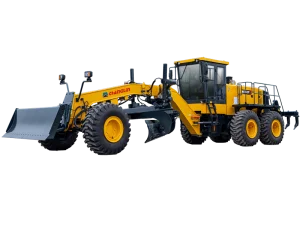
Verified factory direct heavy equipment, excavator track roller assemblies, motor graders, compactors, and earthmoving machinery.







1. Executive Summary & Macro-Industry Solutions: The Evolution of Excavator Roller Manufacturing
In the global heavy construction and earthmoving equipment ecosystem, the track roller assembly—commonly referred to as the excavator roller, track roller, or bottom roller—serves as the primary load-bearing foundation of crawler excavator undercarriage systems. Operating simultaneously under extreme static weights, dynamic shock loads, highly abrasive slurry environments, and torque forces, excavator track rollers dictate machine mobility, operational efficiency, and total cost of ownership (TCO).
When fleet managers, mining operators, and equipment buyers search to buy excavator roller factory and factories options directly, they are navigating a multi-layered global procurement landscape. The primary intent moves beyond basic replacement parts sourcing: it encompasses verifying metallurgical integrity, evaluating precision heat-treatment technologies, establishing direct OEM/ODM factory partnerships, and securing long-term supply chain resilience.
Modern excavator roller manufacturing factories have shifted from traditional sand-casting methods to high-precision die-forging techniques utilizing boron-alloyed structural steels such as 40Mn2 and 50Mn. Concurrently, the operational scope of "excavator rollers" expands into heavy road rollers, landfill compactors, and vibratory soil rollers operating within integrated earthmoving fleets. This whitepaper delivers an exhaustive technical and commercial breakdown designed for global procurement teams, fleet engineers, and heavy machinery distributors seeking factory-direct manufacturing partnerships.
2. Advanced Metallurgy & Precision Manufacturing Engineering
How leading Chinese factories engineered world-class durability through chemical composition, heat treatment, and sealing technology.
Forged Boron Alloy Shells
High-grade 50Mn and 40Mn2 forged steel shells eliminate internal porosity, grain boundary fractures, and casting voids. Precision hot-die forging aligns the internal steel fiber flow along the roller surface profile, ensuring structural resilience against massive impact loads in quarry and mining operations.
Differential Induction Hardening
State-of-the-art factories employ computer-controlled medium-frequency induction hardening. This creates a deep wear layer (8mm to 12mm depth) with Rockwell hardness reaching HRC 52–58, while maintaining a ductile, shock-absorbing internal core (HRC 28–35) to prevent catastrophic fracturing under sudden shock loads.
Duo-Cone Mechanical Floating Seals
To guarantee zero lubricant loss and total exclusion of abrasive mud, sand, and water, factory track rollers utilize micro-lapped alloy steel Duo-Cone seal rings paired with high-resilience Nitrile (NBR) or Fluorocarbon (FKM) O-rings. Tested to withstand extreme temperature ranges from -40°C to +110°C.
3. Global Commercial & Industrial Status: OEM vs. Direct Factory Sourcing
The global market for excavator undercarriage parts is experiencing rapid consolidation and technological upgrading. Historically, equipment owners relied exclusively on regional authorized dealerships for replacement rollers, paying substantial brand markups. Today, direct B2B sourcing from certified excavator roller factories in manufacturing hubs like Changzhou, Jiangsu, and Quanzhou, Fujian has transformed fleet procurement dynamics.
Major international contractors, rental companies, and aftermarket distributors are establishing direct OEM (Original Equipment Manufacturer) and ODM (Original Design Manufacturer) relationships. The economic and operational drivers include:
- Cost Optimization without Quality Compromise: Eliminating distributor layers yields savings of 30% to 50% on bulk undercarriage orders while maintaining identical material grades (40Mn2 forged steel).
- Custom Specification Capabilities: Direct factory engagement enables customized flange configurations (single flange, double flange), specialized cold-weather lubrication fluids (synthetics rated down to -50°C), and augmented seal arrangements for dredging or mining slurry duties.
- Supply Chain Transparency & Traceability: Tier-1 manufacturing factories implement full heat-number traceability, chemical spectral analysis, and ultrasonic flaw detection reports for every production batch.
4. Total Cost of Ownership (TCO) & Maintenance ROI Calculation
Evaluating an excavator roller factory requires analyzing the complete lifecycle cost per operating hour. The equation below illustrates how high-durability rollers impact the bottom line:
Example Analysis: A substandard budget roller costing $80 with a 1,500-hour lifespan generates significantly higher hourly TCO than a $130 factory-direct heavy-duty forged roller that operates reliably for 4,500+ hours without inducing premature track chain wear.
In addition, uneven roller wear accelerates wear on track links, idlers, and drive sprockets. By sourcing factory rollers with matching induction hardening profiles across the entire undercarriage, fleet managers preserve harmonious wear rates across all rolling elements, preventing early track chain failure.
5. Localized Application Scenarios & Extreme Operating Conditions
Tailoring undercarriage engineering to localized geography, substrate geology, and regional climate conditions.
Arctic & Sub-Zero Mining
Deployments in Northern Canada, Scandinavia, and the CIS region demand specialized steel temperings to prevent low-temperature brittle fracture. Factories utilize specialized synthetic gear lubricants and silicone Duo-Cone O-rings engineered to retain elasticity at -45°C.
High-Abrasive Quartz & Granite Quarries
Rock quarries present intense impact loads and sharp abrasive dust. Double-flange bottom rollers with augmented shell thickness and extended induction hardening depth (up to 12mm) prevent rapid rim thinning and structural collapse under continuous 40+ ton excavator movements.
Tropical Swamps & Marine Dredging
High humidity, acidic mud, and saltwater exposure attack steel shells and cause seal degradation. Premium factory configurations integrate anti-corrosion exterior coatings, stainless-steel seal retaining rings, and heavy-duty mechanical face seals certified to IP68 water/mud ingress standards.
6. Technical Roadmap & Future Outlook: Industry 4.0 Undercarriages
The next decade of excavator roller manufacturing is anchored in telemetry integration, sustainable metallurgy, and automated production. Leading factories are advancing technological roadmaps focused on three core pillars:
1. Smart Connected Telemetry (IoT Rollers): Integration of wireless micro-temperature and vibration sensors directly inside the shaft cavity. Real-time telemetry alerts fleet managers when internal temperatures spike due to seal failure or lubrication loss—enabling planned maintenance long before catastrophic lock-up occurs.
2. Eco-Friendly Closed-Loop Forging: Advanced factories are transitioning to electric induction reheating furnaces powered by clean energy, achieving zero direct carbon emissions during forging. Furthermore, steel scrap from machining operations is 100% recycled back into high-strength structural alloys.
3. Advanced Bimetallic & Ceramic Coatings: Research and development teams are testing thermal-spray ceramic coatings on roller flange wear tracks to extend operating lifespans past 8,000 hours in ultra-abrasive copper and iron ore open-pit mines.
7. Frequently Asked Questions (Q&A) - Factory Procurement Guide
Expert technical answers to essential questions when buying excavator rollers and heavy compaction equipment directly from factories.
How do I verify the metallurgical quality of an excavator roller factory before ordering?
Request comprehensive mill test certificates (MTC), heat treatment spectrum analysis, and ultrasonic flaw inspection reports from the manufacturer. Top-tier factories provide third-party laboratory verification (SGS, TÜV, or BV) confirming chemical composition (specifically Boron and Manganese content), grain size uniformity, and Rockwell hardness depth profiles (HRC 52-58 up to 10mm depth).
What is the difference between single-flange and double-flange track rollers?
Single-flange track rollers are typically installed near the machine’s center or drive sprocket, whereas double-flange rollers are placed strategically along the track frame to prevent track link derailment, especially during steep slope crawling or side-hill turns. A balanced combination of both ensures maximum track chain alignment and minimal wear.
Can factory-direct excavator rollers be customized for extreme cold or hot climates?
Yes. Custom OEM factory manufacturing allows buyers to specify low-temperature synthetic lubricants, high-heat viton seals, or specialized heavy-duty Duo-Cone mechanical seal rings designed specifically for ambient temperatures ranging from -50°C (Arctic mining) up to +55°C (Desert construction).
What are the warning signs that an excavator roller needs immediate replacement?
Key indicators include visible oil leakage past the Duo-Cone floating seal, flat-spotting or abnormal wear grooving on the roller running surface, excessive lateral play/slop in the shaft bearings, high operating temperature compared to adjacent rollers, and squeal/grinding noise during machine travel.
How are heavy excavator machinery and roller components packaged for global export?
Undercarriage components are thoroughly coated with rust-inhibiting wax, mounted on heavy-duty wooden or steel pallet frames, wrapped in moisture-proof vacuum film, and securely banded with high-tensile steel strapping. Complete machines (excavators, road rollers) are shipped via RoRo (Roll-on/Roll-off), Flat Rack, or Breakbulk ocean vessels with full sea-fastening protection.
What international quality certifications should a reliable machinery factory hold?
Reputable heavy machinery manufacturers must be certified under ISO 9001 (Quality Management System), ISO 14001 (Environmental Management), ISO 45001 (Occupational Health & Safety), and possess CE marking for European market compliance, alongside Tier 4 Final / Stage V emission compliance for powered diesel equipment.
Featured OEM Machinery & Heavy-Duty Components (Part II)
Explore additional factory direct equipment, crawler excavators, heavy bulldozers, and vibratory road rollers.





