
Featured Heavy Machinery Equipment (Part I)
Explore our primary lineup of earthmoving machinery engineered for heavy excavation, soil compaction, and site development.





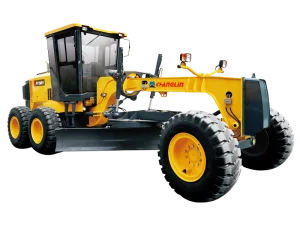

1. Executive Sourcing Guide: Macroeconomic & Industrial Dynamics
The global heavy earthmoving equipment industry is undergoing a paradigm shift driven by urban expansion, mega-infrastructure projects, resource extraction intensity, and decarbonization mandates. Evaluating heavy machinery manufacturers requires a rigorous framework that accounts for total cost of ownership (TCO), hydraulic efficiency, structural resilience, and lifecycle spare-parts security.
Procurement directors and capital project managers no longer make purchasing decisions based on initial acquisition cost alone. Modern earthmoving fleets—comprising medium-to-large crawler excavators, high-horsepower motor graders, heavy bulldozers, electric wheel loaders, and specialized compactors—are strategic capital assets. Operating efficiency, measured in cubic meters of earth moved per liter of fuel or kilowatt-hour of electric energy, defines project profitability.
Sourcing directly from enterprise-grade heavy earthmoving equipment manufacturers eliminates multi-tiered distributor markups while securing custom engineering adaptations—such as high-altitude engine recalibration, desert cooling packages, and customized wear-plate configurations.
2. Deep Engineering Analysis across Equipment Categories
Achieving maximum uptime across extreme operating environments requires deep mechanical alignment between machine capabilities and site demands. Below is an engineering overview of our core earthmoving platforms.
Heavy Crawler Excavators
Platforms like the ZG210, ZG220, ZG220N, and heavy-duty ZG365 utilize main pumps with electronically controlled positive-flow hydraulics. This design ensures that hydraulic output precisely matches load demands, minimizing relief valve energy losses and delivering exceptionally smooth multi-function control during trenching and bulk excavation.
Precision Motor Graders
Engineered for road maintenance and heavy mining haul roads, series such as the PY130H, PY150, PY190H, PY320T, and PY350T feature heavy-frame articulation, durable moldboard circle-drive mechanisms, and high-torque power-shift transmissions to guarantee fine surface levelling under heavy traction loads.
Wheel Loaders & EV Innovations
From the heavy diesel workhorse ZL30H to the zero-emission electric wheel loader ZL50EV, our payloaders feature reinforced box-section frames and heavy planetary transmissions. The ZL50EV integrates high-density LFP battery architectures with thermal management systems to sustain full-shift continuous cycle duty.
Engineered Performance Metrics Matrix
| Equipment Category | Primary Engineering Focus | Hydraulic / Powertrain Architecture | Target Applications |
|---|---|---|---|
| Crawler Excavators (21T – 36T) | Breakout Force & Cycle Speed | Positive-flow hydraulic system; Cummins/Weichai high-torque diesel engines | Mass excavation, rock quarrying, pipeline trenching, foundation engineering |
| Motor Graders (130HP – 350HP) | Blade Traction & Grading Precision | No-Spin differential lock, heavy circle gear drive, articulated frame mechanism | Highway construction, mining haul-road grading, airport ground maintenance |
| Electric Wheel Loaders (5T Payload) | Zero Emissions & Instant Torque | Direct-drive electric motor, high-voltage LFP battery array, regenerative braking | Ports, steel mills, tunnels, enclosed material yards, green urban zones |
| Landfill & Soil Compactors | Density Realization & Traction | High-amplitude vibratory drums; specialized trash-compaction teeth with scrapers | Sub-base soil stabilization, highway embankment, municipal waste density management |
3. Global Procurement Realities & TCO Optimization
Navigating international heavy machinery procurement involves balancing initial acquisition costs, freight logistics, customs compliance, and long-term operating overhead.
Direct OEM vs. Regional Dealer Models
Traditional regional dealership chains add significant markup fees (typically 18% to 30%) to offset showroom overhead and regional distribution exclusivity. Sourcing directly from an established manufacturing enterprise gives global buyers direct access to factory-level pricing, specialized engineering modifications, and priority spare parts stocking plans.
Furthermore, direct factory communication accelerates warranty claims and engineering resolutions, bypassing secondary support channels.
Total Cost of Ownership (TCO) Decomposition
Equipment lifecycle costs generally follow a 20/80 ratio: 20% accounts for the initial purchase price, while 80% comprises fuel/power consumption, routine maintenance, wear parts replacement, operator payroll, and unmanaged downtime.
Our engineering design focuses on reducing the 80% operational tail by integrating fuel-efficient engines, extended hydraulic oil change intervals (up to 5,000 hours), and high-wear steel alloys on bucket wear plates, dozer blades, and grader cutting edges.
4. Localized Compliance, Safety Standards & Adaptation
Operating heavy machinery globally requires strict compliance with international safety protocols and local environmental standards. Earthmoving machinery exported across regulated markets must conform to rigid structural and operational criteria.
ROPS / FOPS Operator Protection
All operator cabs on excavators, motor graders, dozers, and loaders undergo strict structural testing to meet ISO 3471 (Roll-Over Protective Structures) and ISO 3449 (Falling Object Protective Structures). Cabs feature pressurized, sound-insulated interiors with ergonomic HVAC systems.
Emissions Compliance Options
We provide engine options compliant with multi-regional emissions standards—ranging from Tier 2 / Tier 3 for non-regulated international development markets to EPA Tier 4 Final / EU Stage V engines equipped with DPF and SCR aftertreatment systems for North America and Europe.
Extreme Climate Engineering
Custom heavy machinery packages adapt equipment for specialized operating environments. This includes high-ambient cooling systems for Middle Eastern desert operations, cold-start glow-plug and engine jacket heaters for CIS sub-zero climates, and specialized sealing for high-corrosion coastal ports.
5. Field Engineering: Application Scenarios & Case Analysis
Earthmoving equipment performance depends on matching mechanical attributes to soil, rock, and climate conditions. Below are key field deployment scenarios.
Scenario A: High-Altitude Open-Pit Mining
Operating Environment: Altitudes exceeding 3,500 meters in Andean or Central Asian mining zones characterized by thin air, abrasive granite rock, and low ambient temperatures.
Machinery Selected: Heavy Excavators (ZG365), Mining Graders (PY350T), and Heavy Dozers (YD255).
Engineering Optimization: Turbocharged engines with automated fuel injection compensation prevent power loss at high altitudes. Undercarriages are upgraded with heavy-duty rock guards, while buckets receive extra-thick side-cutters and wear strips.
Scenario B: Municipal Solid Waste Management
Operating Environment: High-density municipal landfills requiring continuous waste distribution, crushing, and air-void elimination.
Machinery Selected: Specialized Landfill Compactors (GYL233).
Engineering Optimization: Fitted with cleated steel compaction teeth arranged to maximize ground pressure, integrated wire-cutters to prevent axle wrapping, and high-clearance scrapers. Centralized grease banks simplify daily maintenance.
6. Technology Roadmap: The Next Decade in Earthmoving
The heavy machinery industry is rapidly integrating digital intelligence, telematics, electrification, and semi-autonomous operation. Sourcing decisions made today must accommodate future site automation and fleet connectivity.
IoT & Telematics Integration
Modern fleets rely on CAN-bus integrated telematics systems that stream real-time operational data via satellite or cellular networks. Fleet managers monitor fuel usage, engine loads, hydraulic temperatures, and GPS tracking while automated diagnostics alert technicians to maintenance needs before component failures occur.
Full Fleet Electrification
Building on successful electric wheel loader models like the ZL50EV, the equipment roadmap expands electric powertrains into medium excavators and compact skid steers. Electric actuation cuts site operational costs while eliminating local tailpipe emissions in enclosed space work.
Semi-Autonomous Earthmoving
Electro-hydraulic main control valves pave the way for semi-autonomous grade control and automatic digging assistance. Excavators automatically hold bucket angles during fine grading, while motor graders interface with 3D GPS surface models to achieve sub-centimeter elevation precision.
Featured Heavy Machinery Equipment (Part II)
Explore additional specialized motor graders, wheel loaders, excavators, and compactors designed for versatile global applications.







7. Procurement & Engineering Technical FAQ
Clear, factual answers to key operational, logistical, and engineering questions asked by global heavy equipment buyers.
What structural features differentiate mining-duty excavators from standard civil construction excavators?
Mining-duty excavators (such as the 36-ton ZG365) feature reinforced box-section boom and arm structures fabricated from high-tensile steel plate. Boom footings and arm tips use heavy steel castings to withstand intense torsional loads. Additionally, mine-spec units incorporate lower track frame rock guards, heavy-duty belly pans, thicker track shoe plates, and severe-duty buckets fitted with high-abrasion tooth systems and side-cutters.
How does an electric wheel loader like the ZL50EV perform compared to conventional diesel loaders in total operating cost?
The ZL50EV electric loader cuts site operating costs significantly. Electric motors deliver peak torque instantly, reducing loading cycle times. Energy costs per ton moved drop by 50% to 70% compared to diesel power depending on local electricity rates. Furthermore, eliminating diesel engines removes engine oil, filters, belts, and DEF fluid systems—cutting routine maintenance overhead by up to 40%.
What logisitical methods are utilized for shipping heavy earthmoving machinery internationally?
Equipment logistics are tailored to machine dimensions. Compact units like skid steer loaders (255F) are loaded into standard 40ft High Cube containers. Heavy machinery like 22-ton excavators (ZG220) and motor graders (PY190H) ship via Ro-Ro (Roll-on/Roll-off) vessels or as flat-rack containerized cargo with booms or moldboards detached to meet transport dimensional limits.
How are custom regional engine emissions handled for exports into non-regulated vs heavily regulated markets?
We offer modular engine configurations tailored to destination regulations. For regions with high-sulfur fuel or less restrictive emissions standards (Tier 2 / Tier 3), robust mechanical or common-rail engines are supplied for maximum fuel tolerance. For regulated markets across Europe and North America, machines are fitted with EPA Tier 4 Final / EU Stage V compliant engines featuring advanced SCR, DPF, and high-pressure common-rail technology.
What spare parts availability and technical support structures are guaranteed for overseas fleet buyers?
We back equipment deliveries with factory spare parts support, recommended initial maintenance wear kits, direct-from-factory component shipments, and remote telemetry diagnostic access. Local dealer service teams and factory field engineers also deliver technical training, scheduled system overhauls, and troubleshooting guidance to maximize fleet uptime.
Request Factory Engineering Quotations & Fleet Consulting
Connect directly with our engineering sales teams to configure machine specifications, request technical datasheets, calculate shipping logistics, and receive OEM factory pricing.