


Global Heavy Equipment Grader Market Landscape & Supply Chain Shift
The global civil infrastructure, mining, and highway construction sectors are undergoing an unprecedented technological evolution. According to recent macro-economic industrial data, global annual infrastructure expenditures require an estimated $3.7 trillion investment through 2035 to sustain urban development and resource extraction demands. Within this capital-intensive matrix, the heavy equipment motor grader remains the pivotal asset for precise subgrade preparation, haul-road leveling, and surface finishing.
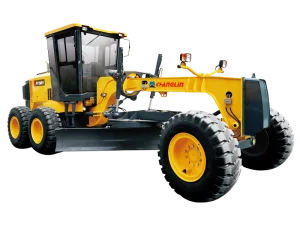
Historically dominated by legacy Western OEMs, the international procurement landscape for motor graders and associated earthmoving equipment has shifted significantly toward high-capacity Chinese OEM manufacturing hubs such as Sinomach-HI (Changlin). Global procurement managers, mining fleet directors, and EPC contractors are actively re-evaluating capital expenditure (CAPEX) strategies. Sourcing heavy equipment motor graders directly from tier-1 Chinese factories offers a compelling balance of high hydraulic power output, advanced electro-hydraulic load sensing, Tier 4 Final/Stage V engine compliance, and up to 35% to 45% reduction in initial acquisition cost.
Mining Haul-Road Efficiency
Continuous maintenance of open-pit haul roads with heavy-duty mining graders reduces haul-truck rolling resistance by up to 30%, decreasing rigid truck fuel consumption and extending tire lifespans by thousands of hours.
Automation & 3D Control Integration
Modern factory assembly lines integrate electro-hydraulic proportional valves engineered for seamless plug-and-play synchronization with Trimble, Topcon, and Leica 3D GNSS grade control systems.
Strict Emission Standards
Tier-1 factories deliver specialized export configurations matching localized emissions mandates, including EPA Tier 4 Final, EU Stage V, and un-regulated engine variants for developing regions.
Heavy Equipment Grader Mechanical Architecture & Component Breakdown
Engineered for extreme torsional resistance and surface precision, a heavy equipment motor grader relies on the complex synchronization of frame geometry, drawbar-circle-moldboard (DCM) assemblies, hydraulic power distribution, and tandem drive axles. Sourcing high-grade machinery requires evaluating these core subsystem parameters:
| Subsystem Component | Engineering Specification | Operational Function & Advantage | Procurement Audit Criteria |
|---|---|---|---|
| Articulated Frame Geometry | Heavy-duty box section with internal ribbing; +/- 20° to 25° articulation angle. | Enables crab steering, tight turning radius in confined quarters, and offsets rear frame for heavy ditching. | Ultrasonic weld defect inspection; high-tensile structural steel grade (Q345B/Q690D equivalent). |
| Moldboard & Circle Drive | 360° hydraulic circle rotation; heat-treated wear inserts; moldboard length 12ft (3.66m) to 16ft (4.88m). | Delivers smooth cutting angles and high down-force ($kN/m$) for compact hardpack gravel or mining overburden. | Replaceable bronze/nylon wear strip clearance; circle drive gearbox torque capacity rating. |
| Hydraulic Pump Systems | Variable displacement axial piston pump; load-sensing hydraulics (LSS); priority steering. | Adjusts flow and pressure dynamically based on blade resistance, reducing engine load and fuel consumption by 15%. | Main system pressure (21-24 MPa); hydraulic valve spool response latency (<50ms). |
| Tandem Axle & Drive Train | Heavy-duty chain-driven tandem box; differential lock/unlock mechanism; heavy multi-disc wet brakes. | Ensures maximum traction under high drawbar pull without ground slippage; protects internal clutches. | Tandem oscillation angle (+/- 15°); chain strength and wear tolerance ratings. |
| Power Plant / Engine | Turbocharged intercooled diesel engine (Cummins, Weichai, Shangchai); 140 HP to 350+ HP. | High torque rise at low RPMs to prevent engine stalling during deep blade penetration or heavy ripper usage. | Specific fuel consumption curve ($g/kW\cdot h$); global emissions certification availability. |
When evaluating heavy motor graders—such as the PY150, PY220H, and PY240H series—the balance between operating weight and engine output dictates the net drawbar pull. An optimal weight-to-horsepower ratio ensures that engine power translates directly into blade cutting force rather than wheel spin.
Total Cost of Ownership (TCO) & Efficiency ROI Model
For enterprise procurement officers, the sticker price of a motor grader represents only 20% to 25% of its overall life-cycle expenditure. Evaluating factory manufacturers requires a rigorous Total Cost of Ownership mathematical formulation:
Where t represents total operating hours (standard baseline: 10,000 hours over 5 operational years).
Localized Application Scenarios & Heavy Fleet Integration
Heavy equipment motor graders do not operate in isolation; they are part of a synchronized machine ecosystem comprising excavators, wheel loaders, bulldozers, and compaction rollers. OEM manufacturing capability must cater to extreme environmental variables across global job sites:
Sub-Saharan High-Heat Infrastructure
Operating Challenges: Ambient temperatures exceeding 48°C, heavy airborne dust, and remote maintenance access.
Factory Configuration Solution: High-capacity tropical radiator cooling packages, dual-stage heavy-duty air pre-cleaners (Donaldson type), and simplified mechanical-injection fuel systems to accommodate variable diesel quality.
High-Altitude Mining (Andes & Central Asia)
Operating Challenges: Oxygen-deprived environments (>3,500m elevation), abrasive rock strata, and sub-zero winter temperatures.
Factory Configuration Solution: Turbocharged engines equipped with altitude-compensation electronics, cold-start ether assistance, heavy-duty rear ripper assemblies, and abrasion-resistant Hardox moldboard liners.
Municipal Road Construction & Finishing
Operating Challenges: Strict millimeter-level grade tolerances, high maneuvering requirements around utility infrastructure.
Factory Configuration Solution: Electro-hydraulic proportional joysticks, 3D GNSS auto-grade interface, front dozer blade attachments, and integrated side-shift circle controls.
How to Audit Heavy Equipment Grader Manufacturers & Factories
Navigating foreign factory procurement requires a thorough verification protocol to ensure equipment reliability, structural integrity, and long-term after-sales support. Enterprise buyers should execute a structured 4-step factory verification process:
| Audit Dimension | Evaluation Metric | Required Standard / Certification |
|---|---|---|
| Structural Manufacturing | Robotic frame welding, ultrasonic non-destructive testing (NDT), frame shot-blasting. | ISO 3834-2 Welding Certification; High-tensile plate compliance. |
| Hydraulic Assembly Cleanliness | Particulate contamination testing of hydraulic oil prior to factory roll-off testing. | ISO 4406 Cleanliness Standard (Target: 16/14/11 class). |
| Factory Testing Rig Rigor | 100% full-load dynamic testing, hydraulic pressure peak spiking, stall-test validation. | Minimum 4-hour continuous factory bench test with temperature logging. |
| Global Compliance & Certs | Emissions, noise level standards, ROPS/FOPS operator cab safety structures. | CE Mark, OSHA ROPS/FOPS ISO 3471/3449, EPA Tier 4F / EU Stage V. |
Technical Roadmap & Next-Generation Machinery Innovation
The heavy equipment industry is undergoing rapid technological convergence. Leading manufacturers are investing heavily in three core innovations that will define earthmoving fleets over the next decade:
Full Electrification (BEV Graders)
Battery Electric Vehicle (BEV) wheel loaders and motor graders utilize high-density lithium iron phosphate (LFP) battery architectures, delivering zero local emissions and silent operation for tunneling and urban infrastructure projects.
Autonomous Haul-Road Grading
Leveraging sensor fusion (LiDAR, Radar, and RTK-GNSS), driverless motor graders will autonomously monitor haul-road wear in mining environments and execute maintenance cycles without human intervention.
Predictive Telematics & Wear Monitoring
IoT-enabled sensors embedded in circle wear plates and cutting edges deliver real-time wear telemetry back to fleet management software, automatically scheduling maintenance before component failure occurs.
Frequently Asked Questions (FAQ)
Critical procurement questions answered by Senior Heavy Equipment SEO & Machinery Specialists.