
Featured Industrial Heavy Equipment Lineup
Heavy-duty crawler excavators, precision motor graders, compact loaders, and soil compaction machinery built to withstand rigorous jobsite demands worldwide.

China Motor Grader PY220H(2) Manufacturers, Factories
View Specifications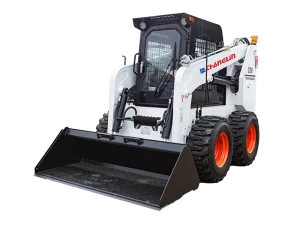
China Skid Steer Loader 275F Manufacturer, Factories
View Specifications
China Crawler Excavator ZG150 Manufacturer, Factories
View Specifications
Buy Road Roller GYS08J Manufacturer, Factories
View Specifications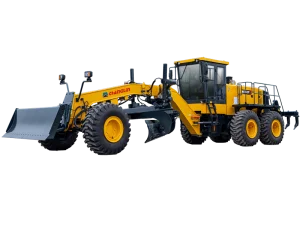
Buy Motor Grader PY350T Manufacturer, Manufacturers
View Specifications
Buy Crawler Excavator ZG365 Manufacturer, Factory
View Specifications
Buy Wheel Loader ZL30H Manufacturer, Manufacturers
View Specifications
China Crawler Excavator ZG220N Manufacturers, Factories
View SpecificationsProcurement Architecture: Sourcing Heavy Industrial Diggers
Navigating global heavy equipment procurement requires an in-depth analysis of hydraulic engineering, powertrain resilience, total cost of ownership (TCO), and regional compliance frameworks.
Hydraulic & Powertrain Rigor
Modern industrial crawler excavators utilize variable displacement axial piston pumps paired with positive flow control (PFC) hydraulics, delivering exact pressure distribution to the boom, arm, and bucket cylinders under dynamic loads.
- Kawasaki & Rexroth Main Valves
- High-torque, low-RPM engine matching
- Optimized main relief valve pressure (>34.3 MPa)
China Factory Ecosystem
The concentration of heavy industrial clusters in Changzhou and Jiangsu provides unprecedented vertical integration. Component casting, robotic structural welding, and heat treatment occur within tightly controlled industrial radii.
- End-to-end quality assurance (ISO 9001:2015)
- Streamlined OEM / ODM customization turnaround
- Aggregated component purchasing economies
Global Homologation
Deploying heavy equipment into North America, Europe, or emerging markets demands strict compliance with regional safety and emissions protocols without sacrificing raw digging breakout force.
- EPA Tier 4 Final & EU Stage V engines
- ROPS / FOPS certified cabin protection
- CE, EAC & SABER compliance verification
Why Direct-from-Factory Chinese Industrial Diggers Drive High ROI
China’s construction equipment manufacturing landscape has evolved from simple assembly to high-precision engineering, automated robotic welding, and stringent metallurgical control.
Advanced Robotic Welding & Metallurgical Quality
Modern excavator frames feature one-piece structural cast elements at key stress points (boom foot and boom tip) combined with automated robotic arc welding. Structural components undergo 100% ultrasonic non-destructive testing (NDT) to prevent fatigue micro-fractures under heavy rock excavation loads.
Standardized Tier-1 Global Component Integration
Leading Chinese heavy machinery factories collaborate with globally recognized component manufacturers. Engines (Cummins, Yanmar, Isuzu), main hydraulic pumps (Kawasaki, Rexroth), and drive motors (Hengli, Nabtesco) are standard, guaranteeing localized spare parts availability across 180+ export markets.
Agile Engineering Customization (OEM/ODM)
Unlike rigid Western OEMs, Chinese industrial digger factories provide flexible jobsite engineering options. Facilities can adjust auxiliary hydraulic pipeline flows, extend arm reach, add reinforced rock guards, or modify cab HVAC units for extreme ambient environments during factory production.
Comprehensive Factory Testing & Quality Verification
Before any excavator or motor grader leaves the manufacturing facility, it undergoes rigorous operational testing. This includes continuous 50-hour hydraulic pressure cycle tests, tilt-table stability analysis, sound level compliance checks, and climate-controlled thermal load simulations.
Total Cost of Ownership (TCO) & Efficiency Metrics
Evaluating heavy digger investments requires looking beyond initial purchase price to fuel consumption per ton moved, hydraulic efficiency curves, and operational lifespan.
| Machine Weight Class | Typical Bucket Range | Engine Power Output | Primary Jobsite Applications | Key Hydraulic Spec |
|---|---|---|---|---|
| 15 Ton (Medium Excavator) | 0.55 - 0.75 m³ | 85 - 98 kW | Urban utility, trenching, foundation digging, road repair | Dual Variable Pumps (2 x 140 L/min) |
| 22 Ton (Heavy Civil Excavator) | 1.00 - 1.20 m³ | 124 - 140 kW | Mass earthmoving, high-capacity trenching, pipeline construction | Electro-hydraulic PFC System (2 x 220 L/min) |
| 36 - 38 Ton (Heavy Quarry & Mining) | 1.60 - 2.10 m³ | 198 - 215 kW | Open-pit mining, heavy rock excavation, quarry loading | High-flow Heavy Duty Valves (2 x 300 L/min) |
| Motor Graders (PY Series) | 3.66 - 4.27 m blade | 132 - 257 kW | Haul road grading, highway creation, leveling, snow removal | Load-sensing Proportional Control |
Targeted Applications for Heavy Earthmoving Fleets
From high-altitude mining sites to dense urban civil infrastructure, industrial diggers must be tailored to specific ground conditions and thermal profiles.
Heavy Open-Pit Mining & Rock Excavation
Deploying heavy 36t to 38t crawler excavators (like the ZG365 and ZG385) in granite or iron ore mines requires reinforced bucket teeth, bottom wear-plates, and high breakout forces (>235 kN) to maintain high bucket fill factors.
Urban Civil Engineering & Infrastructure
Medium excavators (ZG150, ZG220N) excel in municipal trenching, foundation drilling support, and roadbed development. Compact swing radii and reduced noise cabs allow seamless operation within residential zones.
Extreme Climates & High-Altitude Earthworks
Operating at altitudes over 4,000 meters or in ambient temperatures ranging from -30°C to +50°C demands turbochargers with wastegate power correction, cold-start preheaters, and multi-fan high-efficiency cooling packages.
Technological Evolution: Smart Diggers & Electrification
The industrial equipment industry is undergoing a digital transformation. Telematics, electric powerplants, and semi-autonomous controls are reshaping jobsite productivity.
IoT Telematics & Remote Fleet Intelligence
Modern industrial diggers come factory-equipped with 5G IoT telematics modules. Fleet managers receive real-time telemetry on hydraulic oil temperature, fuel consumption, GPS positioning, error codes, and predictive maintenance alerts directly to desktop dashboard consoles.
Electric & Zero-Emission Digger Powertrains
With global net-zero targets, high-capacity lithium iron phosphate (LFP) battery systems are replacing diesel engines in urban and underground tunneling excavators. Electric diggers drastically reduce noise pollution and cut operational energy costs by up to 60% per hour.
Semi-Autonomous 3D Grade Control Integration
Precision electro-hydraulic valves enable 3D GPS grade control integration. Operators can set depth limits via cab touchscreens; the machine automatically adjusts boom and arm elevation to achieve grade accuracy within +/- 10mm, preventing over-excavation.
Industrial Digger Purchasing & Technical Questions
Detailed technical and commercial answers for equipment procurement officers, fleet operations managers, and international machinery distributors.
What key technical criteria should be prioritized when selecting an industrial crawler excavator?
Focus on five core metrics: 1) Engine Net Power Output (kW) matching target cycle times, 2) Main Hydraulic Pump Max Displacement (L/min) and Relief Pressure (MPa), 3) Bucket Digging Breakout Force (kN), 4) Structural Steel Grade (S690 High Yield Tensile Steel) used in the arm/boom fabrications, and 5) Undercarriage Track Roller and Link Plate heat treatment depth (HRC 52-58) for extended track wear life.
How do Chinese machinery factories handle international warranty and spare parts support?
Leading Chinese heavy equipment manufacturers maintain global spare parts hubs across key regions (Latin America, Middle East, Southeast Asia, CIS). Key wear items (filters, hydraulic hoses, seals, bucket teeth) are standardized, while major structural items are covered by standard 1-year / 2,000-hour or extended 2-year / 4,000-hour powertrain warranties supported by localized dealer networks.
Can machines be customized for extreme high-altitude or low-temperature operational environments?
Yes. Factories configure specific altitude packages (turbocharger wastegate calibration and modified ECU maps to prevent power loss above 3,500m altitude) and cold-weather packages (block heaters, synthetic low-pour-point hydraulic oil, heated fuel filters, and Arctic-grade rubber seals rated for -40°C).
What shipping logistics methods are utilized for heavy industrial excavators and graders?
Depending on dimensions and destination ports: compact machinery (skid steers and small rollers) ship in standard 40ft High Cube (HC) containers. Heavy excavators (20t - 38t) and large motor graders ship via Roll-on/Roll-off (RoRo) vessels, Flat Rack (FR) containers with arm/bucket disassembled, or Break-Bulk shipping lines to optimize freight costs and safeguard machine integrity.
How does positive flow control (PFC) improve digger operational efficiency?
Positive Flow Control (PFC) uses pilot pressure sensors to communicate lever displacement directly to the main hydraulic pump's swashplate control. Unlike traditional negative flow control, PFC supplies the exact fluid volume required for the operation, reducing wasted pump bypass hydraulic fluid, lowering heat generation, and saving up to 8-12% in fuel consumption during intense digging cycles.
Explore Full Industrial Diggers & Earthmoving Range
Complete machine portfolio including heavy excavators, landfill compactors, wheel loaders, and road rollers available for global factory-direct shipping.
China Road Roller GYS10J Manufacturers, Factory
View Specifications
Buy Landfill Compactor GYL233 Manufacturers, Factory
View Specifications
China Crawler Excavator ZG360 Manufacturer, Factories
View Specifications
China Wheel Loader ZL80H Manufacturers, Factory
View Specifications
Buy Road Roller GYS20J Manufacturers, Factories
View Specifications
China Crawler Excavator ZG385 Factory, Factories
View Specifications
Buy Motor Grader PY150 Factory, Factories
View Specifications