
Featured OEM Construction Equipment & Heavy Machinery (Part I)
Explore our flagship heavy excavators, skid steers, graders, road rollers, and electric loaders directly engineered for extreme operational environments.






Executive Summary: The Modern Landscape of Global Loader Equipment Procurement
In the evolving global heavy machinery market, procurement directors, mining enterprise operators, and government civil works contractors require more than standardized spec sheets. When evaluating the directive to buy loader equipment from a manufacturer or factory, global buyers look for an optimal convergence of structural durability, total cost of ownership (TCO) optimization, environmental compliance, and localized lifecycle product support.
As heavy infrastructure projects become more complex and mining cycles demand 24/7 duty cycles, the loader equipment segment has transformed. Modern wheel loaders, compact skid steers, crawler excavators, and motor graders are no longer standalone mechanical units; they are integrated hydraulic and electronic ecosystems designed to maximize payload per hour, optimize fuel efficiency, and minimize operational downtime.
The Engineering & Supply Chain Advantage of Chinese Heavy Machinery Manufacturing
China has firmly established itself as the global epicenter for heavy construction machinery engineering and manufacturing excellence. Built upon decades of industrial modernization and joint ventures with leading global powertrain innovators, Chinese OEMs offer world-class heavy earthmoving platforms manufactured at scale in Changzhou and key industrial hubs.
Vertical Integration & Precision Manufacturing Standards
Modern loader factories feature state-of-the-art robotic welding cells, automated plasma cutting centers, and computer-controlled heat-treatment lines. Structural elements—such as front loading arms, articulated chassis frames, and bucket torque tubes—are engineered using finite element analysis (FEA) to eliminate stress concentrations and guarantee structural integrity over tens of thousands of operating hours in high-impact environments.
Cost Efficiency at Scale
Economies of scale achieved through centralized component sourcing reduce raw material and component costs, yielding superior value per horsepower for global fleets.
Tier-1 Component Sourcing
Factory integration of premium global brands including Cummins engines, Weichai powertrains, ZF transmissions, and Kawasaki/Linde hydraulic pumps guarantees operational uptime.
Electrification Leadership
Pioneering battery-electric vehicle (BEV) technology, including lithium iron phosphate (LFP) power packs engineered for heavy wheel loader duty cycles and zero local emissions.
Localized Application Scenarios: Tailoring Equipment to Site-Specific Conditions
No two work sites are identical. OEM factories must customize heavy equipment to thrive under localized climatic, geographical, and operational challenges. Procurement managers should evaluate specific job-site demands to determine optimum machine specifications.
1. Heavy Mining & Aggregate Quarries
High-abrasion iron ore and granite extractions demand reinforced heavy-duty rock buckets, extended wear plates, high breakout force hydraulics, and armored sidewall radial tires.
2. Municipal Infrastructure & Highways
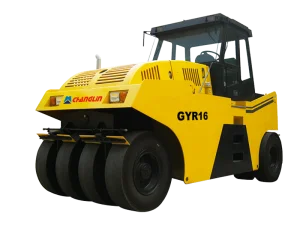
Urban road formation relies on precise earth grading and compaction fleets. Motor graders with auto-leveling moldboards and tandem vibration road rollers ensure sub-base stability.
3. Port Logistics & Bulk Material Handling
Port terminals loading coal, grain, or fertilizer benefit immensely from high-capacity battery-electric wheel loaders (such as the ZL50EV), reducing hourly fuel expenditures by up to 60%.
4. Extreme Environment Adaptation
Equipment deployed in high-altitude (Andean/Tibetan plateau) or tropical desert conditions requires customized cooling packages, pre-cleaner air filtration, and cold-start pre-heaters.
5. Waste Management & Landfills
Landfill operations demand specialized landfill compactors equipped with cleated steel wheels, trash blades, and enclosed cabs with positive pressure HEPA filtration for operator safety.
6. Compact Utility & Urban Landscaping
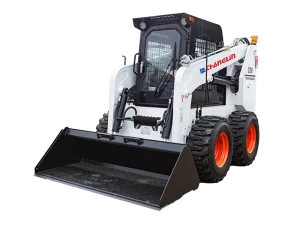
Versatile skid steer loaders (like the 275F) equipped with quick-coupler hydraulic systems allow seamless switching between buckets, augers, trenchers, and hydraulic breakers.
Technical Procurement Evaluation Matrix: Machinery Specifications
To assist global equipment buyers and fleet engineers in shortlisting machinery, the matrix below details key engineering benchmarks across core machine categories.
| Machine Category | Model Reference | Engine / Power Rating | Operating Weight | Bucket / Blade Capacity | Primary Application Target |
|---|---|---|---|---|---|
| Heavy Duty Excavator | ZG330D Crawler Excavator | Cummins Tier 3 / Stage V (198 kW) | 32,500 kg | 1.5 - 1.8 m³ | Mass Excavation, Quarry Mining |
| Medium Excavator | ZG250 Crawler Excavator | High-Torque Turbocharged (133 kW) | 24,200 kg | 1.2 m³ | Civil Infrastructure, Trenching |
| Electric Wheel Loader | ZL50EV Battery Electric | LFP Battery Pack (282 kWh) | 18,000 kg | 3.0 - 4.0 m³ | Ports, Steel Plants, Indoor Processing |
| Heavy Wheel Loader | ZL60H Diesel Loader | Weichai / Cummins Heavy Duty (175 kW) | 20,000 kg | 3.5 - 4.5 m³ | Aggregate Batching, Open-Pit Mining |
| Motor Grader | PY190H Road Grader | Powershift Transmission (140 kW) | 15,800 kg | 3,965 mm Moldboard | Highway Construction, Haul Road Maintenance |
| Compact Loader | 275F Skid Steer Loader | Perkins / Yanmar Diesel (55 kW) | 3,450 kg | 0.45 m³ | Urban Utility, Material Handling, Rental |
| Heavy Road Roller | GYS20J Vibratory Roller | Heavy Duty Turbocharged (129 kW) | 20,000 kg | 2,130 mm Drum Width | Sub-base Soil & Rock Fill Compaction |
Global Regulatory Compliance, Safety Standards & Environmental Protection
Navigating international import regulations is a vital prerequisite for enterprise machinery buyers. Leading factory manufacturers adhere to rigorous international safety, noise, and environmental emission frameworks, ensuring smooth customs clearance and local job-site authorization.
Emissions Compliance
Factories provide multi-tier engine options matching regional standards: EPA Tier 4 Final / EU Stage V for North America and Europe, and Tier 2/Tier 3 engines for non-regulated regions.
Structural Operator Safety
Cabs engineered and certified in compliance with ISO 3471 (ROPS - Roll-Over Protective Structures) and ISO 3449 (FOPS - Falling Object Protective Structures) standards.
Quality & Export Certifications
Fully compliant with ISO 9001:2015 Quality Management Systems, CE Marking for the European Economic Area, EAC for the Eurasian Customs Union, and SABER for Saudi Arabia.
Global Fleet Localization & Factory-Direct Lifecycle Support
Purchasing loader equipment directly from the factory establishes a strategic partnership that extends across the machine's entire operating lifecycle. Reliable aftermarket support prevents costly job-site standing time and protects project profitability.
1. Global Spare Parts Availability
OEM factories maintain centralized overseas spare parts warehouses supported by digital warehouse management systems (WMS). Fast-moving filtration kits, hydraulic hoses, seal kits, and wear teeth can be dispatched via air freight within 24 to 48 hours to minimize unexpected downtime.
2. Telematics & Fleet Management Systems
Modern loaders come equipped with factory-installed IoT telematics modules. Remote telemetry provides fleet managers with real-time tracking of machine location, fuel consumption, engine operating parameters, thermal alerts, and preventive maintenance scheduling via a web interface or mobile application.
3. Customized Technical Training Programs
Factory engineers offer comprehensive hands-on and remote virtual training programs for customer technicians and operators. Structured modules cover electro-hydraulic diagnostics, transmission recalibration, routine preventive maintenance schedules, and safe operating practices.
Featured OEM Construction Equipment & Heavy Machinery (Part II)
Browse our complete catalog of heavy excavators, bulldozers, motor graders, and compaction equipment engineered for demanding overseas projects.







Frequently Asked Questions (FAQ) for Equipment Buyers & Procurement Managers
In-depth answers to common questions regarding OEM manufacturing, custom options, international shipping, warranty coverage, and fleet maintenance.