
Featured OEM Motor Graders, Loaders & Rollers
Factory-direct engineered equipment configured for international civil infrastructure, open-pit mining, and extreme earthmoving applications.






Global Demand Vectors & Mechanical Engineering Paradigms
Evaluating the technical shift toward high-tonnage motor graders, load-sensing variable displacement hydraulics, and automated grade management across international infrastructure mega-projects.
Macro-Economic Drivers & Procurement Shifts
Modern earthmoving operations require strict adherence to dimensional tolerances, surface levelling precision, and operating cost efficiency. Procurement directors evaluating motor grader types from global manufacturers face a complex matrix of choices: balancing capital expenditure (CAPEX) against operating expenditure (OPEX), fuel burn efficiency, structural durability, and aftermarket component interchangeability.
Global demand is propelled by four distinct vectors: major transport corridor expansion across Africa and Southeast Asia, heavy overburden haul-road maintenance in CIS open-pit mines, agricultural land consolidation in South America, and urban civil drainage works in the Middle East. Each operating theater demands unique mechanical configurations—ranging from high-horsepower all-wheel-drive (AWD) units to agile rigid-frame utility levellers.
Total Cost of Ownership (TCO) Architectural Framework
A comprehensive TCO audit reveals that raw machinery procurement costs account for less than 28% of a motor grader's lifecycle cost over an 8-year operating window. Fuel consumption, routine maintenance, wear-component replacement (moldboard cutting edges, circle drive wear strips), and unplanned downtime constitute the remaining 72%.
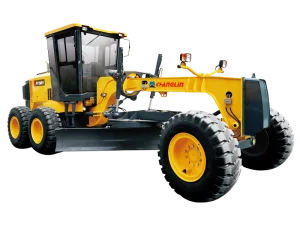
Leading manufacturers like Sinomach-HI (Changlin) design equipment around modular, field-serviceable architecture. Incorporating load-sensing hydraulic pumps, high-torque turbocharged diesel engines, and direct-drive power-shift transmissions ensures maximum drawbar pull while mitigating fuel consumption spikes during heavy blade loads.
Taxonomy & Mechanical Classification of Motor Graders
Deep technical comparison of chassis configurations, drivetrain mechanics, moldboard geometry, and hydraulic distribution systems.
Rigid Frame vs. Articulated Frame
Articulated Frame Architecture: Utilizes a hydraulic-pivot joint located between the rear tandem cab and the front frame frame. This provides a significantly reduced turning radius (often under 7.5 meters) and allows "crab steering"—enabling the front wheels to run on firm ground while the moldboard grades wet or unstable material on slopes.
Rigid Frame Architecture: Employs a single continuous structural beam. While less maneuverable, rigid frame graders offer superior structural rigidity and lower mechanical complexity for long-run linear road construction projects where sharp turning is unnecessary.
Tandem Drive (6x4) vs. All-Wheel Drive (6x6)
Tandem Drive (6x4): Power is delivered through a heavy-duty rear tandem chain-driven axle set. Ideal for standard asphalt base prep, gravel road upkeep, and dry soil conditioning. Offers high fuel economy and reduced hydraulic system complexity.
All-Wheel Drive (6x6): Features independent hydro-static or mechanical front wheel drive motors synchronized with the rear tandem axles. Delivers maximum rim pull, eliminating front wheel drift during heavy side-draft blade loads, essential for snow clearing, muddy terrain, and steep grade cuts.
Duty Class: Utility vs. Mining Heavyweight
Utility & Road Construction (130HP – 220HP): Operating weights from 11 to 17 metric tons. Fitted with 12ft or 14ft moldboards. Tailored for municipal roads, shoulder maintenance, trench backfilling, and light subgrade leveling.
Heavy Mining & Haul Road (250HP – 350HP+): Operating weights from 19 to 30+ metric tons, exemplified by models like the PY350T. Fitted with 16ft or 18ft heavy moldboards, high-torque engines, and massive drawbar pull to maintain heavy mine haulage routes under constant 100-ton truck loads.
| Motor Grader Model Class | Engine Power Range (HP) | Operating Weight (kg) | Moldboard Length (mm / ft) | Primary Application Spectrum | Drive Configuration |
|---|---|---|---|---|---|
| Light Utility / Municipal (PY150 Series) | 130 - 165 HP | 11,500 - 13,500 | 3,660 mm (12 ft) | City roads, agricultural leveling, landscaping | Tandem Drive (6x4) |
| Medium Highway / Civil (PY190 Series) | 190 - 215 HP | 15,500 - 16,500 | 3,965 mm (13 ft) | Highway sub-base preparation, airport runways | 6x4 / Optional 6x6 AWD |
| Heavy Infrastructure (PY320 Series) | 280 - 320 HP | 23,000 - 25,500 | 4,270 mm (14 ft) | Major earthworks, quarry haul roads, dam construction | Heavy Tandem / 6x6 AWD |
| Super Heavy Mining (PY350 Series) | 350+ HP | 28,000 - 32,000 | 4,880 mm (16 ft) | Open-pit mine haulage, overburden grading | Reinforced Mining 6x4 / AWD |
Moldboard Kinematics & Load-Sensing Hydraulics
The physics of earthmoving: How blade curvature, circle drive torque, and proportional hydraulic control dictate grading precision and fuel economy.
Moldboard Involute Roll-Away Dynamics
The efficiency of a motor grader depends significantly on its moldboard radius profile. An optimized involute blade profile forces scraped soil to roll forward cleanly rather than sliding horizontally across the steel plate. This continuous rolling motion reduces blade resistance force ($F_r$) according to the equation:
F_drawbar = \mu \cdot W_{rear} + \eta \cdot (V_{soil} \cdot \rho \cdot g)
By optimizing soil roll-away geometry, Sinomach-HI motor graders reduce required drawbar pull by up to 14%, translating directly into measurable fuel savings per cubic meter of soil moved.
Proportional Load-Sensing Hydraulic Systems (LSS)
Traditional fixed-displacement hydraulic pumps continuously circulate fluid at maximum pressure, generating excess heat and parasitic engine load. Advanced motor graders utilize variable-displacement axial piston pumps paired with Proportional Priority Pressure Compensated (PPPC) valves.
When the operator modulates multiple blade controls simultaneously (e.g., raising the lift cylinder while rotating the circle drive), the LSS valve stack adjusts fluid flow proportional to lever movement regardless of load variations, preventing control starvation and maintaining sub-millimeter grading accuracy.
Global Sourcing, Regional Compliance & Fleet ROI
Navigating cross-border heavy equipment acquisitions, engine emission compliance, and specialized climate customization for global project operators.
Regional Engine Emission Adaptations
International fleet buyers operate in jurisdictions with vastly differing emission standards and fuel sulfur levels. Sourcing from top Chinese manufacturers provides access to customizable engine packages:
- Tier 2 / Tier 3 Mechanical Fuel Injection: Engine platforms designed for high-sulfur fuel environments across developing regions (Africa, Central Asia, parts of South America). High tolerance for fuel impurities with easy field serviceability.
- Tier 4 Final / Stage V Electronic Common Rail: Integrated with SCR and DPF systems for North American and European regulatory compliance, maintaining low particle output.
Severe Environment Packages
Heavy machinery operating environments range from sub-zero Siberian mines (-40°C) to high-temperature Arabian deserts (+55°C) and extreme altitude Andean plateaus (4,500m above sea level).
Factories configure specialized packages: high-capacity tropical cooling matrices with wide-fin radiators, ether-assist cold-start systems with pre-heaters, multi-stage cyclone air pre-cleaners for extreme dust, and pressurized ROPS/FOPS cabs with high-capacity HVAC and HEPA filtration.
OEM Procurement Audit Checklists
When auditing prospective motor grader factories, institutional buyers verify structural manufacturing controls:
- Robotic welding of main frame box sections with ultrasonic non-destructive testing (NDT).
- Single-piece forged circle drive gears with heat-treated tooth profiles.
- Hardened bronze-alloy wear inserts between the circle and drawbar for smooth rotation and minimal play.
- Standardization of hydraulic hose fittings (ORFS) to prevent oil leakage under vibration.
3D GNSS Automation, Telematics & Electric Drive Vectors
Examining the technological convergence of satellite grade control, autonomous haul road maintenance, and electrification in earthmoving equipment.
3D GNSS & Laser Grade Control Integration
The modern motor grader is evolving from a purely manual machine into an automated micro-level finishing system. Modern models come pre-wired for plug-and-play integration with 3D GPS/GNSS grade control systems (such as Trimble, Leica, or Topcon).
Dual-antenna GPS systems mounted on the moldboard track machine position relative to digital terrain models (DTM). Hydraulic valves adjust blade height and slope automatically in real time, achieving elevation tolerances within ±5 millimeters. This eliminates manual surveying stakes, cuts pass requirements by up to 40%, and prevents material over-excavation.
Electrification & Hybrid Powertrains
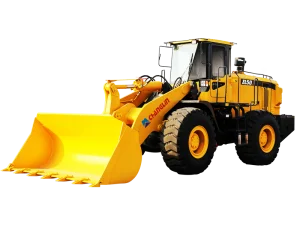
Building on the commercial success of zero-emission wheel loaders (such as the ZL50EV electric wheel loader), research and development teams are actively engineering battery-electric (BEV) and diesel-electric hybrid powertrains for medium motor graders.
Electric drive motors offer instant peak torque across all RPM ranges, allowing precise slow-speed grading under extreme loads without engine stalling. Regenerative braking capabilities recapture kinetic energy during downhill passes, significantly extending operational shift hours in enclosed tunnel projects and eco-sensitive infrastructure zones.
Global Dealer Infrastructure, Parts Logistics & Training
Ensuring high equipment uptime through strategic regional spare parts distribution, remote diagnostics telematics, and structured technician certification.
Regional Spare Parts Hubs
Machine downtime on a remote job site can cost thousands of dollars per hour. Sourcing heavy equipment backed by overseas parts hubs is vital. Spare parts logistics centers maintain high-demand replacement components—including cutting edges, wear plates, hydraulic cylinder seal kits, control valves, and circle drive pinion gears—ready for dispatch within 24 to 48 hours.
Technician Training & Knowledge Transfer
Maximizing machine longevity requires qualified maintenance personnel. Manufacturers host structured technical training programs covering advanced fault diagnosis, electro-hydraulic calibration, transmission pressure testing, and preventive maintenance regimes. Certified local engineers provide rapid response for fleet commissioning and complex overhauls.
IoT Telematics & Fleet Management
Factory-installed IoT telematics modules transmit real-time telemetry data to fleet operations centers. System supervisors monitor GPS location, engine operating hours, fuel burn rates, hydraulic oil temperature spikes, and active fault diagnostic codes (DTC), enabling proactive maintenance before catastrophic component failure occurs.
Complete Fleet Machinery Portfolio
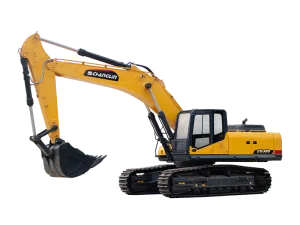
Complementary earthmoving machinery family: Excavators, wheel loaders, bulldozers, and compactors built for extreme job sites.





Frequently Asked Technical & Sourcing Questions
Detailed answers to complex questions asked by international fleet buyers, equipment dealers, and project procurement managers.
How do I select the optimal horsepower and moldboard length for heavy mining vs. highway construction?
Selection depends primarily on material density, slope angle, and daily bank cubic meter (BCM) throughput. For highway sub-base prep and municipal grading, a 150HP to 215HP unit (such as the PY150 or PY190H) with a 12ft or 13ft moldboard delivers ideal balance between maneuvering agility and fuel efficiency. For heavy mining haul road maintenance (where 100-ton+ dump trucks continuously rut hard-packed rock), heavy-duty models rated from 300HP to 350HP+ (such as the PY320T or PY350T) equipped with a 14ft or 16ft heavy moldboard, rear ripper, and front bull blade are required to maintain continuous penetration and drawbar pull.
What are the primary performance advantages of All-Wheel Drive (6x6) motor graders over Tandem Drive (6x4)?
All-Wheel Drive (6x6) systems utilize hydrostatic or mechanical front-wheel auxiliary drives that automatically deliver proportional torque to the front wheels whenever rear wheel slip is detected. This eliminates front-end drift when cutting steep ditch side-slopes, increases total tractive net pull by up to 30% in mud, sand, or snow, and enables precise control during bank cutting operations where front wheel traction holds the front frame against lateral blade thrust forces.
How does factory customization accommodate high-altitude and extreme climate job sites?
For high-altitude deployments (exceeding 3,000 meters above sea level), engines are fitted with high-pressure wastegate turbochargers to compensate for lower air density and prevent thermal de-rating. For arctic environments (-40°C), factory pre-installations include block pre-heaters, synthetic low-pour-point hydraulic fluids, heating elements for fuel lines, and cold-weather rubber seals. For desert projects (+50°C), heavy-duty cooling packages feature enlarged aluminum radiators and variable-speed hydraulic demand fan drives.
What international shipping methods are used for exporting motor graders and heavy excavators?
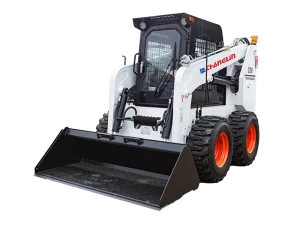
Heavy earthmoving machinery is shipped via three main maritime logistics methods based on unit dimensions and destination port infrastructure: Roll-on/Roll-off (RoRo) vessels allow fully assembled machines to be driven directly onto covered deck levels for maximum protection; Flat Rack (FR) Containers are used for medium-sized units with disassembled moldboards; and Break-Bulk Cargo is utilized for multi-unit fleet orders. Compact skid steer loaders (such as the 275F) are loaded directly into standard 40ft High Cube (HC) sea containers.
What routine maintenance cycles are recommended to maximize circle drive and moldboard lifespan?
To prevent excessive play in the circle drive rotation system, bronze wear strips must be inspected and shimmed every 250 operating hours. Hydraulic circle drive pinion gear teeth should be lubricated daily with extreme-pressure lithium grease. Cutting edge bolts must be torque-checked after the first 50 operating hours, and reversible moldboard cutting edges turned before wear reaches the main moldboard beam plate. Daily inspections of load-sensing hydraulic valve fittings ensure zero fluid contamination.
Can Sinomach-HI motor graders be integrated with third-party 3D GPS grade control systems?
Yes. All current generation motor grader models are engineered with open architecture hydraulic interfaces and pre-wired electrical harnesses compatible with leading 3D satellite grade control systems (including Trimble Earthworks, Leica iCON, and Topcon 3D-MC). Factory options include factory-installed mounting masts, integrated hydraulic proportional control valves, and cab-ready display power connections.