
Featured Heavy Machinery Fleet Selections
Explore our primary export-grade machinery line, manufactured directly under rigorous international quality standards for earthmoving, road building, and mass excavation.






Global Commercial & Industrial Landscape of Heavy Road Grading Infrastructure
The global market for road grader machinery—commonly referred to as motor graders—is undergoing a structural evolution driven by mega-infrastructure investments, expanding mining haul-road networks, and demanding municipal urbanization projects across emerging economies.
Infrastructure Development Demand
Global belt-and-road logistics corridors, sub-Saharan highway expansions, and Latin American mineral transport arterials require high-drawbar motor graders capable of continuous earth-shaping and base-layer leveling with strict tolerances.
Mining Haul-Road Maintenance
Ultra-heavy mining graders (300+ HP) are critical assets in open-pit operations. Keeping haul roads smooth reduces haul-truck tire wear by up to 35% and increases fuel efficiency across massive dump truck fleets.
Shift Toward TCO Optimization
Contractors no longer select manufacturers based on initial capital expenditure (CAPEX) alone. Total Cost of Ownership (TCO), hydraulic reliability, structural steel integrity, and immediate spare-parts availability dictate buying choices.
Engineering Architecture & Advanced Technical Blueprint
A modern road grader machine is a highly engineered balancing act between mechanical leverage, hydraulic precision, and structural durability. Here is an architectural breakdown of heavy-duty OEM manufacturing parameters.
Load-Sensing Proportional Hydraulics
Our OEM factories integrate variable-displacement axial piston pumps paired with load-sensing proportional valves. This ensures precise multi-function control—allowing operators to lift, slope, turn, and tilt the blade simultaneously without fluid starvation or erratic moldboard bounce.
Articulation & Frame Kinematics
Featuring a heavy-duty box-section frame constructed from high-tensile structural steel. Articulated frame joints (typically ±20° to ±25°) allow a tight turning radius and crab-steering modes, essential for grading around curves and stabilizing the front axle on steep side slopes.
Moldboard Dynamics & Circle Drive
The circle drive gear system features internal heat-treated teeth, a 360-degree hydraulic rotation sphere, and replaceable wear bushings. High-carbon steel cutting edges provide maximum penetration force across hard clay, gravel, and frozen soil layers.
Technical Specification Matrix: Motor Grader Tiers
| Performance Specification | Light Utility (130-160 HP) | Medium Highway (180-220 HP) | Heavy Mining (300-350+ HP) |
|---|---|---|---|
| Operating Weight (kg) | 11,000 – 14,000 kg | 15,500 – 17,500 kg | 27,000 – 38,000 kg |
| Moldboard Blade Length | 3,660 mm (12 ft) | 3,965 mm (13 ft) / 4,270 mm (14 ft) | 4,880 mm (16 ft) / 5,486 mm (18 ft) |
| Maximum Drawbar Pull | 75 – 88 kN | 105 – 125 kN | 180 – 230 kN |
| Hydraulic System Pressure | 17.5 MPa | 20.0 MPa | 22.5 MPa |
| Primary Target Application | Municipal roads, farm maintenance | National highways, airport runways | Open-pit mine haulage roads |
Localized Application Scenarios & Environment Adaptations
Heavy equipment must perform reliably regardless of geography or micro-climate. Modern factory customizations accommodate localized severe operating environments across four primary international domains.
High-Temperature & Sahara Dusty Operations
Regions: Middle East, North & Sub-Saharan Africa.
Features heavy-duty desert cooling packages, dual-stage oil-bath pre-filters, and pressurized cabs to keep dust out and protect electronic sensors in +50°C ambient heat.
Sub-Zero Winter & Snow Removal
Regions: CIS Region, Northern Europe, North America.
Specially outfitted with fuel pre-heaters, synthetic arctic hydraulic fluid, thermal cab insulation, front snow plows, and V-shape wings for heavy snow removal on ice roads.
High-Altitude Plateau Work
Regions: South American Andes, Central Asian Ranges.
Incorporates turbo-charged engines equipped with barometric altitude compensation software to prevent power derating at elevation thresholds exceeding 4,000 meters above sea level.
Tropical Heavy Clay Earthworks
Regions: Southeast Asia, Latin America Rainforests.
Utilizes high-flotation wide tires, self-cleaning tread patterns, and reinforced rear ripper shanks to break up compacted cohesive clay soils in high-humidity zones.
Technology Roadmap & Future Outlook (2025–2030)
The road grader manufacturing sector is rapidly adopting intelligent sensing, automation, and green energy technology. Buying from forward-looking OEM factories ensures your fleet remains competitive over its 10-year service life.
3D GPS / GNSS Grade Control Integration
Modern factory units come pre-wired for plug-and-play integration with 3D GPS/GNSS and laser auto-grading systems (such as Trimble, Leica, or Topcon). Automatic hydraulic blade positioning achieves sub-centimeter leveling accuracy, cutting operator training time in half.
Electrification (BEV) & Hybrid Powertrains
As zero-emission mandates extend from urban construction to mining, OEM engineering teams are introducing battery-electric (BEV) and hybrid motor graders. Electric motor torque provides instant blade response while cutting fuel expenditure by up to 60% in standardized grading cycles.
IoT Telematics & Remote Diagnostics
Next-generation fleets embed CAN-bus IoT hardware transmitting real-time operational telemetry—including hydraulic fluid temperature, engine load factor, fuel burn rate, and predictive component wear alerts direct to fleet management dashboards.
China OEM Manufacturing Ecosystem & Supply Chain Efficiency
Establishing a factory direct partnership with leading Chinese heavy machinery hubs (such as Sinomach-HI / Changlin in Changzhou) offers global buyers unmatched manufacturing scale, component consistency, and cost advantages.
Vertical Integration & Key Component Control
Unlike simple assembly facilities, major Chinese manufacturing centers utilize vertical integration—producing their own structural frames, drive axles, and hydraulic cylinders while pairing them with globally recognized engines (Cummins, Weichai, Shangchai) and ZF-technology transmissions.
Robotic Welding & Precision Machining
Automated robotic welding lines, CNC boring machines, and ultrasonic weld testing guarantee high structural integrity across all moldboards, drawbars, and main chassis frames, preventing stress fracturing during high-drawbar loading.
Optimized Shipping Logistics & Port Proximity
Located near major ocean logistics hubs (Shanghai/Ningbo ports), factory shipments can be flexibly packaged for RoRo (Roll-on/Roll-off), Flat Rack, or modular Containerized freight—minimizing ocean shipping costs and transit lead times.
Global Compliance, Operator Safety & On-Site Support
Deploying heavy machinery globally demands strict compliance with regional emission standards, operator safety regulations, and rapid after-sales support networks.
ROPS / FOPS Operator Safety Certification
All modern cabins feature certified Roll-Over Protective Structures (ROPS) and Falling Object Protective Structures (FOPS), ergonomic suspension seats, 360-degree LED work lights, and rear-view cameras to ensure high operator safety during night work.
Multi-Tier Emission Compliance Options
Engine platforms can be tailored to destination standards—ranging from Tier 2 / Tier 3 for regions with variable fuel quality, up to Euro Stage V and EPA Tier 4 Final for strict environmental regulations in North America and Europe.
Comprehensive Spare Parts Service Level Agreement
Factory direct buyers gain access to centralized spare-parts repositories. Critical wearable items (cutting edges, end bits, filter kits, hydraulic seals) are supported with guaranteed rapid dispatch to avoid equipment downtime.
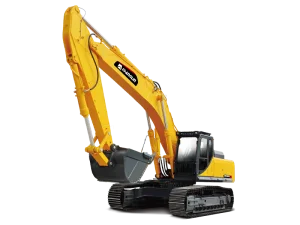
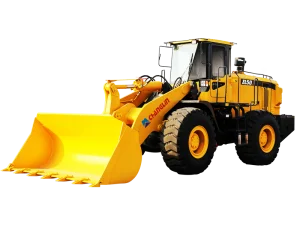
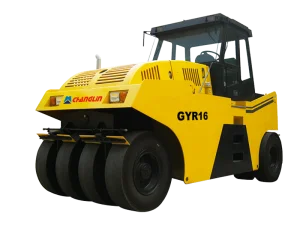
Additional Heavy Duty Construction Machinery Line
Browse additional machinery units engineered for harsh jobsites, including specialized motor graders, landfill compactors, and heavy crawler dozers.






Frequently Asked Questions for Global Machine Buyers
Essential technical and commercial clarifications to assist equipment buyers, fleet managers, and procurement teams before issuing an RFQ or contract purchase order.
What are the key technical parameters to specify when buying a road grader machine?
When requesting quotations from OEMs, buyers should evaluate four core criteria: Engine Horsepower (HP) relative to Operating Weight (to ensure sufficient drawbar pull without traction loss), Moldboard Length (12ft vs 14ft), Hydraulic System Type (Load-sensing proportional hydraulics offer vastly superior control over gear-pump systems), and Frame Kinematics (articulation angle and wheel lean capacity for working steep slopes).
How does buying direct from a Chinese factory compare to local dealer sourcing?
Factory-direct purchasing eliminates intermediary markups, providing a 20% to 35% cost advantage while enabling custom equipment engineering tailored to your specific job site (e.g., high-altitude setups, desert cooling packages, specialized attachments). OEM buyers are backed by direct factory engineering warranties and comprehensive spare-parts dispatch channels.
What optional attachments can be factory-installed on a motor grader?
Common factory-installed options include Rear Rippers (3-shank or 5-shank for breaking hard packed rock), Front Dozer Blades (for heavy pushing and backfilling), Front Scarifiers (mid-mounted for light soil loosening), Automatic Lubrication Systems, and pre-wiring for 3D GPS/GNSS auto-grading software controllers.
How are large motor graders shipped internationally?
Depending on machine size and destination port capabilities, equipment is shipped using three main methods: Roll-on/Roll-off (RoRo) for fully assembled drive-on delivery, Flat Rack containers for heavy units, or Disassembled Containerization (where wheels and moldboard are detached to fit into standard 40ft High Cube containers, significantly reducing ocean freight cost).
What maintenance schedules are recommended to maximize motor grader longevity?
Daily checks should focus on blade cutting edge wear, tire pressure, and greasing circle drive turn-table teeth. Preventative service intervals require engine oil and filter changes every 250–500 hours, hydraulic oil fluid analysis and filter replacement every 1,000 hours, and circle drive wear-strip shimming to maintain precision blade tolerances.
Can motor graders be customized for low-quality high-sulfur diesel fuel?
Yes. For export markets in developing regions where fuel quality varies, OEMs offer mechanically governed or Tier 2 / Tier 3 electronic engines equipped with heavy-duty multi-stage water-separator fuel filters to prevent fuel injector damage.