
Tier-1 Factory Heavy Equipment Directory (Part I)
Direct factory-backed heavy machinery engineered for infrastructure development, mining, road compaction, and high-efficiency earthmoving operations globally.

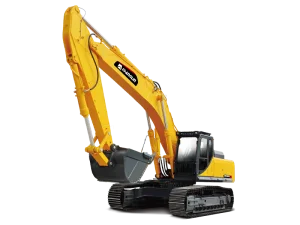






The Global Commercial Landscape of Wheel Excavators (2026–2032)
The global heavy construction machinery sector is experiencing a structural paradigm shift. While traditional crawler excavators dominate mass earthmoving in open-pit mining and virgin land clearing, wheel excavators (wheeled diggers) have emerged as the fastest-growing equipment category across urban infrastructure, utility trenching, and municipal maintenance worldwide.
Driven by accelerating global urbanization, stringent municipal road protection laws, and the urgent demand for flexible, multi-tool machinery, the worldwide demand for wheeled excavators is projected to expand at a compound annual growth rate (CAGR) of 6.4% through 2032. Unlike tracked variants, wheel excavators offer self-propelled road speeds between 25 km/h and 40 km/h, eliminating the logistical expense and delays of lowboy trailer transport over short-to-medium inter-site distances.
Urban Mobility & Low Surface Damage
Equipped with heavy-duty pneumatic rubber tires or dual-tire assemblies, wheel excavators prevent asphalt degradation and concrete cracking during travel and operation, making them mandatory for European, North American, and East Asian city works.
Logistical TCO Reductions
By removing reliance on specialized flatbed transport for intra-city relocations, fleet operators report up to 28% reductions in operational logistics costs and immediate gains in daily equipment utilization rates.
Versatile Hydromechanical Tool Integration
Modern wheel excavators serve as Swiss Army knives for contractors. High-flow auxiliary hydraulic circuits allow seamless operation of tiltrotators, hydraulic breakers, asphalt cutters, grapple buckets, and augers.
Why Direct Sourcing from Chinese Machinery Factories Yields Strategic Advantage
China has transformed from a high-volume manufacturing hub into the world's most sophisticated ecosystem for heavy equipment production, integrated hydraulic engineering, and smart machinery assembly.
1. Complete Supply Chain Concentration
Chinese industrial manufacturing zones—such as Changzhou, Jiangsu, and Shandong clusters—house complete Tier-1 supply chains within a 50-kilometer radius. Major global powerplants (Cummins, Weichai, Yuchai), advanced hydraulic main valves/pumps (Kawasaki, Rexroth, Hengli), and heavy transmission/axle systems (ZF, Dana, Meritor) are natively integrated into automated factory lines.
This dense industrial clustering eliminates cross-border component bottlenecks, drastically cuts factory lead times, and allows factory-direct buyers to customize chassis configurations, boom geometries, and counterweight balances at a fraction of Western OEM costs.
2. Robotized Precision Assembly & Quality Control
Modern Chinese heavy equipment factories deploy Industry 4.0 standards. Structural steel fabrication utilizes ultra-high-power fiber laser cutting, multi-axis robotic welding arms for seamless structural stress distribution, and automated ultrasonic flaw detection on high-load boom weld seams.
Every manufactured unit undergoes multi-stage factory verification: high-pressure hydraulic leak testing, 100% full-duty dynamic load testing, transmission thermal endurance runs, and strict ISO 9001 / CE compliance validation prior to export shipping clearance.
Localized Application Scenarios for Wheel Excavator Fleets
Selecting the appropriate machinery requires a granular analysis of terrain constraints, soil composition, mobility demands, and multi-attachment utility.
1. Municipal Road & Pipeline Trenching
In urban excavation, space is tightly restricted and road surfaces must remain intact. Wheel excavators fitted with short tail-swing radius, dozer blades, and dual stabilizers (outriggers) can dig trenches along curbstones, lift concrete barriers, and backfill pipelines without blocking multiple traffic lanes.
2. Agricultural Canal Maintenance & Forestry
For rural water conservancy and irrigation canal dredging, wheel excavators excel by traveling directly along unpaved farm access roads. High ground clearance and all-wheel drive (4WD) configurations ensure superior traction in mud and soft clay.
3. Scrap Yards, Recycling & Port Logistics
Configured with elevated operator cabs, extended material-handling booms, and hydraulic rotating grapples or electromagnets, wheeled excavators serve as agile scrap handlers in scrap yards and port terminals, shifting materials faster than stationary cranes.
Engineering Specification Matrix: Wheel vs. Crawler Excavators
A comparative evaluation for procurement directors and asset managers:
| Operational Metric | Wheel Excavator (8T – 22T) | Crawler Excavator (8T – 50T+) | Strategic Procurement Impact |
|---|---|---|---|
| Transit Mobility | High (25 – 40 km/h self-driven) | Low (3 – 5 km/h, requires lowboy) | Eliminates short-haul transport rental fees. |
| Ground Surface Impact | Minimal (Pneumatic rubber tires) | High (Steel tracks disrupt asphalt) | Mandatory for paved municipal job sites. |
| Operational Stability | High (With outriggers & dozer blade down) | Maximum (Broad track footprint) | Outriggers provide solid digging foundation. |
| Undercarriage Wear Cost | Low to Moderate (Tire rotation/replacement) | High (Pins, bushings, sprockets wear) | Lower long-term undercarriage rebuild costs. |
| Ideal Work Environment | Urban roads, utilities, scrap, ditches | Heavy mining, rock quarries, deep swamps | Matches site terrain to machinery design. |
Future Industry Trends Shaping Factory R&D and Manufacturing
Electrification & Pure Electric (EV) Wheel Excavators
Zero-emission directives in European and North Asian metropolitan regions have driven Chinese factories to lead the development of lithium iron phosphate (LFP) battery-powered wheel excavators. Operating with zero localized emissions, reduced thermal output, and up to 70% lower energy cost per hour compared to diesel units, electric wheel loaders and excavators represent the future of sustainable urban construction.
Smart Telematics, GPS/GIS & Autonomous Control
Modern factory-direct machines are equipped with integrated CAN-bus electronic architecture, 5G remote telematics, and 2D/3D GPS grade control readiness. Fleet managers can monitor real-time fuel/power consumption, hydraulic pressure spikes, operator efficiency metrics, and geo-fencing diagnostics from centralized enterprise dashboards.
Global Enterprise Procurement: TCO Analysis & OEM Sourcing Criteria
For commercial contractors, government procurement agencies, and equipment leasing fleets, acquiring heavy machinery requires evaluating Total Cost of Ownership (TCO) rather than focusing solely on the initial FOB purchase price.
The Universal Enterprise Machinery TCO Formula:
TCO = C_acquisition + C_energy/fuel + C_maintenance + C_downtime - S_salvage_value
- C_acquisition: Machine unit FOB price + ocean freight logistics + import tariffs.
- C_energy/fuel: Liters of diesel (or kWh for EVs) consumed per hour of hydraulic digging.
- C_maintenance: Scheduled oil/filter changes, hydraulic seal kits, tire replacements, and wear items.
- C_downtime: Revenue loss caused by spare part shipping delays or unexpected component failure.
- S_salvage_value: Resale value of the machine after 5,000–10,000 operational hours.
Factory Audit & Production Verification
Enterprise buyers should verify supplier credentials through third-party factory audits (SGS, TÜV, Bureau Veritas), inspecting frame robotic welding, assembly torque calibration records, and hydraulic cleanliness standard ISO 4406 levels.
Custom OEM/ODM Technical Specs
Tier-1 Chinese factories offer bespoke engineering adaptations: high-altitude engine tuning, arctic cold-start packages (-40°C), desert tropical cooling radiators (+55°C), and reinforced heavy-duty arm attachments.
Containerized & RoRo Logistics
Optimized disassembly protocols allow medium wheel excavators and compact loaders to fit inside standard 40ft HQ containers or flat racks, reducing ocean freight overhead by up to 30% compared to RoRo shipping.
Tier-1 Factory Heavy Equipment Directory (Part II)
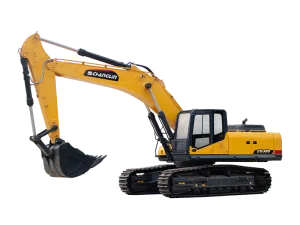
Explore our complete range of specialized road rollers, crawler excavators, electric wheel loaders, and earthmoving machinery manufactured to rigorous international standards.





Frequently Asked Questions for Machinery Sourcing & Fleet Buyers
Detailed engineering and commercial answers to help enterprise procurement managers make informed equipment purchasing decisions.
What are the key technical differences between wheel excavators and crawler excavators?
Wheel excavators feature pneumatic rubber tires and advanced drive axles, allowing self-propelled transit speeds up to 40 km/h on public roads without damaging asphalt surfaces. Crawler excavators use steel tracks, providing lower ground pressure for soft or muddy terrain but requiring flatbed lowboy trailers for transport. Wheel excavators rely on hydraulic outriggers and a front dozer blade to establish a rigid foundation during heavy digging operations.
How do Chinese machinery factories guarantee hydraulic system quality and anti-leakage performance?
Leading Chinese heavy machinery factories integrate premium global hydraulic components (such as Kawasaki main pumps and Rexroth main control valves) assembled in class-10,000 cleanroom environments. Hydraulic oil filtration standards meet ISO 4406 (e.g., 16/14/11 cleanliness grade). Before shipment, machines undergo continuous 4-hour high-pressure dynamic load cycles and thermal stress testing to verify zero oil leakage at seal connections.
What engine emission standards are available for factory-direct export orders?
Factories tailor engine packages to destination regulatory requirements. European and North American buyers receive EU Stage V / US EPA Tier 4 Final engines equipped with DPF/SCR exhaust treatment. For developing markets in South America, Africa, and Southeast Asia, Tier 2 / Tier 3 mechanical engines are available to accommodate high-sulfur fuel varieties without component damage.
How does buying directly from Chinese factories impact long-term spare parts availability?
Tier-1 Chinese OEMs maintain international spare-parts depots across major global hubs (Dubai, Johannesburg, Sao Paulo, Tashkent) backed by digital EPC (Electronic Parts Catalog) software. Fleet buyers receive recommended 2,000-hour fast-wearing spare parts kits (filters, seal kits, tooth adapters, hydraulic hoses) with initial unit shipments, ensuring zero job-site downtime.
Can factory customization (OEM/ODM) be applied to specialized work attachments?
Yes. Chinese factories specialize in custom OEM engineering. Buyers can request high-flow dual-way auxiliary hydraulic lines, hydraulic quick-couplers, tiltrotator interfaces, extendable telescopic booms, elevated cabs for material sorting, and reinforced heavy-duty buckets directly integrated on the factory assembly line.
What shipping methods are used for exporting heavy machinery from Chinese factories?
Depending on machine dimensions and order quantities, factories utilize three primary export shipping channels: 1) Roll-on/Roll-off (RoRo) or Breakbulk vessels for fully assembled heavy units; 2) Flat-Rack containers for high-deck excavators; and 3) 40ft High-Cube (40HQ) containers via modular disassembly (removing wheels, arm, and counterweight), reducing ocean freight costs by up to 35%.
What international quality certifications should buyers check during factory audits?
Enterprise buyers should verify ISO 9001 (Quality Management System), ISO 14001 (Environmental Management), CE Marking for European machinery safety compliance, ROPS/FOPS operator cab safety certification (ISO 3471 / ISO 3449), and E-Mark certification for road-legal lighting and braking systems.
What is the standard factory warranty structure for international B2B machinery orders?
Standard factory warranties cover 12 months or 2,000 operational hours (whichever comes first) for core power-train and hydraulic components (engine block, main pump, control valve, transmission, swing motor). Extended warranty terms up to 24 months or 4,000 hours are available upon request for fleet agreements.