
Primary OEM Machinery Lines Available for Global Dispatch

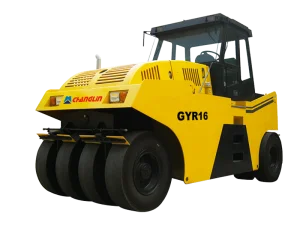





The Evolution of China Bucket Excavator Manufacturing
In modern heavy civil engineering, mining, and infrastructure development, the bucket excavator represents the primary mechanical lever for earthmoving productivity. Selecting a tier-one China bucket excavator manufacturer has transitioned from a pure cost-saving tactic to a strategic long-term supply agreement focused on structural durability, customized metallurgical engineering, and total cost of ownership (TCO) optimization.
High-Strength Alloy Metallurgy
Leading Chinese excavator bucket manufacturers employ premium quenched and tempered steel alloys (such as NM400, NM500, and Hardox 450/500 equivalent plates). This material selection ensures superior yield strength (>1000 MPa) and exceptional resistance to high-impact abrasion during hard-rock extraction.
Hydraulic & Geometric Optimization
By leveraging advanced FEA (Finite Element Analysis) and 3D kinematic simulation, bucket geometry is mathematically contoured to reduce digging resistance by up to 15%. This optimizes cycle times and dramatically cuts fuel consumption per bank cubic meter (BCM) excavated.
Full OEM & Attachment Integration
Modern excavator plants in China do not merely produce standard buckets; they engineer complete working attachments, quick couplers, tilt-rotators, and specialized bucket configurations (HD Rock, Mud Ditching, Skeleton, Trenching) tailored to major global excavator brands.
Key Technical Insight for Procurement Directors
The total operating efficiency of a hydraulic crawler excavator depends heavily on matching bucket volume, lip thickness, and tooth profile to the excavator's operating weight and breakout force. A mismatched bucket increases hydraulic strain, elevates oil temperatures, and reduces engine service life.
Why Sourcing from Chinese Excavator Factories Delivers Unmatched ROI
China's heavy machinery ecosystem has evolved into a global center of excellence. Factory integration, robotic precision, and raw material availability create significant performance and economic advantages.
Integrated Supply Chain & Metallurgical Control
Chinese heavy equipment factories benefit from immediate access to domestic high-grade steel mills and localized production of heavy hydraulic components. From initial plate cutting using high-definition CNC plasma/laser systems to automated bending and heat treatment, the entire supply chain is consolidated under strict ISO 9001 and CE quality frameworks.
This vertical integration eliminates multi-layered subcontractor markups, allowing global buyers to receive mining-grade, heavy-duty bucket assemblies at direct OEM factory rates.
- Automated Submerged Arc Welding (SAW) for stress-free structural joints
- Ultrasonic and magnetic particle weld defect inspections
- Custom tooth adapter systems (CAT GET, ESCO, Komatsu compatibility)
Manufacturing Capability Comparison
Multi-axis robotic welding cells execute uniform bead penetration, eliminating human thermal error and localized fatigue cracking under extreme payload conditions.
Equipped with weld-on heel shrouds, lip protectors, wing shrouds, and bimetallic wear buttons (700 BHN) for high-abrasion silica and granite extraction.
Custom pin center distances, earplate widths, and stick clearance radius designed directly from client CAD files or machine specification sheets.
Key Industry Trends Reshaping Excavator & Bucket Engineering
As global construction demands shift toward lower carbon emissions, higher automation, and enhanced job-site safety, Chinese manufacturers are pioneering several critical advancements.
Electrification Alignment
With the rise of battery-electric hydraulic excavators, bucket design emphasizes weight reduction without structural loss to preserve battery duty cycles per charge.
Smart IoT & Telematics Integration
Integration of bucket-mounted payload measurement sensors and tilt-angle telemetry compatible with 3D GPS grading systems for millimeter-level levelling precision.
Ultra-Wear Resistant Alloys
Implementation of complex carbide overlay plates and modular bolt-on wear technology, drastically cutting maintenance downtime during field service intervals.
Eco-Standard Compliance
All carrier excavators manufactured for global markets comply with EU Stage V and US Tier 4 Final low-emission diesel engine standards.
Localized Application Scenarios & Equipment Selection Matrix
Selecting the correct bucket geometry and machine tonnage depends heavily on material density, ambient job site conditions, and earthmoving tasks.
1. Open-Pit Mining & Hard Rock
Requires heavy-duty rock buckets featuring spade-nose (V-lip) edges, thick side cutters, complete bottom wear straps, and heavy forged pin-on teeth systems designed to withstand intense shock loads.
2. Urban Trenching & Utilities
Demands narrow profile trenching buckets with optimized breakout force geometry, smooth side-clearance plates, and integrated quick-coupler hook attachments for efficient pipe-laying operations.
3. Water Conservancy & Dredging
Utilizes wide, high-capacity mud ditching buckets equipped with water drainage holes, dual cutting edges, and optional hydraulic tilt mechanisms up to 45 degrees left/right.
Excavator Bucket Specification Selection Guide
| Excavator Tonnage Class | Recommended Bucket Type | Standard Capacity (m³) | Material Density Target | Tooth & Wear Package Configuration |
|---|---|---|---|---|
| 6 - 13 Ton (Compact/Mini) | General Purpose / Trenching | 0.25 - 0.60 m³ | Up to 1.8 t/m³ (Topsoil, Clay) | Standard pin-on teeth, single side cutters |
| 20 - 25 Ton (Medium Utility) | Heavy Duty Excavation / HD Rock | 0.90 - 1.40 m³ | 1.8 - 2.2 t/m³ (Gravel, Loose Rock) | NM400 base plate, lip shrouds, HD GET teeth |
| 30 - 40 Ton (Heavy Earthmoving) | Severe Duty Quarry / Rock Bucket | 1.40 - 2.20 m³ | 2.2 - 2.8 t/m³ (Blasted Granite, Ore) | Hardox 450 main body, heel shrouds, wear buttons |
| 45 - 90 Ton (Heavy Mining) | Extreme Duty Spade-Nose Mining | 2.50 - 6.00 m³ | > 2.8 t/m³ (Iron Ore, Abrasive Rock) | Complete spade lip, bimetallic liners, ESCO/CAT GET |
Global Enterprise Procurement & Lifecycle TCO Framework
When procuring heavy equipment fleets or attachment shipments from China, procurement managers must evaluate overall financial efficiency, factory audit compliance, and international freight logistics.
1. Technical RFP & Specification Alignment
Ensure your RFP defines exact material specs, pin dimensions, operating hydraulic pressures (MPa), and desired wear liner hardness ratings. Verify structural drawing sign-offs prior to batch casting and bending.
2. Factory Quality Audits & Testing
Require third-party inspections (SGS, TÜV, Bureau Veritas) covering NDT weld testing, raw material mill test certificates (MTC), dimensional accuracy, and paint thickness (DFT) compliance.
3. Logistics & Export Packaging
Ensure heavy machines are shipped via RoRo (Roll-on/Roll-off) or Flat Rack vessels. Buckets and compact attachments should be steel-palletized with anti-corrosion VCI wrapping for ocean shipping transit.
Total Cost of Ownership (TCO) Equation for Heavy Earthmoving Fleets
TCO Formula: TCO = Acquisition Cost + (Operating & Fuel Costs) + (Downtime & Wear Maintenance) - Residual Asset Value
Procuring direct from established Chinese manufacturers reduces initial Capex by 25%–40% while matching Tier-1 structural performance. This initial saving, combined with lower replacement costs for GET wear components, maximizes ROI across multi-year mining and infrastructure projects.
Earthmoving, Grading & Compaction Machinery Range




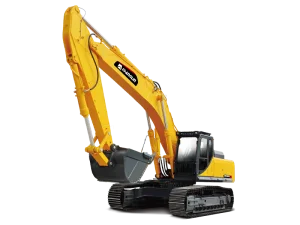

Frequently Asked Questions on China Bucket Excavator Sourcing
In-depth technical answers for equipment buyers, fleet managers, and procurement specialists.
How do Chinese excavator manufacturers ensure weld structural integrity for mining buckets?
Leading Chinese factories utilize automated robotic Submerged Arc Welding (SAW) and Gas Metal Arc Welding (GMAW) processes with pre-heated steel plates to prevent hydrogen-induced cold cracking. All high-stress load points (such as earplate-to-shell welds) undergo 100% Non-Destructive Testing (NDT) via Ultrasonic Testing (UT) and Magnetic Particle Inspection (MPI) in accordance with international welding standards like ISO 5817.
What steel grades are used in heavy-duty vs. general-purpose excavator buckets?
General-purpose buckets typically utilize Q355B/Q355D structural steel for the shell and side plates with medium-carbon alloy teeth. Heavy-duty and rock buckets incorporate quenched and tempered high-yield alloys such as NM400, NM500, or imported Hardox 450/500 steel for the cutting lip, side cutters, and bottom wear straps. This provides a surface hardness of 400 to 500 HBW, extending structural life by 200% to 300% in abrasive environments.
Can Chinese excavator manufacturers produce custom attachments for specific machine brands?
Yes. OEM/ODM customization is a primary capability of tier-one manufacturers in China. Manufacturers can produce buckets and attachments engineered to exact pin-diameter, stick-width, and pin-center distance measurements for all major global brands (including Caterpillar, Komatsu, Volvo, Hitachi, Kobelco, Hyundai, and SANY), or supply direct quick-coupler adapters (S-type, CW-type, or Pin-Grabber systems).
How is bucket volumetric payload capacity calculated?
Bucket capacities are specified in accordance with ISO 7451 and SAE J296 standards. Capacity is split into two ratings: Struck Capacity (the volume of the bucket after scraping a straight line along the strike plane) and Heaped Capacity (the struck volume plus the additional material piled on top at a 1:1 or 2:1 angle of repose). Professional procurement requires matching the heaped density of your target material to the machine's maximum payload limit.
What are the standard international shipping methods for excavators and heavy attachments?
Complete crawler excavators are shipped globally via RoRo (Roll-on/Roll-off) vessels or specialized Flat Rack (FR) containers. Separate excavator buckets, hydraulic breakers, and attachments are steel-bound on reinforced pallets and shipped inside standard 20ft or 40ft High Cube (HC) sea containers. All unpainted machined surfaces (pins, bushings) receive rust-preventative grease coating and moisture-barrier shrink wrapping prior to container loading.
What warranty coverage and spare parts support are offered for direct factory orders?
Complete heavy excavator units generally come with a standard 12-month or 2,000-operating-hour warranty (whichever comes first), covering main hydraulic pumps, control valves, engines, and structural frames. Bucket wear parts (GET teeth, adapters, lip shrouds) are treated as consumable items, but manufacturers offer consolidated spare parts packages shipped alongside original machine orders for easy maintenance stocking.
Partner with China's Premier Machinery & Excavator Manufacturers
Whether you require a single specialized heavy-duty bucket attachment or an entire fleet of crawler excavators, motor graders, and compaction machinery, our engineering support team is ready to assist your procurement process.
Request a Customized Factory Quote