
Featured Earthmoving & Heavy Construction Machinery Showcase
Explore our high-performance fleet manufactured in state-of-the-art facilities, designed for extreme durability, low operational costs, and global site compliance.



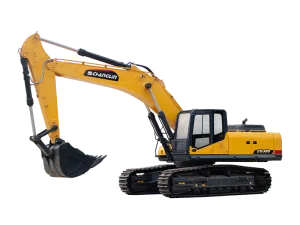
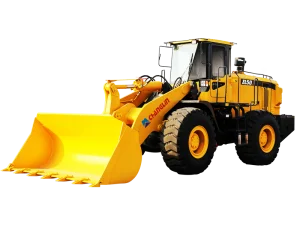

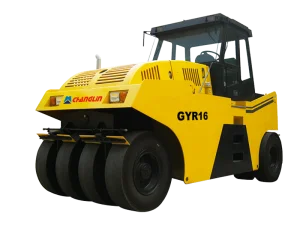

Global Commercial & Industrial Landscape of Heavy Construction Bulldozers
The global heavy earthmoving machinery sector is undergoing a massive structural transformation. Driven by trillion-dollar national infrastructure packages, expanding open-pit mining operations, and critical land reclamation projects across Africa, Latin America, Southeast Asia, and the Middle East, the demand for high-horsepower, ultra-reliable construction bulldozers has reached an unprecedented peak. Bulldozers serve as the primary force in earthmoving—responsible for pioneering cut-and-fill operations, clearing dense overburden, leveling rough terrain, and stabilizing foundation beds before secondary construction can begin.
In modern industrial applications, buyers no longer evaluate bulldozers purely on raw horsepower or operating mass. The focus has decisively shifted toward Total Cost of Ownership (TCO), fuel efficiency ratios per cubic meter of moved earth, hydraulic responsiveness, and digital system integration. Traditional mechanical-drive dozers are increasingly giving way to dual-circuit electronically controlled hydrostatic transmission systems and electro-hydraulic proportional pilot controls. These advancements yield smoother speed variations, counter-rotation capabilities in tight quarters, and up to 15% reduction in fuel burn under heavy load cycles.
Furthermore, ESG (Environmental, Social, and Governance) mandates from international development banks and tier-one mining conglomerates are enforcing strict emission standards (EU Stage V / US EPA Tier 4 Final) and demanding noise mitigation features for operator cabs. As global fleet operators face rising diesel prices and skilled labor shortages, modern Chinese bulldozer manufacturers have stepped up to bridge the market gap. By pairing top-tier power engines (such as Weichai, Cummins, and Shangchai) with modular hydrostatic systems, Chinese factories now offer industrial-grade bulldozers that match European and North American performance metrics while drastically improving capital expenditure return timelines.
The Supply Chain & Production Efficiency Advantages of Chinese Factories
China has established itself as the undisputed global epicenter for construction machinery manufacturing. This leadership is not merely built on scale, but on deep-tier supply chain integration, advanced robotic welding infrastructure, and state-of-the-art metallurgical control. When global buyers source bulldozers directly from a leading OEM manufacturer in China, they tap into an ecosystem engineered for speed, precision, and economic efficiency.
Complete Vertical Integration
From high-tensile steel plate rolling to cast-steel track shoe forging and precision gear machining, Chinese manufacturing clusters eliminate cross-country component transport latency. Undercarriage structural components undergo rigorous induction hardening in-house, doubling wear life in abrasive rocky terrains.
Robotic Precision Assembly
Sub-assembly lines leverage multi-axis automated robotic welding for heavy mainframes, box-section equalizer bars, and track roller frames. Ultrasonic flaw testing and coordinate measuring machine (CMM) inspections guarantee zero structural defect propagation under continuous shock loads.
Capital Efficiency & Scale
By producing tens of thousands of heavy machines annually across standardized modular platforms, Chinese factories achieve unmatched economies of scale. Procurement teams gain top-grade power-shift transmissions, Linde hydraulic pumps, and ROPS/FOPS cabs at a fraction of Western production costs.
Technical Engineering Deep-Dive: Hydrostatic Drives, Undercarriages & Blade Mechanics
Modern Chinese bulldozers are engineered with sophisticated mechanical and electronic architecture to optimize force distribution and operator safety. Understanding these key technical pillars enables procurement officers to match machine specifications precisely to job site demands.
1. Power System & Powertrain Architecture
At the heart of the modern heavy dozer is a high-torque, low-RPM diesel engine equipped with electronic common-rail fuel injection. Key engine partners include Weichai Power and Cummins China, offering dedicated heavy-duty curves tailored for earthmoving resistance. Drive systems generally fall into two categories:
- Hydrostatic Drive (HST): Dual-path electronically controlled variable-displacement pumps and motors continuously match travel speed to load changes without gear-shift hesitation. HST offers dynamic counter-rotation, seamless turning under full blade load, and superior fuel economy in medium-duty grading.
- Torque Converter Hydro-Shift: Utilizing single-stage single-phase torque converters paired with planetary power-shift transmissions, this setup excels in continuous heavy ripping and high-resistance quarry mass pushes where maximum tractive effort (drawbar pull) is required.
2. Undercarriage Configurations & Track Hydraulics
Undercarriage maintenance accounts for up to 50% of a crawler dozer's lifetime repair costs. Chinese manufacturers offer modular undercarriage configurations engineered for specialized soil types:
| Undercarriage Type | Ground Contact Area | Ground Pressure (PSI) | Primary Application Scenario |
|---|---|---|---|
| Standard (STD) | Standard Track Length & Shoes | 8.5 – 10.2 PSI | Hard rock, general earthmoving, cut-and-fill construction |
| Extended Track (XTR) | Extended Frame Length | 7.2 – 8.1 PSI | Precision slope finish grading, highway shoulder stabilization |
| Low Ground Pressure (LGP) | Extra Wide Triangular/Flat Shoes | 4.1 – 5.3 PSI | Soft mud, wetlands, swamps, riverbank dredging operations |
| Desert & Mining Heavy (HD) | Reinforced Rock Shoes & Guards | 9.8 – 11.5 PSI | Abrasive iron ore, granite quarries, high-temperature sands |
3. Blade Geometry & Attachment Dynamics
Maximizing earth volume shifted per hour depends heavily on matching blade geometry to soil cohesion. Factory options include:
- Straight-Tilt (S-Blade): Short height, high penetration force. Ideal for tough, heavily compacted soil, pioneering, and rock chipping.
- Semi-U Blade (SU-Blade): Combines penetration capability with side wings to retain material, making it the most versatile choice for long-distance earth pushing.
- Universal Blade (U-Blade): Wide curvature with large side wings designed for high-capacity stockpiling of loose material such as coal, woodchips, or dry topsoil.
- Heavy-Duty Single/Triple Shank Rippers: Parallelogram linkage design with hydraulic pitch adjustment allows operators to fracture bedded shale, limestone, and frozen ground prior to dozing.
Field Deployments: Localized Application Scenarios Across Global Job Sites
From sub-zero Siberian mines to scorching Middle Eastern deserts and high-altitude Andean plateaus, Chinese-built construction bulldozers demonstrate exceptional adaptability across challenging field conditions.
High-Altitude Open-Pit Mining & Quarrying
Operating above 4,000 meters requires specialized engine turbocharging matching thin-air oxygen density. Configured with heavy-duty rock undercarriages, anti-abrasive wear plates, and single-shank rippers, 320HP+ dozers slice through granite seams while maintaining hydraulic pressure stability.
Transcontinental Highway & Belt Road Logistics Corridors
Mass cut-and-fill work across hundreds of kilometers demands continuous duty reliability. Hydrostatic dozers equipped with 3D GPS auto-grading interfaces allow operators to achieve sub-centimeter elevation accuracy on roadbed subgrades, drastically cutting rework costs.
Wetland Reclamation & Agricultural Water Works
For marshlands, coastal mudflats, and rice paddy irrigation projects, low ground pressure (LGP) bulldozers with wide swamp track shoes provide necessary flotation. Sealed undercarriage rollers prevent slurry ingress, extending pin and bushing service intervals.
Landfill Waste Management & Environmental Compaction
Specialized sanitary landfill bulldozers feature elevated air pre-cleaners, trash guards, wide-volume refuse blades, and sealed underbody belly plates to prevent wire entanglement and radiator clog, maximizing waste compaction density.
Global Enterprise Procurement Demand & Strategic Sourcing Checklist
For B2B procurement managers, contract developers, and mining fleet directors, sourcing heavy equipment from China requires rigorous evaluation of technical parameters, logistics planning, and after-sales support networks.
Engine & Emission Compliance
Verify whether your target country accepts Tier 2 / Stage II mechanical engines or requires Tier 4 Final / Stage V common rail engines with SCR/DEF systems.
Duty Cycle & Tonnage Matching
Match dozer operating mass (16-ton, 22-ton, 32-ton, or 50-ton) to daily hourly target volume ($m^3/hr$) and truck payload capacities.
Undercarriage Lubrication Type
Ensure sealed and lubricated track chains (SALT) are specified for abrasive sand/rock to prevent internal pin wear and stretch.
Spare Parts MTTR & Logistics
Confirm manufacturer availability of fast-moving filter kits, hydraulic hoses, cutting edges, and wear shoes delivered via regional parts hubs.
Telematics & Remote Diagnostics
Select machines integrated with CAN-bus telematics modules for real-time tracking of fuel burn, fault codes, GPS location, and engine load factors.
Complete Heavy Machinery Equipment Portfolio
Explore our full range of motor graders, hydraulic excavators, wheel loaders, and compaction rollers designed for seamless fleet synchronization.








Industry Trends: The Next-Generation Evolution of Bulldozer Technology
The construction machinery sector is advancing rapidly. Driven by digital transformation, stricter environmental guidelines, and autonomous operating models, modern manufacturers are embedding high-tech features into heavy machinery fleets:
Autonomous & Remote Operation
In high-risk open-pit mining or landslide remediation, 5G remote control systems allow operators to control dozers safely from miles away. Integrated LiDAR and stereo vision cameras provide real-time spatial mapping with millisecond latency.
Electric Powertrains & Hybrid Drives
Following the successful deployment of electric wheel loaders (such as the ZL50EV), electric bulldozers featuring heavy battery packs and high-torque electric traction motors are undergoing field trials. They promise zero tailpipe emissions and instant maximum torque.
Smart Grade Control Systems
Factory-integrated 2D/3D blade control interfaces automatically adjust blade height and tilt based on digital terrain models (DTM). This reduces the required operator skill level and prevents over-excavation.
Frequently Asked Questions (FAQ) - Global Equipment Sourcing
Direct technical and operational answers to common questions asked by international contractors and equipment distributors.