
Featured Heavy Construction & Earthmoving Equipment
Explore top-tier machinery configurations manufactured for extreme durability, operational efficiency, and global job-site compliance.







1. The Role of High-Definition Video Inspections in Modern Heavy Equipment Sourcing
In the contemporary heavy machinery procurement ecosystem, global infrastructure developers, mining conglomerates, and municipal fleets are increasingly turning to Chinese original equipment manufacturers (OEMs). However, cross-border procurement of capital-intensive assets like crawler bulldozers, motor graders, and large excavators presents inherent risk management challenges regarding build quality, structural integrity, and specification compliance.
Search terms such as "China Bulldozer Videos Manufacturers & Factories" reflect a profound evolution in B2B search intent. International buyers no longer rely solely on static PDF specification sheets or glossy promotional brochures. Instead, they seek empirical, visual proof of manufacturing capability, robotic assembly precision, hydraulic pressure testing, dynamic field operations, and rigorous pre-delivery inspections (PDI) via unedited video documentation.
"Information Gain in Equipment Procurement: Live video walkthroughs, factory automation footage, and dynamic hydraulic stress test videos reduce remote buyer risk by up to 85%, bridging the trust gap between overseas procurement officers and Chinese manufacturing plants."
Modern Chinese heavy machinery hubs—such as Sinomach-HI's Changlin manufacturing base in Changzhou, Jiangsu—have pioneered high-transparency video auditing frameworks. Through structured factory videos, global clients can visually inspect automated plasma cutting, finite element analysis (FEA)-proven chassis welding, multi-stage painting chambers, and final track-tensioning routines prior to shipping. This digital inspection paradigm ensures that every machine leaving the assembly line meets rigorous ISO 9001, CE, and EPA/Stage V regulatory standards.
Factory Live-Stream Auditing
Real-time video verification allows international engineering teams to conduct virtual factory acceptance tests (FAT), reviewing component assembly line precision and serial-number matched parts.
Dynamic Load Test Documentation
Video evidence of full-load blade penetration, stall-speed testing, drawbar pull benchmarking, and hydraulic relief valve pressure validation ensures out-of-the-box field readiness.
Logistics & RORO Video Sign-off
Comprehensive video logs documenting anti-corrosion wax application, containerization, flat-rack lashing, or Roll-on/Roll-off (RORO) vessel loading prevent transit damage disputes.
2. Global Heavy Machinery Landscape & China's Production Superiority
The global market for earthmoving equipment—encompassing crawler bulldozers, motor graders, wheel loaders, and excavators—is experiencing unprecedented structural shifts. Accelerated infrastructure investment across South America, Central Asia, the Middle East, and Sub-Saharan Africa, paired with massive mining expansions for transition minerals, has heightened global demand for reliable, heavy-duty machinery.
Chinese construction equipment manufacturers have evolved from low-cost alternative suppliers into global technology leaders. By integrating premium global component supply chains (such as Cummins, Weichai, Shangchai engines, ZF transmissions, and Linde/Leduc hydraulics) with domestic robotic manufacturing efficiency, Chinese factories yield unmatched price-to-performance ratios.
Furthermore, Chinese manufacturing facilities benefit from complete vertical integration. From steel plate rolling to precision machining of final drive gearboxes and heat treatment of undercarriage track links, the localized supply cluster reduces lead times from months to weeks.
3. Technical Architecture of Modern Crawler Bulldozers
To evaluate bulldozer factory efficiency and machine quality from video audits, procurement managers must understand the key engineering components that dictate operational lifespan and drawbar efficiency.
| Engineering Subsystem | Standard Configuration | Advanced / Mining Specification | Operational Impact |
|---|---|---|---|
| Powertrain & Engine | Weichai / Cummins Turbocharged Diesel (Stage II / Tier 3) | Common Rail Electronic Engine (EPA Tier 4F / EU Stage V) | Optimal fuel burn efficiency, high torque rise under heavy blade loading, global emissions compliance. |
| Transmission System | Powershift Planetary Gear Transmission (3F/3R) | Dual-Circuit Hydrostatic Drive System with Electronic Control | Seamless speed variations, counter-rotation maneuverability, lower fuel burn rate per m³ earth moved. |
| Undercarriage Architecture | Standard Sealed & Lubricated Track Chains (SALT) | Heavy-Duty Rotating Bushing / Extreme Service Track Shoes | Extended pin/bushing wear life in highly abrasive rock and granite mining applications. |
| Hydraulic System | Fixed Displacement Gear Pump (16-20 MPa) | Load-Sensing Variable Displacement Piston Pump | Proportional operator control, reduced hydraulic fluid heating, high breakout force. |
| Operator Cabin | ROPS / FOPS Certified Enclosed Cab with HVAC | Positive-Pressure Noise-Insulated Cab with 3D GPS Grade Control | Operator fatigue reduction, extreme temperature protection (-40°C to +50°C), millimeter precision grading. |
Hydrostatic vs. Powershift Drive Systems: Video Evaluation Criteria
When analyzing factory test videos, buyers must distinguish between mechanical powershift dozers and hydrostatic dozers. Powershift models (such as 160HP to 320HP class machines like the YD160 series) utilize torque converters to handle shock loads during heavy ripping and rock push applications. Hydrostatic dozers utilize variable-displacement hydraulic pumps and motors for step-less speed control, allowing full power delivery to both tracks during tight turning radii.
4. Application-Specific Configurations & Field Performance
Bulldozers are deployed across diverse and punishing operating environments. Chinese factories offer modular chassis and blade variations engineered for specific geological and climatic challenges.
Mining & Heavy Quarry Duty
Equipped with reinforced Semi-U or Universal blades, single-shank or triple-shank rear rippers, and heavy-duty chassis guards. Engineered for overburden stripping, benching, and rock ripping in open-pit mines.
Wetland & Swamp (LGP)
Low Ground Pressure (LGP) models feature extended track frames and wide triangular track shoes (up to 1,100mm wide), reducing ground bearing pressure down to 20-35 kPa for soft mud, marshland, and dam construction.
Sanitary Landfill Compaction
Landfill configuration dozers feature high-capacity trash blades with top grill guards, full underside engine and transmission armor, and anti-wrapping radiator fan reversal systems to handle solid municipal waste.
Extreme Desert & Cold Weather Kits
High-ambient desert packages include multi-stage cyclone air pre-filters and oversized radiators. Arctic packages incorporate fuel water pre-heaters, synthetic low-temp hydraulic fluids, and double-glazed cab heating.
5. Total Cost of Ownership (TCO) & Procurement Optimization
When evaluating China bulldozer manufacturers through online video channels and factory audits, savvy asset managers look beyond initial purchase price (CAPEX). Total Cost of Ownership (TCO) encompasses fuel burn rates, maintenance intervals, wear parts availability, and resale depreciation over a typical 10,000-hour operating lifecycle.
1. CAPEX Optimization
Chinese factory-direct procurement delivers 30% to 45% capital expenditure savings compared to equivalent Tier-1 North American or European brands, allowing contractors to double their fleet size within the same project budget.
2. Spare Parts Interchangeability
Top Chinese manufacturers standardize component design. Key wear items—such as cutting edges, end bits, track rollers, drive sprockets, and filter elements—are globally cross-compatible with standard aftermarket part numbers.
3. Telematic & Remote Diagnostics
Modern export-spec bulldozers feature CAN-bus telematic control units (TCU). Overseas fleet owners can monitor fuel consumption, hydraulic fluid temperatures, fault codes, and GPS location via desktop or mobile dashboards.
6. Future Industry Trends: Teleoperation, AI & Electric Dozers
The earthmoving machinery industry is undergoing a digital revolution driven by decarbonization and autonomous technologies. Chinese bulldozer factories are at the absolute forefront of these breakthroughs, often captured in cutting-edge demonstration videos shared with international clients.
Pure Electric & Hybrid Drives
Zero-emission battery-electric bulldozers (BEV) and diesel-electric hybrid drive systems are actively entering commercial production. Electric drive dozers provide instantaneous torque, zero local tailpipe emissions, and up to 60% reduction in energy cost per operating hour in tunnel and mining operations.
5G Teleoperation & Remote Cockpits
For high-risk applications—such as hazardous waste handling, landslide clearance, or ultra-deep open-pit mining—Chinese factories engineer 5G ultra-low latency remote control cockpits, enabling operators to control heavy dozers thousands of kilometers away with haptic feedback.
GNSS 3D Automated Grading
Integration of dual-antenna GNSS receivers and automated hydraulic blade controls allows dozers to execute cut-and-fill operations automatically according to 3D CAD terrain models, achieving millimeter-level grading precision with zero manual staking.
Explore Additional Earthmoving & Construction Models
Complete fleet solutions manufactured under strict ISO quality management systems, available for direct worldwide export.






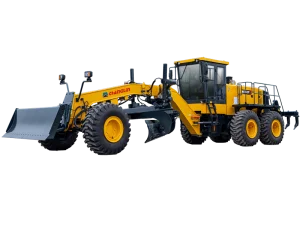
7. Frequently Asked Questions (FAQ) for Overseas Buyers
In-depth technical and commercial answers addressing common inquiry points from global engineering firms and equipment importers.
Why are video inspections (Factory Acceptance Videos) crucial when buying bulldozers from China?
Video inspections provide verifiable empirical proof of machine build quality prior to ocean shipment. Unedited HD video records allow remote technical teams to verify core component serial numbers (engine, transmission, hydraulic pumps), inspect weld seam quality under magnifying lenses, witness live hydraulic stall-pressure tests, check track tensioning, and evaluate operational responsiveness. This eliminates discrepancy risks between sales quotes and delivered machinery.
How do Chinese bulldozer factories ensure quality control during high-volume production?
Leading Chinese heavy equipment factories employ rigorous ISO-standard Quality Assurance protocols. Structural components undergo automated CNC laser cutting, robotic seam welding, and ultrasonic non-destructive testing (NDT) to prevent fatigue cracking under stress. Assembled units undergo mandatory multi-hour dyno testing, hydraulic pressure calibration, rain leak testing in dedicated booths, and dynamic track run-in trials prior to final sign-off.
What emissions standards are supported for North American, European, and developing markets?
Chinese OEM manufacturers offer multi-tier engine configurations tailored to destination import laws. For North America and Europe, machines are equipped with EPA Tier 4 Final / EU Stage V compliant electronically controlled common-rail engines featuring AdBlue/DEF DPF+SCR aftertreatment. For non-regulated or developing markets across South America, Africa, and Southeast Asia, Tier 2 / Tier 3 mechanical injection engines are available to ensure compatibility with high-sulfur diesel fuels.
What is the typical ocean shipping method for heavy dozers, graders, and excavators?
Heavy machinery shipping options depend on machine dimensions and port infrastructure. Standard compact dozers and skid steers can be shipped via 40ft High Cube or Open Top containers. Larger crawler bulldozers (160HP to 320HP+) and large excavators are typically shipped via Roll-on/Roll-off (RORO) vessels or Flat-Rack containers with blades and rippers disassembled. All exported units undergo full exterior anti-salt spraying and critical hydraulic rod anti-corrosion wrapping prior to port delivery.
How are spare parts handled to ensure zero operational downtime overseas?
Major OEMs support international buyers through direct spare parts packages shipped alongside the initial machinery order (consisting of 2,000-hour preventive maintenance filters, hydraulic seals, track shoe bolts, cutting edges, and wear plates). Additionally, global service networks, regional warehouse hubs, and DHL/FedEx express spare parts dispatch ensure emergency replacement parts reach site within 3 to 7 business days.
Can machines be customized for specialized working conditions like landfill or high altitude?
Yes. Chinese factories excel at modular factory customization. Buyers can request low ground pressure (LGP) swamp chassis, high-capacity trash blades with trash racks for landfill operations, rock-duty undercarriages for quarrying, high-altitude engine turbo-match kits for operating above 3,000m, or arctic pre-heating packages for sub-zero climates.