
High-Performance Fleet Solutions (Series I)





Global Construction Machinery & Wheel Loader Ecosystem
An analytical overview of structural shifts in global earthmoving equipment procurement, Chinese manufacturing capability, and Total Cost of Ownership (TCO) optimization for multi-ton material handling.
Shift to High-Efficiency Chinese OEM Supply
Over the past decade, the global heavy equipment sector has undergone a fundamental transformation. Procurement departments across mining, municipal infrastructure, and global EPC contracting no longer evaluate suppliers solely on brand heritage, but on rigorous Total Cost of Ownership (TCO), hydraulic responsiveness, chassis structural integrity, and supply chain resilience.
China's construction machinery manufacturing ecosystem—anchored by state-of-the-art production clusters in Changzhou, Jiangsu—leads this global shift by integrating advanced robotic welding, planetary power-shift transmissions, and high-torque electro-hydraulic controls.
Engineering Precision & Heavy-Duty Kinematics
Modern wheel loaders, excavators, and motor graders built in China’s tier-one manufacturing facilities undergo rigorous finite element analysis (FEA) to withstand extreme torsional fatigue. Heavy-duty Z-bar linkage systems provide maximum breakout force for severe rock handling, while optimized hydraulic flow distribution prevents energy dissipation during dual-axis bucket lifting and steering maneuvers.
This structural evolution ensures continuous operating duty cycles exceeding 10,000 to 15,000 operational hours under harsh ambient loads.
Electrification & Zero-Emission Paradigms
The industrial machinery domain is rapidly adopting Battery Electric Vehicle (BEV) architecture. Chinese equipment factories are setting global standards for battery-electric wheel loaders equipped with high-density Lithium Iron Phosphate (LFP) energy storage, intelligent thermal management systems, and dual-motor decoupled drive units.
These electric loaders lower operating noise to sub-70 dB cab levels and reduce operating fuel expenditures by up to 60-70% compared to traditional diesel alternatives.
Engineering Executive Takeaway
Integrating Chinese wheel loaders, dozers, and excavators into global project fleets enables contractors to achieve high productivity per capital dollar spent without compromising structural longevity or aftermarket parts availability.
Technical Architecture of Modern Earthmoving Machinery
Examine the core mechanical, hydraulic, and structural design standards that ensure peak performance across heavy construction, quarrying, and mining operations.
1. Power Generation & Emission Compliance
Leading Chinese heavy equipment OEMs integrate tier-one diesel engines configured to meet worldwide emission protocols, including EU Stage V, US EPA Tier 4 Final, and National Stage IV standards. These turbocharged engines utilize High-Pressure Common Rail (HPCR) fuel injection systems combined with Variable Geometry Turbochargers (VGT) to deliver optimal torque curves at lower RPMs.
For electric variants, direct-drive permanent magnet synchronous motors (PMSM) replace traditional engines, eliminating torque lag and maximizing mechanical efficiency across all load spectrums.
2. Load-Sensing Hydraulic Flow Systems
To reduce power consumption during idle and transit phases, Chinese machinery manufacturers deploy advanced variable displacement axial piston pumps paired with load-sensing main valves. This design dynamically matches hydraulic oil pressure and flow rates to real-time operator joystick inputs.
The result is a responsive hydraulic feel, minimized oil thermal degradation, and up to a 15% reduction in overall fuel consumption during intensive excavating, lifting, and dumping operations.
| Equipment Category | Core Structural Kinematics | Hydraulic & Powertrain Focus | Primary Industrial Applications |
|---|---|---|---|
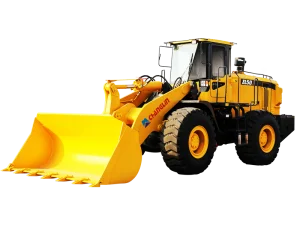
| Heavy Wheel Loaders (5T-12T) | Heavy-duty Z-bar bucket linkage, articulated box-section frame | Power-shift countershaft transmission, load-sensing steering | Open-pit mining loading, aggregate handling, port logistics |
| Medium & Large Excavators | Reinforced boom/arm structure, heavy crawler chassis | Dual-pump negative flow control, high-torque swing motor | Mass earthmoving, trenching, quarry rock breaking, demotion |
| Motor Graders (130HP-240HP) | Articulated frame, fully sealed slewing ring moldboard | Electro-hydraulic proportional valve, load-sensing hydraulics | Highway sub-grade preparation, mine haul road maintenance |
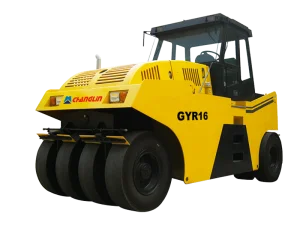
| Landfill & Soil Compactors | High-impact padfoot/smooth vibratory drums, protective scrapers | Hydrostatic dual-frequency vibration system, heavy drive axles | Municipal solid waste density optimization, highway soil compaction |
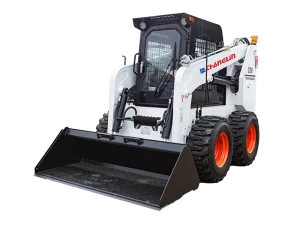
| Compact Skid Steers | Vertical or radial lift path, quick-attach universal coupler | High-flow auxiliary hydraulics, dual hydrostat drive motors | Urban construction, landscaping, agriculture, material handling |
Global Macro-Industry Deployment Scenarios
Discover how tailored Chinese heavy equipment configurations solve challenging operational demands across distinct geographic and industrial landscapes.
1. Mining Operations & High-Altitude Quarries
In high-altitude mining sites across South America and Central Asia, reduced air density impairs standard engine combustion. OEM manufacturers equip mining-grade loaders and excavators with specialized high-altitude turbochargers and expanded cooling packages.
Thick-plate rock buckets fitted with high-wear alloy teeth (HARDOX steel) and reinforced side cutters guarantee reliable cycle times when excavating granite, iron ore, and dense basalt.
2. Extreme Climate Thermal Management
From the desert heat of the Middle East (+50°C) to the sub-zero winters of Northern Europe and CIS regions (-40°C), thermal performance dictates machine uptime.
Configurations feature independent hydraulic oil cooling radiators with automatic reversing fans for thermal shedding, while cold-weather packages incorporate intake block pre-heaters, synthetic low-viscosity hydraulic oils, and double-glazed insulated operator cabins.
3. Ports, Steel Mills & Enclosed Logistics
Indoor logistics hubs, grain terminals, and chemical batching plants demand low-emission, highly maneuverable loading machinery. Electric wheel loaders and compact skid steer loaders fitted with quick-coupler attachments (side-dump buckets, pallet forks, paper roll clamps) provide versatile material transfer.
Electric drive units eliminate toxic exhaust fumes, preserving indoor air quality and complying with strict environmental health standards.
Technology Roadmap: Intelligent & Autonomous Heavy Equipment
Explore how Artificial Intelligence, 5G Telematics, and Autonomous Fleet Management are integrated into next-generation loader platforms.
1. 5G Remote Control & Autonomous Operation
By leveraging ultra-low latency 5G connectivity, operators can remotely control heavy wheel loaders and excavators from hundreds of kilometers away. This technology eliminates human exposure to hazardous quarry faces, unstable trench walls, and toxic processing environments.
Autonomous trajectory planning and auto-digging algorithms enable machines to perform bucket-loading cycles with repetitive precision, boosting shift efficiency by over 20%.
2. Predictive Maintenance AI & Telematics
Modern Chinese equipment platforms integrate IoT telematics controllers that stream operational metrics—such as hydraulic pressure spikes, engine oil degradation, torque converter thermal trends, and battery cell balance—directly to cloud diagnostics engines.
AI maintenance algorithms notify site managers of potential component stress prior to catastrophic failure, turning unscheduled downtime into planned maintenance routines.
3. Modular OEM Component Standardization
To solve long-standing global spare parts distribution challenges, Chinese manufacturers are standardizing modular components across product lines. Common hydraulic valve blocks, electronic control units (ECUs), operator cab structures, and pin/bushing dimensions are shared across multiple equipment models.
This structural interchangeability streamlines field repair and simplifies inventory management for international dealers and fleet operators.
International Compliance & Factory Quality Control
Rigorous manufacturing oversight ensures every excavator, motor grader, and wheel loader delivered abroad fulfills strict international engineering benchmarks.
Factory Quality Verification Protocols
- Ultrasonic NDT Weld Inspection: Structural booms, frames, and arm linkages are subjected to ultrasonic non-destructive testing to eliminate internal voids or stress concentrations.
- 100% Full-Load Hydraulic Bench Testing: Main hydraulic pumps, steering cylinders, and control valves are pressure-tested up to 35 MPa prior to chassis installation.
- Pre-Shipment Endurance Track Run: Completed units undergo a 6-hour active duty run on factory testing tracks to verify brake performance, transmission shifting, and thermal equilibrium.
Global Export Logistics & Customs Packaging
- Ro-Ro & Flat Rack Shipping: Heavy multi-ton wheel loaders and mining excavators are secured using marine-grade corrosion-inhibiting wax and custom tie-down points for safe ocean transport.
- Container Knock-Down (CKD/SKD): Compact loaders and skid steers are engineered for optimized high-cube container fitting, lowering freight costs for international buyers.
- Customs & Certification Compliance: Full documentation suites including CE certification, ISO 9001/14001, Form E, Certificate of Origin, and EPA emissions paperwork are supplied per destination port requirement.
High-Performance Fleet Solutions (Series II)








Frequently Asked Procurement Questions
Detailed technical, operational, and commercial insights for international equipment dealers, project contractors, and fleet managers.
How do I determine whether to procure a diesel or battery-electric wheel loader for my job site?
The choice between diesel and electric wheel loaders depends on shift predictability, charging infrastructure, and site operating environment:
- Diesel Wheel Loaders: Ideal for remote mining sites, greenfield highway construction, and areas with limited or un-stabilized electrical grid access. Diesel loaders offer maximum flexibility for long, unpredictable shifts where refuel turnaround must occur in minutes.
- Electric Wheel Loaders (BEV): Best suited for fixed-location material handling such as ports, steel plants, concrete batching facilities, aggregate yards, and underground tunnels. Where charging can be scheduled during shift breaks, electric loaders provide a 60-70% reduction in energy costs, eliminate local emissions, and significantly reduce operator cabin vibration.
What structural parameters should be evaluated when selecting bucket capacity for excavators and loaders?
Bucket capacity should never be selected solely on volumetric size; it must be calculated using material bulk density (t/m³) and target haul-truck match:
1. Material Density Matching: High-density materials like blasted rock or iron ore (1.8 - 2.2 t/m³) require heavy-duty rock buckets with reinforced wear plates and smaller volumetric capacity to prevent hydraulic system relief overloading. Light materials like coal or wood chips (0.6 - 0.8 t/m³) utilize oversized light-material buckets.
2. Pass-Matching Efficiency: Ideally, a wheel loader or excavator should fully load a haul truck in 3 to 5 passes. Too few passes create shock loads on the truck body, while too many passes extend truck loading cycle time.
How do Chinese factories configure heavy machinery for extreme high-altitude or desert conditions?
Custom engineering options are integrated directly on the manufacturing assembly line based on site parameters provided during quotation:
- High-Altitude Spec (above 3,000m): Includes wastegate-turbocharged engines engineered to compensate for low air density, high-efficiency intercoolers, and recalibrated ECU fuel maps.
- Hot Climate / Desert Spec (+50°C): Utilizes enlarged radiator cores, independent hydraulic oil coolers, tropical-rated fan clutches, and multi-stage air pre-cleaners (desert cyclone filters) to prevent fine silica ingress.
What after-sales service and spare parts support models are available for international buyers?
International buyers are supported through a multi-tiered service ecosystem:
1. Regional Dealer Network: Over 300 dealer partners and 650 service points globally maintain local inventory of fast-moving maintenance items (filters, brake pads, hydraulic hoses, ground-engaging teeth).
2. Direct OEM Parts Support: For fleet owners purchasing directly, fast-track DHL/FedEx spare part dispatch channels or consolidated sea-freight spare parts kits (recommended for 2,000-hour preventive maintenance cycles) are supplied alongside machine delivery.
3. Remote Diagnostics: Factory service engineers conduct real-time troubleshooting via IoT telematics and video guidance to resolve technical issues promptly.
What are the standard international trade and shipping terms offered by Chinese heavy equipment manufacturers?
Standard export trade terms include FOB (Free on Board), CFR (Cost and Freight), and CIF (Cost, Insurance, Freight). Payment is typically structured via Irrevocable Commercial Letter of Credit (L/C at sight) or Telegraphic Transfer (T/T).
Equipment is shipped via Roll-on/Roll-off (Ro-Ro) vessels, Break-Bulk vessels for heavy machinery fleets, or High-Cube containers (for compact skid steers and road rollers).