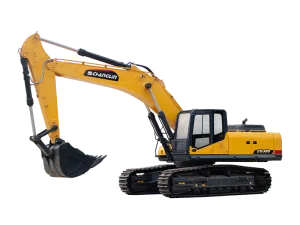
Primary Earthmoving & Road Equipment Series
Explore top-tier crawler excavators, motor graders, road rollers, and compact loaders manufactured at our Changzhou heavy industry base for global deployment.







1. Executive Summary & Semantic Clarification: "Digger" vs. "Excavator"
In international heavy machinery procurement, terminological ambiguity frequently leads to contractual friction, improper equipment sizing, and logistical misalignments. The phrases "Digger" and "Excavator" are regularly used interchangeably across field sites, yet from a manufacturing, engineering, and ISO standardization perspective (specifically ISO 6165 and ISO 7131), they carry subtle linguistic, structural, and operational distinctions that every global procurement officer must understand.
Historically, the term "Digger" originated as a colloquial, broad-spectrum descriptor predominantly utilized in the United Kingdom, Australia, New Zealand, and Ireland to refer to any mechanical earthmoving equipment capable of trenching or excavating soil. In these markets, a "digger" can encompass everything from a 1-tonne mini excavator used in residential utility trenching to a tractor-mounted backhoe loader. Conversely, in North American and international OEM engineering contexts, "Excavator" explicitly denotes a dedicated heavy earthmoving machine equipped with a 360-degree rotating upper structure (revolving superstructure), hydraulic boom, arm, attachment, and dedicated continuous track (crawler) or wheeled undercarriage.
Key Sourcing Insight for Procurement Teams:
When submitting Requests for Quotation (RFQs) to a Chinese OEM factory like Sinomach-HI (Changlin), specifying "digger" without mechanical qualifications can delay engineering review. Clarifying whether your project requires a heavy crawler hydraulic excavator (e.g., Sinomach ZG385), a medium utility excavator (e.g., ZG210D), or a compact backhoe/skid steer solution ensures immediate alignment with factory production specifications and export homologation rules.
Table 1.1: Comprehensive Semantic & Technical Matrix
| Evaluation Parameter | Colloquial Term: "Digger" | ISO Technical Standard: "Excavator" | Backhoe Loader (Alternative "Digger") |
|---|---|---|---|
| Primary Linguistic Markets | UK, Australia, NZ, South Africa, Ireland | Global ISO Standard, USA, Canada, East Asia | Latin America, South Asia, Middle East |
| ISO Classification | Non-standard umbrella term | ISO 6165 Earth-moving machinery — Excavators | ISO 6165 — Backhoe Loaders |
| Rotation Capabilities | Varies (180° swing to 360° continuous) | Full 360° continuous house rotation | 180° rear boom swing only |
| Undercarriage Options | Compact rubber track, wheeled, tractor chassis | Steel crawler tracks or heavy wheeled chassis | Four-wheel drive tractor tires |
| Operating Weight Range | Typically 0.8 to 12 Metric Tonnes | 6 to 120+ Metric Tonnes (Mini to Mining) | 7 to 11 Metric Tonnes |
| Primary Application Scope | Landscaping, urban trenching, light utility | Heavy earthmoving, quarrying, mining, road construction | Municipal repairs, road maintenance, agriculture |
2. Mechanical & Engineering Anatomy: How Chinese Factories Build Heavy Excavators
Understanding the structural engineering inside Sinomach-HI's Changzhou manufacturing facility reveals why factory-grade crawler excavators outperform adapted or general-purpose diggers in rigorous job-site environments.
Advanced Hydraulic Power Distribution
Unlike light utility diggers that employ basic open-center gear pumps, full-scale hydraulic excavators like the Sinomach ZG385 and ZG210 utilize negative flow control or load-sensing positive flow hydraulic systems. Dual-variable displacement axial piston pumps automatically adjust hydraulic oil flow (L/min) and pressure (up to 34.3–37.0 MPa) based on real-time load resistance, delivering maximum breakout force while minimizing fuel consumption per cycle.
Structural Metallurgy & Stress Relief
The turntable chassis, boom, and arm of a heavy excavator undergo high-strength low-alloy (HSLA) steel robotic welding followed by thermal stress-relief annealing. Heavy-duty cast steel structures reinforce high-stress pivot points at the boom foot and bucket linkage, preventing fatigue cracking during continuous quarry loading or hydraulic hammer rock breaking.
Undercarriage & Slewing Durability
Heavy crawler excavators feature x-frame box-section track frames engineered with sealed and lubricated track chains, heavy-duty sprockets, and top/bottom rollers. The central slewing bearing incorporates induction-hardened internal gear teeth driven by an axial piston slewing motor with integral automatic braking, allowing seamless 360° slope operation.
3. Global Enterprise Procurement Demand & Sourcing Strategies
International equipment buyers—ranging from multinational EPC contractors in Southeast Asia to mining conglomerates in South America and state-owned infrastructure fleets in Africa—face distinct procurement hurdles when sourcing heavy equipment from Chinese OEM manufacturers. A comprehensive Total Cost of Ownership (TCO) model requires evaluating factors far beyond the initial FOB machine purchase price.
TCO Sourcing Dynamics: CAPEX vs. OPEX Realities
While initial Capital Expenditure (CAPEX) for Chinese excavators and motor graders can be 25% to 40% lower than equivalent Western Tier-1 brands, long-term Operational Expenditure (OPEX) is governed by three critical variables: fuel efficiency, wear-part availability, and hydraulic component reliability. Chinese state-owned manufacturers like Sinomach-HI mitigate OPEX risks by integrating tier-one global power systems (such as Cummins, Isuzu, and Perkins) and premier hydraulics (Kawasaki, Rexroth) with high-efficiency local structural engineering.
1. Logistics & Containerization Efficiency
For compact and medium excavators (under 22 Metric Tonnes, such as the ZG210 series) and skid steer loaders (like the 255F), factory packaging engineers design boom geometry and track widths to fit inside standard 40-foot High Cube (40HC) ocean containers. This significantly lowers ocean freight charges compared to Breakbulk or RoRo (Roll-on/Roll-off) shipping required for 38-tonne mining excavators (ZG385) or large motor graders (PY320T).
2. Multi-Machine Fleet Consolidation
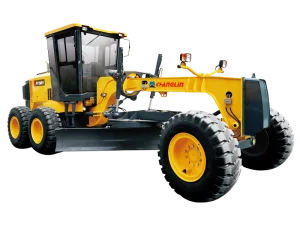
Global contractors rarely deploy excavators in isolation. Road building and earthmoving fleets demand synchronized equipment pairing: crawler excavators for cut-and-fill loading, motor graders (PY150, PY220H) for leveling and road crown shaping, and road rollers (GYS142, GYD132J) for soil and asphalt compaction. Purchasing mixed fleets from a single OEM platform streamlines international trade documentation, spare parts stocking, and operator training protocols.
4. Macro-Industry Engineering Solutions & Application Scenarios
Different commercial sectors require specific machine configurations. Below is how Sinomach-HI's tailored machine families address distinct operational intent across global industries.
Mining & Quarrying Heavy Earthmoving
High-tonnage overburden removal and blasted rock handling demand heavy-duty crawler excavators (ZG380 / ZG385) featuring reinforced rock buckets with ESCO bucket teeth, extra-wide track shoes, and heavy counterweights. Paired with PY240H / PY320T Mining Graders to maintain smooth haul roads, this equipment combination minimizes haul truck tire wear and preserves fast cycle times.
Highway Infrastructure & Belt-and-Road Construction
Long-distance highway construction requires precise grade control and sub-base preparation. Medium excavators (ZG210D) manage side-ditch excavation and culvert placement, while PY150 / PY220H Motor Graders establish precise cross-slopes. Sub-base density is guaranteed using heavy single-drum vibratory road rollers like the GYS142.
Municipal Utility & Landfill Management
Urban utility installation and waste management require specialized machinery. Compact 255F Skid Steer Loaders and mini diggers maneuver inside congested city streets, while heavy-duty GYL203 / GYL233 Landfill Compactors featuring steel cleated drums and trash blades maximize waste compaction density in municipal solid waste containment cells.
5. Technical Roadmap & Future Outlook: China's Heavy Machinery Innovation
The global construction equipment market is undergoing a seismic transformation driven by stringent decarbonization goals, labor shortages, and digital job-site connectivity. Chinese manufacturers are pioneering technology deployments across three core domains:
Electrification & Zero-Emission Powertrains
Driven by advancements in Lithium Iron Phosphate (LFP) battery density and high-voltage 600V electric architectures, zero-emission wheel loaders and electric diggers are shifting from experimental prototypes to mass production. For underground tunneling, indoor demolition, and urban sites subject to strict noise/emission limits, pure electric equipment offers over 60% savings in hourly energy costs compared to diesel equivalents.
Smart Telematics & Autonomous Fleet Controls
Modern Sinomach-HI machinery comes equipped with 5G IoT telematics modules that stream real-time operational data: fuel burn rates, hydraulic oil temperature, GPS geo-fencing, and predictive maintenance diagnostic codes (DTCs). Integration with 3D GPS/GNSS machine control systems allows excavators and motor graders to execute millimetric grade cuts directly from CAD design models without manual surveying.
Next-Gen Electro-Hydraulic Systems (EHS)
Future excavator iterations are replacing traditional mechanical pilot control lines with full Electro-Hydraulic pilot valves. This shift enables programmable joystick sensitivity, automated boom swing cushioning, and effortless integration of tiltrotators and hydraulic quick-couplers directly from the operator's digital cab touchscreen.
6. Factory Quality Assurance, International Compliance & Localization
Exporting heavy equipment across 180+ countries requires rigorous adherence to regional regulatory standards, climate-specific engine tuning, and responsive overseas after-sales support.
Engine Emission Compliance
Machines are configured to match local fuel sulfur content and environmental standards: EPA Tier 4 Final / EU Stage V (DPF + SCR) for North America and Europe, National IV for China, and robust Tier 2 / Tier 3 mechanical engines for regions with high-sulfur fuel availability.
Extreme Climate Engineering
Factory options include cold-start engine pre-heaters, heavy-duty Arctic hydraulic seals, and heated cab glass for sub-zero CIS mining operations, alongside tropical high-ambient radiator packages and multi-stage desert air pre-filters for Middle Eastern and African sites.
Global Service Network
Supported by over 300 international dealers and 650 dedicated service centers worldwide, Sinomach-HI provides emergency spare parts shipping, factory technician field dispatch, and comprehensive technical operator training workshops.
Procurement & Technical FAQ
Get expert technical answers regarding equipment classification, OEM factory customization, shipping terms, and maintenance standards.
Extended Machinery & Compaction Machinery Gallery
Direct factory procurement access for heavy crawler excavators, high-horsepower mining motor graders, and landfill compaction equipment.