
Featured Heavy Machinery Lineup (Top Selection)


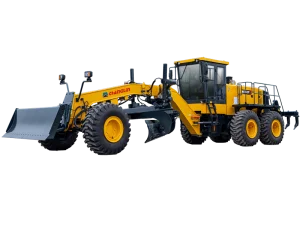





Global Commercial & Industrial Status of Chinese Diggers and Excavators Manufacturing
The global market for construction, earthmoving, and mining machinery has undergone a structural transformation over the past decade. China’s heavy equipment manufacturing industrial clusters—anchored in hubs such as Changzhou, Jiangsu—have evolved from cost-driven OEM assembly lines into global epicenters for advanced hydraulic engineering, structural metallurgy, electrification, and intelligent telemetry. Procurement directors, civil engineering contractors, and mine site operators searching for a high-volume, high-reliability China Diggers And Excavators Factory & Factories are no longer merely seeking competitive initial capital expenditure (CAPEX); they are sourcing highly engineered machinery capable of delivering low Total Cost of Ownership (TCO), superior hydraulic efficiency, and long-term operating stability under brutal environmental stress.
Supply Chain Integration
Chinese manufacturing ecosystems integrate Tier-1 global component leaders—such as Kawasaki, Rexroth, Cummins, and Weichai—with localized high-precision structural steel fabrication (Hardox 450, Q345D/Q690D), creating seamless assembly pipelines.
Export Growth & Compliance
Modern OEM factories manufacture machines strictly compliant with international emissions regimes, including Euro Stage V, US EPA Tier 4 Final, and regional non-road mobile machinery (NRMM) mandates across 180+ countries.
OEM & ODM Manufacturing
Leading factories support customized machine architectures—offering specialized boom configurations, custom hydraulic circuit flow rates, tropicalized cooling systems, and specialized cab ergonomic packages for international buyers.
Technological Roadmaps & Electrification Trends in Heavy Excavation
The earthmoving and excavating sector is undergoing a rapid paradigm shift driven by decarbonization targets, rising diesel fuel costs, and digital job-site automation. OEM factories in China are at the forefront of this industrial evolution, pushing three key technological pillars.
1. Electrification & High-Voltage Battery Architecture (BEV)
Battery Electric Vehicles (BEV) are moving from niche applications to heavy quarrying and urban infrastructure. Electric wheel loaders such as the ZL50EV and zero-emission mini/medium crawler excavators utilize 618V to 800V silicon carbide (SiC) power electronics combined with CATL LFP (Lithium Iron Phosphate) battery packs. These units reduce local operating carbon emissions to zero while achieving thermal efficiencies exceeding 92%, compared to 35–40% on conventional diesel internal combustion engines.
- Dual-Motor Independent Power Split (Travel vs. Hydraulic Work System)
- Kinetic Energy Recovery Systems (KERS) during boom lowering
- Liquid thermal management with active heating & cooling loops
2. Positive Flow Control & Electro-Hydraulic Integration
Traditional negative flow hydraulic systems are rapidly being superseded by Electro-Hydraulic Positive Flow Control Systems (E-PFC). By utilizing electronic sensors on the pilot joystick combined with direct ECU control over the main hydraulic pumps (e.g., Kawasaki K3V/K7V series), fluid delivery is dynamically matched to load demand within milliseconds. This eliminates throttling losses through the main control valve (MCV), reducing diesel fuel consumption per ton of excavated material by 12% to 18%.
- Electronic Main Control Valves (e-MCV) with pressure sensors
- Automatic Boom Confluence and Arm Regeneration circuits
- Proportional solenoid controls for ultra-smooth multi-function operation
Engineering Specification Architecture Comparison
Detailed breakdown of operational parameters across Chinese factory excavator categories:
| Excavator Category | Operating Weight | Engine Power Output | Hydraulic Flow Rate | Primary Application Profile |
|---|---|---|---|---|
| Compact / Mini Excavator | 1.8 Ton – 6.0 Ton | 14 kW – 36 kW (Kubota / Yanmar) | 65 – 140 L/min | Urban utility, pipe laying, landscaping, zero-tail swing work |
| Medium Crawler Excavator (e.g. ZG210) | 21.0 Ton – 25.0 Ton | 115 kW – 133 kW (Cummins / Weichai) | 2 x 220 L/min | General earthmoving, highway construction, foundation trenching |
| Heavy Mining Excavator (e.g. ZG360 / ZG385) | 36.0 Ton – 40.0 Ton | 212 kW – 298 kW (Cummins / Isuzu) | 2 x 360 L/min | Quarrying, open-pit mine loading, heavy rock ripping, blasting assist |
| Battery Electric Excavator (BEV) | 20.0 Ton – 32.0 Ton | 140 kW – 220 kW Dual Motor | Variable Demand PWM | Enclosed tunnels, municipal low-noise zones, green mining yards |
Engineered for Extreme Job-Site Reliability
Every digger, excavator, grader, and loader leaving the Changzhou factory passes strict quality assurance protocols under ISO 9001 and CE certifications.
Localized Application Scenarios & Heavy Operating Environments
Earthmoving machinery must be customized to withstand vastly divergent geological, barometric, and climatic conditions. Standard factory configurations often fail when exposed to sustained extreme stress. Chinese excavator manufacturers have developed localized packages designed for targeted global operational theaters.
High-Altitude Plateau Mining
At altitudes exceeding 3,500 meters (Andes, Tibetan Plateau), air density drops significantly, causing conventional engines to lose oxygen and overheat. Factory altitude options include turbochargers with wastegate electronic pressure matching, enlarged air-to-air intercoolers, and high-performance radiator fans to ensure full power retention up to 4,500m.
Tropical High-Dust & Humidity
Operations in Sub-Saharan Africa and Southeast Asia demand heavy-duty multi-stage cyclone air pre-cleaners, anti-corrosion condenser coating for humid coastal salinity, and independent hydraulic oil cooling radiators designed for continuous 52°C ambient temperatures without thermal derating.
Sub-Zero Arctic Operations
For winter earthmoving in Siberia, Northern Canada, or Scandinavia (-40°C), machines are equipped with engine fuel pre-heaters, synthetic low-viscosity Arctic hydraulic oils, cold-start glow-plug systems, double-glazed insulated FOPS/ROPS cabs, and cold-resistant rubber seals and hoses.
Macro Industry Solutions & Total Cost of Ownership (TCO) Matrix
Successful fleet procurement requires balancing initial machinery cost against operational longevity, fuel burn rates, maintenance intervals, and spare-parts supply security. Modern Chinese machinery factories partner with international fleet managers to optimize TCO across the machine's entire lifecycle.
CAN-Bus Telematics & Remote Diagnostics
Integrated 4G/5G telematics modules broadcast real-time machine telemetry (SAE J1939 CAN-bus protocols) directly to fleet management dashboards. Operational supervisors can remotely monitor hydraulic oil temperatures, pump pressures, fuel consumption rates, idle time percentage, and active fault codes. Early fault detection prevents catastrophic main pump or engine failures, maximizing fleet uptime.
Logistics & Knock-Down (CKD/SKD) Export Packaging
Shipping heavy machinery internationally involves substantial freight overheads. Advanced OEM facilities utilize modular machine design: compact loaders and mini-excavators are packaged in standard 40ft High Cube (HC) containers, while large 30-ton to 40-ton excavators (such as ZG360 and ZG385) are prepared for Ro-Ro (Roll-on/Roll-off) or Flat Rack shipping with anti-corrosion protective wraps for ocean transit.
Complete OEM Product Catalog Selection (Bottom Selection)







Frequently Asked Questions (FAQ) for B2B Equipment Buyers
Direct technical and commercial answers for fleet operators, contractors, and machinery dealers sourcing heavy machinery directly from Chinese factories.
How do Chinese excavator manufacturers ensure structural boom and arm durability under heavy quarry loading?
Leading OEM factories utilize High-Strength Low-Alloy (HSLA) steel (such as Q345D/Q690D or specialized Hardox wear plates) in high-stress pivot zones. Modern manufacturing employs robotic tandem submerged-arc welding (SAW) with 100% Ultrasonic Testing (UT) and Radiographic Inspection (RT) on critical weld seams. Additionally, booms and arms undergo thermal stress-relief annealing to eliminate internal residual welding stresses before final machining, preventing fatigue cracking in heavy mining applications.
What are the primary differences between electric wheel loaders (e.g., ZL50EV) and standard diesel wheel loaders?
Electric wheel loaders replace the conventional diesel engine, torque converter, and multi-stage transmission with high-density CATL LFP battery packs and dual permanent magnet synchronous motors (PMSM). Motor 1 drives the travel axle, while Motor 2 powers the hydraulic main pump independently. Key operational advantages include zero local emissions, low noise levels (<70 dB in cab), instant torque delivery, and a 60% to 70% reduction in hourly energy costs compared to diesel fuel burn.
What international emissions certifications do Chinese diggers and excavators support?
Factories build machines with engine configurations matched to destination country regulations. Units destined for North America and Western Europe feature US EPA Tier 4 Final / EU Stage V compliant engines equipped with Diesel Particulate Filters (DPF), Selective Catalytic Reduction (SCR), and Diesel Exhaust Fluid (DEF/AdBlue) dosing systems. For non-regulated markets in Latin America, Africa, or Southeast Asia, Tier 2 / Tier 3 mechanical fuel injection engines are available to tolerate higher sulfur fuel content.
How are spare parts and aftermarket service supported overseas?
Aftermarket support is delivered through a tiered service architecture. First, factories provide recommended 1,000-hour and 2,000-hour fast-moving spare parts kits (filters, hydraulic seals, bucket teeth, pins, and bushings) packaged with original machine shipments. Second, regional overseas consignment warehouses stock major assemblies (main pumps, swing motors, final drives, ECU modules). Third, remote diagnostic software enables technicians to troubleshoot CAN-bus systems anywhere in the world via satellite or cellular data links.
What OEM customization options are available for specialized earthmoving jobs?
Buyers can specify auxiliary hydraulic piping circuits (high-pressure breaker lines, medium-pressure tilt-rotator lines, dual-way proportional flow controls), extended reach booms for dredging, heavy-duty rock buckets with side cutters, rubber track pads for municipal pavement preservation, central automatic lubrication systems, and specialized 360-degree camera systems with AI pedestrian detection sensors.