
Primary Earthwork & Road Construction Fleet
Heavy-duty machines factory-engineered for extreme mechanical load, continuous operation cycles, and rigorous global job site standards.


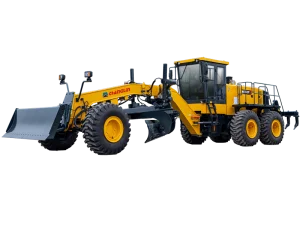




1. Macro Industrial Landscape & Global Earthmoving Dynamics
The international heavy earthwork machinery sector is undergoing a profound structural transformation. Rapid urbanization, large-scale belt-and-road infrastructure investments, open-pit mining expansion, and global climate mandates are driving fleet operators toward equipment that offers higher thermal efficiency, lower lifecycle maintenance overhead, and multi-tier emission compliance.
The Shift in Global Procurement Metrics
Historically, global heavy equipment buyers focused overwhelmingly on initial Capital Expenditure (CAPEX). Modern fleet management, however, prioritizes total operational cost per ton of earth moved. Equipment performance is now judged on hydraulic responsiveness, structural steel fatigue resistance, fuel conversion efficiency, and parts availability.
China’s tier-one manufacturing facilities have successfully closed the gap with legacy Western manufacturers. By integrating advanced Japanese and European hydraulic control components with robust domestic steel fabrication, Chinese OEMs deliver machinery that achieves 95%+ operational uptime at a significantly lower total cost of ownership (TCO).
Key Market Drivers Across Key Geographies
- Developing Africa & Latin America: High demand for mechanical simplicity, extreme ambient temperature tolerance, and high-clearance undercarriage configurations for unpaved road construction.
- Eurasia & CIS Region: Rigorous requirement for cold-start pre-heating systems, high-altitude engine turbocharging, and heavy-duty rock buckets for open-pit extraction.
- Middle East & North Africa: High-efficiency cooling packages, multi-stage dust filtration, and heavy-duty hydraulic oil coolers to withstand continuous desert operation above 50°C.
2. Technological Trends Reshaping Earthwork Machinery
Technological convergence in hydraulics, power electronics, telematics, and metallurgy is redefining job site productivity. Sourcing directors must evaluate these core trends when acquiring modern machinery.
Electrification & Hybrid Powertrains
The commercialization of high-capacity Lithium Iron Phosphate (LFP) battery technology has elevated electric wheel loaders from niche prototypes to primary quarry assets. Electric powertrains eliminate zero-idle fuel waste, deliver instantaneous torque, reduce operating noise by over 50%, and cut energy costs per hour by up to 60-70% compared to traditional diesel engines.
Smart Hydraulics & Positive Flow Control
Modern crawler excavators (such as the ZG330D and ZG210D series) have migrated from negative flow control to electro-hydraulic main pump controls. Positive flow distribution calculates joystick deflection in real time, metering oil exactly where needed. This reduces hydraulic throttling energy loss, smooths compound movements, and cuts fuel consumption by 8% to 12%.
IoT Telematics & Fleet Diagnostics
Integrated CAN-bus gateway modules stream real-time operational metrics directly to cloud-based monitoring dashboards. Parameters such as hydraulic oil temperature, engine load factor, real-time GPS positioning, and fault warning codes allow remote asset monitoring, preventing catastrophic mechanical failures before they occur.
3. China Factory 4.0: Supply Chain Resilience & Manufacturing Edge
China’s dominance in earthwork equipment manufacturing is built on an integrated industrial supply chain ecosystem. In manufacturing hubs like Changzhou, Jiangsu Province, structural steel processing, hydraulic cylinder production, transmission casting, and final assembly occur within a tightly integrated geographic radius.
Automated Precision Engineering
State-of-the-art Chinese machinery factories utilize automated laser cutting machines, high-capacity CNC boring mills, and multi-axis robotic arc welding gantries. Boom and arm weldments undergo 100% ultrasonic non-destructive testing (NDT) to prevent structural stress fractures under heavy cyclic mining loads.
Flexible OEM/ODM Customization
Unlike rigid Western assembly plants, factory 4.0 setups in China support custom machine configurations. Overseas buyers can specify engine brands (Cummins, Weichai, Shangchai, Yuchai), hydraulic configurations (Kawasaki, Rexroth), cold-weather starting kits, or specialized mining attachments directly on the main assembly line.
4. Global Enterprise Procurement & TCO Analysis
For enterprise procurement officers, purchasing heavy equipment requires balancing upfront capital outlays against long-term operational expense. Below is a structured engineering breakdown evaluating a typical 20-30 ton earthmoving asset over a 10,000-hour operational lifecyle.
| Evaluation Parameter | Legacy Western OEMs | China Tier-1 Factory Direct | Procurement Advantage |
|---|---|---|---|
| Initial Acquisition Cost (CAPEX) | Baseline (100% Benchmark) | 40% to 55% Lower | Substantial initial capital preservation |
| Core Component Lineage | Proprietary closed-loop systems | Globally interchangeable (Kawasaki/Rexroth) | Lower spare parts sourcing friction |
| Fuel Consumption / Ton | Optimal baseline efficiency | Matching (Within 2-3% variance) | Highly competitive operational expense (OPEX) |
| Spare Parts Lead Time & Cost | High margin markups, rigid supply lines | Direct factory dispatch, 50% cheaper parts | Minimized machine downtime risk |
| Custom Duty Configuration | Standardized optional packages | Factory-tailored per site climate/altitude | Exact alignment with local operating conditions |
Strategic Purchasing Guidance: Enterprise buyers should request complete factory test records, hydraulic pressure mapping certificates, and pre-delivery inspection (PDI) logs prior to containerized or Ro-Ro shipment release.
5. Field Operations & Localized Application Scenarios
Earthmoving equipment must be selected according to specific geotechnical, climatic, and material conditions. Below are standard engineering deployment configurations across four major industrial sectors.
A. Heavy Open-Pit Mining & Quarrying
Recommended Fleet: Large Crawler Excavators (ZG330D), Heavy Motor Graders (PY350T), Heavy Wheel Loaders (ZL80H).
Mining environments demand heavy structural reinforcement. Excavators require rock-hardened buckets with forged tooth adapters, full-length track guards to protect bottom rollers from sharp debris, and heavy-duty boom cylinders. Mining graders utilize wider, thicker moldboards and rear rippers to clear haul roads, protecting high-capacity dump truck tires from premature cuts.
B. Highways, Runways & Precision Grading
Recommended Fleet: Heavy Road Rollers (GYS12J / GYS10J), Motor Graders (PY220H), Compactors.
Highway formation requires absolute sub-base compaction and millimeter-accurate grading control. Single-drum vibratory road rollers utilize dual-frequency, dual-amplitude hydraulic excitation to achieve maximum density in soil and crushed stone bases. Motor graders fitted with load-sensing hydraulic control valves provide stable blade positioning for accurate cross-slope creation.
C. Municipal Infrastructure & Urban Utilities
Recommended Fleet: Medium Crawler Excavators (ZG210D), Skid Steer Loaders (255F / TS100).
Urban construction sites require compact footprints, zero tail-swing capability, and low ambient noise levels. Skid steer loaders serve as multi-tool platforms running hydraulic breakers, augers, cold planers, and sweepers. Medium excavators provide ideal balance between digging force and ease of low-boy trailer transport between municipal job sites.
D. Specialized Landfill & Environmental Engineering
Recommended Fleet: Landfill Compactors (GYL233), Heavy Bulldozers (YD255).
Landfill compaction demands high ground-pressure spikes to fracture, shred, and compress municipal solid waste. Landfill compactors feature heavy-duty steel wheels with weld-on cleats, integrated wire cutters, high-mounted cooling packages with reversible fans to clear airborne refuse debris, and full underbody armor plating.
6. Frequently Asked Questions (FAQ) for Overseas Buyers
Direct expert answers addressing international sourcing, engineering customization, shipping logistics, and long-term product support.
What engine and emission options are available for export machines?
Our manufacturing facilities offer multi-tier engine configurations matched to your local fuel quality and regulatory standards. For non-regulated markets in Africa, Latin America, and Central Asia, we provide Tier 2 / Tier 3 mechanical engines (Cummins, Weichai, Shangchai) that handle high-sulfur diesel fuel without catalytic converter degradation. For Europe and North America, machines are equipped with Stage V / Tier 4 Final electronically controlled engines with SCR and DPF exhaust aftertreatment.
How are heavy earthmoving machines packaged and shipped globally?
Logistics methods depend on machine dimensions. Compact machines like skid steer loaders and small rollers are shipped in standard 20ft/40ft High Cube containers. Medium to large excavators, bulldozers, and motor graders are shipped via Roll-on/Roll-off (Ro-Ro) or Breakbulk vessels to protect painted surfaces and hydraulic cylinders from salt-water atmospheric corrosion. Where container freight offers cost savings, machines can be partially disassembled (counterweight and boom removed) for SKD container loading.
What after-sales warranty and spare parts guarantees are provided?
All machines carry a standard factory warranty of 12 months or 2,000 operating hours (whichever comes first), with optional extended power-train warranties up to 36 months. Spare parts are stocked in regional distribution centers, and critical emergency orders (filters, hydraulic seals, injectors) are dispatched via DHL/FedEx air freight within 48 hours. CAN-bus diagnostic software allows remote troubleshooting directly with factory service engineers.
Can machinery be customized for extreme cold or high-altitude job sites?
Yes. Custom factory options include high-altitude turbocharged engines calibrated for low oxygen density (up to 4,500 meters above sea level), arctic cold-weather packages (Webasto engine coolant heaters, synthetic low-temperature hydraulic oil, heated fuel filters, double-glazed cabin glass), and desert cooling modules featuring oversized radiators and anti-abrasion sand coatings.
How do electric wheel loaders compare in payback period (ROI)?
While an electric wheel loader carries a 30-40% higher initial purchasing price due to its high-capacity lithium battery pack, its operational cost is up to 70% lower than a diesel equivalent. In heavy-duty industrial applications such as ports, steel mills, or aggregate yards working 12-16 hours daily, fuel and maintenance savings typically achieve full capital payback within 14 to 18 months of operation.
Specialized Heavy Duty Machinery
Explore specialized machinery lines designed for waste management, precise grading, compaction, and compact urban earthmoving.






Partner with a Leading China Earthwork Machinery Manufacturer
From singular machine acquisitions to comprehensive enterprise fleet tenders, our engineering and export team provides end-to-end technical support, custom manufacturing, and global logistical coordination.