
Precision-Engineered Heavy Construction & Earthmoving Equipment
Direct factory machinery supply engineered for rigorous duty cycles across civil engineering, open-pit mining, road building, and commercial site development.








The Global Commercial Landscape of Heavy Excavator Manufacturing in China
Over the past two decades, China’s heavy construction machinery sector has transitioned from contract assembly to pioneering world-class hydraulic engineering, structural metallurgical design, and intelligent manufacturing systems.
The global demand for excavators—ranging from compact 1.5-tonne mini excavators for urban utility work to 90-tonne super-heavy crawler excavators for open-cast mining—is driven by unprecedented investments in global infrastructure, urbanization in developing markets, and energy transition projects. As a central hub for heavy machinery manufacturing, China's modern excavator factories represent a integrated industrial ecosystem capable of delivering high-tier operational efficiency at an optimized Total Cost of Ownership (TCO).
Key to China’s competitive advantage is the complete vertical integration of component manufacturing. Advanced OEM/ODM facilities in Changzhou, Jiangsu, and key industrial clusters bring together metallurgy, precision machining, structural welding, hydraulic control valve assembly, and digital CAN-bus telematics calibration under single manufacturing quality standards (ISO 9001, ISO 14001, CE Certification, and Eurasian EAC standard compliance).
Advanced Metallurgical Integrity
High-tensile low-alloy steel frames subjected to finite element analysis (FEA) ensure structural resistance against fatigue stress during heavy rock loading and hammer operations.
Global Emissions Alignment
Engine power options tailored for varying regional regulatory tiers, including Cummins, Weichai, and Yanmar powerplants matching Tier 3, Tier 4 Final, and EU Stage V emission standards.
Positive Flow Hydraulics
Main hydraulic pumps with load-sensing variable displacement deliver flow proportional to joystick movement, reducing parasitic engine load and decreasing fuel consumption by up to 15%.
Technical Classifications & Operational Tonnage Breakdown
Selecting the correct excavator specification requires a detailed understanding of bucket breakout force, hydraulic displacement, operating weight, and swing torque across diverse earthmoving duties.
| Excavator Tonnage Class | Operating Weight (Tons) | Rated Engine Power (kW) | Bucket Capacity (m³) | Primary Industrial Applications |
|---|---|---|---|---|
| Compact / Mini Class | 1.8 - 6.0 Tonnes | 15 - 38 kW | 0.04 - 0.22 m³ | Urban trenching, residential utilities, indoor demolition, landscaping, municipal repairs. |
| Medium Duty Excavators | 13.5 - 25.0 Tonnes | 73 - 133 kW | 0.52 - 1.20 m³ | Road construction, highway earthworks, bridge foundation prep, commercial building foundations. |
| Heavy Duty Excavators | 30.0 - 48.0 Tonnes | 190 - 299 kW | 1.40 - 2.40 m³ | Large-scale civil infrastructure, rock quarrying, heavy riverbed dredging, pipeline trenching. |
| Mining Class Excavators | 50.0 - 90.0+ Tonnes | 300 - 450+ kW | 3.00 - 5.50 m³ | Open-cast mineral extraction, heavy overburden removal, high-tonnage truck loading operations. |
Localized Operating Scenarios & Severe Environment Customization
A primary differentiator of leading Chinese heavy equipment manufacturers is the structural capability to custom-engineer machines for global climate extremes and specialized geological conditions.
High-Altitude Plateau Packages
At altitudes exceeding 3,000 meters above sea level, atmospheric oxygen depletion leads to engine power loss. Chinese manufacturers integrate turbochargers with electronic wastegate control and recalibrated fuel injection maps, ensuring that models operating in South American Andean mines or Central Asian plateaus maintain rated hydraulic flow without thermal overload.
Sub-Zero Arctic Cold Kits
For operations in Northern Eurasia and Nordic winter conditions (-40°C), excavators feature pre-heating jacket systems, arctic-grade low-viscosity hydraulic oils, low-temperature synthetic seals, and double-glazed pressurized operator cabs with auxiliary combustion heaters to prevent seal embrittlement and hydraulic cavitation.
Tropical & High-Dust Desert Specs
High ambient temperatures (+50°C) combined with airborne particulate matter demand heavy-duty, dual-core cooling packages with reversible hydraulic fan control. Multi-stage cyclone pre-filters separate dust prior to air filter intake, extending engine cylinder life in Middle Eastern and Saharan quarry environments.
Technology Roadmap: Electrification, Telematics & Automation
The future of heavy earthmoving machinery is driven by zero-emission powertrains, 5G remote telematics, and AI-assisted semi-autonomous excavation controls.
Electrification & High-Voltage Battery Architectures
Pure electric excavators equipped with CATL Lithium Iron Phosphate (LFP) battery packs are revolutionizing urban utility jobs and underground tunnel projects. Operating on 600V-800V high-voltage platforms, electric wheel loaders and excavators offer zero localized tailpipe emissions, 70% lower energy running costs compared to diesel equivalents, and reduced acoustic footprint.
5G Telematics & Fleet Intelligence
Modern Chinese machinery integrates CAN-bus IoT hardware that streams real-time data to cloud platforms. Fleet managers monitor GPS position, hydraulic pressure anomalies, fuel consumption rate, engine oil degradation, and operator cycle times remotely via desktop or mobile interfaces, enabling proactive preventive maintenance.
Autonomous Digging & Electro-Hydraulic Pilot Systems
Transitioning from mechanical pilot controls to electro-hydraulic main control valves enables semi-autonomous grade control. Operators set target excavation depth and slope parameters on cab screens, and automated hydraulic boom/arm feedback maintains dig precision to within ±15mm, dramatically reducing re-work and fuel waste.
Macro-Industry Solutions: Turnkey Equipment Matching Strategy
Maximum job-site productivity requires matching crawler excavators with complementary earthmoving and compaction machinery. China's leading equipment platforms offer complete fleet synergy.
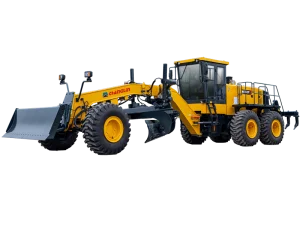
Heavy Earthmoving, Road Machinery & Specialized Equipment
Browse our factory-direct machinery solutions configured for global contractors, mining corporations, and equipment leasing agencies.






Frequently Asked Questions by Global Equipment Procurement Managers
Detailed answers regarding technical selection, OEM/ODM customization, total cost of ownership, international logistics, and after-sales service engineering.
1. What are the key criteria when selecting an excavator manufacturer in China for international projects?
When evaluating Chinese excavator manufacturers, buyers must look beyond the initial purchase price. Key verification points include: 1) Structural Component Quality: Use of high-strength alloy steel plate (e.g., Q345B or Hardox) in boom, arm, and bucket structures; 2) Main Hydraulic Brand & Matching: Quality hydraulic main pumps, pilot control valves, and swing motors from recognized international tier-1 suppliers (such as Kawasaki, Rexroth, or Hengli); 3) Engine Emission Alignment: Availability of Tier 3, Tier 4 Final, or Stage V engines matched to local country environmental regulations; 4) Export Documentation & Testing: Factory pre-delivery inspections (PDI), third-party verification (SGS, BV, TUV), and full CE/EAC certification availability.
2. How does a positive-flow hydraulic system improve excavator operating efficiency?
A positive-flow hydraulic control system utilizes electronic pressure sensors that send pilot signals directly to the main hydraulic pump whenever joystick levers are displaced. Unlike traditional negative-flow systems that measure return oil pressure, positive-flow control adjusts pump displacement instantly to match actual operator input. This eliminates spool lag, delivers smoother multi-function compound movement (such as simultaneous boom lift and bucket curling), and lowers fuel consumption by 8% to 15% depending on digging duty cycle.
3. What is the expected service lifecycle of a heavy crawler excavator under standard rock quarrying conditions?
Under structured preventive maintenance protocols, a heavy crawler excavator (20-tonne to 50-tonne class) manufactured in top-tier Chinese facilities is designed for an operational structural lifespan of 10,000 to 15,000 engine hours. Heavy-duty undercarriages (track chains, rollers, idlers, and sprockets) typically require track pin/bushing turns or track pad replacements between 3,000 and 5,000 hours depending on ground abrasiveness. Hydraulic pump rebuilds or cartridge replacements are typically scheduled around 8,000 to 10,000 operating hours.
4. Can Chinese excavator factories provide custom attachments and auxiliary hydraulic piping configurations?
Yes. Factory production lines offer versatile auxiliary hydraulic configurations, including primary high-pressure lines for hydraulic breakers and rock rippers, dual-way secondary flow lines for hydraulic shears and tilt-rotators, and dedicated low-pressure drain lines for rotating grapples. Quick-coupler piping (both mechanical and hydraulic safety-lock types) can be factory-installed with cab-integrated control switches and proportional foot switch or joystick thumbwheel controllers.
5. How are heavy machinery shipments organized from China to overseas ports?
Depending on machine dimensions and operational weight, international ocean logistics utilize three primary shipping methods: 1) Ro-Ro (Roll-on/Roll-off): Ideal for fully assembled excavators, loaders, and graders, providing optimal corrosion protection inside vessel holds; 2) Flat Rack (FR) Containers: Suitable for heavy excavators over 30 tons where the boom or counterweight remains attached; 3) Disassembled 40ft High Cube (HQ) Containers: Compact excavators (under 15 tons) or mini excavators can be cost-effectively packed inside standard shipping containers by unbolting counterweights and boom assemblies, reducing sea freight costs by up to 40%.
6. What spare parts and field maintenance support are provided for global fleet buyers?
Leading Chinese manufacturers maintain global spare-parts distribution hubs, dealer network service depots, and direct factory technical support teams. Recommended procurement packages include initial wear-parts kits (filters, bucket teeth, side cutters, seal kits, high-pressure hydraulic hoses, and track tension seals) delivered alongside the machine order. Remote diagnostics via CAN-bus telematics allow factory engineers to assist local technicians in troubleshooting fault codes, sensor calibrations, and hydraulic pressure adjustments anywhere in the world.