
Featured Earthmoving & Road Infrastructure Equipment (Batch I)








1. Executive Summary: The Structural Shift in Global Equipment Procurement
The global heavy equipment and industrial machinery sector is undergoing a profound structural evolution. Infrastructure expansion across emerging markets, coupled with aggressive capital expenditure in mining and urban redevelopment within developed economies, has catalyzed unprecedented demand for high-reliability, technologically advanced machinery. Historically dominated by Western and Japanese original equipment manufacturers (OEMs), the global market is witnessing a decisive paradigm shift toward China equipment machine manufacturers and factories.
This transition is not merely driven by baseline price competitiveness. Rather, it is fueled by a comprehensive convergence of technological parity, advanced Industry 4.0 manufacturing ecosystems, massive economy-of-scale advantages, and superior total cost of ownership (TCO) dynamics. International engineering, procurement, and construction (EPC) conglomerates, mining operators, and commercial fleet managers are increasingly restructuring their procurement strategies to integrate Chinese machinery platforms—ranging from heavy-duty crawler excavators and high-precision motor graders to eco-efficient electric wheel loaders and rugged land compactors.
Macroeconomic Demand Drivers
Worldwide investments in energy transition infrastructure, mega-transportation corridors (such as the Belt and Road Initiative), and critical mineral mining require massive, resilient machinery fleets capable of operating under harsh, continuous-duty cycles.
E-E-A-T Sourcing Validation
Global buyers enforce rigorous verification standards. Top-tier Chinese manufacturers now routinely carry CE, ISO 9001, ISO 14001, Tier 4 Final, and Stage V environmental and safety certifications, eliminating regulatory compliance barriers.
Supply Chain Integration
Concentrated industrial hubs in Changzhou and surrounding Jiangsu provinces combine metallurgy, precision gear casting, hydraulic system manufacturing, and final robotic assembly into hyper-efficient local clusters.
2. China Industry 4.0: Supply Chain Resilience & Manufacturing Efficiency
The transformation of China’s machinery manufacturing landscape is rooted in the aggressive implementation of Industry 4.0 smart factory standards. Leading industrial bases, such as the Changlin manufacturing complex in Changzhou, Jiangsu, utilize end-to-end digital integration to manage every step of equipment production—from raw structural steel plate cutting to final hydraulic calibration.
Key pillars of this industrial resilience include:
- Vertical Upstream Integration: Direct alignment with domestic steel production mills and foundry clusters ensures consistent supply of high-strength alloy steels (e.g., Q350/Q690 steel for excavator booms and bulldozer chassis) resistant to severe stress fatigue.
- Advanced Hydraulic Systems Engineering: Co-development of main pumps, control valves, and rotary motors with world-class component partners provides precise, load-sensing hydraulic flow control, optimizing fuel efficiency and multi-function responsiveness.
- Automated Quality Control (AQC): Ultrasonic flaw detection on structural welds, laser tracking for frame alignment, and simulated dynamic stress bench testing guarantee that every machine exiting the assembly line meets rigorous field durability parameters.
3. Industry Trends: Electrification, Telematics & Smart Control
The global construction equipment market is undergoing twin revolutions: rapid zero-emission electrification and deep digital telematics integration. Chinese manufacturers are currently leading the practical deployment of electric machinery in industrial environments.
Next-Gen Electrification (BEV Equipment)
Electric wheel loaders, such as the ZL50EV platform, incorporate high-capacity Lithium Iron Phosphate (LFP) battery packs, direct-drive dual electric motors, and liquid cooling systems. Operating in enclosed tunnels, ports, and steel mills, these machines eliminate direct site emissions while cutting energy expenditures by up to 60-70% compared to diesel counterparts.
Electro-Hydraulic Load Sensing (ECLS)
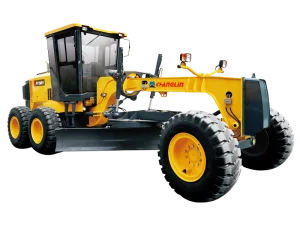
Modern motor graders (e.g., PY220H, PY350T series) utilize electronically controlled main hydraulic pumps that automatically regulate fluid displacement based on moldboard load resistence. This prevents engine bogging during heavy cut operations and saves up to 12% in operational fuel consumption.
Integrated Telematics & Remote Diagnostics
Factory-standard IoT gateways continuously transmit real-time telemetry data—including hydraulic oil temperatures, engine load profiles, fault codes, and GPS site tracking—directly to fleet management dashboards, allowing predictive maintenance and minimizing unplanned downtime.
Financial Evaluation: 5-Year Total Cost of Ownership (TCO) Matrix
For fleet directors and EPC procurement officers, evaluating equipment sourcing requires a rigorous TCO calculation. Below is a operational cost baseline model comparing traditional legacy tier-1 machinery against modern China factory-direct heavy platforms (over 10,000 operating hours).
| Cost Vector Category | Legacy Western / Japanese OEM Platform | China Factory Direct Platform (e.g., Sinomach-HI) | Strategic Advantage / Financial Impact |
|---|---|---|---|
| Initial Capital Expenditure (CapEx) | 100% Baseline (High Premium) | 60% – 70% of OEM Baseline | Up to 40% initial capital preservation for fleet expansion |
| Scheduled Maintenance & Parts Cost | High proprietary part pricing & locked diagnostic software | Standardized component ecosystem & open telemetry | 30% – 45% reduction in recurring preventive maintenance costs |
| Fuel / Energy Efficiency (Diesel) | High efficiency (Tier 4 / Stage V optimized) | Equivalent efficiency (Engineered Cummins/Weichai power) | Operational parity in fuel burn per ton of material moved |
| New Energy (Electric BEV Option) | Limited availability, premium pricing | Commercialized mass production (e.g., ZL50EV) | 65% reduction in hourly energy cost using local grid charging |
| Resale Value & Depreciation Rate | Established secondary auction markets | Rapidly maturing global dealer & secondary demand network | Closing residual value gap over 5-year operational lifecycles |
4. Global Application Scenarios: Engineering Equipment in Action
Chinese machinery is built to perform in diverse, uncompromising geographic conditions. Factory configurations are routinely customized to match specific operational climates and material properties.
Scenario A: Extreme Arid & Desert Infrastructure (Middle East & North Africa)
Deployment Challenges: Ambient temperatures exceeding 50°C, fine silica airborne dust, intense thermal radiation, and continuous long-shift highway grading.
Factory Engineering Solution: Motor graders (such as PY220H and PY220H-5) and heavy vibratory rollers (GYS20J) are configured with tropicalized oversized radiators, multi-stage cyclone air pre-cleaners, pressurized dust-sealed operator cabins with high-capacity HVAC units, and specialized UV-resistant hydraulic hosing.
Scenario B: Open-Pit Mining & Heavy Overburden Excavation (CIS & South America)
Deployment Challenges: Highly abrasive rock matrix, sub-zero winter starting conditions (-30°C), steep haul road inclines, and high-impact bucket loads.
Factory Engineering Solution: Heavy crawler excavators (e.g., ZG365) and large bulldozers (YD320) are equipped with heavy-duty reinforced rock booms, Hardox-faced bucket wear plates, cold-start engine pre-heaters, fuel water separators with electrical heating elements, and heavy-track undercarriages with dual-gouser track shoes.
Scenario C: High-Altitude Road Maintenance & Earthmoving (Andean & Himalayan Regions)
Deployment Challenges: Rarefied atmosphere (elevations above 4,000 meters), severe engine power derating, extreme daily thermal cycling.
Factory Engineering Solution: Turbocharged engines fitted with altitude-compensating wastegate turbochargers, upgraded hydraulic oil coolers, and optimized ECU mapping to maintain rated horsepower and hydraulic pump output despite low ambient air density.
5. Global Procurement Guide: Evaluating China Machinery Factories
To successfully execute cross-border machinery acquisitions and avoid common supply chain pitfalls, international procurement committees should utilize a standardized four-stage evaluation framework:
Stage 1: Manufacturer Credentials & Audit
Verify whether the supplier is a direct manufacturing enterprise (such as Sinomach-HI / Changlin base) or a third-party trading broker. Request factory audit documentation, ISO quality management certificates, and proof of state-owned enterprise (SOE) or tier-1 industrial backing.
Stage 2: Technical Configuration Protocol
Ensure that detailed technical datasheets specify exact engine models (e.g., Cummins, Weichai, Shangchai), hydraulic main pump brands (Kawasaki, Rexroth), transmission types (ZF, Hangchi), and structural steel grades before signing commercial contracts.
Stage 3: Logistics & Shipping Optimization
Determine the optimal maritime transport method based on unit dimensions. Compact equipment (skid steers, 10-ton rollers) fits into standard 40ft High Cube containers; large excavators, motor graders, and bulldozers require Flat Rack, Ro-Ro (Roll-on/Roll-off), or Break-Bulk shipping with anti-corrosion marine waxing.
6. Frequently Asked Questions (FAQ) – Technical & Sourcing Intelligence
Below are detailed responses to the primary technical, operational, and financial inquiries posed by global fleet directors and machinery importers.
Featured Earthmoving & Excavation Equipment (Batch II)






7. Strategic Sourcing Summary & Direct Factory Collaboration
In an increasingly competitive global construction and mining market, equipment selection directly governs operational profitability, fleet availability, and project completion timelines. Contracting with established China equipment machine manufacturers and factories provides international buyers with a decisive strategic advantage—combining robust engineering design, flexible application customization, rapidly advancing electric power technology, and significant lifecycle cost savings.
By leveraging certified manufacturing hubs such as Sinomach-HI (Changlin base), global contractors and machinery dealers secure high-performing assets backed by transparent quality verification, reliable global spare-parts channels, and dedicated after-sales engineering support.