
Featured Heavy Machinery Production Line (Catalog Part I)
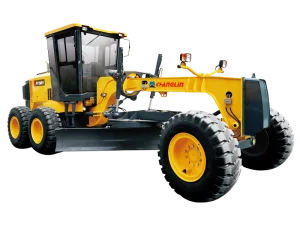
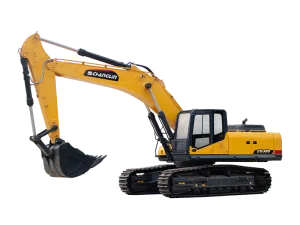
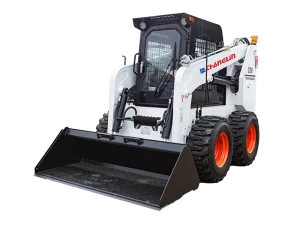
Explore factory-direct crawler excavators, motor graders, compaction equipment, and loaders engineered for heavy-duty international applications.




1. Global Market Architecture & The Evolution of China’s Excavator & Backhoe Industry
Analyzing macro supply chain realignments, technological maturity, and why tier-1 OEM buyers are shifting structural procurement to China’s machinery hubs.
The global heavy earthmoving and earth-handling equipment market has undergone a fundamental transformation over the past decade. Driven by massive infrastructure programs across Southeast Asia, Latin America, the Middle East, and Sub-Saharan Africa, the demand for versatile diggers, hydraulic crawler excavators, and multi-functional backhoe loaders has surged. At the epicenter of this dynamic expansion is China’s heavy machinery industrial ecosystem. No longer characterized merely by high-volume output, leading Chinese excavator and backhoe factories have evolved into sophisticated OEM/ODM hubs operating with state-of-the-art robotic welding, automated assembly lines, and advanced quality assurance protocols aligned with ISO 9001, CE, and Tier 4 Final / Stage V emission directives.
Industrial clusters located in Changzhou, Jiangsu, along with manufacturing strongholds in Shandong and Xuzhou, have integrated top-tier global supply chains with domestically optimized production structures. High-end crawler excavators (ranging from 15-ton utility models like the ZG150 to 38-ton quarry workhorses like the ZG380) now standardly incorporate hydraulic components from global market leaders such as Kawasaki and Rexroth alongside heavy-duty diesel engines from Cummins, Weichai, or Yanmar. Consequently, EPC contractors and fleet procurement directors no longer face a trade-off between capital outlay and machine uptime.
When auditing a Chinese excavator or backhoe factory, technical evaluation should prioritize main control valve (MCV) spool tolerances, pilot-operated control sensitivity, and thermal dissipation efficiencies. High-performance factories utilize positive or negative flow control systems with dual variable displacement axial piston pumps capable of maintaining stable oil flow even under 90%+ continuous engine load cycles.
2. Engineering Architecture: Excavators vs. Backhoe Loaders
Deconstructing structural stress points, hydraulic flow distribution, and duty-cycle math to select the correct chassis for your specific job site.
Understanding the key engineering differences between a dedicated 360-degree hydraulic crawler excavator and a tractor-based backhoe loader is vital for equipment specifiers. While both machine types execute digging, trenching, and lifting operations, their underlying kinematics, frame geometry, and structural load pathways differ substantially.
| Technical Metric / Specification | Medium Crawler Excavator (e.g., ZG150 / ZG365) | Heavy-Duty Backhoe Loader (Tractor Chassis) |
|---|---|---|
| Operating Swing Radius | Full 360° Continuous Upper Structure Rotation | 180° Boom Pivot Swing via Side-Shift or Center-Mount |
| Undercarriage & Mobility | Steel Tracks with Triple-Grouser Shoes (High Flotation) | 4WD Heavy-Duty Pneumatic Tyres (Fast Site Mobility) |
| Main Hydraulic Pressure | 31.4 – 34.3 MPa (High Digging Force Efficiency) | 20.7 – 25.0 MPa (Balanced Loader/Backhoe Hydraulics) |
| Frame Structural Design | X-Frame Heavy Box-Section Track Frame | Integrated One-Piece Monoblock Tractor Frame |
| Primary Site Application | Mass Excavation, Deep Trenching, Quarry Loading | Urban Maintenance, Pipe Laying, Trench-and-Backfill |
Structural Metallurgy & Stress Relief Protocols
Modern Chinese heavy machinery plants employ advanced Finite Element Analysis (FEA) to eliminate stress concentration zones in the boom, arm, and chassis. High-tensile low-alloy steel plates (such as Q345B, Q460D, or Hardox 450 wear plates on bucket lip shrouds) are standardly processed using robotic tandem arc welding. Critical structural fabrications undergo shot blasting and thermal stress relief to prevent micro-fissure propagation under cold-weather impacts or continuous heavy-rock digging.
3. Factory Selection Matrix: Evaluating China Excavator & Backhoe Factories
A rigorous audit framework for procurement managers evaluating manufacturing capability, quality control, and component origin.
Component Traceability
Verify that key hydraulic assemblies (pumps, main control valves, swing motors, final drives) carry original manufacturer certificates from top-tier brands or proven domestic joint ventures.
Quality Testing Infrastructure
Top factories operate dedicated test grounds incorporating 30° gradient climbs, hydraulic pressure surge testing, hot-room cooling tests, and ultrasonic weld flaw detection.
OEM Customization Capabilities
Ensure the factory offers tailored options such as auxiliary hydraulic lines for breakers/shears, cold-weather pre-heaters, ROPS/FOPS certified cabs, and high-altitude engine tuning.
When conducting on-site or third-party factory audits in China (such as Changzhou or Xuzhou manufacturing clusters), global buyers should request factory clearance inspection reports (PDI) covering oil cleanliness ISO codes (ISO 4406 18/16/13 target), paint thickness gauge results (>120 µm anti-corrosion layer), and bolt torque calibration records across all chassis mounting points.
4. Localized Application Scenarios & Macro Field Solutions
Tailoring fleet configurations to regional ambient temperatures, soil types, altitude factors, and operating environments.
Extreme Hot & Dusty Sites (Middle East / Africa)
High ambient temperatures exceeding 45°C require heavy-duty radiator stacks, independent hydraulic oil coolers, and multi-stage cyclone air pre-filters. Machines configured with tropical cooling packages protect hydraulic seals from premature thermal breakdown.
High-Altitude Mining & Quarries (Andes / Central Asia)
Operating above 3,500 meters altitude causes air rarefaction and engine power derating. Turbocharged electronic common-rail engines combined with high-flow hydraulic pumps ensure stable torque curves and dig forces despite reduced oxygen density.
Urban Utility & Trenching Projects
For tight municipal job sites, compact rubber-tracked excavators or versatile 4WD backhoe loaders equipped with extendable dippers and side-shift backhoes offer flexible trenching capabilities without damaging asphalt roadways.
5. Technology Roadmap & Future Industry Trends (2025–2035)
How electrification, intelligent hydraulic load sensing, and 5G telematics are shaping the next generation of Chinese heavy machinery.
The global heavy equipment sector is experiencing an unprecedented technological convergence. Leading Chinese factories are pioneering pure-electric wheel loaders, battery-powered mini/medium excavators, and hybrid heavy dozers. Driven by lithium iron phosphate (LFP) battery packs, electric machinery delivers zero local emissions, significantly reduced noise levels, and up to 60-70% savings in hourly energy expenses compared to traditional diesel power units.
In enclosed environments such as tunnels, indoor industrial plants, and urban low-emission zones, pure electric machinery eliminates the need for expensive site ventilation infrastructure while providing instant hydraulic torque response.
Autonomous Operations & IoT Fleet Management
Modern Chinese machinery factories are integrating CAN-bus telematics hardware directly into the machine control architecture. Real-time parameters—including hydraulic oil temperature, engine load factor, fuel burn rates, GPS location, and fault diagnostic codes—are transmitted securely to cloud platforms. Fleet managers can monitor machine health, schedule preventative maintenance, and optimize cycle times remotely from any web browser or mobile app.
6. Total Cost of Ownership (TCO) & Procurement Financial Modeling
A complete breakdown of capital expenditure (CapEx), operational expenditure (OpEx), wear-part costs, and residual values over 10,000 operating hours.
Evaluating an excavator or backhoe factory purely on initial purchase price is a common mistake in fleet management. Experienced equipment directors evaluate Total Cost of Ownership (TCO) over a standard 5-year / 10,000-hour machine lifecycle. Chinese factory-direct sourcing generally saves between 30% to 50% in initial CapEx compared to legacy Western or Japanese brands, freeing up working capital for additional operational assets.
When calculated per ton of earth moved or per trench meter executed, the combination of lower initial acquisition cost, economical spare parts pricing, and highly competitive fuel consumption rates yields an exceptionally fast payback period (typically between 12 to 18 months under active project utilization).
7. Frequently Asked Questions (FAQ) – Procurement & Technical Guidance
Answers to common technical, logistics, and quality assurance questions asked by international buyers sourcing heavy machinery from China.
Q1: How do Chinese excavator and backhoe factories ensure hydraulic system cleanliness and reliability?
Q2: Can excavators and loaders be customized for specific emissions regulations (Tier 4 Final / Stage V)?
Q3: What shipping modes are recommended for heavy machinery export from China?
Q4: How are spare parts delivered for overseas fleets?
Q5: What warranty coverage is standard for factory-direct machinery purchases?
Q6: How can buyers verify machine performance before shipment?
Featured Heavy Machinery Production Line (Catalog Part II)
Additional heavy equipment models including compact skid steers, heavy bulldozers, high-tonnage graders, and compactors.






