
Flagship Excavators & Heavy Equipment Series (Part I)
Factory-direct crawler excavators and earthmoving machinery engineered for heavy-duty mining, quarrying, and civil infrastructure projects.






1. The Industrial Advantage of China Excavator Manufacturing
How Changzhou & Jiangsu Heavy Machinery Clusters Redefined Global Earthmoving Production Standards
Over the past two decades, China has evolved from a licensed assembly hub for global heavy machinery brands into the undisputed powerhouse of primary hydraulic excavation technology, structural metallurgy, and electrified heavy equipment manufacturing. Modern Chinese OEM factories, exemplified by state-backed heavy industrial platforms such as Sinomach-HI (Changlin), integrate the complete value chain—from high-tensile steel plate cutting to advanced robot-assisted boom welding, precision hydraulic valve machining, and automated end-of-line testing.
Integrated Supply Clusters
Locating production inside the Yangtze River Delta manufacturing ecosystem guarantees immediate access to tier-1 hydraulic components, forged undercarriage tracks, and high-yield structural steel, lowering supply chain lead times by up to 45%.
Advanced positive-flow hydraulics
By coupling electro-hydraulic main control valves with electronic main pumps, Chinese excavators achieve millisecond-level pilot response, reducing hydraulic energy loss and lowering fuel burn by 12% to 18% per hour worked.
Rigorous Metallurgical Quality
Booms, arms, and track frames utilize Q690D/Q345E structural steel subjected to ultrasonic flaw detection, shot-peening stress relief, and robotic multi-pass welding to prevent structural cracking in mining environments.
OEM Direct Factory Manufacturing vs. Trading Intermediaries
For international procurement managers, distinguishing between direct OEM manufacturing facilities and trading resellers is paramount for long-term fleet uptime and warranty security. The following matrix illustrates key operational differentiators:
| Evaluation Benchmark | Direct Factory (e.g., Sinomach-HI) | Commercial Trading Intermediaries |
|---|---|---|
| Engineering Customization | Direct access to chassis, hydraulic flow, cold-start, and cabin design customization. | Restricted to standardized off-the-shelf stock without factory engineering support. |
| Spare Parts Traceability | 100% genuine OEM part numbers mapped via CAN-bus system schematics. | Risk of mixed-grade aftermarket components and delayed logistics. |
| Emission Standard Compliance | Factory engines tailored to local regulations (EU Stage V, US Tier 4F, Tier 2/3). | Inconsistent documentation leading to customs impound risks. |
| After-Sales Technical Support | Direct factory technician dispatch, remote telematics diagnostics, certified training. | Third-party outsourcing with delayed response times. |
2. Procurement Framework & Total Cost of Ownership (TCO)
Strategic Financial Evaluation for Overseas Mining Enterprise, Infrastructure Contractors, and Equipment Leasing Companies
Deconstructing the TCO Equation for Excavator Fleets
When procuring heavy excavators—ranging from 21-ton utility units like the ZG210 to 38-ton mining excavators like the ZG385—capital expenditures (CapEx) represent only 25-35% of total lifetime operational investment. The remaining 65-75% is consumed by fuel consumption, routine preventive maintenance, wear parts replacement (bucket teeth, track shoes, undercarriage rollers), and unplanned downtime losses.
CapEx Optimization
Factory-direct sourcing eliminates multiple tiers of broker margins, allowing enterprise buyers to allocate capital toward higher-spec attachments (hydraulic breakers, quick couplers, rippers) or expand total fleet volume while staying strictly within capital budgets.
OpEx & Fuel Efficiency
Modern Cummins and Weichai engines paired with Kawasaki hydraulic positive-flow management systems dynamically match engine RPM to hydraulic pump load. Auto-idle and auto-shutdown functions reduce unnecessary fuel burn during idle haul-truck wait times.
Buyer Persona Requirements & Sourcing Criteria
- Mining & Quarry Operators: Require heavy-duty box-section booms, reinforced belly guards, double-grouser track shoes, and bucket capacities above 1.6 m³ capable of handling dense blasted rock (>2.2 t/m³). Models like the ZG360, ZG365, and ZG385 are engineered specifically for continuous 20-hour daily duty cycles.
- Civil Infrastructure & Highway Contractors: Depend on multi-tool versatility, high road transportability, and precision grading capability. The integration of PY220H and PY240H Motor Graders alongside 20-ton to 25-ton excavators (ZG220N, ZG250) maximizes site productivity during earthwork cut-and-fill operations.
- Port Authorities & Materials Logistics Yards: Increasingly demanding zero-emission equipment to meet corporate ESG targets. Zero-emission electric wheel loaders like the ZL50EV offer zero localized carbon output, drastically lower ambient noise in enclosed hoppers, and lower maintenance costs by eliminating internal combustion engine overhauls.
3. Global Industry Trends & Technological Disruption (2025–2030)
Emerging Innovations Shaping the Next Generation of Smart Earthmoving Machinery
Electrification & Hybrid Drive
High-capacity LFP battery packs (350+ kWh) combined with fast thermal management enable 8+ hours of continuous operation on heavy loaders like the ZL50EV. Electric motors provide instant peak torque, eliminating hydraulic lag.
Smart Telematics & IoT Tracking
Integrated CAN-bus data gateways stream real-time operational diagnostics—including hydraulic oil temperature, fuel rate, error codes, and GPS geofencing—directly to fleet management dashboards worldwide.
Semi-Autonomous Control
Electro-hydraulic proportional control valves facilitate plug-and-play integration with 3D GPS grade control systems, enabling automated bucket leveling, trench depth control, and reduced operator fatigue.
Environmental Compliance & Engine Adaptability
Global export markets present vastly different fuel standards and emissions mandates. China’s leading excavator factories engineer multi-platform power installations to ensure seamless deployment anywhere in the world:
- Regulated Markets (North America, Western Europe): Configured with EU Stage V / US Tier 4 Final engines utilizing Selective Catalytic Reduction (SCR), Diesel Particulate Filters (DPF), and cooled EGR for stringent particulate matter compliance.
- Developing & High-Sulfur Markets (Africa, South America, CIS): Fitted with robust Tier 2 / Tier 3 mechanical or electronic injection systems equipped with multi-stage high-efficiency fuel-water separators and heating elements to prevent pump failure from high-sulfur diesel fuel.
4. Application Scenarios & Engineering Solutions
Tailored Machine Packages Designed to Execute Extreme Job Site Challenges Worldwide
Heavy Mining & Open-Pit Rock Excavation
Recommended Fleet: Crawler Excavators ZG360, ZG365, ZG380, ZG385 + Bulldozers YD320
In high-abrasion copper, gold, and coal open-pit operations, machines face extreme impact loads. Sinomach excavator packages feature cast-steel boom roots, heavy-duty rock buckets equipped with forged side cutters, and high-torque swing motors to minimize cycle times when loading 40-ton dump trucks.
High-Altitude Road & Alpine Infrastructure
Recommended Fleet: Motor Graders PY220H, PY240H + Excavators ZG250, ZG330D
High-elevation projects (>3,000 meters above sea level) often cause engine derating due to thin air. Factory-configured turbochargers with wastegate power management preserve engine horsepower, while independent hydraulic cooling systems prevent oil breakdown in low ambient temperatures.
Urban Municipal, Utilities & Trenching Work
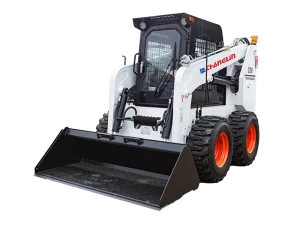
Recommended Fleet: Excavators ZG210, ZG220N + Skid Steer Loaders 255F, 275F
Narrow urban corridors demand tight tail-swing radius, smooth fine control for pipe laying, and low vibration output. Auxiliary dual-way hydraulic lines allow operators to instantly switch between hydraulic breakers, earth augers, and tiltrotators without manually swapping hoses.
Compaction & Waste Landfill Engineering
Recommended Fleet: Road Rollers GYS10J + Landfill Compactors & Wheel Loaders ZL30H, ZL50EV
Road bed preparation requires precise dual-amplitude, dual-frequency vibratory rollers to achieve maximum soil density in fewer passes. In municipal solid waste management, specialized high-cleat padfoot compactors increase landfill airspace utilization while protecting underchassis components.
5. Quality Assurance Protocols & Shipping Logistics
Factory Acceptance Testing (FAT) and Global Maritime Transport Security Standards
To ensure that every excavator delivered to overseas job sites arrives in turnkey operating condition, Chinese manufacturing facilities enforce standardized quality gate protocols at every step of fabrication:
100% Hydraulic Pressure Testing
Main control valves and cylinders undergo static and dynamic burst-pressure testing at up to 35 MPa to eliminate fluid leaks under severe loads.
2000-Hour Structural Fatigue Trials
Prototype booms and upper frames undergo accelerated hydraulic stress rig testing equivalent to 2,000 continuous hours of heavy digging.
Pre-Shipment PDI Verification
Every unit undergoes a comprehensive 80-point Pre-Delivery Inspection (PDI), including engine stall testing, swing gear play measurement, and full video documentation shared with the buyer.
Maritime Logistics & Packaging Strategies
Proper export packaging is essential to prevent saltwater corrosion and structural damage during transoceanic shipping:
- RoRo (Roll-on/Roll-off) Vessels: Recommended for complete machines. Units are driven directly onto protected ship decks, shielded entirely from marine weather elements.
- Flat Rack Containers: Ideal for large excavators (ZG360, ZG385) where booms or counterweights are detached, secured with heavy steel lashings, and sealed in corrosion-inhibiting VCI film.
- HQ Container Disassembly: For compact units (skid steers, small wheel loaders), machines are systematically disassembled, boxed, and packed inside standard 40ft High Cube containers to lower ocean freight rates per unit.
Specialized Heavy Fleet Equipment (Part II)
Explore electric loaders, medium excavators, dozers, and compaction machinery for specialized industrial applications.








6. Frequently Asked Questions (B2B Sourcing Guide)
Technical and Commercial Clarifications for Overseas Fleet Procurement Managers