
Primary Machinery Lineup & Heavy Fleet Roster
Explore high-performance hydraulic crawler excavators, motor graders, wheel loaders, and compactors engineered for extreme working environments.

China Crawler Excavator ZG360 Manufacturer, Factories
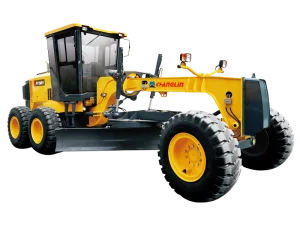
Buy Motor Grader PY150 Factory, Factories

Buy Crawler Excavator ZG250 Manufacturer, Manufacturers
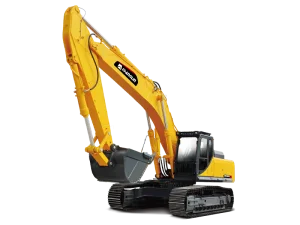
China Crawler Excavator ZG480 Manufacturers, Factory

Buy Bulldozer YD160 Manufacturer, Manufacturers

China Road Roller GYS12J Manufacturers, Factories

Buy Wheel Loader ZL30H Manufacturer, Manufacturers

China Landfill Compactor GYL203 Manufacturer, Factories
1. Global Excavator Market & Procurement Dynamics
Analyzing global demand shifts, manufacturing excellence, and Total Cost of Ownership (TCO) optimization in Chinese excavation machinery.
The global demand for heavy earthmoving machinery is experiencing a paradigm shift driven by massive international infrastructure investments, mining expansion, and urban renewal projects. Enterprise procurement officers and logistics executives across South America, the CIS region, Southeast Asia, Africa, and the Middle East are increasingly looking to leading China excavator machine working manufacturers and factories to fulfill complex equipment requisitions. Modern manufacturing clusters—centered in industrial hubs like Changzhou, Jiangsu—have established world-class engineering benchmarks through automated welding robotics, stringent stress testing, and strategic partnerships with global powertrain suppliers.
Understanding the actual working performance of crawler excavators requires an evaluation beyond basic horsepower or operating weight. It demands an in-depth analysis of dynamic load matching, hydraulic pump displacement under heavy resistance, thermal balance during continuous 24/7 quarry operations, and structural fatigue resilience. Modern Chinese factories have integrated real-time telematics and digital twin simulations directly into their production lines to ensure every machine leaving the assembly bay performs reliably under harsh ambient conditions ranging from -35°C in Arctic mines to +50°C in equatorial deserts.
2. Technical Architecture & Hydraulic Working Systems
Dissecting the mechanical, hydraulic, and electronic subsystems that power heavy excavators working under peak load conditions.
Positive Flow Hydraulic Control
Unlike conventional negative flow systems, positive flow control directly senses joystick pilot signals, modulating main pump output before movement begins. This reduces response time by up to 40% and yields smoother multi-actuator compound digging cycles.
Heavy-Duty Undercarriage & Boom
Utilizing high-tensile strength structural steel plates (up to 700 MPa yield strength) combined with robotic submerged arc welding. Stress concentrations are mitigated via finite element analysis (FEA) to endure heavy rock hammer operations.
Electro-Hydraulic Synergy (EHS)
Micro-processor controlled engine ECU and hydraulic main valve communication automatically match engine torque output curves with hydraulic pressure spikes, preventing engine stalling even in sudden heavy-load digging situations.
Technical Specification Comparison across Key Excavation Categories
A detailed engineering baseline comparing medium and heavy-duty crawler excavators produced by leading Chinese OEMs:
| Model Class | Operating Weight (kg) | Engine Rated Power (kW/rpm) | Bucket Capacity (m³) | Max Digging Force (kN) | Main Hydraulic Flow (L/min) |
|---|---|---|---|---|---|
| ZG250 Medium Crawler | 24,500 - 25,200 | 140 / 2000 | 1.2 - 1.4 | 175 | 2 x 234 |
| ZG360 Heavy Crawler | 34,800 - 36,000 | 212 / 2000 | 1.6 - 1.9 | 245 | 2 x 320 |
| ZG480 Mining Crawler | 47,500 - 49,000 | 298 / 1800 | 2.2 - 2.6 | 320 | 2 x 380 |
3. Macro Industry Solutions & Working Deployments
Tailored operational configurations for quarrying, municipal engineering, road building, and landfill management.
Open-Pit Mining & Hard Rock Quarrying
Deploying heavy-duty excavators such as the ZG480 paired with mining graders and heavy bulldozers. Equipped with reinforced rock buckets, dual-flange track rollers, and full-length track guards to survive granite and basalt abrasion.
- Heavy-duty bucket teeth with high-chromium alloy inserts
- Optional hydraulic rippers and breaker piping circuits
- Pressurized dust-proof cabs with FOPS/ROPS certification
Cross-Country Road Construction & Infrastructure
Synergizing crawler excavators (ZG250/ZG360) with PY150/PY190H Motor Graders and GYS12J Heavy Road Rollers. Delivers continuous sub-grade cutting, slope formation, ditching, and structural compaction.
- 3D GPS & GLONASS machine control readiness
- Quick-coupler hydraulics for rapid tool changing
- Fuel-efficient ECO operating modes for bulk earthwork
Landfill Management & Soil Compaction
Combining heavy-tonnage earthmovers with specialized machinery like the GYL203 Landfill Compactor featuring spiked cleat wheels and wide trash blades to maximize refuse density and cover material placement.
- High-clearance frame design preventing debris wrapping
- Centralized lubrication systems for low maintenance
- Corrosion-resistant paint coatings for acidic site conditions
4. Technological Roadmap & Future Innovations
How Chinese excavating machinery manufacturers are leading the next decade of earthmoving through electrification, autonomous operation, and AI telematics.
Pure Electric & Hybrid Excavation Systems
As carbon neutrality mandates tighten across Western markets and enclosed tunneling projects, Chinese manufacturers are pioneering battery-electric crawler excavators and loaders. By replacing diesel engines with high-energy-density LFP (Lithium Iron Phosphate) battery packs and electric motors, operational noise is reduced by up to 70%, while operating energy costs plummet by 50-60% compared to traditional diesel power.
Furthermore, high-voltage fast-charging architecture enables full battery replenishment in under 60 minutes, allowing seamless shift handovers in high-density material yards and port operations.
Autonomous Digging & AI Fleet Telematics
Future excavation sites will rely heavily on cloud-connected fleets. Advanced algorithms analyze digging resistance in real-time, automatically calculating optimal bucket entry angles to minimize fuel burn per ton of excavated dirt. Autonomous trenching software allows single operators to control multiple machines remotely from a central control hub, eliminating operator hazard in hazardous landslide stabilization or mining zones.
Predictive diagnostic systems monitor hydraulic oil particle counts and vibration signatures to alert fleet managers weeks before structural or pump failures occur.
5. Manufacturing Quality Standards & Compliance Safeguards
Strict quality assurance protocols, international emissions certifications, and structural testing executed across Chinese heavy machinery factories.
Purchasing heavy excavating machinery across international borders demands complete confidence in factory quality control. Premium Chinese manufacturers implement ISO 9001 quality management systems alongside rigorous structural testing regimens. Every critical steel weld undergoes ultrasonic non-destructive testing (NDT) to prevent fatigue cracking under cyclic loading.
Emissions & Engine Standards
Machinery is supplied with engine options customized to local environmental regulations, including Tier 3, Tier 4 Final, and EU Stage V standards. Cummins, Weichai, and Yanmar powertrains are integrated with precision exhaust treatment systems (SCR/DEF, DPF) to ensure seamless customs clearance in North American and European ports.
Hydraulic Cleanliness Protocols
Hydraulic contamination is the leading cause of premature valve and pump failure. Modern factories utilize automated oil flushing rigs to clean internal hydraulic lines down to ISO 4406 cleanliness standards (16/14/11 class) prior to factory roll-off.
Pre-Delivery Inspection (PDI)
Before shipment, every machine undergoes a 50-hour operational break-in trial. This includes maximum hydraulic pressure relief holding tests, track tension calibration, thermal imaging of rotating bearings, and water-tight cab leak testing.
6. Overseas Logistics, Spare Parts & Technical Localization
Ensuring uninterrupted operational uptime through localized spare parts hubs and heavy machinery shipping expertise.
Heavy Machinery Logistics Optimization
Transporting 20 to 50-ton excavators across global shipping lanes requires specialized logistics execution. Manufacturers work closely with Ro-Ro (Roll-on/Roll-off) and Breakbulk vessel carriers to ensure units are secured safely against salt-water corrosion.
- Ro-Ro Shipping: Fully assembled excavators are driven directly into vessel holds, offering maximum protection from marine elements.
- Flat Rack Containerization: For medium excavators (ZG250) and wheel loaders, boom/arm sections can be dismounted to fit standard 40ft Flat Rack containers, reducing freight costs.
- Protective Coatings: Exterior cylinder rods and machined surfaces are sealed with anti-corrosion wax prior to dock delivery.
Lifecycle Spare Parts Support & Telematics
Machine downtime costs contractors thousands of dollars per day. Leading Chinese OEMs maintain regional parts distribution centers across South America, Africa, Central Asia, and the Middle East, stocking fast-wearing items such as filter kits, hydraulic seals, bucket teeth, and track shoes.
Through embedded IoT telematics, equipment owners receive automated maintenance alerts, engine fault codes, and fuel consumption analytics directly to their mobile devices, ensuring proactive service before failure occurs.
Complete Equipment Range & Supporting Machinery
Complement your excavator fleet with high-capacity bulldozers, heavy-duty road rollers, wheel loaders, and motor graders.

China Bulldozer YD255 Manufacturer, Manufacturers

Buy Motor Grader PY190H Manufacturers, Factories

Buy Wheel Loader ZL60H Factory, Factories
China Road Roller GYS10J Manufacturers, Factory

Buy Motor Grader PY350T Manufacturer, Manufacturers

Buy Skid Steer Loader 255F Manufacturers, Factories
Buy Road Roller GYS20J Manufacturers, Factories
China Road Roller GYD132J Manufacturer, Factory
7. Technical & Procurement Questions & Answers
Addressing key engineering, operational, and commercial questions for international heavy equipment buyers.
- Track Shoe Options: Triple grouser (standard), single grouser (rock), or rubber pads for urban asphalt.
- Arm & Boom Configurations: Short arms for maximum breakout force in mining, or long-reach booms (up to 18 meters) for dredging and slope finishing.
- Hydraulic Auxiliary Lines: Dual-way proportional hydraulic piping for tilt-rotators, crushers, shear attachments, and rock breakers.
- Cab & Safety Features: FOPS/ROPS level II certified cabs, 360-degree bird's-eye camera systems, and armored windscreen guards.