
Heavy Duty Construction & Excavation Equipment
Direct factory-engineered earthmoving equipment, excavators, and motor graders built for high-stress mining and infrastructure operations.






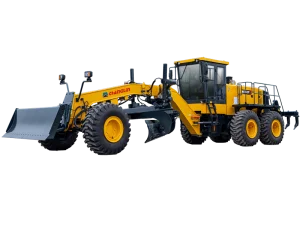
The Evolution of China's Heavy Equipment Bucket Manufacturing
Analyzing global supply chain shifts, high-strength alloy integration, and high-gain procurement strategies for earthmoving attachments.
In the modern earthmoving, mining, and civil infrastructure landscape, the heavy equipment bucket is no longer viewed merely as a passive steel weldment. It represents the primary mechanical interface between multi-million-dollar hydraulic excavators, wheel loaders, or backhoes and the earth's lithosphere. As global infrastructure projects encounter increasingly hostile geological strata—ranging from highly abrasive quartz granite to frozen permafrost—the structural design, metallurgical composition, and breakout force geometry of earthmoving buckets directly dictate fleet fuel burn rates, cycle times, and operational profitability.
This comprehensive technical whitepaper explores the macro-economic drivers, structural engineering methodologies, sector-specific application vectors, and long-term procurement frameworks required when partnering with a leading China heavy equipment bucket manufacturer.
1. Global Enterprise Procurement Demands for Heavy Equipment Buckets
Global equipment procurement managers face multi-faceted challenges when specifying attachments for diverse excavator weight classes (ranging from 1-6 ton compact excavators to 100-800 ton ultra-class mining excavators) and wheel loaders (from 3-ton utility units to 50-ton quarry loaders). Procurement demands have evolved beyond basic dimensional compatibility to encompass rigorous structural engineering metrics.
1.1 Duty-Class Categorization & Geometric Specification
Industrial bucket manufacturing in China follows precise duty-class classifications tailored to soil mechanics and rock mass rating (RMR) scales:
General Purpose (GP) Buckets
Engineered for low-abrasion, cohesive materials such as topsoil, clay, and loose sand. Constructed using high-strength structural steel (such as Q355B/Q460D) with baseline wear strips. Features optimized fill factors according to ISO 7451 / SAE J296 guidelines.
Heavy Duty (HD) Buckets
Designed for compacted soils, gravel, shot limestone, and soft rock excavation. Reinforced with lateral wear cutters, thicker lip plates (25mm–50mm), and high-wear bottom runner strips utilizing NM400/Hardox 400 steels.
Severe Duty (SD) & Extreme Rock (XDR)
Tailored for high-impact abrasive quarrying, iron ore extraction, and trenching in solid granite. Incorporates full shrouding (heel shrouds, lip shrouds, wing shrouds), double-vector side cutters, and solid cast GET (Ground Engaging Tools).
1.2 Kinematic Balance and Breakout Force Optimization
A critical engineering failure in low-grade bucket fabrication is improper pin geometry. When a bucket’s tip radius is incorrectly calibrated against the excavator boom and arm cylinders, the machine suffers a severe loss of digging force (ISO 6015 breakout force). Leading Chinese bucket factories utilize 3D kinematic modeling to match exact machine geometry—maximizing hydraulic cylinder pressure transfer while preventing premature bush and pin wear.
| Excavator Class (Tons) | Bucket Capacity (m³) | Cutting Edge Thickness (mm) | Primary Material Grade | Typical Operational Application |
|---|---|---|---|---|
| 12 - 15 Tons | 0.50 - 0.75 m³ | 20 - 25 mm | Q355B / NM400 | Utility Trenching, Urban Civil Infrastructure |
| 20 - 25 Tons | 1.00 - 1.40 m³ | 30 - 40 mm | Q460D / Hardox 450 | General Construction, Roadbuilding, Earthmoving |
| 30 - 40 Tons | 1.50 - 2.20 m³ | 40 - 60 mm | Hardox 450 / Hardox 500 | Heavy Excavation, Foundation Piling, Quarries |
| 50 - 90 Tons | 2.50 - 5.50 m³ | 60 - 90 mm | Hardox 500 / Weldox 700 | Open-Pit Mining Overburden, Bulk Loading |
| 100 - 400+ Tons | 6.00 - 24.0 m³ | 90 - 140+ mm | Cast Alloy + Hardox 500/600 | Ultra-Class Extraction (Copper, Gold, Iron Ore) |
2. Macro-Industry Solutions & Sector-Specific Attachments
Different global sectors demand specialized bucket architectures to address unique material densities, moisture profiles, and wear mechanisms. Chinese tier-1 bucket manufacturers provide custom-tailored solutions across major global industries.
Mining & Hard-Rock Quarrying
Mining environments subject buckets to extreme sliding abrasion and heavy impact forces. Solutions feature high-Vickers hardness liner plates, mechanical wear buttons, choky bars, and ESCO/CAT-style cast tooth systems. Delta-v shaped spade lip designs reduce penetration resistance by up to 18%, significantly lowering fuel consumption per bank cubic meter (BCM).
Heavy Civil Infrastructure & Earthworks
Focuses on maximum cycle efficiency and material retention. Features dual-radius shell profiles that roll material smooth during the dump phase, minimizing sticky soil carry-back. Quick-coupler compatible geometries allow seamless interchangeability between tiltrotators, rippers, and trenching buckets.
Dredging & Marine Operations
Submersible excavation and harbor deepening require corrosion-resistant coatings, marine-grade pin seals, and high-volume drainage perforations. Heavy-duty hydraulic clamshell buckets engineered with dual-cylinder synchronizers ensure uniform sealing force under saltwater pressures.
Recycling, Scrap & Demolition
Demolition environments require skeleton/sifting buckets, hydraulic grapples, and sorting buckets designed to process reinforced concrete debris, rebar, and scrap metal. Integrated high-torque hydraulic rotators provide 360-degree positioning precision.
3. Technology Roadmap: Metallurgy, FEA & Future Innovations
The competitive edge of top-tier Chinese heavy equipment bucket factories stems from rapid technology deployment. Modern bucket manufacturing has transitioned from empirical craftmanship to computational physics and metallurgical engineering.
Advanced Metallurgical Formulations (Quenched & Tempered Steels)
Leading Chinese factories utilize direct partnerships with global steel giants (such as SSAB Hardox, Baosteel, and NISCO). High-wear bucket zones integrate Martensitic alloy plates offering yield strengths exceeding 1,200 MPa and Brinell hardness ratings up to 600 HBW. Low-temperature impact toughness is maintained even down to -40°C for Siberian and Arctic mining applications.
Finite Element Analysis (FEA) Stress Vectoring
Before burning steel plates via CNC plasma cutters, engineers run complex FEA software simulations. Virtual loads up to 150% of peak excavator breakout force are applied across tooth adapters, side cutters, and upper torque tubes. This pinpoints stress concentration points, enabling strategic plate gusseting without adding non-functional tare weight.
Robotic Tandem GMAW/FCAW Welding Systems
Structural reliability depends on weld seam integrity. Leading Chinese plants utilize multi-axis robotic welding cells executing continuous Submerged Arc Welding (SAW) and Gas Metal Arc Welding (GMAW). Pre-heating protocols (150°C–200°C) and ultrasonic non-destructive testing (NDT) guarantee zero hydrogen cracking, void formation, or weld fatigue failures.
Telemetry & "Smart Bucket" IoT Integration
The next frontier in bucket technology involves embedded wireless wear sensors, strain gauges, and RFID Ground Engaging Tool tracking. Smart buckets transmit real-time lip wear thickness, payload metrics, and fatigue cycles directly to fleet management platforms via CAN-bus gateways, eliminating catastrophic tooth loss events in crushing plants.
4. Global Commercial Landscape & Total Cost of Ownership (TCO) Analysis
For international buyers, equipment procurement is driven by total operational cost per loaded ton ($/ton). Chinese heavy equipment bucket manufacturers offer an unmatched value proposition by combining raw material scale, dense industrial clusters, and competitive manufacturing overheads.
4.1 Industrial Clusters in China
China’s bucket manufacturing ecosystem is concentrated in established heavy machinery hubs:
- Changzhou & Xuzhou Hubs (Jiangsu Province): Globally recognized for excavator attachments, benefiting from proximity to tier-1 excavator OEMs (e.g., Sinomach-HI, Caterpillar Xuzhou, XCMG) and deep-water shipping ports like Shanghai and Ningbo.
- Jining & Linyi Hubs (Shandong Province): Renowned for large-scale casting foundries, heavy dozer blades, loader buckets, and ground-engaging tool fabrication.
4.2 TCO Financial Model Comparison
5. Localization Support, Quality Assurance & Global Compliance
To succeed in overseas markets, leading Chinese manufacturers maintain strict international engineering and compliance standards.
International Certifications
Production lines operate under ISO 9001:2015 Quality Management Systems and ISO 14001:2015 Environmental Management Standards. Welding operations strictly adhere to AWS D1.1 / ISO 3834-2 structural welding standards.
Rigorous Pre-Shipment Inspection (PSI)
Every bucket undergoes 100% 3D coordinate measurement verification, pin center-to-center tolerance checks (±0.5mm), pressure testing for hydraulic models, and Ultrasonic Flaw Detection (UT) along critical weld joints.
Custom OEM/ODM Engineering
Factories offer rapid-response OEM engineering. Overseas dealers can supply custom quick-coupler drawings, specialized tooth adapter requests, or branded colorways, receiving approval-ready CAD renders within 48 hours.
Excavators, Dozers & Heavy Road Rollers
Comprehensive machinery solutions engineered for high durability, low maintenance, and severe duty cycles across global jobsites.







6. Strategic Procurement Checklist for Sourcing Buckets from China
To streamline international sourcing and mitigate technical risks, procurement officers should evaluate Chinese manufacturers against these critical operational criteria:
1. Material Traceability
Require Mill Test Certificates (MTC) according to EN 10204 3.1 verifying chemical composition and mechanical properties for all structural and wear steel plates.
2. Welder Accreditation
Verify that factory welders hold active ISO 9606-1 or AWS D1.1 structural welding certifications for multi-pass flat, vertical, and overhead positions.
3. Fitment Integrity
Insist on master pin-gauge testing or trial fitting on actual machine arm sticks prior to final crating and containerization.
Frequently Asked Questions: Heavy Equipment Bucket Sourcing
Expert engineering answers addressing common technical queries from overseas equipment managers and distributors.