
Featured Machinery Lineup (Series Part I)
Factory-direct heavy equipment engineered for rugged reliability across global infrastructure, mining, and road construction projects.



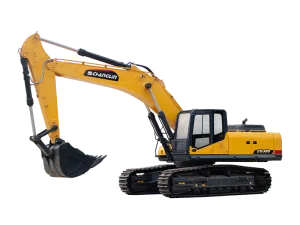



1. Macro-Industry Architecture: The Global Heavy Loader Sourcing Shifts
Strategic analysis of industrial supply chains, structural manufacturing concentration in China, and Total Cost of Ownership (TCO) evaluation frameworks for global capital procurement teams.
Global Supply Chain Realignment
Over the past decade, the global construction machinery landscape has undergone a monumental shift toward OEM consolidation in key industrial hubs. Chinese heavy equipment manufacturers, led by Changzhou and Jiangsu industrial clusters, have transitioned from localized fabricators to dominant global technological forces. By integrating vertical component ecosystems—combining state-owned steel foundries, advanced hydraulic research institutes, and automated robot assembly lines—China heavy machinery loader factories now deliver equipment with high structural rigidity, tier-one hydraulic components, and competitive capital expenditure thresholds.
TCO Equation & Capex Optimization
International procurement directors in mining, earthmoving, and municipal infrastructure evaluate wheel loaders and heavy excavators not merely on upfront acquisition price (CAPEX), but on life-cycle cost efficiency (OPEX). The modern Total Cost of Ownership (TCO) equation integrates initial purchase price, specific fuel consumption (SFC in g/kWh), hydraulic system efficiency losses, preventative maintenance intervals, wear-parts lifecycle, and residual fleet resale value. China heavy machinery factories provide up to 35% lower initial CAPEX while delivering equivalent hydraulic cycle speeds and structural uptime.
Manufacturing Scale & Standardization
Factory-direct heavy equipment sourcing eliminates intermediary dealer premiums and allows customized configuration matching specific job-site conditions. Modern Chinese production lines utilize High-Strength Weldment Structures (HSLA steel), automated robotic arc welding cell control, and ultrasonic non-destructive testing (NDT) to ensure structural frame life exceeding 15,000 operational hours under severe load cycles in open-pit mines and aggregate quarries.
When procuring heavy machinery loaders from Chinese manufacturers, fleet buyers should look beyond surface specifications. True operational longevity relies on component integration—verifying how engine torque curves align with planetary powershift transmission shift-points and main hydraulic pump displacement curves.
2. Heavy Machinery Loader Engineering Paradigm & Technical Breakthroughs
Deep-dive analysis into powertrain hydraulics, structural kinematics, energy conversion efficiencies, and battery electric vehicle (BEV) heavy equipment architectures.
Powertrain Architecture: Hydrostatic vs. Powershift
Modern heavy loaders manufactured in China utilize two primary powertrain architectures tailored to application dynamics. Hydrostatic drive systems utilize variable displacement axial piston pumps and motors, providing seamless infinitely variable transmission ratios ideal for quick shuttle-loading cycles, tight job site maneuvering, and maximum low-speed rimpull without wheel slippage. Conversely, heavy-duty countershaft powershift transmissions with electro-hydraulic shift control are selected for high-tonnage mining loaders and long-distance load-and-carry tasks, delivering mechanical efficiency up to 92% across higher speed ranges.
Load-Sensing Variable Hydraulics (LSS)
To eliminate parasitic hydraulic power losses, advanced Chinese loader factories integrate Load-Sensing System (LSS) technology featuring variable-displacement piston pumps coupled with pressure-compensated main control valves. Unlike fixed-displacement gear pump systems that constantly dump excess fluid over relief valves generating thermal heat, LSS monitors steering and boom/bucket pressure demands, supplying only the flow required by the actuator. This reduces fuel consumption by 12% to 18% per loading cycle while maintaining breakout forces exceeding 200 kN.
Electric Wheel Loaders (BEV Architectures)
China leads the global transition to pure electric heavy machinery. Electric wheel loaders replace traditional diesel engines with high-voltage (600V–750V) Lithium Iron Phosphate (LFP) battery packs paired with dual permanent magnet synchronous motors (PMSM). By decoupling the hydraulic motor from the traction drive, energy efficiency reaches up to 85% compared to 30% for internal combustion counterparts. Operating costs drop by over 60% in enclosed ports, steel manufacturing plants, and underground tunnel excavation environments.
| Engineering Parameter | Conventional Diesel Heavy Loader | Pure Electric (BEV) Heavy Loader | Operational Impact / Benefit |
|---|---|---|---|
| Power Source | Turbocharged Heavy Duty Diesel Engine | LFP Battery Array (282 kWh – 423 kWh) | Zero direct site carbon emissions for indoor/tunnel work |
| Energy Conversion Efficiency | 30% – 38% Thermal Efficiency | 85% – 92% Electro-Mechanical Efficiency | Massive reduction in heat generation and operational cost |
| Hydraulic Cycle Time | 9.5s – 11.2s Total Cycle Time | 8.2s – 9.0s Instant Motor Response | Faster bucket loading speeds and improved tonnage/hour |
| Maintenance Requirements | Engine Oil, Filters, Belts every 250-500h | Coolant & Hydraulic Fluid only; No Engine Oil | 70% reduction in scheduled maintenance downtime |
| Noise Level (Cab / External) | Cab: < 75 dB(A) / External: < 106 dB(A) | Cab: < 65 dB(A) / External: < 94 dB(A) | Enhanced operator health, fatigue reduction & night shift work |
3. Global Commercial Applications & Specialized Industry Scenarios
Tailored heavy equipment configurations for open-pit mining, port logistics, municipal waste, and harsh environmental operating regimes.
Severe Mining & Quarry Operations
In heavy aggregate quarries and open-pit mining operations, loaders face abrasive silica dust, high impact loading, and continuous 20-hour daily duty cycles. Heavy machinery factories in China configure mining-spec units with reinforced rock buckets featuring Hardox 500 wear plates, heavy-duty planetary hub-reduction drive axles, steel-braided hydraulic hosing, and armored undercarriage guard plates. Integrated high-dump linkages enable seamless feeding into 40 to 60-ton mining dump trucks.
Port Logistics & Bulk Material Handling
Port operations handling coal, iron ore, grain, and fertilizer demand high-capacity side-dump or oversized light-material buckets (up to 8.0 m³). Heavy loader factories equip these units with specialized anti-corrosion paint coatings, multi-stage electronic weighing systems with ±1% accuracy, and quick-coupler hydraulic systems that allow operators to switch between log grapples, side dumps, and sweeping attachments within 30 seconds from inside the cab.
Municipal Waste Management & Landfills
Landfill compactors and heavy waste loaders require specialized protection against puncture risks and airborne debris. Chinese factories supply specialized landfill compactors equipped with padfoot drums with wear-resistant alloy teeth, built-in wire cutters, sealed cab pressurization with activated carbon air filtration, and auto-reversing radiator fans that blow out fine dust and trash particulates to prevent engine overheating.
4. Localized Support, Regulatory Compliance & Extreme Ambient Adaptations
Navigating international safety standards, engine emissions regulations (EU Stage V / EPA Tier 4F), and custom engineering packages for extreme climates.
Global Regulatory & Emissions Compliance
China heavy machinery exporters configure engine options to comply with regional environmental standards worldwide. For North America and the European Union, machines feature Tier 4 Final and EU Stage V compliant engines utilizing Selective Catalytic Reduction (SCR), Diesel Particulate Filters (DPF), and Exhaust Gas Recirculation (EGR). For non-regulated markets across Latin America, Africa, and Southeast Asia, Tier 2 / Tier 3 mechanical fuel injection engines are supplied for maximum tolerance to high-sulfur fuel.
Operator Safety: FOPS / ROPS Certification
Safety is non-negotiable on modern job sites. Operator cabins engineered by leading Chinese factories comply strictly with ISO 3471 (Roll-Over Protective Structures - ROPS) and ISO 3449 (Falling Object Protective Structures - FOPS Level II). Cabins feature integrated silicone viscous shock absorbers that dampen engine vibration by 60%, panoramic laminated safety glass, acoustic insulation, and full climate-control HVAC systems for operator safety and comfort.
Severe Climate Custom Engineering
Equipment exported to Central Asia, Northern Europe, or high-altitude Andean mines (+4,500m above sea level) requires climate-matched engineering. Cold-weather packages include fuel pre-heaters, block heaters, arctic-grade low-viscosity hydraulic oils, and synthetic rubber seals operable down to -40°C. High-altitude packages feature turbochargers calibrated for low-density intake air to prevent engine power de-rating.
5. Technical Roadmap & Future Outlook: Autonomous Fleets & Telematics
The convergence of 5G connectivity, AI bucket auto-filling, autonomous fleet management, and hydrogen fuel-cell innovations in heavy earthmoving equipment.
Autonomous Fleet & 5G Remote Piloting
Chinese heavy equipment factories are pioneering the commercial rollout of 5G-enabled remote piloting and autonomous earthmoving fleets. By integrating LiDAR sensors, millimeter-wave radar, and GNSS RTK positioning systems with accuracy within ±2 cm, wheel loaders can perform autonomous bucket loading, haul-route navigation, and dump site positioning in hazardous mining or high-temperature slag-handling environments without human cab occupation.
AI-Driven Smart Bucket Control
Machine learning algorithms embedded within the hydraulic control unit (HCU) optimize bucket penetration kinetics into aggregate piles. By monitoring hydraulic cylinder pressure spikes and wheel speed sensor data in real-time, the automated load system calculates optimal boom lift and bucket tilt angles, eliminating wheel spin, reducing tire wear by 25%, and guaranteeing maximum bucket fill factors on every pass.
Predictive Telematics & Remote Diagnostics
Modern China heavy machinery loaders come factory-equipped with CAN-bus IoT telematics modules. Cloud-based fleet management platforms stream real-time operational data including oil temperature, hydraulic pressure transients, engine load factors, and GPS location to maintenance managers. AI predictive diagnostic engines flag abnormal wear patterns before mechanical failure occurs, boosting total machine uptime past 98%.
6. Strategic Procurement Q&A (Frequently Asked Questions)
Direct technical and commercial answers for equipment procurement officers, dealers, and fleet operations directors.
Full Machinery Catalog (Series Part II)
Complete your fleet with our high-tonnage excavators, heavy-duty dozers, motor graders, and compaction machinery.







