Featured China Machinery & Mining Attachments
Direct factory supply of heavy-duty crawler excavators, bulldozers, motor graders, and wheel loaders optimized for extreme payload cycles.







Engineering Paradigm of Huge Excavator Buckets
An in-depth evaluation of high-capacity structural buckets, heavy-duty rock excavation, and manufacturing excellence in China's industrial equipment sector.
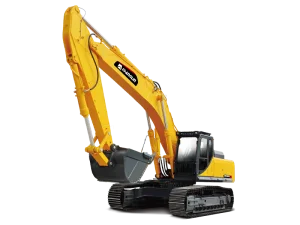
In modern open-pit mining, large-scale civil infrastructure, and heavy rock quarrying, the operational efficiency of mega earthmoving equipment relies fundamentally on the design and structural integrity of the huge excavator bucket. Defined typically as heavy-duty attachments with volumetric capacities spanning from 3.5 cubic meters (m³) up to over 20 m³—engineered for excavators ranging from 35-tonne medium-heavy units to 120-tonne+ ultra-large mining excavators (such as the China Crawler Excavator ZG480 and ZG330D)—these massive structures represent the front line of mechanical force transfer. They must withstand immense breakout forces, severe cyclical fatigue, and relentless abrasive wear under the harshest geological conditions worldwide.
As global mining enterprises and EPC contractors seek to optimize their Total Cost of Ownership (TCO) and maximize material throughput per operational hour, China has emerged as a premier manufacturing hub for advanced excavation attachments. Leading Chinese OEMs and specialized bucket factories have combined cutting-edge metallurgy (utilizing quenching-and-tempering wear steels such as Hardox 450/500 and NM400/500), Finite Element Analysis (FEA) computer modeling, and automated robotic arc welding to engineer buckets that match or exceed international performance benchmarks while offering unparalleled capital expenditure efficiency.
Key Takeaway for Procurement Directors
Selecting the optimal huge excavator bucket is not merely a purchasing decision of volumetric capacity; it requires a precise match between the machine’s hydraulic breakout force, material density (ton/m³), rock abrasiveness index, and lip geometry. Custom engineering from verified China factories ensures minimum payload deadweight and maximum cycle productivity.
Global Trends in Huge Excavator Bucket Manufacturing
Transformative technological shifts driving productivity gains, payload optimization, and digital telemetry integration in heavy attachment design.
Advanced Lightweight Alloy Metallurgy
The global shift toward high-yield-strength micro-alloy steels enables Chinese manufacturers to reduce structural bucket tare weight by 12% to 18% without compromising structural rigidity. Lower bucket weight translates directly into higher payload capacity per pass, reducing engine fuel burn and hydraulic cycle times.
Smart Bucket & Telematics Integration
Modern mega buckets are increasingly integrated with IoT sensors, tooth loss detection telemetry, and real-time payload monitoring systems. Wireless sensors embedded in the bucket lip alert equipment operators if a tooth point detaches, preventing costly damage to downstream primary crushers.
Modular Wear Packages & Quick-Change Geometry
To maximize continuous uptimes, top China manufacturers utilize bolt-on and weld-on modular wear liners, heel shrouds, and lip protectors. Universal quick-coupler geometry permits seamless attachment swapping across diverse fleets, including heavy excavators, wheel loaders, and mining dozers.
Structural Metallurgy, FEA Analysis & Geometry Design
The rigorous scientific principles behind high-durability bucket manufacturing for extreme rock abrasion and structural stress distribution.
1. Finite Element Analysis (FEA) Stress Mapping
Under severe loading conditions—such as prying massive granite boulders or excavating blasted iron ore—a huge excavator bucket experiences asymmetrical torsional forces. Leading Chinese factories utilize 3D Finite Element Analysis software to simulate high-stress concentration points along the torque tube, side plates, and hinge points. By redistributing plate thickness and adding internal structural gussets where stress peaks occur, engineers eliminate premature weld cracking and extend structural fatigue life up to 25,000 operational hours.
2. Advanced Metallurgical Material Selection
The lifespan of a bucket operating in high-abrasion environments is directly linked to the Brinell hardness (HBW) and impact toughness of its constituent steel plates:
- Structural Shell & Hinge Zone: Constructed using high-strength low-alloy structural steel (e.g., Q550D / Q690D or Weldox 700) featuring high yield strength to absorb dynamic shock loads without permanent deformation.
- Main Cutting Lip (Edge): Manufactured from forged or heavy-plate quenched and tempered alloy steel (e.g., Hardox 450 / Hardox 500) with a thickness ranging from 50mm to 120mm depending on machine tonnage.
- High-Wear Zones (Side Cutters, Wear Strips, Bottom Runners): Reinforced with NM500 or Hardox 500 premium wear plates, supplemented by bi-metallic wear buttons (700 HBW white iron bonded to mild steel backings) and chocky bars in extreme impact zones.
3. Digging Penetration Geometry & Fill-Factor Optimization
A poorly designed bucket increases digging resistance, driving up fuel consumption per cubic meter of earth moved. Precision bucket geometry features a tapered profile—where the distance between side plates widens slightly from the mouth toward the rear shell. This shallow profile reduces friction drag during loading and ensures effortless material dump during cycle discharge, achieving an optimal material fill factor exceeding 110% in blasted rock applications.
Enterprise Procurement Demands & Industrial Solutions
How top-tier Chinese manufacturers solve the operational challenges of international mining houses, equipment rental fleets, and infrastructure conglomerates.
Solution A: Open-Pit Mining & Hard Rock Quarrying
Challenge: Excessive lip wear, tooth breakage, and severe bottom abrasion caused by quartz-rich granite, quartzite, and iron ore.
China Factory Solution: Heavy-Duty Rock (HDR) and Extreme Duty Rock (XDR) buckets featuring cast Delta-lip profiles, GET (Ground Engaging Tools) tooth adapters from ESCO or MTG systems, full heel shroud protection, and internal diamond-pattern wear grids.
Solution B: Extreme Climate Adaptation (Arctic vs. Desert)
Challenge: Cold-temperature steel embrittlement below -40°C in Siberian mining, or overheating hydraulic systems in Middle Eastern ambient temperatures exceeding +50°C.
China Factory Solution: Sub-zero impact-tested steel alloys (Charpy V-notch testing verified at -40°C) with stress-relieved heat treatment, paired with customized low-friction bucket geometry that lowers excavator hydraulic pressure requirements.
Solution C: Multi-Fleet OEM Compatibility
Challenge: Managing mixed equipment fleets consisting of CAT, Komatsu, Hitachi, Volvo, and domestic Chinese excavators like Sinomach, ZOOMLION, and SANY.
China Factory Solution: Custom pin-to-pin bucket manufacturing engineered precisely to OEM arm dimensions, or universal quick-hitch adapters ensuring 100% mechanical interchangeability across heterogeneous fleets.
Solution D: TCO & Operational Cost Optimization
Challenge: High capital cost of tier-1 Western replacement attachments combined with extended procurement lead times.
China Factory Solution: Direct factory-floor sourcing yielding 30% to 50% CAPEX savings while maintaining ISO-certified manufacturing standards, backed by rapid sea-freight container or flat-rack shipping logistics.
Localization Support, Quality Assurance & Global Compliance
Ensuring full regulatory compliance, rigorous non-destructive testing (NDT), and reliable global supply chain execution.
Factory Quality Assurance Protocols
- Ultrasonic Flaw Detection (UT): 100% non-destructive testing on all major load-bearing structural welds and lip plate joints.
- Magnetic Particle Inspection (MT): Verification of surface weld integrity to eliminate micro-fissures prior to painting.
- Mechanical & Hardness Testing: Spectrographic material verification confirming chemical composition and Brinell hardness of wear plates.
- Robotic Arc Welding: Automated Lincoln welding systems utilizing flux-cored wire to guarantee uniform penetration and stress relief.
Global Compliance & Export Packaging
- International Standard Certifications: Fully certified under ISO 9001:2015 Quality Management Systems, CE Machinery Directive compliance, and ISO 3834-2 International Welding Standards.
- Heavy Freight Export Packaging: Heavy-duty steel skid mountings, anti-corrosion VCI marine wrap coating, and customized structural bracing for Breakbulk, Flat-Rack, or Open-Top ocean container transport.
- After-Sales Parts SLA: Guaranteed supply SLA for replacement bucket teeth, adapters, side cutters, and wear pin kits dispatched worldwide within 72 hours.
Technology Roadmap: The Next Decade of Bucket Innovation (2025–2035)
Strategic advancements in intelligent manufacturing, composite materials, and zero-carbon earthmoving efficiency.
Autonomous Digging Kinematics
Future huge excavator buckets will incorporate 3D spatial positioning targets and hydraulic pressure feedback nodes, allowing autonomous excavators to dynamically adjust angle-of-attack for maximum bucket load efficiency in unmanned surface mines.
Bi-Metal & Ceramic Matrix Composites
Emerging research in Chinese metallurgical laboratories focuses on embedding ceramic matrix particles into high-chromium cast iron matrix structures, promising a 300% increase in abrasion resistance compared to standard Hardox 500 alloys.
Carbon Footprint Reduction & Recycling
By shifting to green-hydrogen-processed steel plates and 100% recyclable wear components, China's leading bucket factories are paving the way for low-carbon heavy attachment manufacturing aligned with international ESG standards.
Frequently Asked Questions on Huge Excavator Buckets
Expert engineering answers to critical purchasing, technical, and maintenance queries from global equipment buyers.
How do I determine the correct bucket capacity (m³) for my heavy excavator?
Determining bucket capacity requires balancing the excavator's maximum allowable operating payload, hydraulic breakout force, tipping load limit, and material bulk density (measured in metric tons per cubic meter, t/m³). For example, loose earth typically weighs 1.5–1.6 t/m³, while shot rock can exceed 1.9–2.2 t/m³. A bucket that is oversized for high-density rock will strain the excavator boom, increase cycle time, and cause hydraulic overheating, whereas an optimized bucket maximizes pass-matching efficiency with target dump trucks (aiming for 3 to 5 passes per truck fill).
What is the structural difference between HD (Heavy Duty) and XDR (Extreme Duty Rock) buckets?
Heavy Duty (HD) buckets are designed for general excavation in mixed soil, clay, and light gravel. They feature standard side cutters and moderate bottom wear strips. Extreme Duty Rock (XDR) buckets, conversely, are engineered for severe mining environments. XDR buckets utilize thicker Hardox 500 cutting edges (up to 100mm+), cast lip shrouds, full heel shrouds, internal wear basket liners, and specialized GET tooth systems to resist high impact and severe quartz-like abrasion.
Why should international buyers source huge excavator buckets directly from China factories?
Direct sourcing from verified Chinese factories delivers significant economic and technical advantages. China possesses a complete industrial supply chain, direct access to premium steel mills producing certified wear-resistant alloys, and advanced robotic manufacturing facilities. This allows China manufacturers to deliver custom-engineered, FEA-tested buckets at 30% to 50% lower cost than traditional Western OEMs, accompanied by shorter production lead times and flexible OEM customization.
Can Chinese bucket manufacturers produce custom pin dimensions for non-standard or older excavator models?
Yes. Chinese factories specialize in custom pin-to-pin engineering. By utilizing 3D laser scanning or technical dimensional drawings provided by the buyer (specifying pin diameter, ear distance, and center-to-center pin spacing), engineers design custom hinge structures that guarantee direct, 100% drop-in mechanical fitment for any excavator model, quick coupler system, or specialized demolition boom.
What quality certifications and weld inspection methods should I require from a China bucket factory?
Procurement teams should verify that the manufacturer holds ISO 9001:2015 quality control certification and ISO 3834 welding qualification. Crucially, insist on Non-Destructive Testing (NDT) reports, specifically Ultrasonic Testing (UT) for full-penetration structural welds and Magnetic Particle Inspection (MT) for lip-plate seam welds. Hardness testing certificates for Hardox / NM500 wear plates should also be provided prior to dispatch.
How are oversized mining buckets packaged and shipped internationally?
Depending on physical envelope dimensions and weight, medium-to-large buckets (3.5m³ to 7m³) are packed inside 40-foot High-Cube (HC) or Open-Top (OT) ocean containers using custom steel transport cradles. Ultra-large mining buckets (exceeding 8m³ to 20m³) are shipped via Flat-Rack containers or as Breakbulk cargo. All exposed machined surfaces, pins, and GET adapters are treated with anti-rust marine grease and sealed in heavy-duty VCI anti-corrosion barrier wrapping.
What maintenance procedures extend the operational life of a huge excavator bucket in mining operations?
Routine maintenance includes daily visual inspection of tooth retention pins and adapters, monitoring lip shroud wear, and replacing wear components before underlying structural base plates are exposed. Implementing a preventative hardfacing re-welding schedule on bottom runners and replacing bolt-on side cutters promptly prevents costly structural rebuilds and preserves original bucket geometry.
Explore Additional Heavy Construction Machinery
Expand your job site fleet with factory-direct bulldozers, motor graders, crawler excavators, road rollers, and heavy loaders.