Heavy Earthmoving & Infrastructure Machinery
Factory-direct machinery platforms engineered for demanding continuous operations across global civil engineering, roadwork, and mining sites.








The Global Evolution of Hydraulic Bulldozer Manufacturing
An analysis of technological convergence, hydrostatic drive shift, and China's OEM industrial dominance in heavy earthmoving machinery.
The global construction equipment industry is undergoing a structural paradigm shift. As infrastructure megaprojects demand higher volumetric earthmoving efficiency, lower Total Cost of Ownership (TCO), and stringent compliance with emissions regulations, the technology embedded in crawler dozers has transformed. Historically dominated by traditional mechanical-hydrodynamic transmission systems (torque converter + powershift gearbox), modern earthmoving sites are rapidly transitioning toward dual-path electronically controlled hydrostatic transmission (HST) systems. China’s heavy equipment manufacturing industrial clusters—anchored by state-level engineering champions such as Sinomach-HI (Changlin)—have positioned themselves at the epicenter of this technological migration.
To procurement managers, global machinery distributors, and mining fleet directors, evaluating China Hydraulic Bulldozer Manufacturers & Factories requires moving beyond basic horsepower ratings. It necessitates an authoritative evaluation of hydraulic valve architecture, structural metallurgy, thermal dissipation design, and supply-chain integration resilience. Chinese OEM manufacturing hubs have consolidated domestic supply chains for high-pressure axial piston pumps, planetary final drives, and heavy-duty undercarriage tracks, allowing them to deliver Tier-4 Final / Stage V compliant machinery at a capital expenditure (CAPEX) advantage of 30% to 45% compared to North American or Western European counterparts without compromising component longevity.
Hydraulic Architecture & Engineering Roadmap
Deconstructing the electro-hydraulic control mechanisms, pump displacement dynamics, and powertrain engineering powering Chinese hydraulic dozers.
Dual-Path Hydrostatic Drive System
Engineered with variable-displacement axial piston pumps and high-torque swashplate hydraulic motors. Eliminates shift shock and allows power steering under full blade load, providing smooth power delivery during slope work and trench backfilling.
- Independent left/right track speed control
- Counter-rotating track maneuverability in narrow spaces
- Integrated over-speed protection & automatic braking
Electro-Hydraulic Load Sensing (LSS)
Utilizes pilot-operated proportioning main control valves that dynamically adjust hydraulic oil flow based on real-time blade resistance. Reduces hydraulic system oil temperatures by up to 15°C under heavy push cycles.
- Proportional joystick control precision down to ±2mm
- Automated blade pitch, tilt, and angle response
- Reduced hydraulic pump parasitic power consumption
CAN-Bus Control & Telematics Roadmap
Modern Chinese hydraulic bulldozers integrate J1939 CAN-bus electronic architecture coupled with IoT gateways. Enables real-time diagnostic reporting of hydraulic pressure spikes, oil cleanliness, and engine load factors.
- 3D GPS/GNSS auto-grading integration ready
- Predictive component failure diagnostics via cloud
- Remote ECU parameter flashing & service logs
China OEM Supply Chain Resilience & Cost Optimization
How vertical integration, localized component ecosystems, and advanced robotics establish unparalleled sourcing advantages for international buyers.
The strategic advantage of sourcing from top-tier China hydraulic bulldozer manufacturers and factories lies in the density of the manufacturing ecosystem. In regions like Jiangsu (Changzhou) and Shandong, 90% of critical sub-assemblies—from high-strength manganese steel blade structures to heavy cast track frames—are manufactured within a 100-kilometer radius of final assembly plants.
1. Power Unit Tier-1 Integration
Chinese factories leverage partnerships with leading engine manufacturers (such as Weichai, Cummins, and Shangchai) customized with high-pressure common rail (HPCR) injection systems. These powerplants are tuned specifically to handle variable fuel sulfur contents found in developing international markets while maintaining Tier 2 through Tier 4 Final/Stage V compliance options.
2. Structural Frame & Undercarriage Reliability
Factory production lines utilize robotic submerged-arc welding and multi-axis CNC machining centers for single-piece track roller frames. Heat treatment processes—including induction hardening on track links, sprockets, and idlers—ensure structural integrity against high-impact abrasive ground environments.
3. Lead-Time & Scalability Advantage
Flexible robotic assembly lines permit high-mix, low-volume customization without sacrificing lead times. Standard hydraulic bulldozers reach FOB shipping ports within 20 to 30 days of contract execution, compared to the 6 to 9 month lead times typical of Western OEMs.
Localized Application Scenarios & Tailored Configurations
Matching hydraulic bulldozer configurations to geographical, climatic, and material density demands.
Configured with reinforced semi-U or Straight blades crafted from Hardox wear plates, heavy-duty rock track shoes, and single/triple-shank hydraulic rippers. Engineered to fracture overburden slate, granite, and dense rock formations prior to excavator loading.
Low Ground Pressure (LGP) variants feature extended track frames and triangular track shoes (up to 950mm width). Reduces ground bearing pressure down to 27-35 kPa, preventing machine entrapment in marshlands, river deltas, and soft agricultural soils.
Equipped with engine fuel pre-heaters, arctic hydraulic fluid specifications, synthetic rubber seals rated to -40°C, and turbocharged power units with automatic altitude compensation for work above 4,000 meters in mountain ranges.
Fitted with oversized waste blades with integrated trash racks, elevated pre-cleaner air intake systems, underbody belly armor plates, and cooling radiator reverse-fan self-cleaning cycles to prevent debris clogging.
Quality Control Standards, PDI Protocols & Global Logistics
Rigorous factory testing frameworks and export logistics guaranteeing zero-defect delivery at destination ports.
Establishing authority and trustworthiness in machinery export demands transparent quality control protocols. Leading Chinese hydraulic bulldozer factories operate under strict ISO 9001, CE Machinery Directive 2006/42/EC, and ISO 12100 Safety Standards. Before any machine receives its Certificate of Conformity for shipment, it undergoes a mandatory 100-hour factory inspection regimen:
- Hydraulic High-Pressure Spike Testing: The hydraulic system is subjected to 1.25x maximum rated working pressure (up to 25 MPa) to verify hose crimping, valve seat seal integrity, and cylinder packings under max thermal load.
- Dynamic Track Traction Benchmarking: Dual-path HST system calibration ensures precise straight-line travel alignment (< 1.5% deviation over 100 meters) without operator joystick correction.
- Noise & Vibration Compliance: Soundproofed operator cabins are tested to meet ROPS/FOPS (Roll-Over/Falling Object Protective Structure) standard ISO 3471/3449, maintaining cab interior noise levels below 78 dB(A).
- Export Packing & Anti-Corrosion Protection: For ocean freight (Ro-Ro, Flat Rack, or Breakbulk), all exposed hydraulic cylinder rams are coated with marine-grade anti-corrosion wax, and electrical conduits are sealed against salt-air degradation.
Frequently Asked Questions (FAQ)
Expert responses to critical engineering, purchasing, and lifecycle maintenance queries regarding Chinese hydraulic bulldozers.
Complete Fleet Sourcing Options
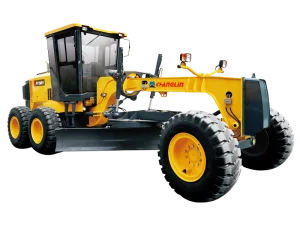
Expand your procurement scope with heavy-duty excavators, road rollers, wheel loaders, and motor graders built to the same rigorous engineering standards.