
Featured Project Excavators & Earthmoving Machinery
High-performance hydraulic excavators, motor graders, wheel loaders, and compactors engineered for large-scale municipal, mining, and infrastructure contracts worldwide.



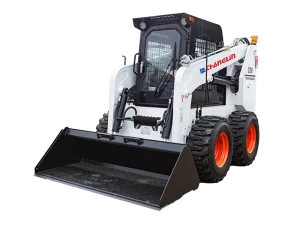




Global Hydraulic Excavator Project Dynamics & Procurement Trends
The global market for hydraulic machinery is undergoing a structural transition. Infrastructure expansion across emerging markets, coupled with aggressive fleet modernization in mature economies, has fundamentally altered procurement requirements.
Belt & Road Infrastructure Drivers
Cross-border transport corridors, deep-water ports, and massive hydroelectric dams across Central Asia, Africa, and Southeast Asia demand heavy crawler excavators capable of continuous operating cycles under unrefined site conditions.
Total Cost of Ownership (TCO) Metrics
International mining and contracting conglomerates have shifted from evaluating initial purchase price alone to analyzing 10,000-hour TCO, factoring in hydraulic efficiency, localized spare-parts availability, and residual resale asset values.
Emission & Regulatory Compliance
From North American Tier 4 Final to European Stage V and China IV standards, engineering factories must offer flexible power options including ultra-low emission diesel engines and zero-emission electric powertrain variants.
Why China leads Global Hydraulic Excavator Manufacturing
China's rise as the epicenter of heavy construction machinery manufacturing is underpinned by unmatched industrial cluster concentration, automated smart factories, and rigorous quality control protocols.
Industrial Cluster Density in Jiangsu & Shandong
China's heavy equipment manufacturing hubs feature complete supply chain integration within a 50-kilometer radius. From high-tensile structural steel casting to precision hydraulic valve machining, every critical component is locally sourced. This cluster efficiency drastically reduces production lead times and insulates international buyers from global supply chain bottlenecks.
Industry 4.0 Smart Production Lines
Modern Chinese excavator manufacturing plants utilize fully automated robotic welding cells, multi-axis CNC machining centers, and automated guided vehicle (AGV) assembly lines. Real-time laser tracking guarantees sub-millimeter tolerances on critical structural components such as main frames, booms, and arm assemblies.
Advanced Hydraulic Component Integration
Leading Chinese excavator manufacturers collaborate directly with Tier-1 global hydraulic component providers (Kawasaki, Rexroth, KYB) while developing proprietary electro-hydraulic control algorithms. This hybrid approach delivers world-class hydraulic response speed, smooth multi-function control, and exceptional durability at a competitive capital cost.
Rigorous Quality Assurance & Testing Rig
Prior to shipment, every machine undergoes intensive factory testing: 100% full-load hydraulic pressure stress tests, thermal dissipation cycling, ultra-sonic weld seam inspections, and 50-hour continuous operational endurance testing on dedicated proving grounds.
Core Hydraulic System Architecture & Mechanical Design
Deep engineering insights into how modern hydraulic excavators maximize digging force while maintaining optimum fuel efficiency during continuous heavy-duty digging cycles.
1. Positive Flow Control (PFC) Hydraulic Technology
Traditional negative flow control systems suffer from inherent hydraulic delay and energy loss due to throttle-bypass regulation. Advanced Chinese crawler excavators (such as the ZG330D and ZG360 series) implement Positive Flow Control (PFC) technology. In a PFC system, main pump displacement is directly regulated by the pilot lever signal, matching oil supply precisely to operator demand in real time. This reduces system pressure drop across the main control valve (MCV) and yields up to a 15% reduction in fuel consumption per ton of excavated rock.
2. Heavy-Duty Structural Engineering (Boom, Arm & Undercarriage)
Project excavators operating in severe mining and quarrying environments face high cyclic fatigue loads. Advanced finite element analysis (FEA) software is used to map stress distribution across the boom and arm pivot points. High-strength steel plates (such as Q690D and Hardox wear plates) are strategically welded into high-stress regions. The X-frame undercarriage is fabricated as a single heavy-duty casting, offering superior torsional resistance against side-load stresses incurred when swinging heavy loads on steep slopes.
| System Parameter | Standard Commercial Excavator | Heavy-Duty Mining Project Excavator (e.g. ZG360) | Operational Advantage |
|---|---|---|---|
| Hydraulic Control Type | Negative Flow Control (NFC) | Positive Flow Control (PFC) / Electro-Hydraulic | Faster response, 12-15% reduced fuel consumption |
| Main Hydraulic Pressure | 31.4 - 32.5 MPa | 34.3 - 37.0 MPa (With Power Boost) | High breakout digging force in hard rock/shale |
| Structural Steel Grade | Q345B Standard Structural Steel | Q690D High-Tensile + Hardox 450 Wear Plates | Double fatigue resistance in severe quarry work |
| Cooling Package Capacity | Standard Ambient (Up to 40°C) | Tropical Heavy-Duty Package (Up to 55°C) | Prevents hydraulic oil degradation in desert heat |
| Undercarriage Frame | Standard Box-Section Welding | Integrated Cast Steel X-Frame Structure | Prevents frame cracking under high impact loads |
Localized Application Scenarios & Specialized Work Tool Attachments
Excavator performance is defined by how well the machine is tailored to site-specific geology, elevation, temperature, and material density.
High-Altitude Mining (Andes & Central Asia)
Operating above 4,000 meters requires turbocharger altitude compensation packages, heavy-duty cold start intake preheaters, and pressurized cabins to offset reduced atmospheric oxygen levels and low air density.
Extreme Heat & Dusty Desert (Middle East)
Features independent hydraulic oil cooling circuits, reversible fan blade systems for automatic radiator blowout, dual-element air pre-cleaners (cyclonic design), and heavy-duty cabin HVAC filters.
Municipal Ditching & Urban Earthmoving
Medium crawler excavators (15-22 ton class) equipped with rubber track pads, zero-tail swing configurations, and low-noise electro-hydraulic pumps for tight urban job sites.
Work Tool Attachment Versatility
A hydraulic excavator is a multi-functional utility platform. Leading Chinese manufacturers engineer multi-circuit auxiliary hydraulic lines (high-pressure breaker lines and low-pressure rotation lines) controlled directly through joystick thumb-switches:
Hydraulic Breakers
Engineered for concrete demolition and quarry secondary breaking; matched with accumulators to dampen pressure spikes.
Heavy-Duty Rippers
Single-tooth and multi-shank rippers for fracturing frozen soil, shale, and fractured bedrock prior to excavation.
Quick Couplers
ISO-compliant hydraulic quick hitches allowing operators to switch attachments in seconds without leaving the cab.
Grapples & Tilting Buckets
Rotational timber grapples and 45-degree tilting grading buckets for forestry management and riverbank landscaping.
Strategic Procurement Blueprint for International B2B Buyers
Navigating international heavy machinery procurement requires a structured framework spanning technical specification audits, factory acceptance testing, and international shipping logistics.
Phase 1: Factory Audit & Qualification
Before issuing contracts, procurement teams should audit factory capabilities: verify ISO 9001 quality management, ISO 14001 environmental compliance, and inspect robotic fabrication capacity. Request third-party validation reports (SGS, TÜV Rheinland) for weld integrity and material composition.
Phase 2: Custom Engineering Specification
Define precise machine configurations based on operational duty cycles: specify engine emissions tier, hydraulic oil viscosity rating for destination ambient temperatures, track pad width (ground pressure requirements), and bucket tooth profiles (rock vs earth buckets).
Phase 3: Factory Acceptance Testing (FAT)
Execute rigorous FAT protocols before final balance payment. Verification includes checking hydraulic relief valve pressure settings, testing engine stall speeds, verifying swing speed RPM, and confirming telemetry data transmission to fleet management software.
Phase 4: Export Logistics & Spare Parts Support
Heavy machinery export requires specialized maritime freight strategies: RoRo (Roll-on/Roll-off) vessels for fully assembled machines, Flat Rack containers for heavy excavators, or standard High-Cube containers for disassembled compact units. Establish a baseline spare parts consignment kit (filters, seals, teeth, hoses) delivered alongside the machinery.
Next-Generation Trends in Hydraulic Excavator Design
The intersection of AI telemetry, battery electrification, and semi-autonomous digging is redefining the next decade of earthmoving machinery.
Pure Electric & Battery-Powered Excavators
Electric excavators (such as battery-electric wheel loaders ZL50EV and electric excavators) replace internal combustion engines with high-density LFP battery packs and permanent magnet synchronous motors, eliminating direct emissions and cutting site energy costs by up to 60%.
AI Telematics & Predictive Maintenance
Integrated IoT controllers transmit real-time hydraulic pressure readings, oil temperature, engine load percentages, and fault codes to cloud dashboards, allowing fleet managers to perform predictive maintenance before component failure occurs.
Semi-Autonomous Digging Assist
2D and 3D GPS machine control integration automatically regulates boom and bucket angle during trenching or slope grading, preventing over-excavation and allowing novice operators to achieve millimeter-level accuracy.
Frequently Asked Questions
Direct technical and procurement answers for international contractors, dealers, and project managers sourcing machinery from China.
Explore Complete Earthmoving & Construction Equipment Line
Complementary heavy machinery options including heavy excavators, electric loaders, motor graders, and bulldozers built to complete your fleet.






