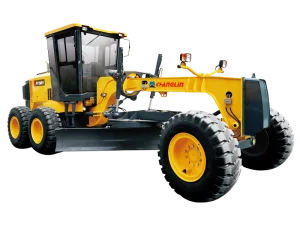
Featured Machinery Models & Industrial Fleets
Factory-direct hydraulic heavy equipment manufactured under stringent ISO9001 and CE quality standards for immediate overseas deployment.








The Paradigm Shift in Chinese Hydraulic Heavy Equipment Manufacturing
How Chinese OEMs evolved from component assemblers into global pioneers of electro-hydraulic integration, high-pressure fluid power, and low-emission heavy machinery.
The global market for construction and mining machinery is undergoing a structural transformation. Procurement managers, municipal engineers, and fleet contractors are no longer evaluating heavy equipment purely by engine horsepower or operational mass. Instead, the modern purchasing mandate centers on hydraulic efficiency, total cost of ownership (TCO) optimization, digital integration, and compliance with stringent environmental standards.
At the center of this transition sits the Chinese manufacturing ecosystem. Historically recognized for high-volume structural production, leading Chinese heavy equipment manufacturers—exemplified by Changzhou-based state-owned engineering platforms like Sinomach-HI (Changlin)—have fundamentally reshaped the competitive landscape. Through multi-decade investments in advanced fluid dynamics, precision machining, and electro-hydraulic proportional control systems, China’s heavy machinery factories now produce world-class crawler excavators, motor graders, wheel loaders, and compaction rollers.
Key Engineering Milestone: Modern Chinese hydraulic systems utilize positive-flow control (PFC) and load-sensing hydraulic architectures (LSS) that reduce main pump throttling losses by 18% to 24%, translating directly into lower fuel burn per ton of earth moved.
Macro Drivers Impacting Global Equipment Procurement
Four primary industry dynamics drive the international demand for Chinese hydraulic machinery across 180+ countries and regions:
1. Total Cost of Ownership Optimization
Global inflation and rising diesel expenditures force fleet operators to evaluate energy consumption ratios. Chinese manufacturers integrate direct-injection turbocharged diesel engines with high-displacement variable piston pumps, cutting fuel consumption without sacrificing breakout force.
2. Electro-Hydraulic Digitization
Transitioning from mechanical pilot levers to CAN-bus electronic controls allows real-time pressure matching, automated blade leveling in motor graders, and bucket payload weighing systems in heavy excavators.
3. Accelerated Electrification (EV Loaders)
The rapid maturity of Lithium Iron Phosphate (LFP) battery technology in China has spawned operational zero-emission wheel loaders (e.g., ZL50EV), offering up to 60-70% reduction in per-hour energy costs compared to fossil counterparts.
Global Enterprise Buyer Demands & TCO Analytical Framework
Quantitative evaluation metrics used by tier-1 mining operators, general contractors, and government public works departments when sourcing Chinese machinery.
Enterprise procurement decisions are governed by rigorous operational risk assessments. When sourcing heavy machinery internationally, enterprise buyers look beyond upfront capital expenditure (CAPEX) to evaluate five core technical dimensions:
- Hydraulic System Pressure & Flow Stability: Operating pressures reaching 34.3 to 35 MPa ensure maximum digging force in tough granite or frozen soil conditions.
- Component Interoperability & Supply Chain Depth: Sourcing key hydraulic main control valves, slewing motors, and axial pumps from global top-tier component partners alongside native precision engineering.
- Structural Durability & Welding Standards: Heavy-duty excavators and bulldozers built with robotic weld seams, high-strength structural steel, and reinforced boom-arm pin connections to prevent fatigue fractures.
- Thermal Dissipation Management: Large-capacity hydraulic oil coolers equipped with temperature-controlled hydraulic fan drives to maintain fluid viscosity in tropical ambient temperatures up to 50°C.
- Rapid Spare Parts Availability: Overseas warehouse support ensuring critical wear parts (teeth, cutting edges, hydraulic seals, filter elements) arrive within 48 to 72 hours.
Performance & Operational Efficiency Benchmarks
Below is a comparative breakdown of key engineering metrics across primary machine categories manufactured in our Changzhou production facilities:
| Machine Category | Hydraulic Control Architecture | Main Pump Max Flow / Pressure | Primary Application Profile | Energy Savings Efficiency |
|---|---|---|---|---|
| Heavy Crawler Excavators (21T–38T) | Dual-pump negative/positive-flow control system | 2 × 380 L/min @ 34.3 MPa | Mining overburden, rock quarrying, bulk earthworks | +15% Fuel Efficiency |
| Heavy Motor Graders (150HP–240HP) | Direct-sensing electro-hydraulic proportional valve | 160 L/min @ 18.0 MPa | Highway grading, ditching, haul-road maintenance | Precision Blade Control (±3mm) |
| Electric Wheel Loaders (5-Ton Class) | Dual-motor independent hydraulic pump drive | 250 L/min @ 20.0 MPa | Ports, steel mills, tunnels, enclosed material yards | 65% Lower Energy Cost/Hr |
| Landfill & Soil Compactors | Hydrostatic closed-loop vibration & steering drive | 220 L/min @ 42.0 MPa | High-density waste compaction, road base stabilization | +22% Compaction Density |
Engineering Capacity Driven by State-Owned Infrastructure Expertise
Decades of continuous manufacturing innovation supporting mega-scale civil construction and mining projects worldwide.
Application-Specific Equipment Deployments
Tailored machine configurations optimized for severe working environments, extreme thermal ranges, and high-altitude topography.
1. Open-Pit Mining & Bulk Quarry Operations
Mining environments demand maximum structural integrity and heavy breakout force. Heavy crawler excavators (e.g., ZG385, ZG330D) paired with high-horsepower mining graders (PY240H) and 255HP bulldozers (YD255) provide continuous 24/7 stripping, trenching, and haul-road conditioning. Reinforced rock buckets, heavy duty track shoes, and cold-start grid heaters ensure uninterrupted operation down to -30°C.
2. Highway Infrastructure & Precision Road Works
National highway paving and subgrade compaction require strict geometrical precision. Heavy motor graders (PY220H, PY190H) feature moldboards with 360-degree hydraulic rotation and electro-hydraulic side-shift, ensuring smooth slope cuts and fine leveling. Paired with single-drum vibratory road rollers (GYS12J, GYS08J), fleets achieve required compaction densities in fewer passes.
3. Environmental, Municipal & Urban Logistics
Urban construction, waste management facilities, and indoor logistics require compact footprints and zero emissions. Landfill compactors (GYL203) feature spiked steel wheels and trash blades to maximize cell capacity, while compact skid steer loaders (TS100) and zero-emission electric wheel loaders (ZL50EV) excel in enclosed spaces with reduced ambient noise.
State-of-the-Art Hydraulic Systems & Power Transmission
Unpacking the internal mechanics: Main Control Valves, Variable Pumps, and Intelligent Thermal Management Systems.
The core competitive advantage of Chinese heavy equipment lies inside the hydraulic circuit. Modern heavy machinery depends on rapid energy transfer with minimal thermodynamic loss. Below are the key fluid power innovations integrated across our machine lines:
1. Variable Displacement Axial Piston Pumps
Unlike outdated fixed-displacement gear pump systems that constantly pump hydraulic fluid at full capacity—wasting energy via pressure relief valves—our excavators and wheel loaders utilize swashplate-type axial piston pumps. Main pump displacement adjusts dynamically within 20 milliseconds based on pilot signal intensity, guaranteeing that engine output matches hydraulic load demand exactly.
2. Positive Flow Control (PFC) Main Control Valves
In traditional negative flow control systems, pump output is controlled by signal pressure measured at the downstream end of the main control valve. PFC technology reverses this architecture by taking joystick pilot signals directly to the pump controller. This eliminates hydraulic lag, provides linear joystick-to-bucket response, and reduces fuel consumption by up to 8% during compound digging cycles.
3. Electro-Hydraulic Proportional Moldboard Control
Featured in our motor grader series (PY190H, PY220H, PY240H), electro-hydraulic proportional valves replace mechanical linkages. Operators experience micro-meter leveling sensitivity. Furthermore, the system integrates seamlessly with third-party 3D GNSS GPS automatic blade control systems, enabling sub-centimeter grading speed on modern highway construction projects.
Global Compliance, Certification, & Regional Support
Meeting international environmental regulations, operator safety standards, and global logistics fulfillment requirements.
Emission Standard Compliance
Machines are manufactured with customized engine configurations tailored to local regulations: EU Stage V / US Tier 4 Final with DPF+SCR for North America and Europe, or Tier 2 / Tier 3 mechanical engines for markets in Africa, Latin America, and Southeast Asia.
ROPS / FOPS Cabin Safety
Operator cabs feature structural ISO 3471 Roll-Over Protective Structure (ROPS) and ISO 3449 Falling Object Protective Structure (FOPS) certification, featuring ergonomic air-suspension seating, noise insulation below 75 dB(A), and high-capacity HVAC units.
Pre-Shipment Inspection (PSI)
Every unit undergoes 100% factory hydraulic pressure testing, stall testing, track/tyre speed calibration, and water-tightness testing. We support third-party inspection firms including SGS, BV, and Intertek prior to vessel loading.
Technology Roadmap: Electrification, Autonomy, & Telematics
Strategic vision for the next decade of intelligent, low-carbon heavy construction machinery.
As heavy equipment transitions into the digital era, Chinese manufacturers are aggressively advancing three technology vectors:
1. High-Voltage Battery Electric Powertrains
Building on success with 5-ton electric loaders like the ZL50EV, future development includes 20-ton electric excavators equipped with 350-500 kWh CATL battery packs, ultra-fast dual-gun DC charging (1.5 hours), and energy-recuperation hydraulic braking systems.
2. 5G Teleoperation & Autonomous Site Fleets
Commercialization of autonomous mining graders and compactors operating via 5G low-latency connections. Remote operators control multiple machines from a central control room, removing human operators from hazardous quarry faces.
3. Predictive Maintenance & Edge AI Sensors
Next-generation telematics modules analyze hydraulic oil particle counts, temperature fluctuations, and pump vibration spectrums in real time. Predictive AI algorithms alert service technicians to potential pump wear before mechanical failure occurs.
Frequently Asked Questions for Overseas Buyers
Detailed technical answers to common questions regarding ordering, technical customization, shipping, and warranty support.
What core hydraulic equipment categories are manufactured in your Changzhou facilities?
Our manufacturing portfolio covers 15 specialized machine categories across six primary heavy equipment families: crawler excavators (medium 21T up to heavy 38T models), motor graders (standard road graders and heavy mining graders), wheel loaders (diesel-powered and high-efficiency electric loaders), bulldozers (up to 255HP), compaction machinery (vibratory road rollers and heavy landfill compactors), and compact skid steer loaders (wheel skid steers).
How do electric wheel loaders (such as the ZL50EV) compare to diesel wheel loaders in financial return (ROI)?
While the initial CAPEX for an electric wheel loader is approximately 30-40% higher than a comparable diesel model, operational energy costs are typically 60% to 70% lower. In high-utilization environments like ports, steel mills, or aggregate yards (operating 3,000+ hours annually), electricity savings combined with eliminated engine maintenance costs (no engine oil, filters, or DEF) typically allow fleet operators to achieve full CAPEX payback within 18 to 24 months.
Can hydraulic machinery be configured for high-altitude or extreme temperature job sites?
Yes. Equipment destined for high-altitude mining (above 3,000 meters) is fitted with turbochargers calibrated for low air density and modified hydraulic cooling setups. For Arctic conditions (down to -40°C), we install fuel pre-heaters, synthetic arctic hydraulic fluid, and cold-weather rubber seals. For tropical or desert environments (up to +50°C), heavy-duty radiator cores and high-flow hydraulic cooling fans are standard.
What export shipping logistics and trade terms are available for heavy equipment delivery?
We support standard international trade terms including FOB, CFR, CIF, and DDP depending on destination. Large units (excavators, motor graders, bulldozers) are shipped via Roll-on/Roll-off (RoRo) vessels, flat rack containers, or break-bulk cargo. Compact equipment such as skid steer loaders (TS100) are securely lashed inside standard 40ft High Cube (HC) shipping containers to minimize freight costs.
What warranty coverage and local technical service support is guaranteed?
All machines come with a standard factory warranty of 12 months or 2,000 operating hours (whichever occurs first), with extended powertrain/hydraulic warranties available up to 3 years. After-sales support is delivered via our global network of 300+ dealers and 650+ service outlets across 180 countries. In remote territories, our factory engineers offer remote CAN-bus diagnostics and direct spare parts dispatch via global express carriers.
How are replacement parts managed to prevent operational downtime?
We maintain complete digital Bill of Materials (BOM) records for every machine serialized at our factory. Original replacement parts—including hydraulic pumps, seal kits, wear teeth, and electrical relays—can be queried via machine VIN. Regional parts hubs stock high-wear inventory, ensuring fast turnaround times for field maintenance.
Explore Additional Heavy Hydraulic Machinery
Select from our extensive line of high-performance crawler excavators, motor graders, and compaction equipment.