
Primary Excavation & Grading Equipment Supply
Direct factory supply solutions for infrastructure, highway leveling, mining, and civil earthworks.
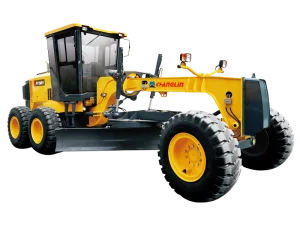






The Engineering Shift: Precision Leveling Excavators vs. Traditional Earthmovers
In modern civil engineering, infrastructure development, and mining site preparation, the operational scope of crawler excavators has evolved far beyond raw volumetric earthmoving. The modern leveling excavator represents a technological fusion of heavy-duty hydraulic force, micro-proportional valve control, automated grade control sensors, and ergonomic kinematics. Leading Chinese manufacturers—anchored in industrial hubs like Changzhou and Jiangsu—have engineered next-generation leveling excavators designed to perform subgrade profiling, slope trimming, precision trenching, and fine grading within millimeter-level elevation tolerances.
Why Global Procurement Managers Source Leveling Excavators from China
China's heavy machinery manufacturing ecosystem has undergone a massive digital and metallurgical transformation over the past decade. Factory bases in Changzhou, supported by state-owned enterprises like Sinomach-HI (Changlin), integrate the world's most robust supply chains for steel plate processing, hydraulic valve blocks, planetary final drives, and electronic control units (ECUs).
1. Vertically Integrated Structural Engineering
Chinese OEM factories utilize high-strength alloy steel plates (e.g., Q690D and Hardox 450) with automated robotic submerged-arc welding. Booms, arms, and undercarriage X-frames undergo ultrasonic non-destructive testing (NDT) and stress-relief heat treatment to prevent micro-cracking under repetitive high-torque leveling loads.
2. Tier-1 Hydraulic & Engine Sourcing
Leading Chinese excavators feature optimized matching between heavy-duty diesel engines (Cummins, Weichai, Yanmar) and world-class positive-flow hydraulic systems (Kawasaki, Hengli, Rexroth). Electronic main control valves provide micro-metering capabilities essential for smooth, continuous leveling motions.
3. Unmatched Total Cost of Ownership (TCO)
Factory-direct procurement from China delivers a 30% to 45% capital expenditure advantage over traditional European and North American OEMs without compromising structural longevity, component warranty, or global spare parts availability.
Core Systems & Electro-Hydraulic Architecture
An engineering breakdown of how Chinese manufacturing plants build high-precision leveling functionality into crawler excavators.
1. Positive Flow Control (PFC) & Electro-Hydraulic Load Sensing
Traditional negative-flow hydraulic systems introduce hysteresis and delayed pilot pressure response when operators perform compound motions (simultaneous boom lowering, stick retracting, and bucket angling). Chinese leveling excavators employ advanced **Electro-Hydraulic Positive Flow Control (PFC)**. Sensors on the operator joysticks transmit digital signals directly to the main ECU, which instantly strokes the dual variable-displacement axial piston pumps before pressure builds up. This eliminates mechanical lag, enabling razor-sharp blade and bucket control during fine slope finishing.
2. 2D / 3D GNSS Integrated Grade Guidance Systems
Modern factory-fitted excavators feature pre-wired CAN-bus harnesses compatible with major global 3D machine control platforms (Topcon, Trimble, Leica, and Unistrong).
- Inertial Measurement Units (IMUs): Dual-axis solid-state gyro sensors mounted on the body, boom, stick, and bucket measure real-time pitch, roll, and articulation angles at 100 Hz refresh rates.
- RTK-GNSS Positioning: Dual antennas on the counterweight connect to local base stations or VRS networks, establishing sub-centimeter 3D spatial positioning for cut/fill reference.
- Semi-Automated Boom Control: The operator controls stick speed while the ECU automatically adjusts boom elevation to hold the exact design grade elevation, virtually guaranteeing impossible-to-overshoot accuracy.
3. Specialized Leveling Attachments & Tiltrotator Interfaces
Leveling performance depends heavily on the front tool interface. Chinese factories engineer dedicated high-flow, low-pressure-drop auxiliary hydraulic lines equipped with proportional solenoid valves. This enables seamless integration of 360° continuous rotation tiltrotators, wide grading buckets with reversible cutting edges, and hydraulic grading beams.
Key Trends Transforming China's Leveling Excavator Industry
Electrification & Pure Electric Platforms
Driven by battery tech leadership, Chinese manufacturers are rolling out 20t to 30t pure electric crawler excavators equipped with CATL LFP (Lithium Iron Phosphate) battery packs. Zero tailpipe emissions make electric leveling excavators ideal for urban road repairs, tunnel grading, and indoor building prep, while reducing hourly energy costs by up to 60% compared to diesel.
Autonomous & Remote Teleoperation
Integration of 5G low-latency teleoperation allows excavators to perform hazardous slope leveling in open-pit mines, landslide mitigation zones, and radioactive waste handling from distant control centers. AI pathfinding algorithms generate optimized pass maps for autonomous site leveling.
BIM (Building Information Modeling) Integration
Leveling excavators now directly ingest IFC / LandXML 3D terrain files from civil engineering design teams. As earthwork progresses, telematics systems stream real-time volumetric as-built data back to project management software, ensuring transparent QA/QC auditing.
Field-Tested Application Scenarios & Site Solutions
Different job sites impose vastly distinct mechanical stress profiles, hydraulic flow requirements, and undercarriage configurations. Below is how China-manufactured leveling excavators are optimized for global site realities:
High-Speed Railway & Highway Subgrade
Challenge: Subbase layers demand absolute planarity within ±5mm tolerance prior to aggregate compaction.
Solution: Medium excavators (20t–25t class) equipped with dual 3D GNSS sensors, wide tilt-buckets, and long arm configurations ensure exact slope matching and ditch contouring without over-excavating ballast channels.
Agricultural Land & Irrigation Channels
Challenge: Agricultural land consolidation requires gentle continuous slopes for uniform water distribution and soil erosion prevention.
Solution: Wide-track low ground pressure (LGP) excavators fitted with specialized slope-grading beams finish large acreage efficiently while protecting fragile topsoil structures from excessive compaction.
Open-Pit Mine Haul Road Maintenance
Challenge: Ultra-heavy 100t+ mining dump trucks cause rapid rutting; unmaintained haul roads cause tire punctures and slow cycle times.
Solution: Large excavators (35t–50t class) working alongside motor graders clear rock debris, trim high rock walls, and shape drainage side ditches to keep haulage routes operating at peak throughput.
Technical Comparison: Leveling Excavator vs. Motor Grader vs. Bulldozer
Evaluating mechanical capabilities, slope capabilities, and cost profiles across earthmoving machinery families.
| Performance Criteria | Leveling Excavator (3D GPS) | Motor Grader (PY Series) | Crawler Bulldozer (YD Series) |
|---|---|---|---|
| Primary Job Role | Precision slope grading, trenching, reach excavation | Fine surface leveling, spreading, road maintenance | Mass earth moving, heavy pushing, rock ripping |
| Grade Accuracy Tolerance | ±8mm to ±15mm (with 3D Control) | ±5mm to ±10mm | ±20mm to ±30mm |
| Max Working Slope Angle | Up to 70% (35°) via articulated boom | Limited to flat or low-incline road shoulders | Up to 45% (24°) depending on track shoes |
| Versatility / Attachments | High (Breaker, Tiltrotator, Grading Bucket) | Medium (Front blade, Rear ripper, Scarifier) | Focused (Straight, Semi-U, U-Blade, Ripper) |
| Working Reach & Depth | Up to 10.5 meters reach, 7 meters depth | Surface level work (0.5m blade cut depth) | Surface & shallow cut (0.6m blade penetration) |
| Footprint / Mobility | Stationary 360° swing; compact swing radiuses | Long wheelbase, requires wider turning radius | Heavy track footprint, high traction push power |
Global Enterprise Procurement & Quality Verification Guide
Buying heavy earthmoving machinery directly from Chinese factories requires structured technical due diligence. Enterprise procurement teams should inspect the following criteria before issuing a Purchase Order:
1. Hydraulic Flow & Pressure Matching
Verify that main pump delivery (L/min) and system relief pressure (Bar) align with the auxiliary attachments required. High-flow tiltrotators demand dedicated dual-pump hydraulic merging circuits to avoid slowing down primary boom functions.
2. Climate & Altitude Customization Packages
For High-Altitude deployment (e.g., Andean mining at 4,000m+), specify turbocharger power matching and expanded radiator cooling packages. For Middle Eastern sites, request tropical oil coolers, dust-seal cab filtration, and high-ambient ambient protection (-20°C to +55°C rating).
3. Factory Inspection & Pre-Shipment Testing
Mandate hydrostatic pressure drop testing (24-hour hold), oil cleanliness verification to ISO 4406 (NAS 7 target), continuous 4-hour hot-bench running tests, and ultrasonic weld flaw inspection records prior to vessel loading.
Technical FAQ: China Leveling Excavators & Factory Sourcing
What is the difference between a standard crawler excavator and a dedicated leveling excavator?
Can 3D GPS guidance systems be retrofitted, or must they be installed at the factory?
How do Chinese excavator manufacturers ensure high-quality hydraulic system cleanliness?
What engine emission standards are available for global export?
What tiltrotator brands are compatible with China-manufactured leveling excavators?
What standard export shipping methods are used for large excavators and graders?
What spare parts support is available for international construction projects?
How do I request a formal factory quote and custom technical specification document?
Additional Heavy Equipment & Road Machinery Models
Explore complementary machinery for comprehensive project fleet deployment.





