
Featured Heavy Equipment Solutions
Factory-direct earthmoving, compaction, and grading machinery engineered for high reliability, extreme climate endurance, and operational efficiency.







Global Macroeconomic Dynamics & Heavy Earthmoving Industrial Landscape
The global construction and heavy earthmoving equipment sector is experiencing an unprecedented structural realignment. International procurement teams, mining conglomerates, and infrastructure contractors are rapidly expanding their supply chains beyond traditional Western OEMs toward advanced Chinese manufacturing hubs.
Driven by massive investments in global infrastructure projects, urbanization across emerging markets, and intensive mining resource extraction, the global demand for high-tonnage crawler excavators and heavy-duty wheel loaders has scaled exponentially. Historically dominated by Japanese, European, and American manufacturers, the industry has undergone a technological convergence. China's leading manufacturing ecosystems—headquartered in industrial centers such as Changzhou, Jiangsu—now deliver machinery that matches or exceeds legacy performance thresholds while unlocking superior total lifecycle economic value.
Today, selecting a Chinese loader and excavator manufacturer is no longer merely a budget-conscious alternative; it is a calculated capital-allocation strategy. Modern Chinese production facilities integrate fully automated robotic welding lines, German-engineered precision CNC machining centers, and advanced Japanese hydraulic assembly techniques. The result is a heavy equipment portfolio engineered to thrive under punishing duty cycles—from open-pit mining operations in South America to sub-zero municipal earthmoving projects across the CIS region.
Technical Deep-Dive: Engineering Architecture of Wheel Loaders & Crawler Excavators
Understanding the precise mechanics, hydraulic dynamics, and structural metallurgy of heavy earthmoving machinery is vital for engineering directors and procurement officers when evaluating global OEM platforms.
Electro-Hydraulic Architecture
Modern excavators utilize positive-flow control hydraulic systems paired with Kawasaki or Rexroth main variable-displacement axial piston pumps. Main control valves (MCVs) dynamically match oil flow to joystick actuation, reducing spool pressure loss by over 12% and maximizing breakout forces at the bucket teeth.
Structural Metallurgy & FEA
Boom, arm, and chassis structures are fabricated from high-strength low-alloy Q355D and Q690D structural steel. Utilizing 3D Finite Element Analysis (FEA), stress-concentration zones are reinforced with forged steel pivot bosses, while automated robotic arc-welding delivers continuous weld penetration verified via ultrasonic testing.
Powertrain & Thermal Efficiency
Integrated with Tier 3, Stage V, or all-electric battery systems, power units feature electronic high-pressure common-rail fuel injection. Heavy-duty cooling packages utilize wide-fin aluminum radiators with independent hydraulic fan drives, allowing continuous operation at ambient temperatures exceeding +55°C.
Engineering Specification Matrix: Loaders vs. Excavators
| Parameter | Wheel Loaders (e.g., ZL50Z / ZL30H) | Crawler Excavators (e.g., ZG220 / ZG360) |
|---|---|---|
| Primary Kinematics | Z-bar linkage mechanism for maximum breakout force | Tri-joint boom/arm linkage optimized for digging depth |
| Hydraulic System Pressure | 18 MPa – 21 MPa (Load-Sensing Hydrostatic/PS) | 34.3 MPa – 37.0 MPa (High-Pressure Power Boost) |
| Undercarriage / Traction | Heavy-duty planetary axles with limited-slip differentials | Heat-treated track assemblies with sealed lubricated chains |
| Cycle Efficiency | Fast V-shape loading cycles (8.5s to 10.2s total) | 360-degree continuous swing loading cycles (14s to 18s) |
| Ideal Application | Stockpile handling, quarry re-handling, site grading | Deep trenching, quarry face loading, heavy excavation |
To optimize fleet uptime, modern Chinese OEMs utilize globalized standard component interfaces. Subsystems such as pilot valves, hydraulic hoses (PARKER/MANULI), seals (NOK), and electrical connectors (DEUTSCH) are standardized across model lines, enabling global service crews to source standard consumables locally without delay.
Chinese Factory Manufacturing Efficiency & Supply Chain Advantages
The competitive advantage of a leading Chinese loader and excavator manufacturer stems from deep industrial cluster integration, automated advanced manufacturing, and lean operational discipline.
1. Complete Vertical Supply Chain Integration
Unlike Western assemblers who rely on complex across-continent supply chains, top Chinese manufacturers are positioned directly within massive industrial hardware ecosystems in Jiangsu and surrounding provinces. Raw steel casting, precision gear milling, cylinder machining, and harness weaving occur within a 50-kilometer radius. This proximity slashes manufacturing lead times for custom machines by up to 60% compared to international industry benchmarks.
2. Robotic Automation & Quality Assurance
State-of-the-art Chinese heavy machinery plants deploy Industry 4.0 smart factory standards. Structural welding is performed by multi-axis ABB and FANUC robotic arms equipped with real-time laser seam tracking. Every hydraulic cylinder and valve block undergoes 100% automated pressure testing under 1.5x nominal operating pressure prior to machine installation, eliminating infant-mortality component failures.
3. Scale Economy & Capital Cost Optimization
High-volume manufacturing allows Chinese factories to amortize tooling, R&D, and overhead costs over tens of thousands of machinery units annually. This production economy of scale directly benefits international buyers by delivering premium mechanical engineering—such as heavy-duty cast counterweights, reinforced X-chassis frames, and luxury ergonomic FOPS/ROPS cabins—at an accessible acquisition cost.
4. Custom OEM/ODM Engineering Flexibility
Western manufacturers frequently charge substantial premiums or enforce prohibitive minimum order quantities (MOQs) for custom machine specifications. Chinese OEMs offer agile engineering adaptation. Whether your site requires specialized high-altitude engine tuning, custom-width buckets, extended dipsticks, or flame-proof mining cabs, factory engineering teams rapidly modify CAD models and assembly procedures to meet job specifications.
Localized Global Field Application Scenarios
Heavy machinery must perform reliably across diverse environmental extreme conditions. Chinese manufacturers design specialized machinery configurations tailored to severe operating environments worldwide.
High-Altitude Open-Pit Mining
Operating at elevations exceeding 4,000 meters in South America or Central Asia causes thin air and power derating. Mining-spec excavators (e.g., ZG330D, ZG360) and heavy graders feature turbocharged engines with electronic altitude compensation, ultra-heavy undercarriages, and high-abrasion rock buckets.
Tropical Extreme-Heat Infrastructure
Across Sub-Saharan Africa and Southeast Asia, ambient temperatures frequently surpass +45°C in high-dust environments. Heavy-duty wheel loaders (ZL50Z) and road rollers utilize multi-stage tropical air filtration, heavy-duty oil coolers, and dust-sealed electrical systems to ensure non-stop operation.
Sub-Zero Winter Earthworks
In northern regions experiencing temperatures down to -40°C, machinery requires specialized cold-start preheating systems, arctic-grade synthetic hydraulic fluids, rubber seals rated for extreme frost, and double-glazed heated operator cabins.
Landfill & Municipal Material Processing
Specialized landfill compactors (GYL203) feature heavy spiked steel drums with wire cutters, high-clearance scrapers, and pressurized cab filtration units designed to eliminate airborne pathogens and optimize waste density in municipal processing plants.
Technological Trends: Electrification, IoT Telematics & Autonomous Operations
The global heavy machinery sector is undergoing a rapid transition toward zero-emissions electric powertrains and intelligent digital fleet management systems. Chinese manufacturers lead this global transformation.
LFP Electric Loader Powertrains
Electric wheel loaders equipped with Lithium Iron Phosphate (LFP) battery packs are revolutionizing port material yards, steel plants, and tunnels. Operating with zero localized emissions, these machines deliver 100% instant torque, reduce energy costs by up to 70% compared to diesel, and recharge fully within 1 hour using dual-gun DC fast charging.
Satellite IoT & Fleet Telematics
Factory-integrated IoT telematics hardware broadcasts real-time machine health metrics directly to fleet managers. GPS positioning, fuel/power consumption, hydraulic oil temperature curves, and predictive fault alarms enable proactive preventative maintenance schedules, minimizing unscheduled job site downtime.
GPS 3D Grade Control Integration
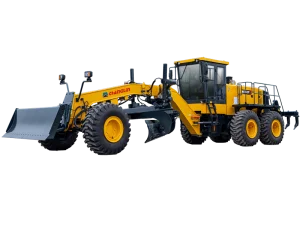
Modern motor graders and excavators come pre-wired for 3D electro-hydraulic grade control integration (Topcon, Trimble, Leica compatibility). Automatic blade and bucket control allows operators to achieve sub-centimeter finish grading in fewer passes, saving both fuel and operator fatigue.
Global Procurement Guide & Total Cost of Ownership (TCO) Strategy
Acquiring heavy equipment across international borders requires a comprehensive evaluation of purchase cost, logistics overhead, parts availability, and long-term resale value.
Strategic TCO Breakdown: 5-Year Life Cycle
While legacy Western machinery carries a high initial purchase cost (Capex), top-tier Chinese equipment reduces upfront Capex by 30% to 45%. When paired with standardized engine platforms (Cummins, Weichai, Shangchai) and universal hydraulics, consumable part costs (Opex) are lowered by up to 35% across a 10,000-hour operational lifecycle.
- Initial Capital Outlay (Capex): 35% Lower upfront fleet investment
- Fuel/Energy Consumption: Equivalent or superior L/hour engine matching
- Spare Parts Expenses: 40% Savings on OEM filters, teeth, and seals
- Payback Period: Achieved 8–14 months faster than Western alternatives
International Shipping & Logistics Protocols
Optimizing logistics protects machinery during long ocean transits. Factory shipping teams coordinate direct vessel bookings tailored to machine dimensions:
- Ro-Ro (Roll-on/Roll-off): Recommended for wheel loaders and motor graders; delivers zero structural disassembly and maximum weather protection.
- Flat Rack & Break-Bulk Vessel: Utilized for heavy crawler excavators (ZG330D, ZG360) with protective anti-salt marine wax coatings applied before loading.
- Containerized SKD/CKD: Compact excavators and road rollers are safely secured in 40ft High Cube containers for lower freight rates.
Complete Fleet Machinery Portfolio
Explore our full lineup of excavators, road rollers, bulldozers, and precision motor graders engineered for global mining and construction operations.





Frequently Asked Questions (FAQ)
Clear, engineering-backed answers to essential questions regarding manufacturing standards, customization, shipping, and global after-sales support.