
High-Capacity Heavy Machinery & Industrial Loaders
Factory-direct engineered equipment configured for heavy civil construction, open-pit mining, and high-volume material handling.


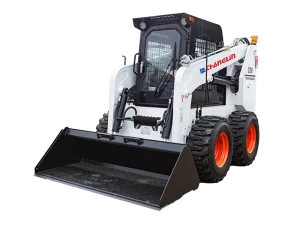





Understanding China's Loader Capacity Manufacturing Ecosystem
An authoritative operational and mechanical evaluation of payload optimization, structural engineering, and supplier OEM/ODM benchmarking.
In the contemporary landscape of global earthmoving and heavy material handling, the search query "China Loader Capacity Factory & Factories" represents far more than a simple sourcing request. It signifies a structural shift in how international EPC (Engineering, Procurement, and Construction) conglomerates, mining operations, and regional equipment distributors evaluate heavy machinery payload efficiency, Total Cost of Ownership (TCO), and factory production capabilities.
China's heavy machinery industry—centered around premier industrial manufacturing bases such as Changzhou, Xuzhou, and Shandong—has undergone a massive technological transformation. Over the past decade, Chinese wheel loader manufacturers have evolved from low-cost assembly hubs into high-precision, vertically integrated engineering centers. Today, factory output focuses on optimizing rated payload capacity, breakout force hydromechanics, static tipping loads, and powertrain thermal management under extreme operating cycles.
Mechanical Engineering Factors Governing Loader Capacity
When procurement managers analyze loader capacity across leading Chinese factories, evaluating bucket volumetric capacity (measured in m³) alone is insufficient. Real-world earthmoving productivity depends on a multi-variable mechanical equation:
- Hydraulic System Operating Pressure & Flow Rate: High-capacity loaders require load-sensing hydraulic systems (PFC pumps) capable of delivering system pressures exceeding 27.5 MPa. This ensures high breakout forces while reducing energy loss across control valves.
- Z-Bar Linkage Kinematics vs. Parallel Lift: Z-bar geometry delivers maximum mechanical advantage at ground level, driving superior bucket breakout force for heavy quarry loading, whereas parallel lift linkages provide precision positioning for multi-purpose material handling.
- Axle Torque Multiplication & Planetary Reduction: Transferring engine output to ground traction requires heavy-duty planetary reduction axles with limited-slip differentials, minimizing wheel spin under high bucket load penetration.
- Structural Steel Metallurgy & Robot Welding: Modern factories leverage Q690D high-strength low-alloy structural steel for boom arms and front frames, seam-welded by automated robotic cells to prevent structural fatigue under high-cycle dynamic loading.
Loader Capacity Engineering Specifications
Data-driven performance indicators demonstrating Chinese heavy machinery manufacturing capabilities across global project tiers.
| Loader Capacity Class | Nominal Payload (kg) | Standard Bucket Range (m³) | Engine Power Output (kW/hp) | Typical Heavy Duty Application |
|---|---|---|---|---|
| Compact / Utility (e.g., 275F) | 1,000 - 2,500 kg | 0.4 - 1.2 m³ | 50 - 75 kW / 67 - 100 hp | Urban construction, landscaping, warehouse handling |
| Mid-Range Standard (e.g., ZL50H class) | 5,000 - 6,000 kg | 2.7 - 3.5 m³ | 160 - 178 kW / 215 - 240 hp | Highway infrastructure, aggregate stockpiling, earthmoving |
| Heavy Duty High-Capacity (e.g., ZL60H) | 6,000 - 8,000 kg | 3.3 - 4.5 m³ | 175 - 220 kW / 235 - 295 hp | Open-pit mining, crushed stone quarries, port unloading |
| Ultra-Heavy Mining Class | 10,000 - 14,000 kg | 5.5 - 8.0 m³ | 250 - 390 kW / 335 - 525 hp | Heavy ore loading, large-scale stripping, quarry faces |
Global Procurement, Trends & Macro Industry Solutions
Essential roadmap for B2B procurement officers, project managers, and heavy fleet owners evaluating Chinese factory capabilities.
1. Global Industry Trends in Loader Capacity Development
The heavy equipment sector is experiencing rapid technological evolution driven by strict emissions mandates, rising fuel costs, and labor shortages. Key technological vectors reshaping loader capacity manufacturing in China include:
- Electrification & Hybridization (BEV Loaders): Battery Electric Wheel Loaders (5-ton to 8-ton capacity) powered by CATL lithium iron phosphate (LFP) battery packs are surging in demand. Electric loaders deliver zero local emissions, immediate hydraulic response due to instant electric motor torque, and up to a 70% reduction in operating energy costs compared to diesel equivalents in port and steel mill environments.
- Telematics & Intelligent Weighing Systems: Modern factory-fitted payload management systems integrate dynamic pressure sensors into boom lift cylinders. Controllers calculate payload mass in real-time with ±1% accuracy, transmitting data via telematics to fleet management platforms to prevent overload damage and optimize truck loading cycles.
- Ergonomics & Operator-Centric Cab Design: Pressurized ROPS/FOPS certified cabs feature low-noise insulation (<75 dB(A)), joystick controls integrated into air-suspension seats, panoramic visibility, and intelligent HVAC units engineered for extreme ambient temperatures ranging from -30°C in alpine winters to +50°C in desert mines.
2. Global Sourcing Requirements & Macro Solutions
International buyers sourcing loaders and heavy earthmoving machinery from China require customized solutions tailored to regional operating environments and regulatory standards:
3. Factory Audits, Localization Support & Compliance Guarantees
A major concern for international B2B buyers is verifying factory manufacturing standards and ensuring long-term aftermarket support. Top-tier Chinese original equipment manufacturers maintain rigorous quality control protocols:
- Emission Standard Compliance: Engine configurations are tailored specifically to destination market rules, including EPA Tier 4 Final / EU Stage V for North America and Europe, as well as Tier 2 / Tier 3 / China IV options for Latin America, Africa, Central Asia, and Southeast Asia.
- Factory Acceptance Testing (FAT): Prior to shipment, each loader undergoes rigorous dynamic performance testing, including 100% load lift tests, hydraulic pressure relief testing, brake performance testing, and water-tightness chamber testing.
- Global Logistics & Spare Parts Supply Chain: Machinery is shipped via RoRo (Roll-on/Roll-off), Flat Rack containers, or Break-Bulk vessels. Strategic OEM distribution networks establish regional spare parts hubs to guarantee 48-hour delivery of critical wearable items (filter elements, hydraulic seals, bucket teeth, brake pads).
4. Technical Roadmap & Future Outlook (2025–2030)
The next decade of loader capacity manufacturing will focus on autonomous fleet operation, AI-assisted path planning, and hydrogen fuel cell energy architectures. Advanced Chinese factories are currently piloting 5G tele-operated wheel loaders in hazardous mining sites, allowing operators to control heavy machinery remotely from thousands of kilometers away with sub-20ms latency. Furthermore, generative AI diagnostic algorithms embedded in machine controllers will enable predictive maintenance alerts long before component failures occur, pushing machine uptime past 98.5%.
Motor Graders, Excavators & Heavy Bulldozers
Complementary high-capacity machinery engineered for road construction, earthmoving, landfill compaction, and mining terrain preparation.








Frequently Asked Questions
Expert insights regarding loader capacity selection, OEM factory evaluation, and international procurement processes.
Static Tipping Load is the minimum load at the bucket center of gravity that will cause the loader's rear wheels or tracks to lift off the ground when the machine is at maximum articulation. Rated Loader Capacity is the safe operational payload calculated in accordance with ISO 14397-1 standards. For wheel loaders, the rated capacity is strictly capped at a maximum of 50% of the full-turn static tipping load to maintain machine stability and dynamic braking safety across rugged job site terrains.
To calculate the ideal loader capacity, determine your required hourly production target (tons per hour), the density of the material being moved (e.g., dry sand at 1.6 t/m³, blasted granite at 2.1 t/m³), and the target haul truck capacity. The optimal loader configuration allows you to fill a haul truck in 3 to 4 passes. For example, a 5-ton capacity loader (such as the ZL50/ZL60 class) featuring a 3.0 m³ bucket is ideal for loading 20-ton to 30-ton triple-axle dump trucks.
Direct factory procurement allows large fleet operators and distributors to secure customized factory engineering options—such as tailored engine emissions packages, specialized hydraulic quick-couplers, reinforced rock buckets, and high-altitude kits—while bypassing dealer markups. Direct purchasing also facilitates direct access to OEM engineering teams for technical support, custom OEM/ODM branding, and consolidated spare parts container shipments.
Premier Chinese heavy machinery manufacturing facilities utilize certified ISO 9001 quality assurance frameworks. Structural elements (boom arms, front/rear articulated frames) undergo automated robotic seam welding, ultrasonic flaw detection (UT), magnetic particle inspection (MT) of critical stress joints, and shot-peening surface treatment. Every machine undergoes rigorous bench testing for hydraulic pressure relief and a multi-hour field drive test before shipment clearance.
Electric wheel loaders eliminate diesel engine fuel consumption and traditional engine maintenance costs (no engine oil changes, fuel filters, or DEF refills). In high-duty application cycles such as ports or aggregate yards, an electric loader can reduce energy costs by up to 70% and total maintenance costs by 40-50%, enabling full ROI recovery on the initial machine price premium within 18 to 24 months of operation.