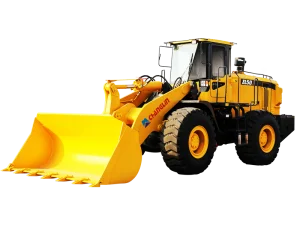
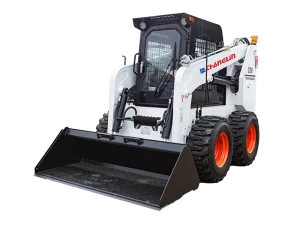
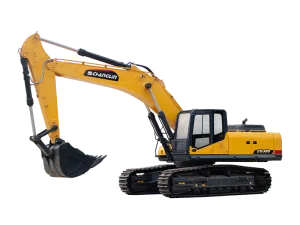
Featured Heavy Earthmoving & Loading Machinery (Part I)
Direct factory equipment solutions configured for rigorous global infrastructure, earthmoving, and mining projects.







Global Heavy Equipment Dynamics & China's Manufacturing Paradigm Shift
The global construction machinery industry is undergoing an unprecedented structural transition driven by infrastructure modernization, stringent global carbon constraints, and the urgent need for lower operational expenditures. Within this evolving macro landscape, China loader construction manufacturers and factories have transitioned from low-cost machinery suppliers to high-precision engineering pioneers. Chinese original equipment manufacturers (OEMs) now command substantial market share across South America, Central Asia, the Middle East, Southeast Asia, and Africa, while simultaneously making deep inroads into European and North American markets through Stage V and Tier 4 Final compliance.
Modern heavy equipment procurement teams no longer evaluate loader factories solely on initial purchase cost. Decision-making frameworks now weigh complex factors including hydraulic system efficiency, load-sensing variable displacement performance, thermal stability under continuous heavy loads, structural Finite Element Analysis (FEA) safety margins, and life-cycle telematics capabilities. This document serves as a comprehensive technical whitepaper designed to provide engineering directors, fleet procurement managers, and OEM distributors with deep clarity on Chinese construction equipment manufacturing capabilities.
Engineering Architecture: Next-Gen Hydraulic & Powertrain Integration
Chinese construction machinery manufacturing has transitioned from basic mechanical assembly to sophisticated system integration. Leading loader factories utilize state-of-the-art hydraulic architectures, advanced metallurgy, and zero-emission electric powertrain platforms.
Electro-Hydraulic Load Sensing (E-LSS)
Modern Chinese wheel loaders (such as the ZL60H and ZL50Z series) incorporate closed-center load-sensing hydraulic systems paired with variable displacement axial piston pumps. By dynamically matching hydraulic flow directly to load demand, system heat generation is reduced by up to 35%, delivering a direct fuel consumption improvement of 12% to 18% during standard dig-and-carry cycles.
Structural FEA Optimization & High-Tensile Metallurgy
Loader frames, lift arms, and chassis assemblies undergo rigid 3D Finite Element Analysis (FEA) to eliminate stress concentration points. Main structural beams utilize Q690D high-strength low-alloy structural steel, providing exceptional fatigue resistance during high-impact quarry operations. Robotic multi-pass welding ensures 100% ultrasonic flaw detection compliance across critical stress joints.
Battery Electric Loader (EV) Electrification Roadmap
China is leading the global electrification of heavy earthmoving machinery. 800V high-voltage Lithium Iron Phosphate (LFP) battery architectures, integrated with dual-motor independent control (dedicated traction and hydraulic motors), eliminate torque converter efficiency losses. Liquid thermal management systems maintain optimal cell temperatures across extreme ambient environments (-30°C to +55°C).
| Architecture Component | Legacy Mechanical Loaders | Next-Gen Chinese Diesel Loaders (e.g. ZL60H) | High-Voltage Electric Loaders (EV) |
|---|---|---|---|
| Hydraulic System | Fixed Displacement Gear Pump | Load-Sensing Variable Piston Pump (E-LSS) | Electro-Hydraulic Independent Motor Control |
| Transmission Tech | Manual Powershift (Fixed Ratio) | Electronic Automatic Countershaft Transmission | Direct Drive / Hydrostatic Dual-Motor Drive |
| Fuel/Energy Efficiency | Baseline Reference | 15% to 22% Reduced Fuel Consumption | 60% to 70% Energy Cost Savings vs Diesel |
| Response Latency | 350ms - 500ms | 120ms - 180ms | < 40ms Instantaneous Torque Response |
| Maintenance Cycle | Every 250 Hours | Every 500 Hours | Every 1,000 Hours (No Engine Maintenance) |
China Supply Chain Resilience, Ecosystem Integration & TCO Supremacy
The unmatched competitive advantage of China loader construction factories stems from dense, fully integrated regional industrial clusters. Geographically concentrated heavy machinery hubs in Jiangsu (e.g., Changzhou and Xuzhou), Shandong, and Zhejiang possess complete vertical integration. Within a 50-kilometer radius, factories source raw structural steel, precision-machined heavy axles, planetary gearboxes, high-pressure hydraulic hoses, and micro-electronic ECU controllers.
1. Vertical Manufacturing Integration
Unlike overseas assemblers reliant on multi-national, fragmented supply chains, Chinese manufacturers produce core components—including heavy-duty planetary drive axles, torque converters, and hydraulic cylinders—in-house or through tight OEM joint ventures. This drastically reduces supply chain vulnerability, ensuring lead times for standard loader configurations remain under 15 to 25 days.
2. Agile OEM/ODM Mass Customization
Chinese factories excel in modular engineering flexibility. Fleet buyers can specify distinct diesel engine configurations (e.g., Weichai, Cummins, Yuchai), custom bucket geometry (rock buckets, side-dump buckets, light-material high-capacity buckets), specialized quick-coupler systems, and climate-specific HVAC systems without incurring exorbitant custom engineering surcharges.
3. Comprehensive Total Cost of Ownership (TCO)
When calculating capital expenditures (CAPEX) and long-term operational expenditures (OPEX), Chinese loaders deliver an unbeatable TCO ratio. Capital costs are typically 30% to 50% lower than equivalent European or North American machinery, while spare parts availability and standardized component designs keep lifetime maintenance expenditures predictably low.
Targeted Industry Deployments & Localized Application Scenarios
Heavy construction machinery must be configured specifically for the geographic, environmental, and material conditions of the job site. Chinese loader manufacturers engineer tailored machine variants optimized for diverse global application scenarios.
Open-Pit Mining & Heavy Quarrying
Challenge: Continuous high-impact loading of blasted granite, iron ore, and abrasive minerals requiring high breakout force and structural durability.
Engineering Solution: Heavy-duty mining loaders (such as the 6-ton to 8-ton heavy wheel loader series and large excavators like the ZG365 and ZG385) feature reinforced box-section frames, rock buckets equipped with wear-resistant HARDOX teeth and lip shrouds, and heavy-duty radial rock tires with protective chains.
High-Altitude & Cold Region Infrastructure
Challenge: Sub-zero winter operations (-30°C to -45°C) and thin air conditions at elevations exceeding 3,500 meters leading to engine power derating.
Engineering Solution: Specialized cold-climate packages incorporate engine block pre-heaters, synthetic hydraulic oils with ultra-low pour points, ambient-controlled fuel heating networks, pressurized heating cabs, and turbochargers optimized for high-altitude air intake density.
Urban Municipal Works & Compact Trenching
Challenge: Confined space operational constraints, stringent noise limits, and versatile attachment switching requirements in urban utility construction.
Engineering Solution: Versatile skid steer loaders (e.g., TS100, 275F, 255F) utilize high-flow auxiliary hydraulics, 360-degree zero-turn maneuverability, and multi-attachment quick-couplers supporting hydraulic breakers, augers, cold planers, and sweeper brooms.
Waste Management & Landfill Compaction
Challenge: High-density waste compaction, harsh corrosive environments, and severe tire puncture risks in municipal solid waste (MSW) sites.
Engineering Solution: Specialized landfill compactors (such as the GYL233) feature heavy steel compaction wheels with weld-on wear cleat teeth, dual-clearing scraper bars, high-clearance trash blades, and fully enclosed underbody armor protecting hydraulic lines from debris wraps.
Global Compliance Standards & Smart Fleet Telematics Integration
To ensure seamless integration into international markets, leading Chinese factories adhere strictly to global engineering standards, safety certifications, and digital fleet management protocols.
International Quality & Safety Certifications
- CE Machinery Directive Compliance: Full conformance with EU 2006/42/EC safety standards.
- ROPS/FOPS Operator Protection: Integrated Roll-Over and Falling-Object Protective Structures certified under ISO 3471 and ISO 3449.
- Global Emission Compliance: Modular engine configurations supporting Tier 3, Stage IV, Stage V, and Tier 4 Final standards.
- EAC & ISO Certification: ISO 9001 quality management systems and EAC certification for Eurasian Customs Union markets.
CAN-Bus Smart Telematics & IoT Tracking
Modern machinery comes equipped with CAN-bus electronic control units integrated with 4G/GPS telematics modules. Remote diagnostic systems enable real-time monitoring of engine operating temperatures, hydraulic line pressures, fuel consumption rates, and operator efficiency. Automatic fault code alerts transmit directly to fleet managers, allowing predictive maintenance that prevents costly unexpected downtime.
Procurement Engineering: Equipment Selection Matrix & Inspection Protocols
Evaluating equipment manufacturers requires analyzing key technical parameters and establishing strict pre-shipment quality assurance protocols.
| Equipment Category | Target Model Example | Primary Technical Criteria | Ideal Application Profile |
|---|---|---|---|
| Heavy Wheel Loader | ZL60H / ZL50Z | Tipping Load, Breakout Force (kN), Hinge Pin Height | High-capacity quarrying, aggregate loading, earthmoving |
| Crawler Excavator | ZG210 / ZG365 / ZG385 | Bucket Capacity ($m^3$), Digging Depth, Hydraulic Flow Rate | Mass excavation, trenching, mining overburden removal |
| Precision Motor Grader | PY240H / PY220H-5 | Moldboard Length/Blade Pull Force, Tandem Axle Drive | Haul road maintenance, highway leveling, ditch cutting |
| Compaction Roller | GYD132J / GYS12J | Static Linear Load, Vibration Frequency/Amplitude | Sub-base soil compaction, asphalt paving finish |
| Landfill Compactor | GYL233 | Operating Weight, Cleat Pattern Density, Trash Blade Width | High-density municipal solid waste compaction |
| Compact Skid Steer | TS100 / 275F / 255F | Auxiliary Hydraulic Flow (L/min), Rated Operating Capacity | Urban trenching, agricultural handling, indoor demolition |
Pre-Shipment Factory Acceptance Testing (FAT) Protocol
To guarantee zero-defect field arrival, Tier-1 Chinese factories conduct comprehensive pre-shipment inspections verified via high-definition video documentation or independent third-party inspection firms (e.g., SGS, BV, Intertek):
- Hydraulic Pressure & Thermal Stall Test: Operating hydraulic circuits at maximum pressure relief settings for 2 hours to confirm thermal equilibrium and zero oil leakage.
- Full Tipping Load Calibration: Dynamic load lifting tests verifying structural stability and relief valve actuation under 110% rated load capacity.
- Cleanliness & Contamination Analysis: Hydraulic oil particle count testing ensuring ISO 4406 cleanliness standards (target 18/16/13) prior to factory seal.
- Anti-Corrosion Export Packaging: Application of marine-grade wax coatings, vacuum sealing of electrical enclosures, and heavy-duty RoRo or flat-rack tie-down validation.
Frequently Asked Sourcing & Technical Questions
Detailed technical answers to common queries raised by international procurement managers and engineering teams.
Diesel wheel loaders (such as the ZL60H) utilize internal combustion engines coupled with torque converters or hydrostatic transmissions, ideal for remote job sites lacking electrical infrastructure. Battery electric loaders replace the engine with high-capacity LFP batteries and electric motors. EV loaders eliminate torque converter efficiency losses, deliver 100% instant hydraulic torque response, reduce local noise by over 70%, and cut total energy costs by up to 60-70%, though they require investment in site charging infrastructure.
Leading Chinese OEMs establish global spare parts hubs across key regions (including Dubai, Johannesburg, São Paulo, Tashkent, and Jakarta). Furthermore, core hydraulic components (such as pumps, main control valves, and seals) utilize standardized international interfaces, allowing seamless interchangeability with globally available aftermarket components.
Yes. Desert and high-ambient packages include oversized aluminum radiator cores, independent hydraulic oil cooling fans with temperature-sensing variable speed control, cyclone pre-cleaners for air filtration, UV-reflective cab glass, and high-capacity air conditioning units engineered for ambient temperatures up to +55°C.
Heavy machinery is transported using three primary export logistics modes: Roll-on/Roll-off (RoRo) vessels for fully assembled mobile equipment; Flat Rack (FR) sea containers for extra-wide heavy excavators and compactors; and 40ft High Cube (HC) containerization for compact equipment like skid steer loaders (TS100, 275F) after partial disassembly of wheels/cab.
Standard production lead times range from 15 to 25 calendar days for standard equipment stock configurations. Custom OEM orders requiring specialized engine emissions compliance, non-standard bucket attachments, or custom paint and branding typically require 30 to 45 calendar days from finalized technical sign-off.
Precision motor graders utilize heavy-duty A-frame drawbars with sealed circle gear drives and electro-hydraulic proportional control valves. Automatic blade control system compatibility (such as 3D GPS/Laser grade control integration) allows blade positioning tolerances to be maintained within ±5 millimeters on fine grading passes.
Landfill compactors feature heavy-duty steel compaction drums equipped with high-density diamond or chevron wear cleats that cut, shred, and crush municipal waste. Dual heavy scraper bars prevent trash buildup between cleats, while pressurized cabs featuring HEPA activated carbon air filtration protect operators from harmful landfill fumes.
Load-sensing systems continuously monitor hydraulic pressure and flow requirements via signal lines connected to variable displacement piston pumps. When control levers are in neutral, pump displacement automatically throttles down to minimum output. This eliminates parasitic power draw, lowers oil temperatures, reduces seal degradation, and extends hydraulic fluid service life up to double that of conventional fixed-displacement systems.
Featured Heavy Earthmoving & Loading Machinery (Part II)
Explore our complete lineup of heavy excavators, wheel loaders, motor graders, compactors, and skid steers.