
Heavy Machinery Showcase: Primary Earthmoving Units
Factory-direct engineered equipment configured for severe-duty cycles, high load factors, and global site compliance.

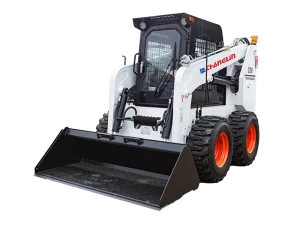

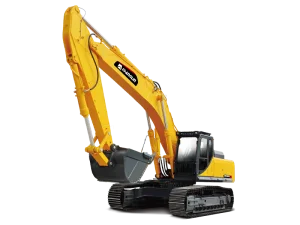
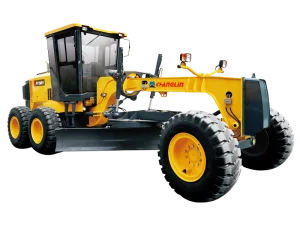



The Global Macro Shift in Heavy Machinery & Loader Procurement
The global heavy equipment market is undergoing a seismic structural transformation. Modern infrastructure developments, large-scale mining concessions, and municipal urbanization projects demand an unprecedented combination of operational uptime, fuel efficiency, and rapid total-cost-of-ownership (TCO) amortization. At the center of this industrial evolution are China’s premier loader heavy machinery manufacturers, who have transitioned from high-volume OEM producers into global engineering powerhouses driving next-generation electro-hydraulic integration, smart telemetry, and extreme-duty modular platforms.
Driven by intensive R&D investments, advanced cluster manufacturing in industrial hubs like Changzhou, Jiangsu, and state-backed manufacturing standards, top-tier Chinese factories now deliver heavy loaders, crawler excavators, motor graders, and compactors that systematically challenge legacy Western OEMs. Global procurement teams across 180+ countries no longer evaluate Chinese machinery purely on acquisition price; instead, decision-making is guided by machine availability, lifecycle spare-parts economics, hydro-mechanical durability, and carbon-reduction pathways.
China Factory 4.0: Supply Chain Resilience & Precision Assembly
How integrated manufacturing ecosystems, automated robotic welding, and rigorous quality assurance eliminate failure modes in heavy loader manufacturing.
Fully Integrated Component Tier Ecosystem
Leading Chinese heavy machinery facilities operate within hyper-dense component clusters. World-class diesel engines (Weichai, Cummins, Shangchai), electro-hydraulic main valves (Kawasaki, Rexroth), and heavy-duty planetary transmissions (ZF-technology, Hangchi) are integrated into rigid, stress-relieved structural frames with zero supply chain latency.
Robotic Welding & Acoustic Defect Inspection
Structural booms, front articulated chassis, and rear frames undergo automated robotic arc welding utilizing high-tensile strength Q355D and Q690D steel plates. Continuous ultrasonic non-destructive testing (NDT) ensures 100% weld joint integrity under extreme cyclic bending forces.
Pre-Shipment Severe-Duty Testing Protocol
Every wheel loader, crawler excavator, and compaction machine off the line undergoes a rigorous 4-hour hot-bench dynamic pressure test. Hydraulic fluid cleanliness is verified via laser particle counters to ISO 4406 standards prior to final export clearance.
Technological Framework: Diesel vs Electric Powertrain Architecture
As corporate net-zero mandates converge with operational efficiency needs, the heavy machinery sector is witnessing a rapid divergence into two optimized powertrain streams: Ultra-clean Tier 4 Final/Stage V Heavy Diesel and 800V High-Voltage Battery Electric Loaders (BEV).
| Evaluation Parameter | Advanced Heavy Diesel Loader (e.g., ZL80H) | 800V Electric Wheel Loader (BEV Series) | Operational Impact & Strategic Value |
|---|---|---|---|
| Energy Conversion Efficiency | 40% – 45% (Thermal Brake Efficiency) | 90% – 94% (Battery-to-Shaft Efficiency) | 60% Lower Energy Cost/Hour |
| Hydraulics & Response Speed | Load-sensing variable displacement piston pumps | Dual-motor independent control (Travel + Lift) | Instant torque response, zero hydraulic lag |
| Noise & Emissions Profile | EU Stage V / EPA Tier 4 Final compliant | Zero local emissions, <70 dB cab noise | Ideal for tunneling, urban & indoor bulk ports |
| Maintenance Interventions | Engine oil, filters, belts every 500 hours | Zero engine oil, zero fuel filter maintenance | 50% Maintenance Labor Reduction |
| Optimal Deployment Site | Remote mining, cross-country infrastructure | Ports, steel mills, aggregate yards, mines | Match powertrain to site electrical access |
Telemetry & CAN-Bus Smart Fleet Management
Modern heavy machinery produced by premier Chinese factories features integrated IoT gateways transmitting real-time CAN-bus data via dual-band satellite/cellular links. Fleet managers track hydraulic oil temperatures, brake pressure transients, operator efficiency scores, and predictive fault alerts directly from centralized command consoles, reducing unscheduled downtime by up to 40%.
Total Cost of Ownership (TCO): 10,000-Hour Lifecycle Model
When procurement executives evaluate suppliers under international competitive tenders, initial capital expenditure (CAPEX) represents only 25% to 35% of the total life-cycle expense over a 10,000-operating-hour machine lifecycle. The remaining 65% to 75% is dictated by fuel/energy consumption, routine maintenance, wear parts replacement, and operator productivity.
1. Capital Acquisition & Financing (CAPEX)
By leveraging concentrated industrial clusters and efficient manufacturing practices, China heavy machinery manufacturers deliver a 30% to 45% CAPEX advantage over traditional Western brands without compromising critical component specs (e.g., ZF transmissions, Parker seals, Kawasaki pumps).
2. Operational Energy & Fuel Optimization
Integrated intelligent power management systems match engine power curves dynamically to hydraulic load demands. Auto-idle shutdown and lock-up torque converters yield up to 15% reduction in liters-per-ton moved in heavy loader operations.
3. Wear-Parts & Global Logistics Support
Standardized pin-and-bushing dimensions, high-abrasion tooth systems, and global parts distribution hubs across 180+ regions ensure replacement wear components arrive on-site within critical maintenance windows, maintaining fleet readiness above 95%.
Localized Application Scenarios: Engineered for Extreme Environments
From high-altitude Andean mines to humid African road projects and sub-zero Siberian operations, discover how specific heavy loader options solve real-world site constraints.
High-Altitude Mining
Elevations above 4,000 meters cause air density drops that penalize engine horsepower. Factory-configured turbocharged engines with air-to-air intercoolers and electronic altitude compensation preserve hydraulic breakout force in Andean and Central Asian mines.
Sub-Zero Winter Packages
For operations down to -40°C in Northern Europe and CIS regions, machinery features block heaters, arctic-grade synthetic hydraulic oils, double-glazed cab heating systems, and cold-start glow plugs to prevent hydraulic seal cracking and diesel gelling.
High-Dust Desert Construction
Middle Eastern and North African desert environments require multi-stage oil-bath pre-cleaners, heavy-duty cooling packages with reversible fans to purge sand accumulation, and dust-sealed cabin HVAC filtration systems.
Landfill & Bulk Handling
Municipal waste sites and port loading require specialized landfill compactors and high-dump wheel loaders equipped with solid rubber tires, protective underbody plating, and high-capacity light-material buckets.
Heavy Machinery Showcase: Graders, Dozers & Compactors
High-performance auxiliary heavy machinery designed to seamlessly integrate into standardized fleet operations.






Frequently Asked Questions: Procurement & Technical Guidance
Direct insights from senior machinery engineers regarding sourcing, logistics, customization, and long-term aftermarket support.
How do leading China loader heavy machinery factories ensure quality control across high-volume production?
What shipping methods and international logistics options are used for exporting heavy equipment?
- Ro-Ro (Roll-on/Roll-off): Recommended for fully assembled wheel loaders, motor graders, and compactors, ensuring maximum protection from weather during transit.
- Flat Rack / Break-Bulk: Utilized for heavy crawler excavators (e.g., ZG480) and large dozers where operating weight exceeds standard container limits.
- Containerization (High Cube): Compact units like skid steer loaders (275F) or disassembled attachments can be securely bundled in 40ft HC containers to drastically optimize ocean freight costs.