
Heavy Machinery & Hydraulic Loader Solutions
Factory-direct heavy construction equipment optimized with high-pressure fluid power architecture for global infrastructure, mining, and earthmoving applications.







The Technological Paradigm Shift in Heavy Loader Hydraulics
How Chinese hydraulic component and loader factories transformed from low-cost casting suppliers into leaders of high-efficiency, electro-hydraulic proportional systems.
Electro-Hydraulic Convergence
Transitioning from traditional mechanical pilot control to electro-hydraulic proportional valves. This evolution reduces hydraulic response times to under 50 milliseconds while integrating directly with automated machine control (AMC) and CAN-bus telemetry networks.
Load-Sensing Variable Displacement
Implementation of high-pressure swashplate axial piston pumps equipped with load-sensing (LS) control modules. Flow is dynamically tailored to operational resistance, reducing fuel consumption by up to 18% compared to fixed-displacement gear pump configurations.
Ultra-High Pressure Tolerances
Advancements in metallurgy and precision honing enable Chinese hydraulic cylinder and valve block manufacturers to sustain continuous operating pressures exceeding 35-40 MPa, supporting extreme duty mining loader applications without fluid bypass or seal rupture.
Energy Regeneration Systems
Integration of boom-down potential energy hydraulic recovery accumulators. By capturing gravitational fluid flow during arm lowering cycles, energy is stored and redirected to assist steering or engine restart, improving thermal equilibrium.
Engineering Architecture of Modern Loader Hydraulic Circuits
In modern heavy machinery engineering, the hydraulic circuit represents the central neuromuscular system of the wheel loader, skid steer, and excavating loader. Over the past decade, Chinese manufacturers have fundamentally restructured their engineering pipelines. Rather than sourcing isolated components—such as main control valves (MCVs), steering units, and hydraulic pumps—from disparate global vendors, Chinese OEMs and Tier-1 fluid power factories have perfected integrated hydraulic system co-design.
Primary Hydraulic Pump Technologies: Gear vs. Axial Piston Architecture
Historically, compact and medium loaders relied heavily on fixed-displacement external gear pumps due to their rugged simplicity and low manufacturing cost. However, the requirement for higher energy density, lower operational noise, and precise multi-function control has accelerated the adoption of variable displacement axial piston pumps across Chinese factories.
- Variable Swashplate Piston Pumps: Operating at working pressures up to 350 bar, these units adjust displacement dynamically via a hydraulic or electronic control angle. When the joystick is in a neutral position, standby flow drops to near zero, substantially reducing idling parasitic power loss.
- Dual-Pump Confluence Systems: High-capacity loader models manufactured in Changzhou and Xuzhou leverage dual-pump merging technology. During rapid digging or bucket lifting, the hydraulic system automatically combines output from both steering and working pumps, delivering maximum flow rate to the lift cylinders without compromising steering priority.
- Flow-Sharing Main Control Valves (LUDV Systems): LUDV (Lastdruckunabhängige Durchflussverteilung) architecture ensures that when multiple hydraulic functions are actuated simultaneously—such as lifting the boom while tilting the bucket under load—the available oil flow is distributed proportionally to each actuator regardless of individual load pressures.
Technical Matrix: Loader Hydraulic System Configurations
Comparative analysis of fluid power configurations commonly integrated by leading Chinese OEM loader manufacturers.
| Hydraulic Parameter | Standard Heavy Duty | High-Efficiency LS | Next-Gen Electro-Hydraulic |
|---|---|---|---|
| Pump System Type | Triple External Gear Pump | Axial Variable Piston Pump | Dual Electronic Swashplate Piston |
| Max Working Pressure | 21.0 - 25.0 MPa | 31.5 - 35.0 MPa | 38.0 - 42.0 MPa |
| Control Mechanism | Mechanical Pilot / Hydraulic Pilot | Hydraulic Load-Sensing (LS) | CAN-Bus Electro-Proportional |
| System Flow Response | 120 - 180 ms | 60 - 90 ms | < 35 ms |
| Fuel Efficiency Gain | Baseline | + 12% to 15% | + 20% to 25% |
| Primary OEM Application | Standard 3T - 5T Loaders | Heavy Mining 6T - 12T Loaders | Electric Loaders & Autonomous Fleets |
Thermal Dissipation & Contamination Management
A critical metric of hydraulic reliability in continuous heavy-duty environments (such as quarrying or steel mill slag clearing) is thermal management. High fluid temperatures degrade oil viscosity, accelerate oxidation, and compromise nitrile/fluororubber seals. Modern Chinese loader hydraulic factories integrate independent, thermostatically controlled hydraulic oil cooling systems.
Proportional hydraulic fan drives automatically adjust fan speed based on real-time fluid and engine coolant sensors, replacing continuous belt-driven fans. Furthermore, hydraulic cleanliness is guaranteed via multi-stage filtration units down to ISO 4406 cleanliness code 16/14/11 prior to factory rollout, mitigating premature valve spool sticking and pump wear.
China Factory 4.0: Supply Chain Resilience & OEM Scale
Inside China's advanced heavy machinery industrial clusters: Combining automated machining, digital quality verification, and unmatched ecosystem integration.
End-to-End Industrial Clusters
Concentrated manufacturing ecosystems in Jiangsu, Shandong, and Zhejiang allow loader factories to source raw forged steel, high-precision valve castings, seals, and hydraulic lines within a 50-kilometer radius, drastically compressing lead times.
Automated Precision Machining
Hydraulic spool valve bores and cylinder barrels are machined on multi-axis Japanese and German CNC centers, achieving sub-micron clearances. This reduces internal fluid leakage and guarantees interchangeability across global replacement parts channels.
Rigorous Test Benches
100% of manufactured main control valves and hydraulic cylinders undergo automated pressure impulse testing, thermal shock validation, and ultrasonic particle counting before installation onto loader chassis.
Custom OEM/ODM Integration
Chinese factories offer extensive white-label and customized hydraulic tuning—configuring relief pressures, pilot flow curves, and mounting brackets to match regional engine emissions standards (Stage V, Tier 4 Final, China IV).
Application Scenarios & Duty Cycles
Engineered for extreme operating environments: How specialized loader hydraulic systems adapt to global job site challenges.
Open-Pit Mining & Heavy Aggregate
High-tonnage wheel loaders equipped with heavy-duty rock buckets require aggressive hydraulic breakout force. Loaders utilize dual-pump confluence systems with armored high-pressure hydraulic hoses to resist abrasive rock impacts and continuous vibration.
Agricultural & Biomass Bulk Handling
Handling low-density bulk material like grain, silage, or woodchips demands high-speed cylinder expansion and auxiliary hydraulic lines for high-tip buckets or log grapples. Quick-coupler hydraulic valves allow rapid front attachment changes inside 30 seconds.
High-Altitude & Extreme Cold (-40°C)
Operating in regions like Central Asia or Northern Europe requires specialized arctic-grade synthetic hydraulic oil, low-temperature seal compounds (HNBR), and pre-heating hydraulic fluid reservoir circuits to prevent cavitation during cold starts.
Urban Infrastructure & Tunnelling
Zero-emission electric wheel loaders operating in underground tunnels utilize pure electric motor-driven hydraulic pumps. The absence of engine noise allows operators to hear acoustic feedback from hydraulic relief valves, ensuring smooth precision operations in confined spaces.
Heavy Earthmoving & Earthworking Fleet
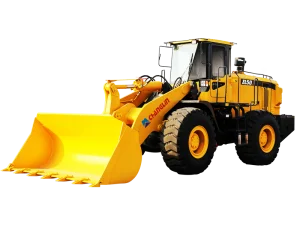
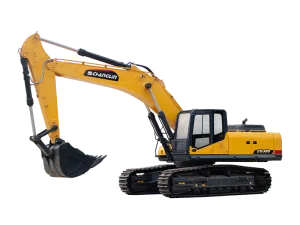
Explore our complete range of hydraulic excavators, wheel loaders, motor graders, and compactors available directly from China manufacturing facilities.






Evaluating China Loader Hydraulic Suppliers: TCO & Quality Audit
When sourcing hydraulic wheel loaders, excavators, or OEM hydraulic assemblies from Chinese suppliers, procurement officers must look beyond initial FOB purchase price. Evaluating Total Cost of Ownership (TCO) requires analyzing hydraulic efficiency ratings, MTBF (Mean Time Between Failures) of key valve blocks, and regional spare parts availability.
Key Criteria for Sourcing & Factory Auditing
- Casting and Honing Quality: Audit whether the factory utilizes shell-mold casting for main valve bodies to prevent internal blowholes and porosity that cause high-pressure leakage under heat.
- Sealing System Sourcing: Confirm the brand of hydraulic cylinder rod seals. Top Chinese loader manufacturers default to premium seals (such as NOK, Parker, or Hallite) to ensure leak-free operation over 5,000+ operating hours.
- Custom Pilot Joystick Tuning: Ensure the factory provides customizable joystick response curves. Operator fatigue decreases significantly when pilot pressure modulation maps match local operator preferences.
- After-Sales Component Interchangeability: Verify that hydraulic port threads use international standardized connections (such as SAE flange or ISO 6149 metric ports) rather than non-standard proprietary threads, enabling fast global servicing.
Frequently Asked Questions (FAQ)
Technical and commercial answers for international procurement managers, fleet directors, and heavy equipment distributors.