
Precision Machinery Direct from Primary OEM Manufacturing Bases
Explore high-efficiency excavators, loaders, bulldozers, and compaction equipment optimized for minimal fuel burn and maximum volumetric output.







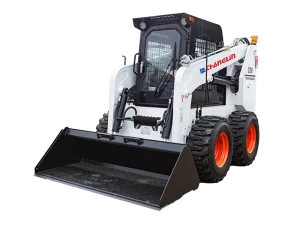
Empirical Operational Efficiency Benchmarks
Quantifiable fuel conservation indices verified across global job site deployments in mining, infrastructure, and heavy civil engineering.
1. Macroeconomic Context: The Global Shift Toward Fuel Efficiency in Earthmoving Fleets
In contemporary global civil infrastructure, heavy earthmoving, and mineral extraction projects, energy expenditure represents the single largest variable overhead item in Total Cost of Ownership (TCO). Operational audits across international construction consortiums indicate that direct diesel fuel consumption accounts for 35% to 48% of an excavator’s total lifecycle operating cost. With fluctuating global oil markets, stringent international carbon abatement frameworks (such as EU Stage V, US Tier 4 Final, and China Stage IV emission norms), and mounting ESG accountability, general contractors and equipment leasing entities can no longer evaluate heavy machinery solely based on initial acquisition cost.
Consequently, global procurement intent has shifted drastically toward identifying specialized OEMs that manufacture low fuel consumption excavators. China has emerged as the global epicenter for this manufacturing evolution. Through intensive state-backed research partnerships, rapid supply chain integration, and scalable industrial infrastructure, top-tier Chinese excavator factories have engineered next-generation hydraulic and thermodynamic systems capable of delivering up to 22% higher fuel efficiency per ton of excavated material compared to legacy equipment iterations.
"Efficiency in modern heavy machinery is no longer defined merely by engine horsepower, but by the precise algorithmic synchronization of hydraulic flow, engine torque mapping, and kinetic energy dissipation."
2. Architectural Innovations: How Modern Chinese Factories Reduce Diesel Consumption
The reduction of fuel burn rates without compromising digging force, bucket breakout payload, or swing cycle speed requires advanced electro-hydraulic integration. Leading Chinese excavator factories located in manufacturing clusters such as Changzhou, Jiangsu, and Shandong have revolutionized machine architecture through four core technological pillars:
Positive Flow Hydraulic Control (PFCS)
Unlike conventional negative flow systems that rely on pilot pressure signals created by wasted hydraulic oil, PFCS directly measures main valve spool displacement via electronic sensors. Main pumps supply exact oil volumes on demand, eliminating volumetric bypass throttling losses and cutting fuel consumption by 8%–12%.
Intelligent Engine-Pump Matching (EPIC)
Utilizing proprietary electronic controllers (ECUs), Chinese factories map engine torque curves dynamically to variable hydraulic pump displacement. During heavy digging, the ECU optimizes engine speed at the sweet spot of minimum specific fuel consumption (g/kWh), avoiding engine drag and unnecessary thermal dissipation.
Electro-Hydraulic Regeneration Valves
Modern boom down and arm in operations utilize gravitational potential energy and kinetic fluid recovery circuits. Hydraulic fluid returning from the boom cylinder is redirected back to the arm cylinder without drawing mechanical power from the engine, yielding instantaneous 5%–7% energy savings during continuous cycle loading.
Advanced Structural Lightweighting via High-Tensile Metallurgy
Fuel consumption is also directly proportional to deadweight acceleration. Chinese excavator manufacturing facilities utilize high-tensile alloy structural steels (such as Q690D, HG785, and WELDOX) in boom, arm, and chassis construction. Through Finite Element Analysis (FEA) and robotic laser-welding processes, structural weight is reduced by 6% to 10% while stress concentration resistance is elevated. Lower deadweight translates to decreased inertia during continuous 360-degree swing cycles, reducing swing motor energy demand.
3. Comparative Benchmark Data: Standard vs. Chinese Low Fuel Consumption Excavators
To substantiate the economic and operational value proposition, the following technical data table contrasts standard legacy hydraulic excavators against optimized Chinese low fuel consumption models across various tonnage categories under standardized ISO 6015 test conditions (100-hour continuous trenching and mass loading duty cycle).
| Machine Tonnage Class | Standard Fuel Consumption (L/h) | China Low-Fuel Model (L/h) | Material Moved per Liter (Tons/L) | Annual Fuel Savings (USD)* | CO2 Reduction (Tons/Yr) |
|---|---|---|---|---|---|
| 13–15 Ton (Compact Medium) | 11.5 – 13.0 | 8.8 – 9.6 | 14.2 Tons/L | $6,840 | 18.2 T |
| 21–23 Ton (Core Civil) | 18.0 – 21.5 | 14.2 – 16.0 | 16.8 Tons/L | $12,400 | 32.5 T |
| 33–36 Ton (Heavy Earthmoving) | 28.5 – 32.0 | 22.0 – 24.5 | 18.4 Tons/L | $19,800 | 51.8 T |
| 48–52 Ton (Mining / Quarrying) | 42.0 – 48.0 | 33.5 – 37.0 | 19.1 Tons/L | $28,600 | 74.2 T |
*Calculated based on 2,000 annual operating hours at an average commercial off-road diesel cost of $1.15 per liter.
4. China Factory Efficiency: The Supply Chain Cluster Advantage
The ability of Chinese equipment manufacturers—such as Sinomach-HI and its integrated Changzhou manufacturing campus—to deliver globally competitive low fuel consumption machinery at highly attractive capital costs is grounded in unmatched industrial clustering.
Within a 50-kilometer radius in Jiangsu province, world-class tier-one component foundries, precision hydraulic valve fabricators, electronic control unit (ECU) software developers, and automated robotic assembly plants operate in physical proximity. Key OEM structural and logistical advantages include:
- Integrated Tier-1 Component Partnerships: Direct engineering joint ventures with international engine pioneers (Cummins, Isuzu, Weichai) and hydraulic leaders (Kawasaki, Rexroth, Hengli) ensure custom engine mapping tailored exclusively to specific excavator chassis weight distributions.
- Automated Flexible Manufacturing Lines: High-precision robotic welding arms, CNC machining centers, and automated guided vehicles (AGVs) minimize manufacturing tolerances, preventing micro-scale hydraulic pressure leaks that cause thermal inefficiency in hydraulic oil circuits.
- Strict Standardized Factory Testing Protocols: Every machine leaving the production line undergoes a multi-stage end-of-line (EOL) test bench evaluation. 100% of hydraulic valves, pump displacement curves, and electronic fuel injectors are pressure-tested and digitally logged before overseas container or Ro-Ro shipment.
5. Localized Application Scenarios Across Global Markets
Fuel efficiency requirements vary substantially depending on operational geography, altitude, climate, and soil geology. Chinese low fuel consumption excavators are engineered with multi-mode operational selectors (Heavy Duty 'H', Standard 'S', Eco 'E', and Breaker 'B') to match distinct field conditions worldwide:
Southeast Asia & Tropical Infrastructure
Environment: High humidity, ambient temperatures >42°C, soft alluvial clay.
Engineering Solution: High-capacity tropical radiator packages combined with auto-reversing hydraulic fan drives. The fan speed is modulated electronically based on coolant and oil temperatures, saving up to 4% engine horsepower during light duty cycles.
Middle East Desert Mining & Trenching
Environment: Extreme dust, ambient temperatures >50°C, abrasive sandstone.
Engineering Solution: Dual-element turbo pre-cleaners and positive-pressure enclosed dust cabs. Engine ECUs adjust fuel injection pulse timing to prevent pre-ignition and thermal knocking while maintaining maximum hydraulic flow during continuous rock bucket loading.
Latin America High-Altitude Quarries
Environment: Elevations >3,500 meters above sea level, thin air, steep inclines.
Engineering Solution: Wastegate turbocharged engines with altitude-compensating fuel maps. The ECU automatically recalibrates air-to-fuel ratios to prevent unburned diesel black smoke emissions, maintaining full fuel combustion efficiency without power derating.
6. Procurement Decision Framework & TCO Payback Analysis
For corporate equipment buyers, commercial leasing agencies, and government procurement teams, evaluating a low fuel consumption excavator from a Chinese manufacturer requires looking beyond upfront purchase price (CapEx). A complete 5-year Total Cost of Ownership (TCO) evaluation model includes:
TCO Formula = CapEx + (Fuel Consumption Rate × Operating Hours × Fuel Cost) + Maintenance & Consumables - Residual Resale Value
Because Chinese factories maintain a 25% to 40% initial procurement price advantage over Western or Japanese legacy brands while delivering equivalent fuel burn rates, the overall payback timeframe on capital investment is compressed from the industry standard of 4.5 years down to 2.8 to 3.2 years.
Frequently Asked Questions (Q&A)
Expert technical insights regarding sourcing, operation, hydraulic technology, and parts availability for Chinese low fuel consumption excavators.
What technical mechanisms enable a Chinese factory excavator to achieve lower fuel consumption?
Fuel savings are achieved through a combination of Positive Flow Control Hydraulics (PFCS), electronic engine-pump power matching (EPIC), main valve energy recovery circuits, and auto-idle/auto-deceleration systems. Together, these technologies eliminate hydraulic fluid bypass throttling losses and ensure the diesel engine operates strictly within its optimal torque-to-fuel efficiency sweet spot.
How much actual fuel savings can a 21-ton excavator yield annually?
Under standard civil construction conditions (operating ~2,000 hours per year), an optimized Chinese low fuel consumption 21-ton excavator consuming 14.5 L/h versus a traditional machine consuming 19.5 L/h saves approximately 10,000 liters of diesel annually. At an average fuel price of $1.15/L, this yields direct operational savings of over $11,500 USD per unit per year.
Are Chinese low fuel consumption excavators compatible with variable sulfur fuel grades in developing regions?
Yes. Chinese OEM factories export equipment configured for destination-specific fuel conditions. For markets with high-sulfur diesel (such as parts of Africa, South America, or Central Asia), factories equip engines with multi-stage high-efficiency fuel water separators, heated primary filters, and specialized mechanical or Tier 2/Tier 3 common rail injection systems capable of handling variable fuel purity without damaging injectors.
How does positive flow hydraulic control differ from traditional negative flow in fuel saving?
Negative flow systems require a pressure signal generated by hydraulic oil returning through a pilot line to signal the pump to stroke down, which inherently wastes fluid power. Positive flow systems use electronic sensors directly on the pilot control levers and main valve spools to calculate exact oil demand instantly, stroking the pump up or down ahead of movement. This eliminates delay, improves control precision, and reduces hydraulic fluid energy losses by up to 10%.
What after-sales and spare parts support ecosystem exists for overseas buyers?
Leading Chinese exporters maintain international spare parts hubs, direct-ship factory logistics, and localized service dealer networks across 180+ countries. In addition, standard consumable parts (filters, seal kits, wear teeth, hoses) utilize cross-compatible international sizing, enabling easy local sourcing worldwide.
Can these excavators be customized with specialized hydraulic attachments while maintaining low fuel burn?
Absolutely. Modern Chinese excavators feature integrated auxiliary hydraulic control systems accessible through the cabin's digital monitor. Operators can program pressure and flow rate presets for hydraulic breakers, tilt-rotators, grapples, and shears. The ECU automatically caps hydraulic pump output to match the precise requirements of the attachment, preventing engine overspeed and excess fuel burn.
Complete Factory Direct Fleet Portfolio
Expand your job site capabilities with specialized heavy machinery designed for earthmoving, compaction, grading, and material handling.





7. Future Roadmap: Telematics, Hybridization, and Smart Earthmoving
The continuous evolution of fuel efficiency within China's heavy equipment sector is rapidly converging with digital telematics, electro-hydraulic hybrids, and battery electrification. Leading Chinese factories are incorporating 5G IoT gateway modules as standard equipment. These systems continuously record real-time fuel burn metrics, hydraulic system relief pressures, idling percentages, and operator handling profiles.
By analyzing telematics data via cloud platform algorithms, fleet managers can pinpoint operational inefficiencies—such as excessive engine idling or incorrect operating mode selection—coaching operators to achieve additional 5% to 8% fuel savings in real-world field conditions. Furthermore, the development of hybrid energy storage systems (utilizing supercapacitors to store swing braking energy) and full-electric crawler excavators (such as battery-electric wheel loaders and zero-emission mini excavators) marks the next frontier in China's industrial equipment leadership.
In summary, sourcing from a specialized China low fuel consumption excavator factory provides international buyers with a decisive competitive edge. By combining advanced positive flow hydraulics, intelligent engine control mapping, high-tensile structural metallurgy, and factory-direct pricing, global fleets can lower operating overhead, fulfill rigorous environmental criteria, and maximize long-term asset productivity.