
Industrial Machinery Direct Showcase
High-performance heavy equipment manufactured to international ISO and CE engineering standards for mining, earthmoving, and civil infrastructure.






Global Procurement Dynamics & China's Machinery Industrial Base
An authoritative evaluation of how China's heavy equipment manufacturing ecosystem has transformed into the primary engine for global infrastructure, mining operations, and green energy site preparation.
The Evolution of Industrial Clusters
China's heavy machinery industry—centered around premier manufacturing hubs like Changzhou in Jiangsu Province—has evolved from low-cost assembly lines into advanced automated smart factories. By integrating robotic welding, automated guided vehicles (AGVs), and laser-guided machining centers, factories operating under state-owned enterprises like Sinomach-HI (Changlin) deliver machinery with tolerance levels matching European and North American benchmarks.
Total Cost of Ownership (TCO) Shift
International procurement directors are shifting focus from initial acquisition cost to complete life-cycle valuation. Chinese heavy machinery manufacturers now offer up to 35% lower capital expenditure (CAPEX) while matching structural longevity, fuel efficiency, and component interchangeability. This structural TCO advantage empowers global contractors to expand fleet sizes while maintaining financial liquidity.
Supply Chain Integration & Agility
Unlike regional machinery producers who suffer from component bottlenecks, tier-1 Chinese factories boast localized supply chain ecosystems. Hydraulic pumps, planetary transmissions, heavy-duty axles, and structural fabrications are sourced within a 100km radius of production centers, guaranteeing rapid production cycles and uncompromised spare-parts availability across global distribution networks.
Heavy Machinery Technical Roadmap & Next-Gen Innovations
Understanding the core engineering advancements in hydraulics, electrification, powertrain integration, and telematics that drive modern Chinese equipment efficiency.
Electrification & Battery Electric Architecture (BEV)
As global net-zero regulations tighten, China leads the heavy machinery electrification revolution. Equipment such as the flagship ZL50EV Electric Wheel Loader replaces traditional diesel powertrains with high-density Lithium Iron Phosphate (LiFePO4) battery packs. Coupled with permanent magnet synchronous motors (PMSM), electric loaders eliminate local tailpipe emissions, reduce noise levels to under 70 dB(A), and cut operating energy costs by up to 60-70% compared to conventional diesel counterparts.
Positive Flow Hydraulic System & Intelligent Control
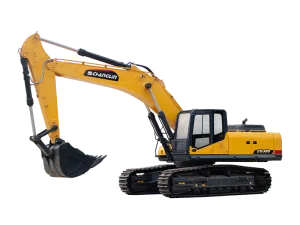
Next-generation crawler excavators (e.g., ZG360 and ZG380 series) incorporate main-spool positive flow control hydraulics coupled with dual variable-displacement axial piston pumps (Kawasaki/Rexroth architecture). This configuration aligns engine output directly with hydraulic load demands, virtually eliminating throttling pressure loss. Hydraulic efficiency improvements yield up to 12% higher fuel economy per ton of earth moved.
Structural Durability & Finite Element Analysis (FEA)
Frames, booms, arm linkages, and moldboards undergo rigorous 3D Finite Element Analysis (FEA) and stress relief thermal processing. Heavy excavator booms utilize high-strength alloy steel (HG70/HG785 grade) with reinforced internal baffle plates. Bulldozer track frames (YD160, YD255) utilize rigid box-section construction to withstand continuous torsional stress in harsh open-pit mining and rock ripping applications.
CAN-Bus Telematics & Fleet Remote Diagnostics
Modern fleet management relies on integrated telematics controllers. Real-time engine torque, oil pressure, hydraulic temperature, fuel consumption, GPS coordinates, and fault diagnostic codes (DTC) are broadcast via CAN-bus to cloud management portals. Operations managers can track equipment utilization, automate preventive maintenance scheduling, and remotely diagnose system anomalies before downtime occurs.
Heavy Equipment Deployment Across Global Industrial Sectors
Tailored machine matrix engineered to withstand site-specific stresses, soil cohesion conditions, payload capacities, and duty cycles.
Mining & Heavy Earthmoving
High-tonnage operations demand heavy excavation force, high bucket capacities, and continuous duty-cycle capability. Heavy crawler excavators like the ZG380 (38-ton) and heavy dozers like the YD255 deliver maximum breakout force, heavy-duty undercarriage protection, and severe-duty rock buckets designed for quarrying, copper extraction, and coal overburden removal.
Highway & Arterial Road Construction
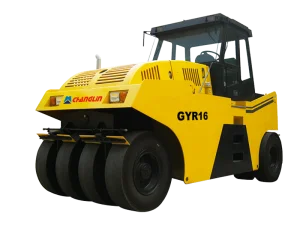
Smooth base-layer leveling and precise compaction are mandatory for asphalt longevity. The combination of precision moldboard motor graders (PY180H, PY220H) and heavy single-drum vibratory road rollers (GYS12J, GYR162) guarantees exact grade alignment, controlled amplitude vibration, and compliance with strict subgrade density specifications.
Municipal Utilities & Compact Civil Works
Urban infrastructure, pipe trenching, and utility repair require compact foot-print machinery without sacrificing hydraulic breakout capability. Medium crawler excavators like the ZG150 and compact wheel loaders like the ZL30H deliver high agility in confined city streets while maintaining rapid cycle times for municipal contractors.
Global Compliance Framework & Environmental Adaptability
Equipment engineered in Chinese machinery industrial factories undergoes multi-tier testing and localized compliance verification to operate seamlessly across extreme climatic zones.
International Certification Protocols
Exported machinery complies fully with regional regulatory frameworks. Powerplants are offered in multiple emission configurations: Tier 2 / Stage II for developing markets with high-sulfur fuel, up to Tier 4 Final / Stage V emission systems utilizing Diesel Particulate Filters (DPF) and Selective Catalytic Reduction (SCR) for North American and European destinations. Certified ROPS/FOPS operator cabs ensure workplace safety under OSHA and CE standards.
Extreme Climate Engineering Packages
Operational reliability requires custom cooling and thermal pre-conditioning packages:
- High-Temperature & Desert Package: Heavy-duty oversized aluminum radiators, independent hydraulic oil coolers, and dust-ejection air pre-cleaners built for 50°C+ ambient environments in the Middle East and North Africa.
- Arctic Cold-Start Package: Fuel pre-heaters, block heaters, synthetic low-viscosity hydraulic oils, and arctic grade seals rated for -40°C operations across CIS and Northern regions.
- High-Altitude Oxygen Compensation: Turbocharger matching algorithms calibrated to prevent power derating at elevations exceeding 4,000 meters above sea level.
Strategic Buyer’s Guide: Auditing Chinese Machinery Manufacturers
A structured methodology for equipment dealers, mining houses, and EPC contractors to evaluate factory credentials, quality management systems, and export logistics.
-
Phase 01
Verification of OEM vs. Assembly Intermediaries
Differentiate genuine manufacturing entities from trading intermediaries. Inspect factory floor area, robotic chassis welding stations, gear-cutting capabilities, and automated paint lines. Direct OEM partnerships (such as Sinomach-HI International Equipment) ensure full engineering support, direct warranty fulfillment, and custom engineering design modifications.
-
Phase 02
Pre-Delivery Inspection (PDI) & Third-Party Auditing
Mandate comprehensive pre-delivery testing protocols before ocean freight booking. Standard factory tests include 100% hydraulic pressure relief validation, 4-hour continuous run-in testing, brake system stall tests, and rain-tight cab testing. Independent inspection agencies like SGS, TÜV, or Bureau Veritas can be integrated into the sign-off workflow.
-
Phase 03
Logistics Engineering & Overseas Shipping Optimization
Machinery transport cost directly impacts delivered unit price. Chinese exporters utilize optimized packing configurations: Roll-on/Roll-off (Ro-Ro) and Break-Bulk for oversized excavators and graders, Flat Rack containers for heavy dozers, and knock-down containerization for compact skid steers and loaders, reducing ocean freight costs by up to 25%.
Complete Industrial Machinery Fleet Range
Explore our complete catalog of factory-direct excavators, motor graders, wheel loaders, dozers, and compaction machinery configured for global delivery.







Global Procurement FAQ: Sourcing Heavy Equipment from China
Detailed technical and commercial insights answering key procurement queries for fleet directors, equipment buyers, and distribution partners.
Why should international buyers partner directly with Chinese heavy machinery OEMs like Sinomach-HI?
Direct factory partnership offers three core strategic advantages: complete engineering customization (adaptations for engine emissions, extreme temperatures, and high-altitude kits), standard OEM pricing without dealer markups, and direct access to engineering teams for technical support. State-owned manufacturing entities such as Sinomach-HI (Changlin base) guarantee long-term financial stability, ensuring spare parts availability across machine lifecycles exceeding 10-15 years.
How do diesel and electric wheel loaders compare in terms of operational ROI?
While an electric loader (such as the ZL50EV) carries a higher initial purchase price than a conventional diesel loader (such as the ZL30H), the operating cost savings are dramatic. In high-utilization environments (e.g., ports, steel mills, aggregate yards running 3,000+ hours annually), electric loaders save up to 60-70% in energy costs per hour and eliminate engine maintenance expenses (no oil filters, fuel filters, or DEF). Typical payback on the capital premium is achieved within 18 to 24 months of operation.
What engine emission standards are available for exported Chinese machinery?
Machinery is built to order based on destination environmental regulations. For regions with standard diesel quality (Latin America, Africa, Central Asia), Tier 2 and Tier 3 engine options (Cummins, Weichai, Shangchai) are available for maximum reliability and ease of maintenance. For regulated markets (North America, European Union, Australia), machines are fitted with Tier 4 Final / Stage V engines utilizing electronic common rail fuel injection, DPF, and SCR systems.
What international logistics shipping methods are utilized for heavy excavators, dozers, and graders?
Shipping logistics are dictated by machine transport dimensions and weight. Heavy excavators (ZG360, ZG380) and motor graders (PY220H, PY320T) are shipped via Roll-on/Roll-off (Ro-Ro) or Break-Bulk vessels to prevent exposure and eliminate disassembly risks. Medium equipment and wheel loaders can be partially disassembled and shipped via 40ft High Cube or Flat Rack containers to optimize freight rates.
How is global after-sales support and spare-parts supply structured?
Global support is backed by an extensive international network comprising over 300 authorized dealers and 650 regional service centers across 180 countries. Core wearable items (bucket teeth, cutting edges, hydraulic seals, filter kits) are dispatched via local distributor stocks or international express parts hubs within 48 hours. Digital CAN-bus diagnostics also enable factory engineers to troubleshoot electronic system anomalies remotely.