
Featured Heavy Equipment & Heavy Duty Crawler Excavators
Direct factory production models engineered for heavy mining, infrastructure earthworks, road grading, and specialized material handling applications globally.






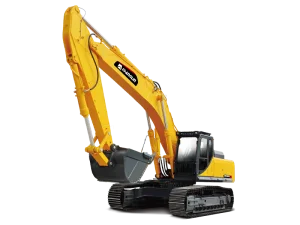
The Strategic Paradigm Shift in Chinese Mechanical Excavator Manufacturing
How Chinese heavy machinery OEMs have evolved from cost-driven exporters to global technology pioneers in electro-hydraulic efficiency, structural durability, and intelligent fleet management.
The global construction machinery market is undergoing a seismic structural shift. Procurement teams, mega-project contractors, and mining conglomerates no longer evaluate heavy excavators merely on initial acquisition cost. Instead, modern operational frameworks demand rigorous assessments of Total Cost of Ownership (TCO), fuel-to-dig efficiency ratios, hydraulic system responsiveness, and long-term supply chain reliability. China’s mechanical excavator manufacturing ecosystem—anchored by state-of-the-art production clusters in Jiangsu, Shandong, and Hunan—has successfully transitioned from high-volume assembly to advanced precision engineering.
Today, leading manufacturers such as Sinomach-HI (Changlin) operate at the intersection of heavy structural metallurgy and cutting-edge digital control systems. By integrating global Tier-1 powertrains (such as Cummins, Isuzu, and Weichai) with custom-tuned negative flow control or positive flow hydraulic architectures (Kawasaki, Rexroth), Chinese factories deliver machines that achieve equivalent or superior cubic-meter material displacement speeds compared to traditional Western OEMs, while reducing capital expenditure by 25% to 40%.
China Factory 4.0: Supply Chain Resilience & Infrastructure Advantages
Inside China's advanced heavy machinery manufacturing hubs—where automated robotics, digital quality gates, and vertical integration guarantee precision quality at scale.
Automated Robotic Welding & FEA Analysis
Heavy excavators face extreme torsional stress during heavy loading and rock ripping. Chinese Smart Factories utilize 100% automated Panasonic/ABB robotic welding stations with ultrasonic flaw detection. Critical load points on boom and arm structures undergo finite element analysis (FEA) to ensure structural lifespans exceeding 10,000 operating hours.
Vertical Integration & Component Traceability
By controlling the entire value chain—from structural steel casting and hydraulic cylinder machining to harness fabrication and final paint curing—Chinese manufacturers mitigate third-party bottleneck risks. Every component is laser-etched with a unique QR code for lifelong maintenance traceability.
Rigorous Pre-Delivery Inspection (PDI)
Prior to export shipping, every crawler excavator, motor grader, or loader completes an intensive 50-point factory audit. This includes high-pressure hydraulic leak tests, 50°C thermal endurance stress testing, digital flow meter calibration, and full-spectrum vibration spectrum monitoring.
Through vertically integrated supply networks, Chinese manufacturers offer standard machinery production lead times of 15–25 days—even for customized high-altitude or arctic-duty excavator configurations—compared to the 6-to-9 month backlogs typical of European or North American suppliers.
Technical Roadmap & Future Engineering Horizons
Next-generation excavator technologies: Electro-hydraulic main control valves, high-capacity lithium battery powertrains, and autonomous machine guidance systems.
The mechanical excavator of tomorrow is no longer purely mechanical; it is a highly integrated cyber-physical machine. Leading engineering divisions across China are driving technical development across four key pillars:
1. Advanced Electro-Hydraulic Positive Flow Systems (EHCO)
Legacy mechanical excavators relied on pilot pressure hydraulic signals, resulting in inherent hydraulic lag and energy loss during multi-function boom, arm, and bucket operations. Modern Chinese excavators (such as the ZG series 20T to 50T range) utilize electronic main control valves (MCV) coupled with electronic joystick controllers. Sensor feedback calculates joystick deflection within milliseconds, instructing variable-displacement piston pumps to supply exact oil volumes on demand. This reduces internal hydraulic throttling losses by up to 18% and improves fuel efficiency per bank-cubic-meter excavated.
2. Electrification & Battery-Electric Powertrains (BEV)
In response to global carbon neutrality mandates, Chinese factories are leading the commercial deployment of 200kWh to 350kWh lithium iron phosphate (LFP) electric excavators and wheel loaders. Utilizing high-voltage 600V architecture, these zero-emission machines eliminate diesel engines entirely. Operating costs drop by 60–70% in high-duty applications such as tunneling, urban foundation work, and indoor industrial demolition, offering rapid ROI for fleet operators despite higher upfront capital cost.
3. Autonomous Mining & 3D Machine Guidance Integration
Factory-installed 3D GNSS grade control, payload sensing systems, and 5G remote teleoperation capabilities are moving from optional add-ons to standard factory configurations. Operators can perform precise grading, trenching, and foundation excavation within ±20mm tolerances directly from cab touchscreen interfaces, eliminating the need for manual grade checking and speeding up site clearance timelines.
| Technology Parameter | Legacy Mechanical System | Next-Gen Electro-Hydraulic (Current Standard) | Future BEV / Smart Hybrid Platform |
|---|---|---|---|
| Hydraulic Response Time | 120 - 150 ms | 40 - 60 ms | 15 - 25 ms |
| Fuel Efficiency (Liters/Ton) | Baseline (100%) | 12% to 18% Lower Fuel Consumption | Zero Fuel / 65% Energy Cost Reduction |
| Emissions Standard | Tier 2 / Tier 3 | Stage V / Tier 4 Final / China IV | Zero Carbon Local Emissions |
| Control Precision | Manual Pilot Feel | Electronic Proportional Solenoid | Autonomous 3D GNSS Target Digging |
| Telemetry & Diagnostic Depth | Basic Analog Gauges | CAN-Bus IoT Real-Time Telematics | Predictive AI Component Health Cloud |
Macro-Industry Solutions & Heavy Machinery Applications
From open-pit copper mines to high-altitude highway construction—engineered configurations designed to withstand severe working conditions worldwide.
Heavy Mining & Quarry Operations
Large crawler excavators (36T to 50T+ like the ZG365 & ZG480) equipped with reinforced rock booms, short arms, heavy-duty rock buckets (HARDOX wear plates), and dual-pump combined flow systems. Ideal for high-impact granite, iron ore extraction, and continuous heavy truck loading in harsh quarry sites.
Infrastructure & Highways
Balanced medium excavators (15T to 25T) paired with high-performance motor graders (PY180H) and vibratory road rollers (GYS20J). Delivers complete roadbed preparation, slope grading, trenching for utilities, and asphalt compaction for national highway initiatives.
Municipal Works & Waste Management
Compact skid steer loaders (TS100) and specialized landfill compactors (GYL203) engineered with high-density steel spiked wheels and debris protection guards. Formulated to maximize landfill waste compaction ratios while reducing daily cover soil requirements.
Global Procurement Evaluation Criteria for Machinery Fleet Buyers
Essential factors engineering directors and procurement committees must evaluate when specifying Chinese excavator suppliers for large-scale international contracts.
1. Hydraulic Flow Matching & Duty Cycle
Avoid buying based on engine horsepower alone. Request the main pump displacement (cc/rev) and maximum relief valve pressure metrics (MPa). For instance, a 22-ton excavator intended for breaker hammer operation requires dual-pump confluence valves and dedicated return oil filtration circuits to prevent hydraulic fluid contamination and thermal degradation under continuous hammering.
2. Life-Cycle Operating Cost (TCO) Metrics
Initial machine acquisition accounts for only 20% to 25% of an excavator’s total life-cycle expense over a 10,000-hour operational life. Buyers should evaluate engine fuel burn curves (g/kWh), filter replacement interval cycles (500h engine oil / 1000h hydraulic oil), and local spare-parts kit pricing to ensure sustainable operational margins.
3. Environmental & Extreme Climate Adaptability
Excavators operating in Tropical environments (e.g., Southeast Asia, Central Africa) require oversized radiator cooling cores and independent hydraulic oil coolers. Conversely, high-altitude alpine mining configurations (4,000m+ in South America or Central Asia) require turbocharged engines with high-altitude derating maps, electrical fuel pre-heaters, and synthetic cold-flow hydraulic fluids.
4. Operator Ergonomics & Safety (ROPS/FOPS)
Modern excavator cabs feature ISO-certified Roll-Over (ROPS) and Falling Object (FOPS) protective structures, silicone oil rubber shock absorbers (reducing in-cab vibration by 50%), automatic HVAC, ergonomic suspension seats, and low-noise acoustic insulation (below 73 dB(A) at operator ear level).
Localization Support, Regulatory Compliance & Logistics Assurance
Securing compliance, certifications, spare parts SLA guarantees, and international freight options across 180+ global markets.
Global Certification Compliance
Factory production models are certified to internationally recognized standards, including European CE certification, Eurasian Economic Union (EAC) compliance, North American EPA Tier 4 Final, and ISO 9001 / ISO 14001 operational quality frameworks.
Spare Parts & Service Level Agreements
To maximize field availability, Sinomach-HI maintains regional spare-parts hubs stocked with wear parts (bucket teeth, track shoes, hydraulic seals) and major assemblies (pumps, slewing motors). SLA guarantees dispatch standard maintenance kits within 24 to 48 hours of ticket issuance.
Multi-Modal Export Logistics
Flexible ocean shipping configurations: Roll-on/Roll-off (RoRo) for fully assembled large excavators, Flat Rack containers for heavy tracking units, or high-cube containerized semi-knocked-down (SKD) shipping for compact wheel loaders and skid steers to optimize ocean freight rates.
Full Range Earthmoving & Construction Fleet Solutions
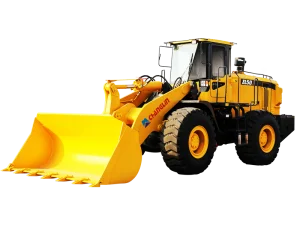
Explore our complete catalog of specialized motor graders, wheel loaders, road rollers, landfill compactors, and high-performance crawler excavators.





Frequently Asked Questions (FAQ) & Expert Insights
In-depth answers to key technical, logistical, and commercial inquiries from global machinery buyers and fleet directors.
What core technical specifications distinguish Chinese crawler excavators in mining applications?
How does Sinomach-HI ensure hydraulic cleanliness and component reliability during manufacturing?
What customization options (OEM/ODM) are available for regional temperature or altitude extremes?
- High-Altitude Package (Above 3,000m): Turbo-charger boost compensation maps, enlarged air intake filters, and low-density air combustion management.
- Cold-Weather / Arctic Package (-30°C to -40°C): Engine block jacket heaters, fuel water-separator pre-heaters, low-viscosity arctic hydraulic oils, and double-glazed heated cab glass.
- Tropical / High-Dust Package (+50°C): Oil bath air pre-cleaners, dual-core cooling radiators, and anti-corrosive protective frame coatings.