
High-Performance Earthmoving & Excavation Equipment
Direct factory supply of heavy-duty crawler excavators, motor graders, bulldozers, wheel loaders, and road machinery tested for severe operational environments.
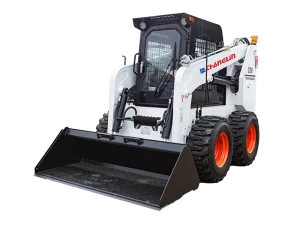
China Skid Steer Loader 275F Manufacturer, Factories
View Product Details →
China Bulldozer YD255 Manufacturer, Manufacturers
View Product Details →
Buy Wheel Loader ZL30H Manufacturer, Manufacturers
View Product Details →
Buy Motor Grader PY220H-5 Manufacturers, Factories
View Product Details →
Buy Crawler Excavator ZG250 Manufacturer, Manufacturers
View Product Details →
China High Performance 22T Excavator ZG220 Factory
View Product Details →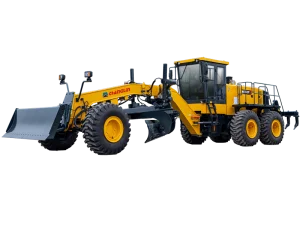
Buy Motor Grader PY350T Manufacturer, Manufacturers
View Product Details →
Buy Road Roller GYR162 Manufacturer, Factory
View Product Details →The Global Commercial & Industrial Landscape of Mining Diggers
Analyzing supply chain evolution, technological convergence, and Chinese OEM leadership in heavy earthmoving machinery.
The global mining digger machine market is undergoing a structural transition driven by rising global demand for critical transition minerals (copper, lithium, nickel, iron ore) and large-scale infrastructure investments across developing and developed economies. As surface mining pits expand and ore grades decline, extraction operations demand heavy equipment capable of maximizing material throughput while minimizing specific fuel consumption per ton excavated. In this evolving industrial paradigm, China has established itself as an indispensable manufacturing hub for heavy crawler excavators, wheel loaders, motor graders, and specialized mining machines.
Historically dominated by legacy Western OEMs, the mining excavation sector has shifted significantly toward Chinese heavy machinery manufacturers. This shift is not merely price-driven; it is built on rapid structural iteration, domestic supply chain integration, advanced hydraulic controls, and massive investment in manufacturing automation. Leading Chinese manufacturers now deliver 20-ton to 100-ton+ mining excavators engineered with high-strength structural steels (such as Hardox and NM400), precision electro-hydraulic load-sensing systems, and compliance with stringent international emissions frameworks (Tier 4 Final / EU Stage V).
Key Strategic Takeaway: Modern China-manufactured mining digger machinery balances capital cost efficiency with structural durability, providing global mine operators and contractors a 30% to 45% reduction in Total Cost of Ownership (TCO) without compromising operational availability or structural fatigue limits.
Procurement teams across Latin America, Central Asia, Africa, and Southeast Asia are increasingly standardizing their open-pit fleets around Chinese manufacturing ecosystems. This adoption is accelerated by integrated OEM support networks that provide guaranteed component availability, remote telematics monitoring, and customized structural configurations tailored to specific geological conditions—ranging from high-altitude Andean copper mines to sub-zero Siberian permafrost reserves.
Technological Architecture of Heavy Mining Diggers
A deep dive into hydraulic circuit design, structural FEA modeling, engine power-matching, and wear-resistant metallurgy.
Electro-Hydraulic Positive Flow Control
Replaces traditional negative flow regulation with electronic main valve spool control. Main pumps deliver precise oil flow proportional to joystick movement, reducing hydraulic power dissipation by up to 15% and increasing digging forces during hard-rock penetration.
Heavy-Duty Reinforced Undercarriage
Utilizes X-frame structures fabricated from high-tensile alloy steel. Track rollers, idlers, and sprockets undergo deep induction hardening. Heavy-duty track guards and lubricated track chains prevent pin wear in highly abrasive granite and quartzite environments.
Powerplant Match & Thermal Management
Powered by high-torque Cummins, Weichai, or Isuzu diesel engines optimized for low-RPM, high-torque output. Independent hydraulic-driven cooling fans auto-reverse to clean radiators in high-dust quarry zones, maintaining optimal oil viscosity.
FEA-Optimized Boom & Arm Geometry
Finite Element Analysis (FEA) isolates stress concentrations across arm structures. Forged steel casting pivots are integrated at high-stress points (boom foot, arm tip) to absorb torsional impact loads during heavy rock breaking and face shoveling.
Severe-Duty Rock Buckets
Standardized with NM400/NM500 wear plates and ESCO-style high-penetration bucket teeth. Side cutters, heel shrouds, and bottom wear strips protect the bucket structure from severe gouging and high-impact abrasion.
Smart Telematics & Fleet Management
Integrated CAN-bus telematics transmit real-time hydraulic pressure, fuel consumption, GPS tracking, and fault diagnostics to fleet managers, allowing predictive maintenance before minor faults escalate to catastrophic downtime.
Technical Benchmarking: Heavy Excavator Tiers for Mining Applications
| Equipment Class | Operating Weight (t) | Engine Power (kW) | Bucket Capacity (m³) | Primary Mining Application | Hydraulic Flow Rate (L/min) |
|---|---|---|---|---|---|
| Medium Excavator (ZG210 / ZG250) | 21.5 – 24.8 | 115 – 140 | 0.9 – 1.3 | Trenching, road construction, light quarrying | 2 x 220 |
| Heavy Excavator (ZG360 / ZG385) | 35.8 – 38.2 | 210 – 250 | 1.6 – 2.0 | Open-pit overburden stripping, aggregate loading | 2 x 360 |
| Ultra-Heavy Mining Excavator | 50.0 – 95.0 | 290 – 450 | 2.8 – 5.6 | High-bench iron/copper ore loading, heavy rock ripping | 2 x 520+ |
| Mining Grader (PY350T Class) | 35.0 | 260 | N/A (4.8m Moldboard) | Haul road maintenance, bench leveling | Proportional Load-Sensing |
Localized Application Scenarios & Operational Engineering
Configuring heavy machinery to withstand extreme temperatures, high altitudes, and abrasive geological strata.
Andean & Central Asian Plateau Mining
Operating digger machines at elevations exceeding 4,000 meters above sea level presents severe challenges, including air thinness, engine power derating, and reduced hydraulic heat dissipation.
- Turbocharged Engine Tuning: Variable Geometry Turbochargers (VGT) maintain manifold pressure to mitigate altitude power losses.
- Expanded Heat Exchangers: Over-sized hydraulic oil coolers prevent thermal breakdown in thin air environments.
- Pressurized FOPS/ROPS Cabs: HEPA-filtered HVAC systems protect operators from fine copper/gold dust.
Siberian & High-Latitude Operations
In sub-zero climates (-40°C to -15°C), hydraulic seals embrittle, structural steel turns brittle, and diesel fuel gels without specialized cold-climate packaging.
- Low-Temperature Alloy Steel: Structural welds undergo Charpy V-notch impact testing to ensure fracture toughness at low temperatures.
- Webasto Auxiliary Pre-Heaters: Engine block and hydraulic tank heating coils ensure rapid cold starts.
- Arctic Fluorosilicone Seals: Prevents cylinder packing leaks and hydraulic fluid loss in sub-freezing conditions.
Middle Eastern & African Desert Earthmoving
Ambient temperatures exceeding +50°C combined with fine silica sand cause accelerated pin wear, hydraulic overheating, and electrical sensor failures.
- Dual-Element Air Pre-Cleaners: Multi-stage cyclone filters eject airborne dust before it reaches the main air filter.
- Heavy-Duty Tropical Radiators: Wide-fin aluminum cores prevent dust clogging and maintain cooling efficiency.
- Dust-Sealed Bucket Pins: Quad-lip rubber seals retain grease and exclude abrasive silica particles.
Iron Ore & Granite Quarry Operations
High-impact loading and face digging into blasted rock require maximum breakout force and extreme bucket wear protection.
- Short Boom & Arm Configuration: Maximizes hydraulic digging force at the tooth point for rock penetration.
- Full-Length Track Guards: Prevents rock debris from lodging in track linkages and damaging rollers.
- Reinforced Slew Bearings: Heavy-duty cross-roller swing bearings absorb cyclic impact loads during rapid loading.
Macro Fleet Solutions & TCO Optimization Matrix
Evaluating Capital Expenditure (CapEx), Operational Expenditure (OpEx), and lifecycle value realization for enterprise buyers.
When procuring heavy mining digger machinery, enterprise buyers must look beyond the initial purchase price to evaluate Total Cost of Ownership (TCO) across a 10,000 to 20,000-hour operational lifecycle. TCO consists of three primary pillars: Initial Capital Expenditure (CapEx), Operating Expenditure (OpEx—primarily fuel, wear parts, and scheduled maintenance), and Machine Availability (uptime vs. unplanned outage costs).
Chinese mining digger manufacturers have restructured the global cost equation. By leveraging integrated industrial clusters in cities like Changzhou, OEMs achieve significant production economies of scale while maintaining rigorous ISO 9001 and CE quality standards. The financial comparison below highlights why international mining syndicates and earthmoving contractors are shifting fleet allocations toward Chinese manufacturing partnerships.
CapEx Savings: 35% – 50%
Acquisition costs for 36-ton to 90-ton Chinese mining excavators are significantly lower than Western equivalents, freeing up capital for site infrastructure, haul truck fleet expansion, and auxiliary equipment.
OpEx Optimization: Fuel Efficiency
Electro-hydraulic main control valves, combined with customized engine power maps, deliver lower fuel consumption per ton of moved earth, matching legacy brand fuel efficiency profiles.
Parts Interchangeability & Availability
Global availability of standard components (Kawasaki hydraulic pumps, Cummins/Weichai engines, Nabtesco travel motors) ensures rapid spare-parts sourcing worldwide.
Technology Roadmap & Future Outlook (2025–2035)
Pioneering electrification, autonomous teleoperation, and AI-driven predictive maintenance in heavy earthmoving machinery.
Battery Electric & Tethered Electric Excavators
As ESG mandates tighten globally, Chinese OEMs lead in developing high-voltage battery-electric excavators and tethered electric quarry diggers. These machines eliminate local carbon emissions, lower noise levels, and reduce maintenance costs by removing traditional diesel engines.
5G Teleoperation & Autonomous Digging
Leveraging low-latency 5G networks, operators can control excavators remotely from safe command centers miles away from dangerous mine benches. Autonomous pathfinding algorithms allow automated truck loading cycles with millimeter-level precision.
Frequently Asked Questions by Mining & Procurement Teams
Expert answers regarding machine customization, shipping logistics, warranty coverage, and spare-parts pipelines.
Heavy Heavy-Duty Earthmoving & Compaction Machinery
Explore specialized landfill compactors, crawler excavators, high-capacity wheel loaders, and road rollers built for demanding civil and mining jobs.

China Landfill Compactor GYL203 Manufacturer, Factories
View Product Details →
China Crawler Excavator ZG385 Factory, Factories
View Product Details →
China Crawler Excavator ZG210D Factory, Factories
View Product Details →
Buy Wheel Loader ZL60H Factory, Factories
View Product Details →
China Crawler Excavator ZG360 Manufacturer, Factories
View Product Details →
China Crawler Excavator ZG210 Manufacturers, Factories
View Product Details →
Buy Road Roller GYS20J Manufacturers, Factories
View Product Details →