
Featured Earthmoving Fleet & Heavy Machinery
Direct factory equipment engineered for extreme reliability and global infrastructural compliance

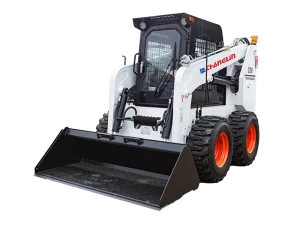






Global Earthmoving Machinery Status & Sourcing Shift
A comprehensive analysis of motor grader capacity procurement, market economics, and OEM manufacturing benchmarks
Global Infrastructure Macro-Trends
The global construction equipment market is undergoing a seismic structural pivot. Infrastructure development across emerging economies, expanding mining operations in Latin America and Central Asia, and aggressive haul-road development in Sub-Saharan Africa have elevated the strategic importance of high-torque, high-efficiency motor graders.
Procurement directors and fleet operators no longer rely exclusively on traditional Western OEMs. China's motor grader capacity manufacturing sector—anchored by state-of-the-art facilities like Sinomach-HI (Changlin)—now leads global supply chains in operational reliability, structural integrity, and life-cycle cost efficiency.
TCO Optimization & Fleet Value
Total Cost of Ownership (TCO) has become the decisive metric in capital equipment acquisition. Chinese motor grader manufacturers have optimized structural steel sourcing, modular hydraulic architecture, and transmission dynamics to deliver a 25% to 40% reduction in upfront capital outlay without compromising structural blade pull or engine drawbar capacity.
With integrated component ecosystems—utilizing proven power plants (Cummins, Weichai) and electro-hydraulic control valves—fleets achieve equivalent operational uptime and reduced maintenance overhead across 10,000+ duty hours.
Manufacturing Scale & Engineering E-E-A-T
China's motor grader manufacturing hubs, particularly centered in Jiangsu (Changzhou), represent decades of institutionalized metallurgical mastery and joint-venture engineering lineage. Modern plants utilize automated robotic welding lines, ultra-sonic non-destructive weld testing, and environmental climate simulation chambers.
This technical foundation guarantees that machine tonnage ratings, moldboard down-force, and tandem-axle torque distribution meet rigid international ISO and CE engineering standards.
Motor Grader Capacity Engineering & Tonnage Matrix
Technical breakdown of weight distribution, horsepower dynamics, moldboard geometry, and hydraulic flow split
Understanding motor grader performance requires analyzing operating weight, horsepower-to-blade-pull ratios, moldboard cutting angles, and hydraulic load-sensing efficiency. Sourcing the right grader capacity ensures optimal earthmoving capability without unnecessary fuel burn or engine lugging.
Engineering Rule of Thumb: Motor grader productivity is determined by the maximum usable blade down-force and tractive drawbar pull before wheel slip occurs. Weight distribution—typically 30% front axle and 70% rear tandem axle—is fundamental to maintaining steering control while carrying heavy moldboard loads.
| Capacity Class | Operating Weight | Engine Power Output | Moldboard Length | Primary Industrial Applications |
|---|---|---|---|---|
| Compact / Light Duty | 10.0 – 13.5 Tonnes | 100 – 140 HP (75 – 104 kW) | 3,048 mm – 3,658 mm (10–12 ft) | Municipal maintenance, urban road expansion, sports fields, agricultural ditching. |
| Medium Infrastructure | 14.0 – 17.5 Tonnes | 150 – 190 HP (112 – 141 kW) | 3,658 mm – 3,962 mm (12–13 ft) | Highway sub-base preparation, regional road leveling, commercial site development. |
| Heavy Earthmoving | 18.0 – 22.0 Tonnes | 200 – 260 HP (149 – 194 kW) | 3,962 mm – 4,267 mm (13–14 ft) | Heavy highway construction, airport runway leveling, forestry haul road carving. |
| Mining & Ultra-Heavy | 24.0 – 55.0+ Tonnes | 280 – 550+ HP (209 – 410 kW) | 4,267 mm – 7,315 mm (14–24 ft) | Open-pit mine haul road clearing, heavy overburden management, ultra-wide grading. |
Hydraulic Load-Sensing Systems (LSS)
Modern Chinese motor graders incorporate proportional pressure-compensated hydraulic valves. This ensures that blade lift, tilt, circle turn, and side-shift operate simultaneously at constant speeds regardless of engine RPM or individual circuit pressure demands, enabling precision sub-grade accuracy to within millimeters.
A-Frame Circle Drive & Moldboard Dynamics
The structural heart of the grader is its heavy-duty box-section A-frame drawbar and heat-treated internal-gear rotating circle. Premium Chinese factories utilize hardened wear plates and hydraulic overload protection valves to safeguard the circle drive motor against sudden side-impact shocks when encountering underground rock obstructions.
Tandem Axle & No-Spin Differential Lock
To convert engine brake horsepower into effective tractive drawbar pull, factories integrate heavy-duty chain-driven tandem axles paired with automatic or operator-controlled 'No-Spin' differential locks. This delivers maximum torque to all four rear drive wheels even when traversing slippery mud or loose gravel base material.
Localized Application Scenarios & Duty Cycles
Field-proven engineering adaptations for extreme climates, high altitude, and demanding terrain
High-Altitude Mining Operations (Andean & Central Asian Plateaus)
Operating earthmoving equipment at elevations exceeding 4,000 meters above sea level presents severe air density challenges, leading to engine power derating and cooling inefficiencies. Chinese OEMs address altitude degradation by configuring motor graders with wastegate-turbocharged engines featuring high-efficiency air-to-air intercoolers.
Electronic fuel injection (EFI) maps automatically adjust fuel-to-air stoichiometry, maintaining full rated torque outputs. Enhanced hydraulic oil cooler heat dissipation blocks prevent thermal breakdown during continuous heavy haul-road scraping in thin atmospheric conditions.
Arid Desert & Ultra-High Dust Environments (Middle East & North Africa)
Ambient temperatures exceeding 50°C paired with airborne micro-particulate sand require specialized filtration and thermal management. Factory options include multi-stage desert pre-cleaners (turbo-air centrifuges), heavy-duty sealed circle drive gearboxes, and reversible hydraulic cooling fans that clean radiator cores automatically.
Enclosed pressurized operator cabs featuring dual-stage HEPA HVAC filtration systems protect operators while preventing dust ingress into electronic control units (ECUs) and joystick sensor harnesses.
Sub-Zero Boreal & Permafrost Conditions (Siberian & Northern European Fleets)
Working in temperatures down to -40°C demands specialized metallurgy, cold-start engineering, and synthetic hydraulic fluid formulations. Factories install arctic package solutions including engine block heaters, fuel water separator pre-heaters, low-temperature synthetic arctic oil lines, and double-glazed thermal cab windows.
Structural steel components undergo low-temperature Charpy V-notch impact testing to ensure frame structural steel remains ductile and immune to brittle fracture under intense dynamic shock loads.
China OEM Supply Chain Resilience & Factory Efficiency
Vertical integration, raw material sovereignty, and advanced production quality control
The competitive advantage of Chinese motor grader capacity manufacturers lies in complete vertical supply chain integration. The Changzhou heavy machinery manufacturing cluster aggregates raw material processing, tier-1 component forging, precision gear cutting, and robotic assembly within a 50-kilometer industrial radius.
Vertical Integration & Component Sovereignty
By producing structural box frames, front axle assemblies, and A-frame drawbars in-house using automated CNC plasma cutters and multi-axis welding robots, Chinese factories eliminate external supplier bottlenecks. Partnership integrations with global tier-1 suppliers—such as ZF power-shift transmissions, Meritor planetary axles, and Bosch Rexroth hydraulics—ensure robust component compatibility and rapid lead-time execution.
Strict ISO 9001 & Zero-Defect Quality Gates
Quality assurance follows rigorous gate checks across every phase of manufacturing:
- Metallurgical Verification: Spectrographic analysis of incoming steel plate raw stock.
- Ultrasonic Weld Testing: 100% non-destructive evaluation of high-stress frame joints.
- Hydraulic Cleanliness: Automated oil particle counting to ISO 4406 standards prior to factory roll-out.
- Pre-Delivery Inspection (PDI): 4-hour dynamic load testing under maximum hydraulic relief pressure.
Cost Efficiency & Production Throughput
Modular platform architecture allows Chinese factories to run flexible production lines capable of rapidly switching between light 13-ton municipal graders and heavy 22-ton mining machines. This operational agility lowers factory overhead costs and enables rapid delivery schedules—often shipping complete units within 15 to 30 days from purchase order confirmation.
Technology Roadmap & Future Outlook
Electrification, 3D GNSS auto-grading integration, and smart fleet telematics
Smart 3D GNSS & Automated Grade Control
The future of grading lies in autonomous accuracy. Next-generation Chinese motor graders feature factory-ready integration harnesses for 3D GNSS (GPS, GLONASS, BeiDou) automated grade control systems. Electro-hydraulic joysticks interface directly with machine control algorithms, automatically adjusting moldboard lift and tilt cylinders in real time to match digital BIM site models.
This technology eliminates manual stake surveying, reduces pass counts by up to 40%, and allows novice operators to achieve millimeter-accurate finish grading on complex slopes and curves.
Battery Electric Vehicles (BEV) & Hybrid Powertrains
Building upon breakthroughs seen in electric wheel loaders (such as the ZL50EV), Chinese OEMs are actively advancing high-voltage LFP (Lithium Iron Phosphate) battery-electric motor graders. Electric motor powertrains provide instant peak torque at zero RPM, eliminating transmission power lag while cutting site operational carbon emissions to absolute zero.
Electric drivelines drastically reduce thermal output and operating noise, making electric motor graders ideal for urban night-work, tunneling operations, and strict ESG-regulated construction zones.
Predictive Telematics & Remote Diagnostics
Integrated IoT telematics gateways stream real-time operational data directly to fleet managers via cloud platforms. Engine thermal metrics, hydraulic pressure spikes, fuel burn rates, machine GPS location, and fault codes are continuously analyzed by AI diagnostics modules.
Predictive maintenance alerts notify service teams before component failures occur, minimizing unplanned downtime and maximizing fleet operational availability across distant project sites.
Global Compliance, Logistics & Aftermarket Safeguards
International certifications, customs documentation, parts availability, and global field engineering
International Regulatory Certifications
Export units conform strictly to destination market standards. Engines can be configured from Tier 2 / Stage II for non-regulated regional markets to Tier 4 Final / EU Stage V utilizing Advanced SCR and DPF exhaust aftertreatment systems. Cabs feature certified ROPS (Roll-Over Protective Structure) and FOPS (Falling Object Protective Structure) compliance according to ISO 3471 and ISO 3449 safety mandates.
Global Spare Parts & Dealer Depot Logistics
To eliminate long lead-time concerns for replacement consumables, manufacturers maintain regional spare-parts hubs across Central Asia, Southeast Asia, South America, and Africa. Critical wear components—such as high-carbon steel moldboard cutting edges, ripper shanks, filters, and hydraulic seal kits—are cataloged via standardized electronic parts books for rapid dispatch within 24–48 hours.
Global Warranty & On-Site Service Engineers
Machines are backed by comprehensive factory warranties spanning 12 months / 2,000 hours up to 24 months / 4,000 hours depending on project agreements. Factory-trained field engineers provide local dealer support, machine commissioning, operator training, and structured diagnostic troubleshooting to maximize operational life cycles.
Frequently Asked Questions (FAQ)
Expert insights into motor grader selection, factory customization, procurement, and field maintenance
Selecting the optimal motor grader capacity depends primarily on material density, slope angle, road width, and annual operational hours. For municipal maintenance and light leveling, a 10–13 ton (100–140 HP) grader is agile and economical. For general highway construction, sub-base compaction, and site prep, a 14–18 ton (150–190 HP) machine with a 12ft moldboard is the industry benchmark. For heavy mining haul roads, hard clay ripping, or wide airport runways, select an 18–22+ ton (200–260+ HP) heavy-duty machine configured with a rear ripper and front dozer blade.
Drawbar pull (measured in kilonewtons, kN) represents the maximum horizontal tractive force the grader can exert to pull the blade through tough terrain without slipping the rear wheels. Moldboard down-force represents the vertical force applied to penetrate hard-packed surfaces. High engine horsepower is ineffective if machine weight distribution is poor; optimal performance requires a balanced frame design that translates engine output into maximum down-force and tractive pull.
Yes. Chinese OEMs partner with global engine manufacturers (such as Cummins and Perkins) and domestic leaders (such as Weichai and Yuchai) to supply fully certified Stage V and Tier 4 Final powertrains equipped with DOC, DPF, and DEF/AdBlue SCR systems for deployment in North America, Europe, and strictly regulated metropolitan zones.
Motor graders are shipped via Ro-Ro (Roll-on/Roll-off) vessels, Flat Rack containers, or Break-Bulk ocean freight. Compact and mid-sized units can be partially disassembled (removing the front axle, cab, and moldboard) to fit inside 40ft High Cube (40HC) sea containers, significantly lowering sea freight costs for long-distance international deliveries.
Standard optional attachments include front-mounted dozer blades (for push-filling and backfilling), mid-mounted scarifiers (for loosening packed gravel), rear multi-shank rippers (for fracturing hard rock and asphalt), front push blocks, and automated 3D GPS/Laser grade control sensor kits.
Articulated frames feature a hydraulic pivot joint between the front frame and rear tandem housing (typically providing ±20 to ±25 degrees of articulation). This allows operators to reduce turning radius in tight spaces, crab-steer to keep rear drive wheels on firm ground while grading soft shoulders, and offset the moldboard to carry heavy windrows without losing directional steering stability.
Key maintenance protocols include replacing main hydraulic return filters every 500 operating hours, sampling hydraulic oil every 1,000 hours to check for moisture and particle contamination (aiming for ISO 4406 cleanliness levels), regularly greasing the circle drive wear inserts, and maintaining proper backlash clearances on circle pinion gears to prevent chatter shock load damage.
Complete Heavy Equipment Machinery Lineup
Explore our extended earthmoving, road building, and material handling product catalog






