
Heavy Industrial Fleet & Earthmoving Machinery
Explore factory-direct equipment engineered for maximum structural durability, high hydraulic efficiency, and long-term operating profit across global job sites.







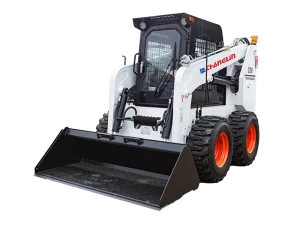
The Structural Evolution of China's Small Backhoe Loader Manufacturing Base
Understanding how modern Chinese OEMs have combined heavy-duty structural steelwork, European hydraulic components, and advanced assembly line robotics to redefine global market expectations.
In the global heavy construction equipment landscape, the Small Backhoe Loader represents one of the most versatile, high-utility machines ever developed. Uniting the dig-and-trench agility of a compact hydraulic excavator with the material handling efficiency of a front-end wheel loader, these multi-purpose powerhouses are critical assets for municipal contractors, agricultural operations, micro-trenching specialists, and utility engineering crews.
Over the past decade, the center of gravity for small backhoe loader manufacturing has shifted decisively toward Specialized Machinery Clusters in China. Modern Chinese manufacturing hubs—located in industrial centers like Jiangsu, Shandong, and Zhejiang—have transformed from basic OEM fabricators into world-class research, design, and manufacturing powerhouses. Driven by state-of-the-art robotic welding, automated laser-cutting platforms, electro-hydraulic calibration benches, and stringent quality assurance frameworks (aligned with ISO 9001, CE, and ISO 14001), Chinese backhoe loader factories now offer global procurement teams an unmatched balance of structural integrity, operational reliability, and total cost of ownership (TCO) efficiency.
Key Procurement Finding: Information Gain for Equipment Buyers
Unlike legacy equipment purchasing models that forced contractors to choose between exorbitant premium pricing or sub-standard structural reliability, China's modern backhoe loader ecosystem utilizes standardized global supply chains. Premium components—such as Cummins, Yanmar, or Perkins engines combined with Carraro transmissions, Rexroth hydraulics, and Permco gear pumps—are seamlessly integrated into high-tensile strength robotically welded chassis, delivering Tier-1 field performance at direct factory pricing.
Strategic Industrial Advantages of China Backhoe Loader Factories
How vertically integrated manufacturing hubs deliver unmatched engineering value, rapid customization, and economic scale to international importers.
Vertical Supply Chain Synergy
Chinese manufacturers benefit from a fully localized ecosystem for raw steel processing, hydraulic hose forging, cylinder machining, and cast counterweights. This concentrated supply chain eliminates cross-border component delays and enables raw-material-to-finished-machine turnaround times up to 40% faster than European or North American facilities.
Advanced Robotic Welding & CNC Tolerances
Leading factories employ automated Panasonic and ABB multi-axis robotic welding cells for structural frames, boom assemblies, and loader arms. High-precision CNC boring guarantees strict pin-and-bushing tolerances, significantly reducing joint wear, structural fatigue, and pin slop over thousands of operating hours in severe soil conditions.
Flexible OEM / ODM Customization Framework
Unlike rigid mass-production lines in the West, Chinese backhoe loader factories excel at tailored configurations. Buyers can specify custom engine emissions (Stage V, Tier 4 Final, or Tier 2 for non-regulated regions), mechanical vs. hydraulic pilot controls, side-shift vs. center-mount carriage frames, and telescopic extendable dippers.
Technological Breakthroughs Shaping Modern Compact Backhoe Loaders
From electro-hydraulic load-sensing system (LSS) architectures to high-voltage electric drive trains, Chinese factories are leading the smart construction equipment wave.
Electrification & Lithium Hybrid Powertrains
Responding to strict urban zero-emission zones and underground tunneling requirements, top Chinese factories are mass-producing pure electric (LiFePO4 battery pack) and diesel-electric hybrid small backhoe loaders. Operating at 300V-600V architecture, electric models deliver instant hydraulic torque, noise reduction below 70 dB, and operational fuel savings exceeding 60% compared to traditional diesel power units.
Smart Electro-Hydraulic Load Sensing (LSS)
Modern Chinese compact backhoe loaders are replacing legacy gear pump arrangements with variable-displacement axial piston pumps controlled by Load-Sensing Systems (LSS). Hydraulic oil flow is dynamically allocated strictly on demand, reducing system fluid heat generation, conserving engine horsepower, and allowing smooth simultaneous multi-function dig cycles.
Telematics, IoT & Remote Fleet Diagnostics
Integrated GPS/4G CAN-bus telematics hardware is now standard across Chinese export backhoe lines. Overseas dealers and fleet managers can monitor real-time hydraulic oil temperatures, fuel consumption curves, engine fault codes, and maintenance schedules remotely via cloud dashboards, reducing unexpected field downtime by over 35%.
Ergonomic FOPS/ROPS Integrated Cabs
Modern backhoe cabs produced in China undergo rigorous rollover and falling-object protective structure (ROPS/FOPS) certification testing. Standard cab packages now feature 360-degree panoramic toughened glass, high-capacity HVAC climate control, air-suspension swivel seats, low-effort pilot joystick controllers, and touchscreen diagnostic displays.
Small Backhoe Loader Performance Specification Matrix
Technical comparison across standard China factory-direct compact backhoe loader categories.
| Specification Parameter | Micro Class (1.5 - 2.5 Ton) | Compact Class (3.0 - 5.5 Ton) | Standard Heavy Class (7.0 - 9.0 Ton) |
|---|---|---|---|
| Rated Engine Power (kW / HP) | 25 - 37 kW (34 - 50 HP) | 45 - 60 kW (60 - 82 HP) | 74 - 82 kW (100 - 110 HP) |
| Loader Bucket Capacity (m³) | 0.4 - 0.6 m³ | 0.8 - 1.1 m³ | 1.2 - 1.5 m³ |
| Backhoe Bucket Digging Depth | 2,000 - 2,600 mm | 3,200 - 4,200 mm | 4,400 - 5,400 mm |
| Hydraulic System Pressure (Bar) | 180 - 200 Bar | 210 - 230 Bar | 240 - 250 Bar |
| Max Breakout Force - Digging (kN) | 22 - 30 kN | 42 - 55 kN | 60 - 75 kN |
| Chassis Architecture Options | Center-mount / Articulated | Side-shift Frame / Rigid or Articulated | Side-shift H-Frame / 4WD Equal Weight |
| Target Applications | Orchards, Micro-trenches, Landscaping | Municipal Utilities, Cable Laying, Road Work | Heavy Excavation, Quarry Support, Civil Contracting |
Localized Application Scenarios & Macro Industry Solutions
Deploying compact backhoe loaders across high-efficiency operational environments worldwide.
Urban Municipal Utilities & Micro Trenching
In narrow urban streets and crowded residential zones, large excavators create severe traffic blockages. A side-shift small backhoe loader can position its digging arm adjacent to walls and curbs, digging narrow utility trenches for fiber optic cables, water mains, and electrical conduits while utilizing its front loader bucket to immediately backfill and level asphalt surfaces.
Agricultural Engineering & Irrigation Infrastructure
Global agricultural enterprises rely on small backhoe loaders as multi-functional workhorses. From digging drainage canals and clearing tree roots in palm oil or fruit plantations to loading fertilizer, grain, and animal feed into hoppers, these machines replace 2-3 single-purpose farm tractors at a fraction of the maintenance cost.
Emergency Logistics & Disaster Relief Works
During landslides, earthquake recovery, or severe flooding, road access is frequently blocked. Compact backhoe loaders equipped with 4-in-1 multi-purpose front buckets and hydraulic breakers can clear debris, break up collapsed concrete blocks, dig diversion channels, and pull stuck vehicles without requiring flatbed transport trailers.
Global Enterprise Procurement & Supplier Auditing Framework
A step-by-step technical auditing checklist for importing construction machinery directly from Chinese factories.
When sourcing heavy machinery directly from Chinese manufacturers, corporate buyers and equipment distributors must look beyond the initial FOB unit cost. Conducting a thorough audit of the factory's structural engineering standards, quality assurance (QA) infrastructure, and global logistics capability ensures seamless long-term fleet integration.
1. Engine and Powertrain Compatibility Verification
Ensure the factory offers certified engines matching your destination country's environmental emissions legislation:
- North America & European Union: Require EU Stage V / US EPA Tier 4 Final engines utilizing Diesel Particulate Filters (DPF) and Selective Catalytic Reduction (DEF/AdBlue urea injection).
- Latin America, Southeast Asia, Africa & Middle East: Tier 2 or Tier 3 mechanical engines (such as Cummins 4BT/6BT or Weichai/Yuchai engines) are highly favored due to their tolerance for variable diesel fuel quality and simple field serviceability.
2. Hydraulic System Pressure & Auxiliary Line Flow Rates
Evaluate the backhoe loader's auxiliary hydraulic circuit. If your operators intend to run heavy hydraulic breakers, augers, trenchers, or hydraulic wood grapples, confirm that the factory installs bidirectional high-flow auxiliary piping with independent oil cooler loops to prevent system overheating during continuous heavy hammer operations.
3. Structural Steel Grades and Frame NDT Inspection
Inquire whether the factory uses Q345B, Q460, or high-yield HG70/HG785 structural steel plates for critical boom and arm weldments. Professional Chinese backhoe loader factories perform Non-Destructive Testing (NDT) such as Ultrasonic Flaw Detection and X-ray weld inspection on 100% of boom stress joints to eliminate structural failure risks under heavy digging loads.
4. Overseas Spare Parts Stocking & Technical Support SLAs
Evaluate the factory's global service footprint. Reputable suppliers maintain regional parts hubs, stock fast-wearing items (filters, bucket teeth, hydraulic seals, hoses, and pins), and provide 24/7 remote diagnostic support via video link alongside localized field service technician training programs.
Road Compaction, Material Handling & Excavation Equipment
Expand your fleet capabilities with factory-direct road rollers, heavy excavators, and high-capacity wheel loaders built to international quality standards.







Small Backhoe Loader Procurement & Technical FAQ
Clear, expert answers to the most common questions raised by overseas equipment buyers and fleet managers.
What is the structural difference between a side-shift and a center-mount small backhoe loader?
A Center-Mount Backhoe Loader has its digging boom fixed permanently at the exact center of the rear main frame, anchored by stabilizer legs that extend downward diagonally. This configuration provides maximum overall digging stability and is widely favored in North American and open-field agricultural applications. In contrast, a Side-Shift Backhoe Loader features a rear sliding carriage (H-frame design) that allows the entire digging boom to shift hydraulically to the far left or right side of the machine frame, with vertical drop-down stabilizer legs. This side-shift design is essential for European and urban municipal works where operators must dig trenches right up against building foundations, walls, property fences, or alongside narrow roadways without taking up multiple traffic lanes.
Why choose a small backhoe loader instead of buying a separate mini excavator and compact wheel loader?
Purchasing a single compact backhoe loader delivers immense financial and logistical advantages over managing two separate machines. First, the capital expenditure (CapEx) required for one backhoe loader is roughly 35-50% lower than buying both a mini excavator and a compact wheel loader. Second, transportation costs are cut in half: you only need a single flatbed truck or trailer to transport one machine between job sites. Third, routine maintenance costs, insurance premiums, operator licensing, and filter replacement schedules are consolidated onto a single engine and hydraulic chassis, dramatically lowering total operating cost per working hour.
How are small backhoe loaders packaged and shipped from China factories to overseas ports?
Shipping method depends heavily on machine dimensions and order quantities. Compact models under 4 tons can frequently be loaded into standard 40ft High Cube (HQ) Shipping Containers by removing cab lighting or bucket assemblies, allowing up to 2 units per container for maximum ocean freight economy. Larger 7-9 ton backhoe loaders are typically shipped via Ro-Ro (Roll-on/Roll-off) Vessels or Flat Rack Containers to ensure zero structural disassembly is required upon arrival at the destination seaport. Professional Chinese factories provide custom anti-corrosion marine shrink-wrapping and wax coating to protect hydraulic cylinders and electrical wiring harness connectors during oceanic transit.
Can Chinese factories customize hydraulic attachment lines for quick couplers and hydraulic hammers?
Yes, factory customization is a core strength of top Chinese manufacturers. You can order machines pre-equipped with factory-installed dual auxiliary hydraulic lines (high-pressure hammer circuit and dual-direction tilt-rotate lines), quick-attach hydraulic couplers for both front loader and rear backhoe arms, and cabin-operated hydraulic selector switches. Popular attachments manufactured in-house include 4-in-1 multi-purpose buckets, hydraulic concrete breakers, auger drills, trenching buckets, grass mowers, and hydraulic wood grapples.
What warranty coverage and spare parts support do Chinese backhoe loader manufacturers offer?
Standard factory warranties range from 12 months / 2,000 operating hours up to 24 months / 4,000 operating hours for core powertrain components (engine, transmission, hydraulic main pump, and axle gearboxes). OEM manufacturers support international fleet owners through global DHL/FedEx spare parts dispatch, localized service centers across 180+ countries, and complete digital electronic parts catalogs (EPC) for quick part number identification.